The Indian Surgeon Who Crossed a War Border to Save Her
There’s a teenage girl in Pakistan whose spine got fixed by a surgeon in India. Not through a telemedicine screen or a written consultation — he actually operated on her. And nobody involved was supposed to let that happen.
The two countries have spent the better part of a century making it nearly impossible for their citizens to cross into each other’s territory. Wars, border disputes, decades of diplomatic freeze. But here’s what nobody tells you about borders: they’re remarkably bad at stopping people who are desperate enough and skilled enough to ignore them. Especially when what’s on the other side is the difference between a life of constant pain and the ability to stand up straight.
Key Facts
- Dr. Rajagopalan Krishnan, a spinal surgeon based in India, operated on a Pakistani teenager with severe scoliosis.
- India and Pakistan have fought four wars since 1947, making cross-border medical travel bureaucratically difficult.
- Scoliosis—the spine curving sideways—affects roughly 2 to 3 percent of people globally.
- Corrective spine surgery for severe scoliosis places metal rods and screws along the vertebrae and takes about six to eight hours.
- The procedure uses real-time neurological monitoring because the spinal cord and leg-controlling nerves lie millimeters from the surgical field.
In short: An Indian spinal surgeon, Dr. Rajagopalan Krishnan, operated on a Pakistani teenager with severe scoliosis despite the two countries’ long hostility and four wars since 1947. The six-to-eight-hour surgery placed rods and screws along her spine under real-time neurological monitoring, correcting the curve and relieving years of pain.
When Cross-Border Spine Surgery Defies Political Reality
India and Pakistan have fought four wars since 1947. The diplomatic temperature between them swings — sometimes it’s cold, sometimes it’s actively hostile, always it’s shaped by territorial disputes that show no signs of getting resolved. Travel restrictions are real. Visas are bureaucratic nightmares. Getting permission to cross for medical reasons means navigating government agencies in both countries, filling out forms that seem designed specifically to discourage you, waiting for approvals that may or may not come. The history of India-Pakistan relations shows occasional cracks where medical diplomacy has squeezed through — but they’re small, temporary, and usually close up again just as quickly.
Dr. Rajagopalan Krishnan is a spinal surgeon in India. He’s the kind of specialist that other surgeons refer impossible cases to. When a Pakistani teenager with severe scoliosis somehow landed on his desk, the political map between them probably felt to him like what it actually is: something humans invented. The spine doesn’t have a nationality.
A Spine That Stole Years From Her Life
Scoliosis — the spine curving sideways instead of straight — shows up in about 2 to 3 percent of people globally. But severe cases? Those are different animals entirely. Left untreated through adolescence, the curve keeps progressing. The ribs compress. Organs shift position. Breathing gets harder. Standing up straight becomes something your body can barely manage. For this young woman, years had already passed without intervention. The window for easier correction had closed quietly. What remained was the kind of complex reconstructive surgery that only a handful of specialists in the entire region could actually pull off. And the one with the best track record lived in a country her government barely maintained diplomatic relations with.
Let that sit for a moment.
The treatment existed. The surgeon existed. The only obstacle between a teenager and pain-free movement was paperwork. Politics. The kind of administrative friction that stops most people before they even try.
How Medicine Sometimes Moves Faster Than Diplomacy
Medical cases have quietly punched holes in the India-Pakistan border before. Patients from one side seeking specialists on the other — cardiac surgeons, oncologists, spinal specialists — when the expertise doesn’t exist back home. These aren’t the kinds of things that make international news or shift policy. They don’t build trade agreements or resolve territorial disputes. But they do something quieter and potentially more subversive: they create proof. Proof that cooperation is possible. That it happens. That borders are permeable when someone needs something badly enough.
Dr. Krishnan’s team took the case. The surgery went well. She stood straighter. The pain that had defined her teenage years was gone. And somewhere in the operating room, for six hours, two countries that spend most of their energy viewing each other with suspicion were working toward the exact same goal. You can read more about where medicine and humanity intersect at this-amazing-world.com, where these kinds of stories keep showing up if you look for them.
The Surgery Itself: What It Actually Takes
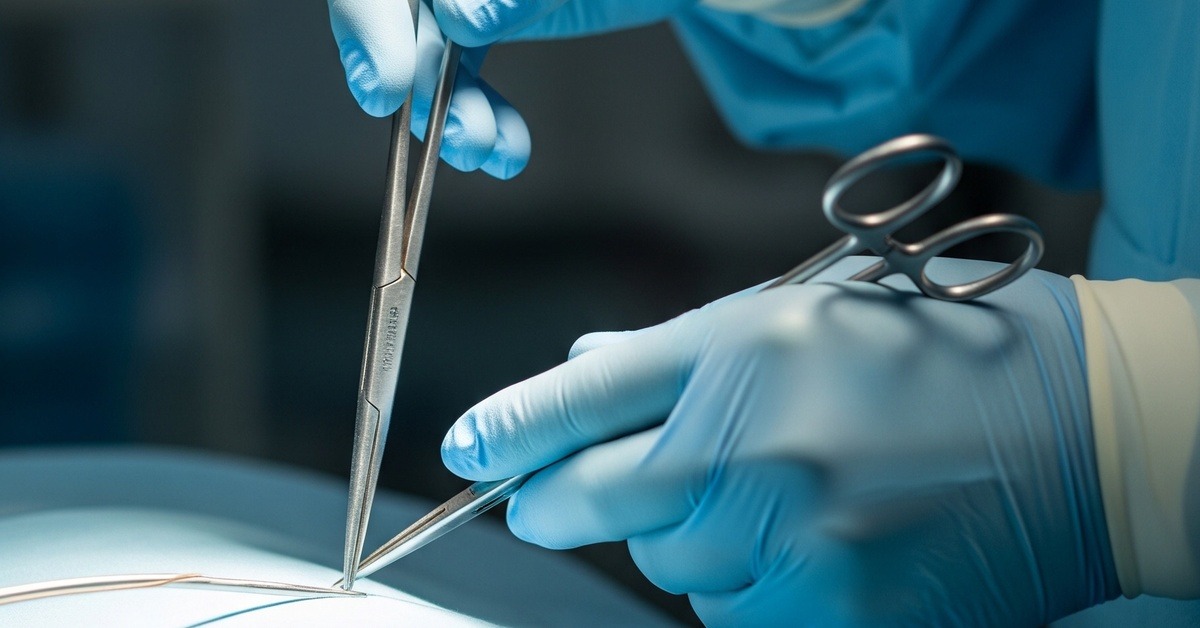
Corrective spine surgery for severe scoliosis involves placing metal rods and screws along the vertebrae to straighten and stabilize the structure. Six to eight hours in an operating room. The margin for error is measured in millimeters.
That last fact kept me reading for another hour. The spinal cord runs directly through the field where the surgeon is working. Nerves controlling leg movement and sensation are maybe the width of a fingernail away. Throughout the entire procedure, real-time neurological monitoring tracks whether anything is going wrong. It’s watching for the moment things go from “careful and precise” to “something has shifted and now we have an emergency on our hands.”
Recovery is measured in months. Rehabilitation. Movement restrictions. The slow process of a body learning to trust its own structure again. And then — if it works, and it usually does with experienced surgeons — patients describe something consistent: they felt like they’d been given back something they didn’t realize they were losing.
That was what was waiting for her on the other side.
If she could get through the border.

What Happens When Healing Outlasts the Politics
Here’s the thing about stories like this one. They don’t resolve with a neat ending where everything changes. India and Pakistan didn’t suddenly become allies because of one surgery. The border didn’t open. Nobody changed policy. And that’s almost beside the point.
What this case actually demonstrates is something much quieter: the instinct to heal is older and more persistent than the instinct to divide. Dr. Krishnan didn’t physically cross the border. But he crossed something. And the girl who walked out of that hospital carries the proof of it in her straightened spine.
Medical professionals talk about “treating the patient in front of you.”
It sounds simple. It absolutely isn’t. It requires ignoring an enormous amount of noise — the political noise, the bureaucratic noise, the voices of people explaining why something can’t be done. The surgeons who manage it aren’t necessarily heroes. They’re just people who got very good at tuning out everything except the person lying on the operating table.
By the Numbers
- 2-3% of the global population has some form of scoliosis, but only about 0.1% of adolescents develop curves severe enough to require surgery (National Institutes of Health, 2022)
- Spinal fusion surgery has a success rate exceeding 90% for significant curve correction when performed by experienced surgeons, according to the Scoliosis Research Society
- India and Pakistan have had only four functional civilian land border crossings since 1947, and most have been heavily restricted or closed for extended periods
- Medical tourism between South Asian nations generates an estimated $9 billion annually, with India treating patients from over 150 countries each year (Ministry of Tourism, India, 2023). A spinal fusion that costs $100,000-plus in the United States can run a fraction of that in India.
Field Notes
- Severe scoliosis reduces lung capacity by compressing the chest cavity — meaning untreated adolescent cases carry long-term respiratory risks that most people never connect to a spinal condition
- The Wagah Border crossing (famous for its evening flag-lowering ceremony) is technically open to civilians, but obtaining permission to cross for medical reasons involves months of coordination across multiple government agencies in both countries
- India has become a global hub for complex spinal procedures. Partly cost — surgeries that run six figures in the US are far cheaper — and partly because several Indian cities have clusters of world-class spinal specialists
Why This Story Is Bigger Than One Surgery
Cross-border spine surgery. It’s an odd phrase. Sounds like something from a policy document. What it actually describes is a person in pain, a person with the skill to fix it, and the very human decision to let that happen despite all the reasons it shouldn’t.
The paperwork was real. The political complications were real. The layers of complexity were genuinely there. None of it turned out to be more powerful than a straightforward fact: a teenager needed help, and a surgeon could provide it.
We draw borders for reasons. Some of them are even defensible. But the body doesn’t negotiate with ideology. Pain doesn’t check a passport. And in that gap — between the lines we draw on maps and the needs we all share — medicine keeps finding a way through.
A girl stands straighter now because a surgeon on one side of a border decided his job was bigger than the line between countries. That’s what happened. Not metaphorically. Actually. Stories like this one keep turning up if you’re paying attention — and if you want more of them, you know where to find them.
Frequently Asked Questions
Q: Who performed the surgery and on whom?
Dr. Rajagopalan Krishnan, a spinal surgeon based in India, operated on a teenage girl from Pakistan who had severe, long-untreated scoliosis. He is described as the kind of specialist other surgeons refer their most difficult cases to. The operation went well: her spine was straightened and the chronic pain that had shaped her teenage years was gone afterward.
Q: What is scoliosis and why was hers so serious?
Scoliosis is a sideways curvature of the spine, affecting roughly 2 to 3 percent of people globally. In severe, untreated cases the curve keeps progressing through adolescence, compressing the ribs, shifting organs and making breathing and standing harder. For this girl, years had passed without intervention, so the easier-correction window had closed and only complex reconstructive surgery remained.
Q: Why was crossing the border so difficult?
India and Pakistan have fought four wars since 1947 and maintain tense, often hostile relations shaped by territorial disputes. Travel restrictions are real and visas are bureaucratic, so getting permission to cross for medical reasons means navigating government agencies in both countries. Medical cases have occasionally squeezed through these cracks before, but such openings are small, temporary and usually close quickly.
Q: What does the surgery actually involve?
Corrective surgery for severe scoliosis places metal rods and screws along the vertebrae to straighten and stabilize the spine, taking roughly six to eight hours. The margin for error is measured in millimeters because the spinal cord runs through the surgical field and leg-controlling nerves sit close by. Real-time neurological monitoring tracks any problem, and recovery with rehabilitation takes months.
Illustrations are AI-generated. Article fact-checked and human-edited.