The Freaky Hand Inside a Bat Wing That Rules the Night
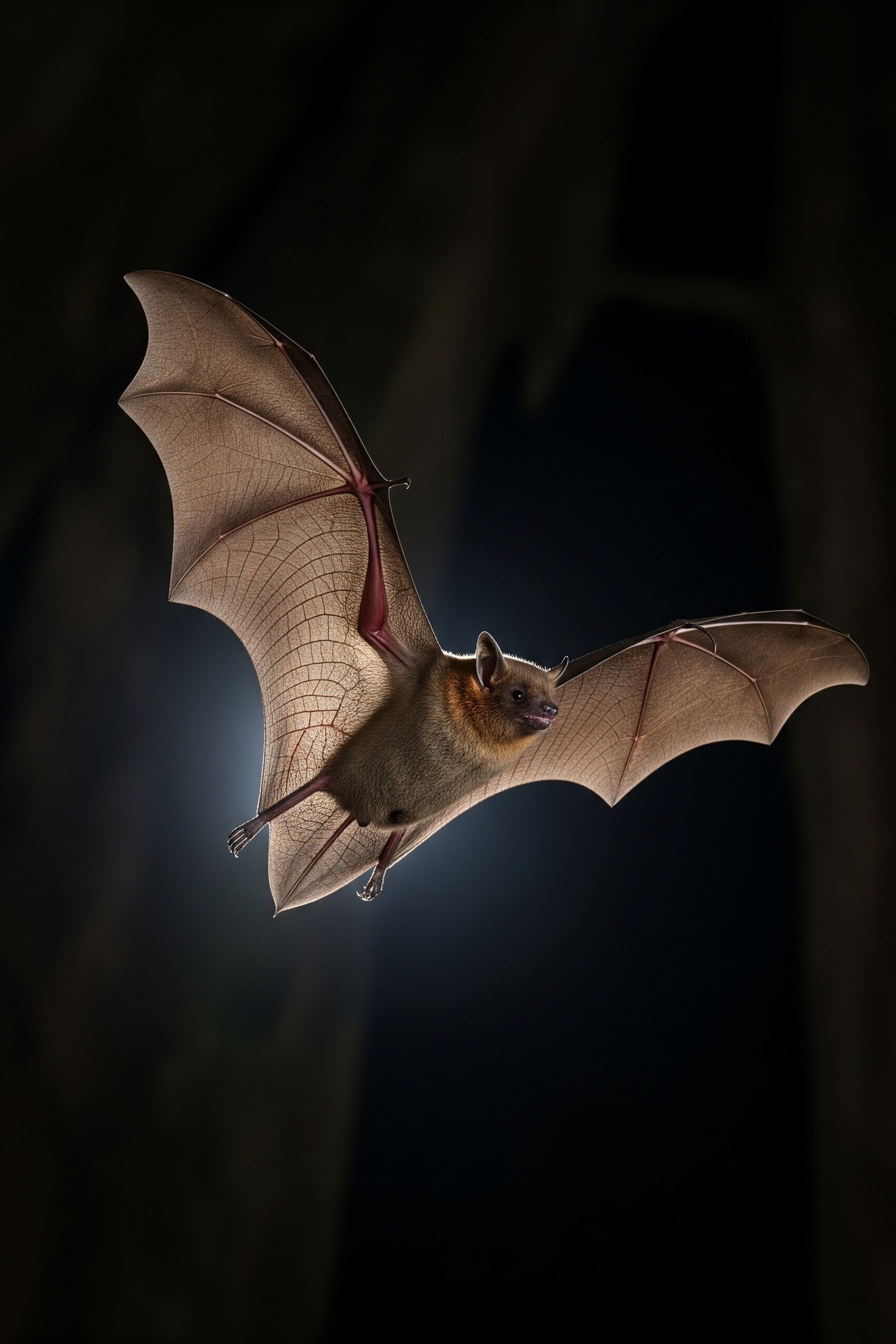
A bat’s wing isn’t a wing at all — it’s a hand. Five fingers, stretched impossibly thin, wrapped in skin so delicate you could read a newspaper through it. That hand just happens to be the fastest self-powered flight machine we’ve ever measured.
Which is wild when you think about it, because hands are supposed to grab things. Hold things. Type on keyboards. Not reach speeds of 160 kilometers per hour in the dark while hunting insects smaller than a grain of rice.
But that’s exactly what happened. Fifty million years ago. And once you start digging into how, you can’t stop.
Key Facts
- A bat’s wing is an elongated hand: the index, middle, ring and little fingers stretch enormously and a thin membrane called the patagium spans the gaps.
- Bat flight arose around 50 million years ago; today there are nearly 1,400 bat species—about one in five of all mammal species.
- The Mexican free-tailed bat (Tadarida brasiliensis) reached a sustained flight speed of 160 km/h in a 2016 study published in PLOS ONE.
- Some bats can detect a wire just 0.3 mm thick in total darkness using echolocation pulses that can exceed 100 decibels.
- Bracken Cave in Texas holds an estimated 15 million Mexican free-tailed bats that consume roughly 140 tons of insects per night.
In short: A bat’s wing is really a hand with hugely elongated fingers spanned by a thin membrane called the patagium. This design, which arose around 50 million years ago, made bats nearly 1,400 species strong—one in five mammals. Combined with echolocation, it lets species like the Mexican free-tailed bat fly 160 km/h and hunt in the dark.
Bat Wing Evolution: How a Hand Conquered the Sky
Around 50 million years ago, something small and shrewlike started spending a lot of time catching insects in the dark. Gradually, according to paleontologist Kenneth Dial and colleagues studying chiropteran origins, elongated finger bones began supporting thin membranes of skin — the patagium — creating a flight surface unlike anything evolution had tried before.
Here’s where it gets weird: nobody can agree on whether flight came first or echolocation did.
The fossil record for early bats is frustratingly sparse. Almost nonexistent. But what we do know is that whatever combination of mutations started this chain reaction, it worked so well that today there are nearly 1,400 bat species alive. That’s one in every five mammal species on Earth. One in five. That’s not a niche strategy. That’s a takeover.
What Actually Makes a Bat Wing So Different
A bird’s wing evolved from a forelimb by fusing and reducing bones over millions of years. A bat kept all five fingers.
Then it stretched them. The index finger, middle finger, ring finger, and pinky grew enormously long, while a thin elastic membrane called the patagium bridged the gaps between them, extending down to the ankles and tail. It’s essentially a living sail attached to a very strange hand.
The thumb stayed short and claw-tipped. Bats still use it to grip surfaces, groom themselves, and handle food. The hand didn’t give up being a hand. It just also became something else entirely. If you want to understand how flight shapes the rest of an animal’s biology, this-amazing-world.com has explored how other fliers solved the same problem in completely different ways — and they all went in stranger directions.
The Membrane That Changed Mammal History
Flying squirrels glide. Sugar gliders drift. Colugos — the most extreme gliders alive — can sail 70 meters between trees on flaps of skin connecting their limbs, neck, and tail. All impressive.
None of them can generate sustained thrust. They all lose altitude.
Bats gain it. The muscular control bats have over each individual finger means they can reshape their wing mid-flight, adjusting camber, sweep, and surface area with a precision that modern aeronautical engineers openly envy. This isn’t just speed — it’s three-dimensional mastery. Bats can hover briefly, dive, bank at sharp angles, and reverse direction faster than almost any bird their size. They didn’t just enter the night sky.
They own it.
Then the Sonar Arrived
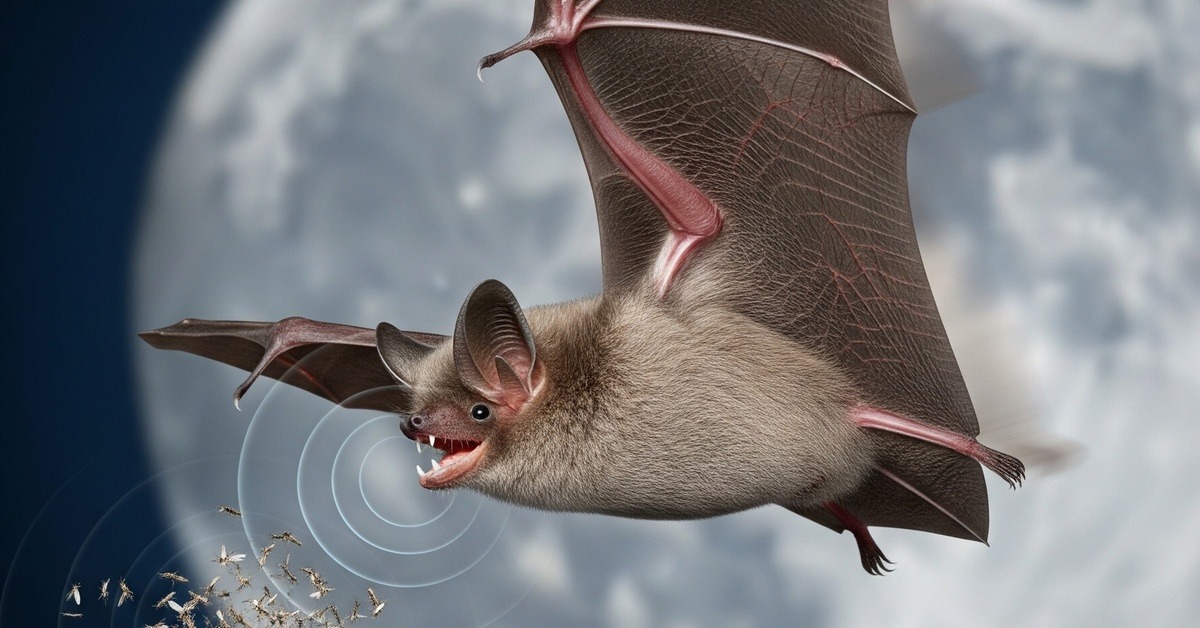
Flight alone would have been enough to give bats an edge. But evolution, apparently, wasn’t done. Most bat species developed echolocation — a biological sonar system so refined that some species can detect a wire just 0.3 mm thick in total darkness. They emit ultrasonic pulses, sometimes exceeding 100 decibels (louder than a smoke alarm), and interpret the returning echoes to build a precise spatial map of everything around them.
The wing and the sonar together created a hunting system with no peer in the mammalian world.
A single little brown bat can catch up to 1,000 mosquito-sized insects in one hour. Not in a night. In one hour. In the dark. At speed. Using sound.
The Wing Is Smarter Than You Think
Here’s the part that kept me reading for another hour at 2 AM: the patagium isn’t just passive skin stretched between fingers. It’s packed with sensory receptors. Tiny hair-like cells embedded in the membrane detect airflow changes across the wing surface in real time, feeding information directly back to the bat’s nervous system. Researcher Jorn Cheney at Brown University has studied how these receptors let bats make aerodynamic corrections faster than conscious thought.
The wing thinks, in a sense, before the brain does.
The membrane also self-repairs. Minor tears heal within days. It’s vascularized, elastic, warm — a living structure, not a passive material. This is why bats can sustain flight night after night, year after year, despite constantly grazing vegetation, cave walls, and each other in the dark.
By the Numbers
- The Mexican free-tailed bat (Tadarida brasiliensis) recorded a sustained flight speed of 160 km/h in a 2016 study published in PLOS ONE. Faster than any bird in level flight. Faster than any animal, actually, when you’re measuring pure self-powered speed.
- Bats make up roughly 20% of all classified mammal species — second in diversity only to rodents.
- Some species can emit echolocation calls exceeding 110 decibels, comparable to a pneumatic drill at close range. They don’t deafen themselves because their inner ear physically disconnects between pulses. Which raises an obvious question: how did that evolution happen? And how long did it take?
- Bracken Cave in Texas: 15 million Mexican free-tailed bats. The largest concentration of mammals on Earth. They consume an estimated 140 tons of insects per night.
Field Notes
- Some bat species use their wings as nets — scooping insects directly into the membrane mid-flight rather than catching them in their mouths.
- The thumb claw bats retained through evolution serves multiple jobs. Gripping cave ceilings, sure. But vampire bats use their thumbs, along with unusually strong legs, to walk and even run on the ground toward sleeping prey — a gait no other bat species can manage.
- Bat wings contributed directly to modern aircraft design. Variable-geometry wing research inspired by bat patagium flexibility has influenced concepts in morphing wing technology being developed for next-generation drones and fighter jets.
Why Bat Wings Matter Far Beyond the Night
Bat wing evolution didn’t just produce a fascinating animal. It produced an ecological keystone. Across every continent except Antarctica, bats regulate insect populations at scales no pesticide could match — and they do it for free, every night, without side effects.
In Mexico and the American Southwest, long-nosed bats are the primary pollinators of agave plants. The ones tequila comes from. Without bats, that industry collapses.
In tropical rainforests, fruit bats disperse seeds across distances that no other animal covers on a nightly basis. They rebuild forest cover after deforestation faster than any other species.
A hand stretched thin over elongated fingers. Wrapped in a membrane with its own nervous system. Attached to an animal with biological sonar. That combination is what keeps your summer evenings from being unbearable. What keeps agave fields productive. What seeds forests back to life after we’ve torn them apart.
Bats are easy to overlook. They work at night. They’re small. They’ve spent 50 million years doing their jobs quietly and without recognition. But follow the anatomy — that strange, stretched hand inside every wing — and you start to see how much of the world they’re holding together. Evolution built something remarkable when it turned fingers into flight. There’s more at this-amazing-world.com, and I promise the next one is even stranger.
Frequently Asked Questions
Q: Why is a bat’s wing considered a hand?
A bat kept all five fingers from its forelimb rather than fusing and reducing them like a bird. The index, middle, ring and little fingers grew enormously long, while a thin elastic membrane called the patagium bridges the gaps and extends to the ankles and tail. The thumb stayed short and claw-tipped, so bats still use it to grip, groom and handle food.
Q: How fast can bats fly?
The Mexican free-tailed bat (Tadarida brasiliensis) recorded a sustained flight speed of 160 km/h in a 2016 study published in PLOS ONE—faster than any bird in level flight and the fastest self-powered animal speed measured. Muscular control over each finger lets bats reshape the wing mid-flight, adjusting camber and sweep, so they can also hover briefly, dive, bank sharply and reverse direction.
Q: How does echolocation help bats hunt?
Most bat species emit ultrasonic pulses, sometimes exceeding 100 decibels, and interpret the returning echoes to build a spatial map in complete darkness. The system is refined enough that some species can detect a wire just 0.3 mm thick. Paired with agile flight, it makes bats formidable hunters: a single little brown bat can catch up to 1,000 mosquito-sized insects in one hour.
Q: How many bats are there and how much do they eat?
There are nearly 1,400 bat species—roughly 20% of all classified mammal species, second only to rodents. Their appetite is enormous at scale: Bracken Cave in Texas holds an estimated 15 million Mexican free-tailed bats, the largest concentration of mammals on Earth, and they consume an estimated 140 tons of insects per night, making bats major natural controllers of insect populations.
Illustrations are AI-generated. Article fact-checked and human-edited.