How Bald Eagles Turn Their Eggs — And Why It Matters
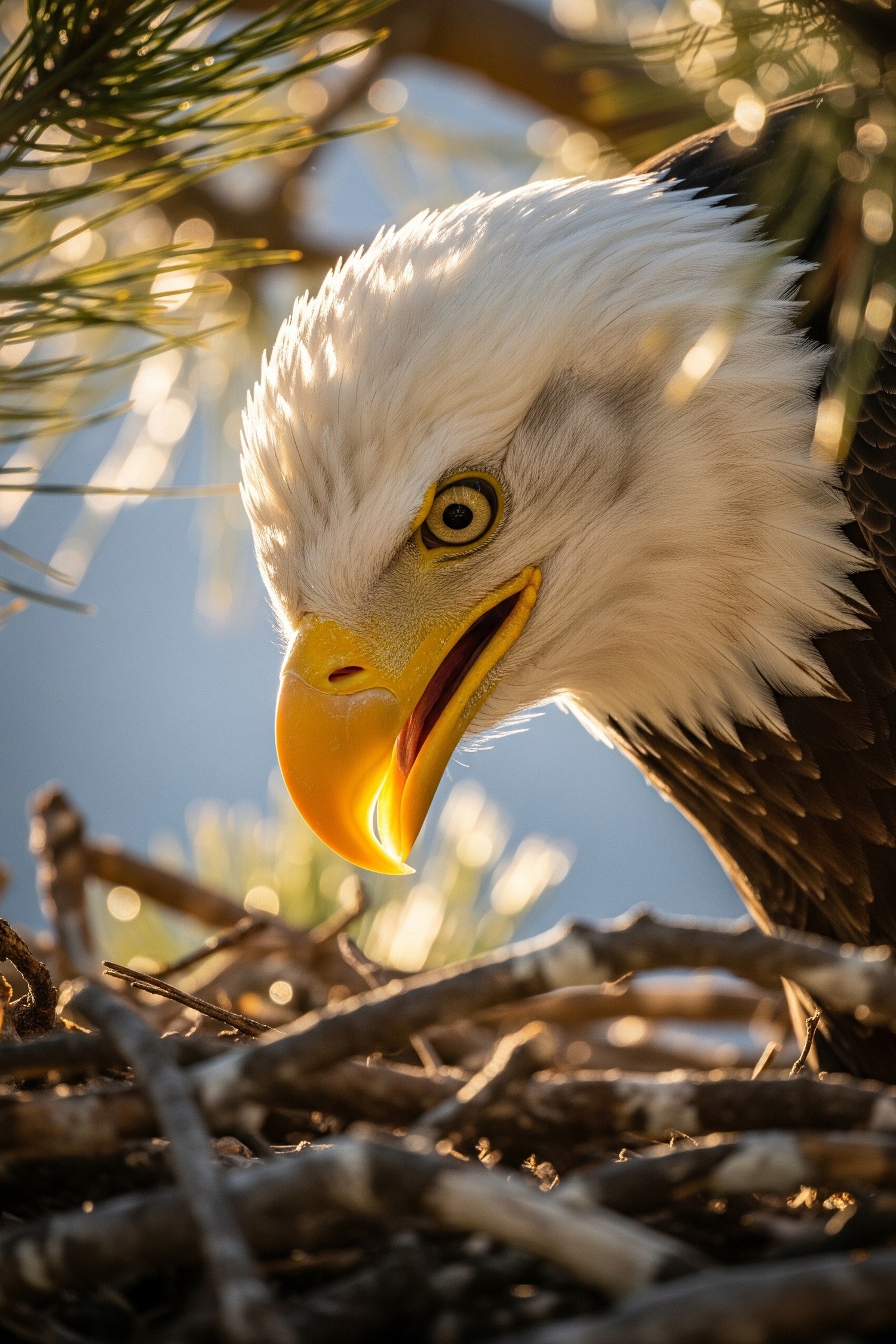
Rotate. Pause. Adjust the weight. Rotate again. For a bald eagle named Jackie, perched above Big Bear Lake in California, bald eagle egg incubation behavior isn’t the passive sitting it appears to be — it’s a precision operation executed dozens of times daily, in conditions that would exhaust most animals, using techniques refined across millions of years without a single structural change.
What most people don’t realize is that those eggs are never truly unattended. Her mate, Shadow, takes shifts when she needs to hunt. Together they’re managing a biological system so finely calibrated that a single missed rotation can tip the difference between a living chick and a stillborn one. But here’s the thing: almost nobody notices because it doesn’t look like work.
Key Facts
- Bald eagles incubate their eggs for approximately 35 days.
- The brood patch keeps eggs at roughly 37–38°C (98–100°F), nearly the temperature needed for embryonic development.
- A 2018 study at Voyageurs National Park found incubating eagles repositioned eggs every 20 to 40 minutes during peak daylight.
- Females handle an estimated 70–75% of total incubation, per the American Eagle Foundation.
- By 1963 fewer than 500 bald eagle breeding pairs remained in the contiguous U.S. due to DDT-driven eggshell thinning, before the 1972 DDT ban.
In short: Bald eagle egg incubation is active, precise work: over roughly 35 days, parents keep eggs near 37–38°C with a brood patch and turn them every 20–40 minutes to prevent cold spots and stuck yolk. Tracked at Big Bear Lake’s Jackie and Shadow nest since 2015, the species recovered after DDT cut it below 500 pairs by 1963.
The Mechanics of Bald Eagle Egg Incubation Behavior
Approximately 35 days. That’s how long bald eagles incubate their eggs — and during that entire stretch, the eggs are never truly left alone for long. What makes bald eagle egg incubation behavior distinctive isn’t just the duration; it’s the continuous, deliberate management of temperature and position. The brood patch, a term ornithologists have used since at least the early 20th century, is a defeathered region of skin on the ventral surface of the incubating bird. Blood vessels dilate close to the surface, raising the skin temperature to roughly 37–38°C (98–100°F) — almost identical to the internal temperature required for embryonic development.
According to researchers at the Cornell Lab of Ornithology, who have studied raptor incubation patterns extensively through their NestWatch citizen science program, maintaining this temperature across the full surface of each egg requires regular repositioning. A round egg can roll. A cold spot can form. And a cold spot, left unaddressed, can kill a developing embryo. The brood patch isn’t passive insulation — it’s an active heat-delivery system, and researchers actually call this process “thermoregulatory engagement” (and this matters more than it sounds, because it means the bird is making active adjustments, not simply warming a clutch passively).
The turning itself is a physical act that looks almost meditative. The eagle uses its bill and the flexing of its tarsi — the lower leg bones — to nudge each egg gently, rotating it a fraction of a turn before settling back down.
Field researchers observing eagles at Voyageurs National Park in Minnesota noted in a 2018 study that incubating adults repositioned eggs as frequently as every 20 to 40 minutes during peak daylight hours. That’s not a statistic you’d guess from watching. It looks like the bird is just sitting there. There’s also the matter of yolk suspension. The yolk inside a fertilized egg is denser than the surrounding albumen, meaning it naturally sinks toward whichever side is lowest. Regular rotation prevents the yolk from adhering to the inner membrane — a condition called “stuck yolk” that causes embryo death. The turning isn’t ceremonial.
It’s keeping something alive.
Both Parents Share the Work — Unevenly
One detail that surprises most people: bald eagle incubation isn’t the female’s job alone. Both parents take shifts on the nest, though the split is far from equal. The female typically handles the majority of overnight incubation — estimates from long-term nest monitoring by the American Eagle Foundation suggest she covers roughly 70–75% of total incubation time, with the male taking shorter, more frequent daytime stints. This pattern mirrors what’s known about other large raptors, where the female’s body condition and caloric investment make her the primary thermal anchor.
It also explains why pair bond quality matters so much to breeding success. A male that’s slow to relieve his mate, or one that abandons the nest entirely during cold weather, creates temperature gaps the embryos can’t survive. This kind of coordinated, trust-dependent caregiving is something we often underestimate in birds — it echoes research into other avian behaviors, like the remarkable deliberate self-treatment behaviors seen in crows, which also challenge our assumptions about what birds are actually doing when we think they’re just sitting still.
At the Big Bear nest, Jackie and Shadow’s coordination has been documented via live-stream cameras operated by Friends of Big Bear Valley since 2015. In that time, viewers have logged thousands of nest exchanges. What the data shows is a consistent pattern: Shadow arrives, Jackie departs, and within minutes the eggs have been repositioned. Neither bird leaves the clutch unattended for more than a few minutes in cold weather. When temperatures dropped below freezing during a late-February cold snap in 2023, Shadow held the nest for nearly four hours straight while Jackie hunted. The eggs survived. What the cameras also capture, occasionally, is something harder to categorize. A parent pausing mid-shift, head tilted slightly, bill hovering just above the shell. Listening? Responding to vibration from within? Researchers can’t say definitively. But the behavior is real, and it’s consistent.
The birds are paying attention to something.
When the Rhythm Breaks
The vulnerability of the incubation window is easy to underestimate. What nearly destroyed bald eagles wasn’t a single catastrophic event — it was a chemistry problem. Bald eagle populations in the contiguous United States dropped to fewer than 500 breeding pairs by 1963 — the nadir of the DDT crisis — and one of the primary mechanisms of that collapse was eggshell thinning caused by DDE, a metabolite of the pesticide. Shells became so fragile that the weight of an incubating parent crushed them.
The turning that had sustained eagle reproduction for millennia became lethal. According to research published by the Smithsonian’s National Zoo and Conservation Biology Institute, bald eagle recovery following the 1972 DDT ban is one of the most closely documented success stories in conservation biology — but it took until 2007 for the species to be officially delisted from the Endangered Species List. The eggshell crisis didn’t just threaten chick survival; it severed the incubation behavior from its outcome. Parents were doing everything right. The eggs still failed.
Today, bald eagle egg incubation behavior faces subtler threats. Climate disruption is shifting the timing of prey availability — particularly fish spawning runs — relative to the nesting calendar. A female who can’t feed adequately during incubation may lose body condition faster than her mate can compensate for. In a 2021 survey of 43 active eagle nests across the Pacific Northwest, the University of Washington’s avian ecology team found that clutch failure rates were statistically correlated with late-season snowpack variability. Cold snaps during the last two weeks of incubation — when embryos are most metabolically active and generate their own heat — were the most damaging single variable. The eggs are resilient, but resilience has a threshold, and watching a species navigate toward it, one perfect incubation cycle at a time, might be the most insidious threat of all.
Bald Eagle Egg Incubation Behavior and What It Tells Us About Animal Intelligence
There’s a question embedded in all of this that science hasn’t fully answered: how much of what an incubating eagle does is instinct, and how much is something else? The distinction matters more than it used to. In 2019, a research team at the Max Planck Institute for Ornithology published findings suggesting that incubating shorebirds actively modulate their turning rate in response to ambient temperature — turning eggs more frequently in cold weather and less frequently in heat — without any prior experience of those conditions. The behavior was adaptive in real time.
It wasn’t just a fixed program running on a loop. Whether bald eagles demonstrate the same dynamic modulation is an open question, but the structural parallels are compelling. The brood patch has thermoreceptors. The bird is receiving data. What it does with that data — and whether that constitutes something resembling awareness — is exactly the kind of question that tends to make neuroscientists and ornithologists argue at conferences.
The live-stream footage from nests like Jackie and Shadow’s has added an unexpected dimension to this debate. Why has this changed the conversation? Because citizen science, once dismissed by some academic ornithologists as anecdote-gathering, has generated behavioral datasets too large to ignore. Cornell Lab of Ornithology’s NestWatch program had logged observations from over 180,000 nest monitoring events by 2022. Within that dataset are tens of thousands of turning events, temperature correlations, and exchange timings.
What emerges isn’t a picture of automatons executing a program. It’s a picture of individuals — pairs, actually — navigating a complex, temperature-sensitive, time-critical task with what looks, at a minimum, like flexible responsiveness. Jackie doesn’t know she’s being watched. She doesn’t know about the live-stream, the comment sections, or the thousands of people who’ve named her eggs and wept when clutches failed. She knows the weight of what’s beneath her. That’s enough.

Where to See This
- Big Bear Valley, California (USA): The Friends of Big Bear Valley operate a live-stream nest camera at bearvalleyaudubon.org, typically active from January through June each year — the full incubation and fledging window for Jackie and Shadow’s annual clutch.
- Voyageurs National Park, Minnesota (USA): One of the highest densities of nesting bald eagles in the lower 48 states; the park’s winter-into-spring transition (March–May) is the best window for observing incubation behavior from a respectful distance.
- Cornell Lab of Ornithology’s NestWatch program (nestwatch.org) maintains a searchable map of active eagle nests reported by citizen scientists across North America — a practical starting point for anyone who wants to find a local nest and contribute observations.
By the Numbers
- ~35 days: Average bald eagle incubation period, consistent across North American populations (Cornell Lab of Ornithology, NestWatch data).
- 37–38°C (98–100°F): Optimal egg surface temperature maintained through direct brood patch contact during incubation.
- 417 breeding pairs: Estimated total bald eagle breeding population in the contiguous United States at the species’ lowest point, circa 1963, prior to DDT restrictions (U.S. Fish & Wildlife Service).
- 9,789 nesting pairs: Documented in the contiguous U.S. by 2006, the year before federal delisting — an increase of more than 2,200% from the 1963 nadir.
- 70–75%: Estimated proportion of overnight and total incubation time handled by the female in bald eagle pairs, according to long-term nest monitoring by the American Eagle Foundation.
Field Notes
- In 2016, researchers monitoring a bald eagle nest in Chesapeake Bay, Maryland, documented a female returning to the nest after a 38-minute absence during a hard freeze — and immediately performing six consecutive egg-turning movements before settling. The sequence suggested the bird assessed the thermal state of the eggs on return and responded accordingly, rather than resuming a fixed behavioral loop.
- Bald eagles typically lay two eggs, occasionally three, with a one-to-four-day interval between each — meaning the eggs don’t all start developing at exactly the same time, and the older embryo may begin generating its own metabolic heat before the younger one does.
- The clicking sounds embryos make inside the shell in the final days before hatching — called “pipping calls” — can be detected by the incubating parent before any external crack is visible. Whether eagles respond behaviorally to these sounds is a genuine open research question.
- Researchers still can’t fully explain why incubation failure rates at some established, long-occupied nest sites are consistently higher than at structurally similar nests nearby. Nest microclimate, legacy contamination, and individual pair behavior have all been proposed — none has been definitively confirmed.
Frequently Asked Questions
Q: How often does bald eagle egg incubation behavior involve actual egg turning?
Bald eagles reposition their eggs multiple times per hour during active incubation, with field observations suggesting peak turning activity during daylight hours. Cornell Lab of Ornithology data indicates that some pairs turn eggs as frequently as every 20 to 40 minutes when temperatures are cool. Both parents participate, though the female handles the majority of overnight incubation. The frequency tends to increase during cold weather and decrease during warmer periods.
Q: What happens if a bald eagle egg isn’t turned regularly during incubation?
Without regular rotation, two main failure modes occur. First, the yolk — which is denser than the surrounding egg white — sinks toward the lowest point and can fuse to the inner membrane, cutting off the embryo’s nutrient supply. Second, temperature gradients develop across the egg’s surface, leaving portions of the developing embryo in cooler zones that slow or halt development. Both failures are lethal. The turning behavior isn’t a behavioral quirk — it’s a physical requirement for embryo survival, and its disruption was a documented mechanism of eagle population collapse during the DDT era.
Q: Do bald eagles ever abandon their eggs during incubation, and why?
Abandonment does occur, though it’s relatively rare in established pairs. The most common triggers are extreme weather events that prevent adequate food intake for the incubating female, persistent human disturbance near the nest site, and infertile eggs — which provide no internal warmth cues and may eventually be recognized as non-viable. In some documented cases, pairs have continued incubating infertile eggs for weeks beyond the normal 35-day window before abandoning them. The biology of how eagles “decide” to abandon a clutch remains incompletely understood, and individual variation between pairs is significant.
Editor’s Take — Alex Morgan
What gets me about this story isn’t the biology — it’s the visibility problem. We’ve built entire conservation frameworks around charismatic megafauna, but the behaviors that actually determine whether a species survives are almost always the ones that look like nothing. A bird sitting still. A small shift of weight. The DDT crisis didn’t look catastrophic until the nest counts came back. The climate timing mismatch doesn’t look catastrophic yet either. We are very bad at paying attention to things that don’t perform their urgency for us.
Every spring, somewhere above a cold lake or a snow-edged forest, a bald eagle settles onto a clutch of eggs and begins a rotation cycle that hasn’t changed in any meaningful way since before our species existed. There’s no audience. There’s no recognition. There’s only the warmth of the brood patch, the faint weight of the shell, and the continuous, unhurried work of keeping something alive. What else are we missing because it doesn’t look dramatic enough to watch?
Illustrations are AI-generated. Article fact-checked and human-edited.