Jonathan the Tortoise: 193 Years of Living History
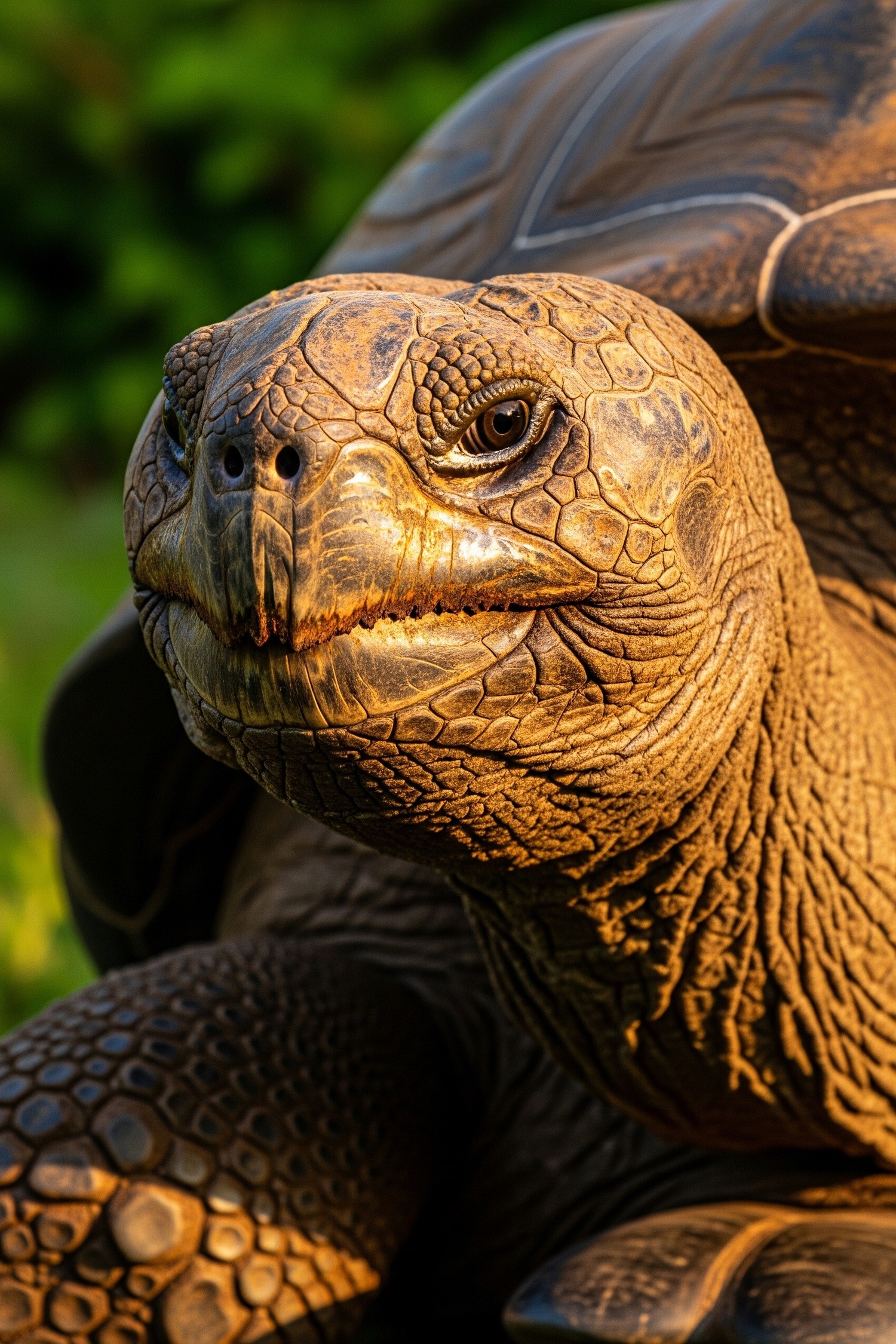
A creature still eating soft fruit on a windswept island in the South Atlantic has now outlasted every human institution, every declared war, every technological rupture of the modern age. Jonathan the tortoise oldest living animal on Earth hatched around 1832. Most of us won’t see 2050. What does nearly two centuries of continuous existence actually teach you about survival?
St. Helena. A British Overseas Territory so remote it took Napoleon’s captors three weeks by ship to deposit him there in 1815. Jonathan arrived on that same island roughly seventeen years later, already a juvenile, already moving through the world at a speed that would define the rest of his life. He has been there ever since, watching empires dissolve and technologies ignite and disappear into routine.
The question nobody can quite answer is this: what does a creature that has witnessed nearly two centuries of human civilization actually know that we don’t?
Key Facts
- Jonathan, a Seychelles giant tortoise (Aldabrachelys gigantea hololissa), hatched around 1832.
- In 2022 Guinness World Records confirmed him as the oldest living land animal, at least 193 years old.
- His age was reassessed using a photograph taken between 1882 and 1886 on St Helena.
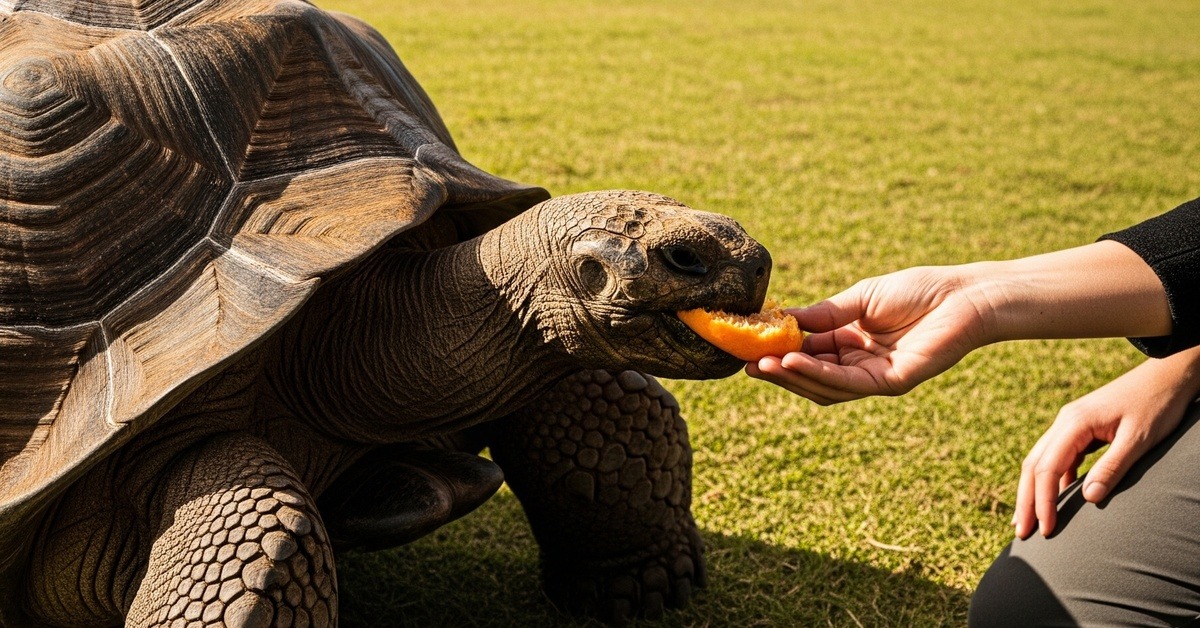
- Since around 2008 Jonathan has been hand-fed every Sunday by vet Dr. Joe Hollins after losing his sense of smell and going blind.
- A 2022 University of Copenhagen study of 77 reptile and amphibian species documented negligible senescence in many cold-blooded animals.
In short: Jonathan, a Seychelles giant tortoise hatched around 1832, is the oldest living land animal — confirmed by Guinness World Records in 2022 at age at least 193. He lives on remote St Helena, hand-fed weekly since about 2008 after going blind. His longevity reflects negligible senescence, a near-cessation of aging seen in many cold-blooded species.
Jonathan the Tortoise, Oldest Living Animal: The Record Books
In 2022, Guinness World Records formally confirmed what the people of St. Helena had suspected for years: Jonathan the tortoise is the oldest living land animal ever documented, and the oldest living terrestrial animal in recorded history. His age was reassessed that year using a photograph taken between 1882 and 1886 — discovered in the archives of St. Helena — which showed a fully mature tortoise grazing in the grounds of Plantation House, the island’s governor’s residence.
Here’s the thing: a Seychelles giant tortoise (Aldabrachelys gigantea hololissa) of Jonathan’s species doesn’t reach full maturity until around fifty years of age. The tortoise in that photograph was already at least fifty — which meant his birth date had to fall no later than 1832, and possibly earlier. Guinness set the confirmed estimate at approximately 1832, making him at least 193 years old.
He was alive when slavery was still legal in the British Empire. When the first commercial railway had been running for barely two years. When Charles Dickens was still a teenager. His lifespan doesn’t just cross eras — it swallows them whole.
What makes Jonathan’s record particularly striking is that it isn’t a projection or an extrapolation. Before the photograph surfaced, his age had been estimated rather loosely, passed down through institutional memory and keeper records. After it, the timeline snapped into focus with startling clarity — grounded in photographic evidence, cross-referenced against the known biology of his species.
And he’s still adding to it, one slow morning at a time.
The Island That Became His Entire World
St. Helena sits alone in the middle of the South Atlantic, roughly 1,200 miles from the coast of Africa and nearly 1,800 miles from South America — one of the most isolated inhabited islands on the planet. Around 1882, Jonathan was brought there from the Seychelles as a gift to the governor, accompanied by two other giant tortoises. The others are long gone. He remained.
There’s something almost allegorical about the idea of radical longevity taking root in a place this remote — not unlike the way isolation allows certain ancient ecosystems to evolve in total separation, producing organisms the rest of the world never imagined. If you’re drawn to the idea of living things that exist outside normal biological rules, you’ll find a similar kind of wonder in the story of an ancient oak tree whose secret ecosystem quietly sustained itself for centuries while the world moved on around it. Watching a creature persist in such profound isolation, you stop calling it geography.
Plantation House, Jonathan’s home since arrival, is the official residence of the Governor of St. Helena. He grazes its grounds freely, living alongside a small group of other giant tortoises. For most of his life he required no special care. Around 2008, that changed.
Veterinarians noticed he was losing weight. Dr. Joe Hollins, the island’s vet at the time, investigated and found that Jonathan had lost his sense of smell almost entirely and was going progressively blind — likely from cataracts. He could no longer locate food reliably on his own. The solution was simple, practical, and quietly moving: hand-feeding every Sunday — soft fruits, vegetables, bananas, carrots, apples. His hearing is intact. He knows the voice. He comes when called.
What 193 Years Does to a Body
Giant tortoises age differently from almost every other vertebrate on Earth. Research published in 2022 by an international team including scientists from the Aging Research and Drug Discovery group at the University of Copenhagen examined aging patterns across 77 reptile and amphibian species. The findings revealed what researchers called “negligible senescence” — a dramatic slowing or near-cessation of biological aging across many cold-blooded animals.
Why does this matter? Because some turtle and tortoise species show virtually no increase in mortality rate as they get older, meaning they don’t become increasingly fragile with age the way humans do. Their bodies appear to simply maintain themselves with a consistency that mammalian biology can’t match. As Smithsonian Magazine reported, the data supported what field researchers had long suspected: these creatures operate on a biological principle entirely foreign to our own.
Jonathan the tortoise oldest living animal exemplifies this in ways that are almost difficult to absorb. His organs — heart, liver, kidneys — continue functioning. His immune system keeps working. His shell, which functions as a fused part of his skeleton, remains solid. The deterioration he has experienced — the blindness, the loss of smell — appears to be sensory rather than systemic. His core biological machinery keeps running. (And this matters more than it sounds: the distinction between localized sensory decline and systemic biological failure is the difference between aging and merely slowing down.)
Scientists at the University of Southern Denmark describe tortoises as natural models for studying the mechanisms of cellular maintenance that underpin extreme lifespans. What the science suggests is uncomfortable: longevity at this scale isn’t luck. It’s biology. Tortoises have had 200 million years to refine it.
The Keepers, the Governors, and 193 Years of Human History
Over 30 governors of the island have served their terms and moved on. Jonathan watched them all. Between 1900 and 1902, the Boer War prisoners arrived on St. Helena — over 5,000 captives who camped within sight of the grounds where he grazed. Both World Wars unfolded while he was still there. In 2016, St. Helena finally got its first scheduled commercial airport service, ending centuries of ship-only access.
Since arriving around 1882, Jonathan has been referenced in the island’s historical records continuously — a level of documentary continuity that makes him one of the most continuously documented animals in British colonial history. A study of these archives by the St. Helena Government’s heritage team traced his mention across more than a century of official papers.
The sheer accumulation of human events creates a kind of vertigo when you actually sit with it. In 1969, humans walked on the Moon. Jonathan was already 137 years old. The internet didn’t exist until he was around 160. The iPhone launched when he was approximately 175. Every technological rupture that defines the modern world happened while he was going about his business on a slow green lawn in the South Atlantic.
His keeper today, Teeny Lucy, who manages his weekly feedings alongside the island’s veterinary team, describes him as alert, responsive, and oriented to routine. He knows Sunday. He knows the voice. He knows the hands that bring the fruit. That continuity — a living creature whose personal history stretches unbroken from the age of sail to the age of artificial intelligence — is something no museum can replicate and no archive can replace.
He is, in the most literal sense, a living witness.
How It Unfolded
- c. 1832 — Jonathan hatches in the Seychelles, likely on Aldabra Atoll, at a time when Charles Darwin had just departed England aboard HMS Beagle.
- c. 1882 — Jonathan arrives on St. Helena as a gift to Governor William Grey-Wilson, accompanied by two other giant tortoises; a photograph taken within years of his arrival later becomes the key evidence for his age.
- 2008 — Island vet Dr. Joe Hollins identifies declining health linked to sensory loss; weekly hand-feeding begins, stabilizing Jonathan’s weight and condition.
- 2022 — Guinness World Records officially confirms Jonathan as the oldest living land animal and oldest terrestrial animal in recorded history, with a confirmed birth year of approximately 1832.
By the Numbers
- 193+ years — Jonathan’s confirmed minimum age as of 2025, based on photographic evidence cross-referenced with species maturity biology (Guinness World Records, 2022).
- 1,200 miles — approximate distance from St. Helena to the nearest continental coastline (Africa), making it one of the most isolated inhabited islands on Earth.
- ~1.8 meters — Jonathan’s approximate body length, typical for a fully mature Aldabra giant tortoise male at maximum size.
- 77 reptile and amphibian species — the scope of the 2022 longevity study that confirmed negligible senescence in giant tortoises, published with contributions from the University of Copenhagen.
- 30+ governors — the number of St. Helena governors whose terms Jonathan has outlasted since his arrival in approximately 1882.
Field Notes
- Between 1882 and 1886, a photograph was taken on the grounds of Plantation House showing a fully grown tortoise indistinguishable in size and shell shape from Jonathan today. Discovered in St. Helena’s historical archives more than a century later, this single image snapped 140 years of institutional memory into verifiable fact.
- Jonathan is technically a sub-species: Aldabrachelys gigantea hololissa, sometimes called the Seychelles giant tortoise — a distinction that wasn’t formally recognised until DNA analysis in the 2010s clarified the taxonomy of Indian Ocean giant tortoises.
- Despite his blindness and loss of smell, Jonathan can still distinguish between keepers by voice alone and will move toward a familiar voice across the lawn — a reminder that sensory decline in one channel doesn’t mean cognitive decline overall.
- Researchers still can’t determine a theoretical upper age limit for Aldabra giant tortoises. There’s no known biological mechanism that mandates death at any specific age — meaning science genuinely doesn’t know how old Jonathan could get, or whether another individual might already be living quietly somewhere that we haven’t found yet.
Frequently Asked Questions
Q: Is Jonathan the tortoise the oldest living animal overall, not just on land?
Jonathan the tortoise oldest living animal title applies specifically to land animals and terrestrial vertebrates. Ocean quahog clams (Arctica islandica) have been documented at over 500 years old — an individual nicknamed “Ming” was confirmed at 507 years when it died in 2006. But among vertebrates — animals with a backbone — Jonathan’s 193 years stands as the verified record, land or sea.
Q: What does Jonathan eat, and how does hand-feeding actually work?
Jonathan’s weekly Sunday feeding, managed by veterinarian Joe Hollins and island keeper Teeny Lucy, typically includes bananas, apples, carrots, and other soft fruits and vegetables. Because he can no longer smell or see food reliably, he depends on direct placement near his mouth. He’s described as an enthusiastic and cooperative feeder — aware of the routine, responsive to familiar voices, and capable of consuming a meaningful portion of his weekly nutrition in a single session. Between feedings he still grazes on grasses and vegetation when he can locate them.
Q: Is Jonathan’s age actually verified, or is it just a best estimate?
A common misconception is that Jonathan’s age is purely speculative. It isn’t — but it does rest on a best-evidence estimate rather than a birth certificate. The Guinness World Records assessment in 2022 used a verified historical photograph taken no later than 1886 showing a fully mature tortoise. Since Aldabra giant tortoises don’t reach maturity until at least 50 years of age, this places his birth year at no later than 1832, and possibly several years earlier. The 1832 figure is a conservative anchor point, not a guess.
Editor’s Take — Sarah Blake
What stops me about Jonathan’s story isn’t the number. It’s the photograph. A Victorian-era image of a tortoise grazing on a colonial governor’s lawn — taken casually, for reasons nobody recorded — ends up becoming the single piece of evidence that locks in the most extraordinary animal longevity record in history. One photograph, found in an archive, changes everything. It makes me wonder how many other records are sitting in boxes somewhere, waiting for someone to look.
Jonathan the tortoise doesn’t know he’s famous. He doesn’t know about the Guinness certificate, or the tourists who travel to St. Helena specifically to watch him graze, or the researchers who study his biology hoping it might unlock something about how cells age and why. He knows Sunday. He knows the voice. He knows the grass under his feet and the slow warmth of the South Atlantic sun. In a world that measures everything by speed and scale, there’s something almost radical about a creature whose entire existence is a quiet argument for patience — and who has been winning that argument for nearly two centuries.
Illustrations are AI-generated. Article fact-checked and human-edited.