Coffee Grounds Powered London Buses on Real Routes
For a brief stretch, coffee grounds powered London buses on real routes. Not a demo. Not a press stunt. The coffee grounds biofuel went into actual diesel engines. Those red double-deckers carried real passengers across a working city, running partly on yesterday’s flat white.
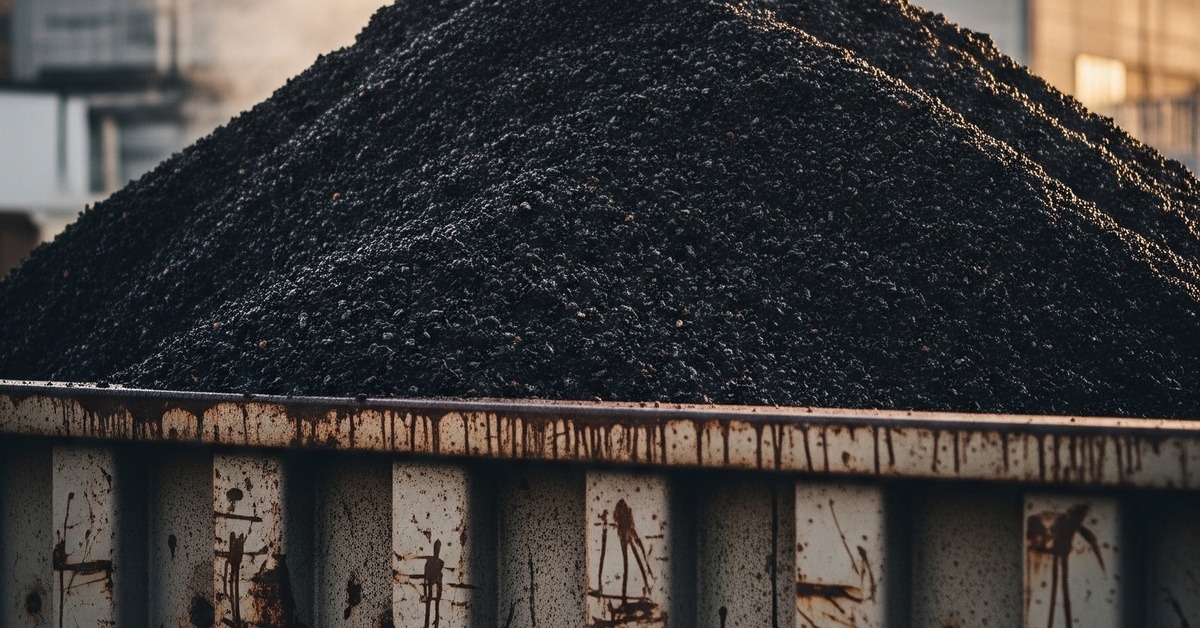
London drinks roughly 200,000 cups of coffee before most cities have finished breakfast. Each one leaves a residue: dark, wet, spent grounds, headed straight for the bin. Multiply that by a city of nine million and you get a mountain of waste that rots in landfill, releasing methane as it goes. For decades nobody asked the obvious question. What if that residue still had value left in it?
Key Facts
- Spent coffee grounds are roughly 15–20% oil by weight, enough to extract and blend into fuel.
- Bio-Bean processed over 2.5 million kilograms of coffee waste in a single year.
- The project partnered with Shell and Argent Energy to refine grounds into a B20-style blended biofuel.
- The fuel was announced for London’s bus network in 2017, compatible with standard diesel engines.
- One tonne of grounds yields enough blended fuel to run a bus for a meaningful stretch of its daily route.
In short: Coffee grounds powered London buses through a process developed by Bio-Bean, which collected spent grounds from cafés, extracted their natural oils, and blended them into a biofuel for diesel engines. It is one of the cleanest examples of a circular economy turning everyday waste into transport energy.

How did coffee grounds biofuel actually get into a bus?
The chemistry isn’t exotic. Spent coffee grounds retain a surprising amount of lipid, the same oils that give roasted beans their aroma. Bio-Bean, founded by Arthur Kay in 2013, built a factory in Cambridgeshire to dry and process grounds at industrial scale. By 2017 the firm had partnered with energy companies to extract that oil and convert it into a fuel that could be mixed with mineral diesel. You can read the technical background of biodiesel production and recognise every step here.
The extracted coffee oil is processed into a fatty acid methyl ester, the technical name for biodiesel. The conversion runs through transesterification, a reaction that strips the oil’s glycerol backbone and swaps in methanol, leaving a thinner fuel that flows and combusts much like mineral diesel. Blended at a 20% ratio with regular diesel, the result drops straight into an existing engine. No modification. No new fleet. The bus doesn’t know or care that part of its tank started life in a takeaway cup in Hackney.
That last point matters more than it sounds. Most green-transport schemes demand new vehicles, new fuelling stations, or both, and that upfront cost is what usually kills them before they scale. Coffee biodiesel sidestepped all of it. The infrastructure already existed. So did the engines. So did the waste, generated fresh every morning by a city that wasn’t going to stop drinking coffee any time soon.
How coffee grounds powered London buses across a city
Bio-Bean’s logistics were the quiet genius of the operation. The company arranged collection from cafés, coffee chains, offices, and factories across London, intercepting grounds before they reached the bin. In a single year the operation handled more than 2.5 million kilograms of spent coffee. If you’ve ever wondered what a real circular economy looks like, this is closer to the answer than most policy summits ever get. We’ve covered other unexpected everyday science stories that hinge on the same idea: value hiding in plain sight.
The mechanism is almost boringly logical. Collect waste that already moves through the city. Dry it. Press the oil. Refine it. Pump it. Each tonne of grounds yields enough blended fuel to push a bus along part of its route, and London runs thousands of bus journeys a day. The supply is renewed every single morning, one espresso at a time.
The collection network was the part nobody had built before. Spent grounds are heavy, wet, and scattered across thousands of cafés, so the logistics looked unglamorous enough that earlier ventures never bothered. Bio-Bean treated the city’s coffee shops as a distributed feedstock supply, slotting pickups into routes that delivery vans already ran. The grounds rode back to a central plant in Cambridgeshire, where industrial drying and pressing turned a messy organic stream into a standardised input.
It’s the rare green idea that doesn’t ask anyone to change their behaviour. Drink your coffee. The rest happens downstream.
Why does coffee grounds biofuel matter beyond a clever headline?
The deeper story is about landfill and methane. Organic waste left to rot anaerobically in a landfill produces methane, a greenhouse gas roughly 28 times more potent than carbon dioxide over a century. Diverting coffee waste into fuel sidesteps that emission twice over: once by avoiding the rot, and again by displacing a slice of fossil diesel. The BBC reported in 2017 on the launch, framing it as a proof of concept for waste-derived transport fuel.
Here’s the thing: coffee oil isn’t a fringe curiosity. Roughly 500,000 tonnes of spent coffee grounds are generated in the UK alone each year. Treat even a fraction of that as feedstock and you have a meaningful, locally sourced fuel stream that no oil tanker has to cross an ocean to deliver.
The carbon math favours it. The logistics favour it. The only thing it ever lacked was someone willing to build the factory.
The limits of the coffee grounds biofuel story
Honesty matters here, and so does scale. Bio-Bean’s coffee fuel never replaced London’s diesel supply, nor was it meant to. A 20% blend is exactly that: a supplement, not a substitution. The University of Bath and other research groups have studied coffee-derived biodiesel since the early 2010s, and the consistent finding is that it works chemically but competes economically with cheaper feedstocks like used cooking oil.
Bio-Bean itself shifted focus over the following years, moving toward solid coffee logs and pellets for heating rather than transport fuel, partly because collection and drying are energy-intensive. Cause and effect: the cleaner the supply chain, the better the carbon balance, and grounds are wet and heavy. Drying them takes energy that eats into the savings.
That trade-off is the crux of every waste-to-fuel scheme. Spent grounds arrive at roughly 60 to 80 percent moisture, so before any oil can be pressed the water has to go, and evaporating water is expensive in energy terms. If that drying runs on fossil power, a chunk of the carbon benefit evaporates with the moisture. The most favourable life-cycle studies assume waste heat or renewable electricity does the drying, which is exactly why location and power source decide whether the whole idea pays off.
None of that erases what happened. Real buses ran. The proof exists. What the project showed researchers was the ceiling, not the floor.
What this means for the rest of our rubbish
The coffee bus is interesting precisely because it’s so ordinary. There’s nothing rare about coffee. There’s nothing rare about buses. The novelty was simply connecting two systems that already ran past each other every day. That template, intercepting an existing waste stream and feeding it back into an existing energy system, scales far beyond caffeine.
Used cooking oil already powers a slice of the world’s biodiesel. Food waste feeds anaerobic digesters that generate electricity. The lesson Bio-Bean made visible was that the gap between waste and fuel is often logistical, not technological. The chemistry was solved decades ago.
And coffee was only ever one candidate. Brewery spent grain, orange peel from juice plants, sawdust, even the glycerol left over from making other biodiesels, all are energy-dense waste streams that a city generates predictably and throws away by default. Each one waits for the same unglamorous combination Bio-Bean assembled: a collection route, a drying step, and a buyer downstream. The barrier is almost never the science. It’s whether anyone builds the boring middle.
What’s missing, usually, is someone asking the question on a city scale.
How It Unfolded
- 2013 — Arthur Kay founds Bio-Bean to recycle spent coffee grounds at industrial scale.
- 2015 — The company opens its first large-scale processing factory in Cambridgeshire.
- 2017 — Bio-Bean, Shell, and Argent Energy announce coffee-derived biofuel for London buses.
- 2019 onward — The business pivots toward coffee logs and pellets as the more cost-effective product.
By the Numbers
- 15–20% — the share of spent coffee grounds that is extractable oil by weight.
- 2.5 million kg — coffee waste processed by Bio-Bean in a single year.
- 500,000 tonnes — estimated spent coffee grounds generated annually in the UK.
- 20% — the blend ratio of coffee biodiesel in standard mineral diesel (B20).
- ~28× — how much more potent methane is than CO₂ as a greenhouse gas over 100 years.
Field Notes
- Bio-Bean’s earliest collections sometimes arrived as soggy sacks straight from café back rooms; drying that moisture turned out to be the single biggest energy cost in the whole chain.
- Coffee oil carries a faint roasted smell even after refining, a detail engineers noted but engines never minded.
- The 200,000-cups-before-breakfast figure is a London estimate; the global daily total runs into the billions, an almost unimaginable feedstock if it were all collected.
- Researchers still can’t fully agree on whether large-scale coffee biodiesel ever beats used cooking oil on net carbon, because so much depends on how the grounds are dried and transported.
Frequently Asked Questions
Q: Did coffee grounds really power real London buses?
Yes. In 2017 Bio-Bean, working with Shell and Argent Energy, produced enough coffee-derived biofuel to be blended into the diesel supply for London’s bus network. The fuel used the oil extracted from spent grounds, processed into biodiesel and mixed at roughly a 20% ratio with regular diesel. The buses required no engine modification to run on it.
Q: How does coffee grounds biofuel work chemically?
Spent grounds still hold 15 to 20 percent oil by weight. That oil is extracted, then converted through a chemical reaction called transesterification into a fatty acid methyl ester, the technical name for biodiesel. Because the end product is chemically similar to conventional biodiesel, it blends cleanly into standard diesel and burns in unmodified engines.
Q: Why aren’t all buses running on coffee today?
Mostly economics, not chemistry. Drying wet coffee grounds is energy-intensive, and cheaper feedstocks like used cooking oil compete directly for the same biodiesel market. Bio-Bean itself shifted toward coffee logs for heating, which proved more cost-effective. The coffee bus remains a working proof of concept rather than a mass-market fuel supply.
Q: How much coffee waste does a city actually produce?
The UK alone generates an estimated 500,000 tonnes of spent coffee grounds every year, and London accounts for a large share. Most of it still goes to landfill, where it rots and releases methane. Even diverting a fraction into fuel or heating products removes a surprising volume of organic waste from the disposal stream.
Editor’s Take — Dr. James Carter
The coffee bus gets filed under feel-good novelty, and that undersells it. The real signal isn’t that coffee burns. It’s that a working city ran a chemically standard biodiesel sourced entirely from rubbish it was already throwing away. The technology was never the bottleneck. The willingness to build the dull, unglamorous collection logistics was. That’s the part worth copying.
The grounds in your cup tomorrow morning will probably end up in a bin. But for a stretch of London’s streets, that same residue moved people through one of the most congested cities on Earth. The chemistry that made it possible is sitting in textbooks, waiting. So is the waste. The only missing ingredient was ever the question: what else are we quietly throwing away that could keep a city moving?
Illustrations are AI-generated. Article fact-checked and human-edited.