Butterfly vs Moth: How to Really Tell Them Apart
A six-spot burnet moth flies at noon over a chalk meadow in southern England, crimson on iridescent black, and almost every walker who passes calls it a butterfly. That single misidentification is the whole butterfly vs moth question in one image: most of the quick rules people use — moths are brown, moths fly at night, butterflies are colourful — fall apart the moment you watch real insects in a real garden. The honest answer is shorter, stranger, and far more interesting than the rules.
Key Facts
- The order Lepidoptera contains roughly 180,000 described species; butterflies make up only about 18,000 of them — roughly one in ten.
- Butterflies are biologically a kind of moth. A 2019 phylogenomic study led by Akito Kawahara of the Florida Museum of Natural History dated the shift from nocturnal moth to day-flying butterfly to about 98 million years ago.
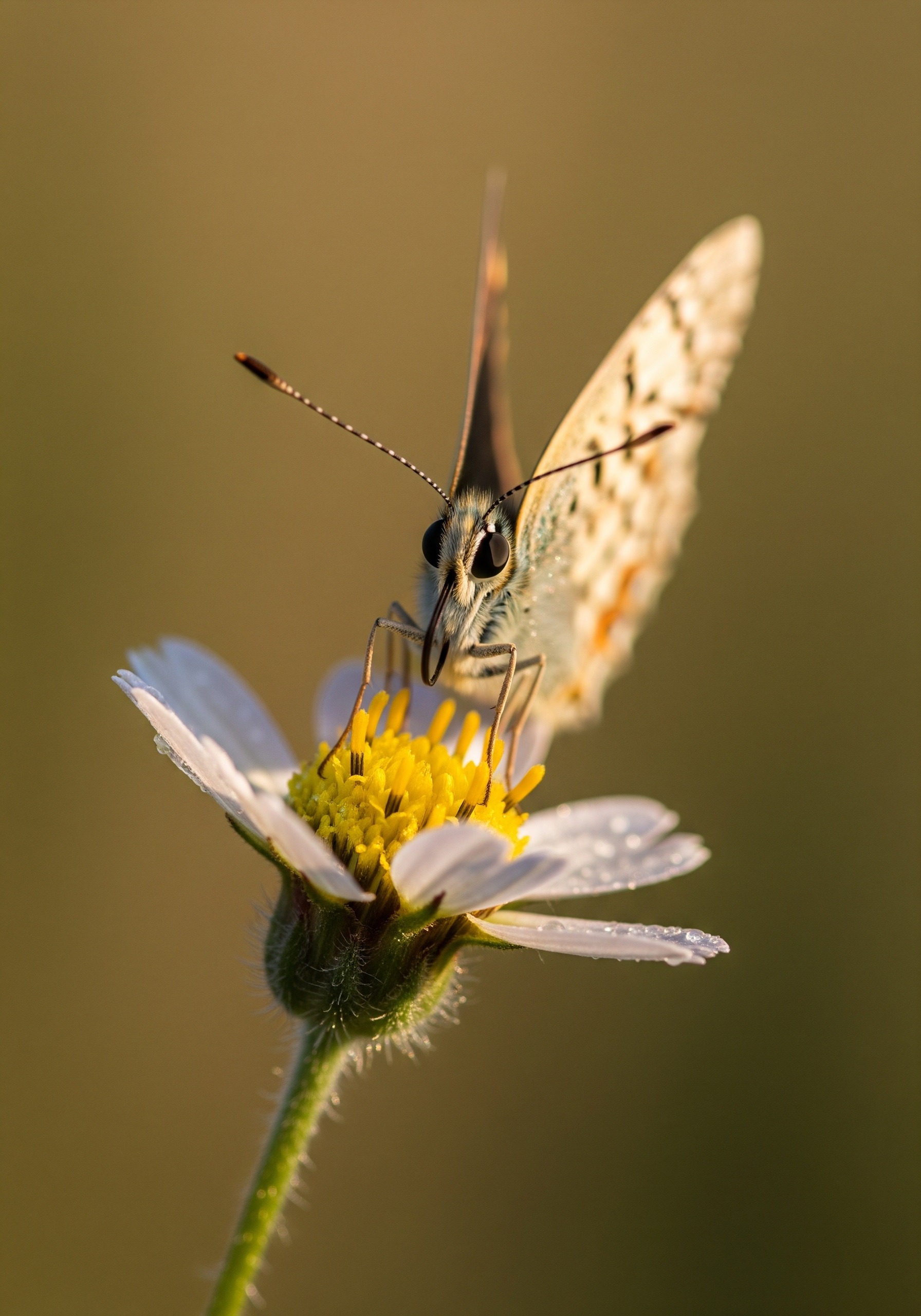
- The single most reliable field clue is the antennae: butterflies end in a small clubbed tip, while almost every moth tapers to a point or fans out into a feathery comb.
- Moths share a tiny wing-coupling bristle called a frenulum that locks fore- and hindwing together in flight. Butterflies have lost it, with a single Australian skipper as the famous exception.
- The UK has about 2,500 resident moth species and only 59 resident butterflies — a ratio roughly in line with the global picture.
In short: Butterflies are a single specialised, day-flying lineage that evolved out of the moths; they account for around a tenth of all Lepidoptera. The two cleanest field clues are antennae (clubbed vs tapered or feathery) and the frenulum (a hindwing hook on moths). Colour and time of day will lie to you almost as often as they help.
Key Facts
- The order Lepidoptera contains roughly 180,000 described species, of which butterflies make up only about 18,000, roughly one in ten.
- Butterflies are biologically a kind of moth; a 2019 phylogenomic study led by Akito Kawahara of the Florida Museum of Natural History dated the shift from nocturnal moth to day-flying butterfly to about 98 million years ago.
- The single most reliable field clue is the antennae: butterflies end in a small clubbed tip, while almost every moth tapers to a point or fans out into a feathery comb.
- Moths share a tiny wing-coupling bristle called a frenulum that locks fore- and hindwing together in flight, which butterflies have lost, with a single Australian skipper as the famous exception.
- The UK has about 2,500 resident moth species and only 59 resident butterflies, a ratio roughly in line with the global picture.
In short: Butterflies are a single specialised, day-flying lineage that evolved out of the moths and account for around a tenth of all Lepidoptera. The two cleanest field clues are the antennae, clubbed on butterflies versus tapered or feathery on moths, and the frenulum, a hindwing hook found on moths. Colour and time of day will mislead you almost as often as they help.
The 60-second field test
You are walking, you see a winged insect on a flower, you have about a minute. Here is the order to look at things in.
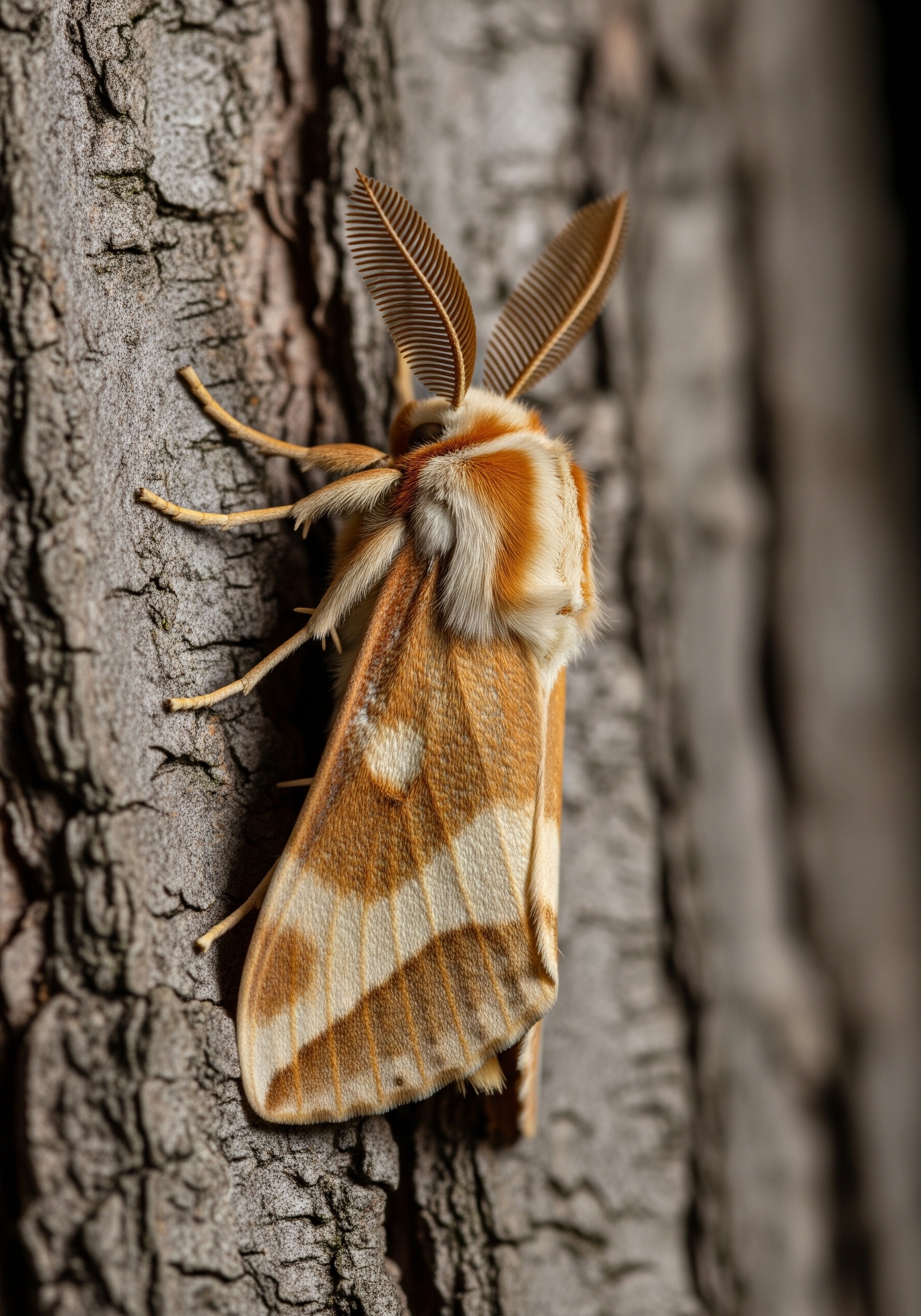
First, the antennae. Clubbed at the tip, like a slim drumstick? Butterfly. Tapering to a point, or feathered like a tiny TV aerial? Moth. This one feature is right roughly 99 percent of the time. It is also the only feature professional lepidopterists trust on a blurry photo.
Second, the wings at rest. Folded straight up over the back like a closed book? Butterfly. Laid flat over the body, tent-like, or wrapped around it like a cigar? Moth. Useful, but not airtight — skippers hold theirs up like jet flaps, and many butterflies bask with wings spread.
Third, the body. Slim, smooth, almost mantis-like under the wings? Butterfly. Stout, often furry, sometimes resembling a flying mouse? Moth. Look for hairs, especially on the thorax.
If two of those three say “butterfly,” it is a butterfly. If two say “moth,” trust it and don’t be talked out of it by colour.
Why the antennae are doing two completely different jobs
The antennae look different because they evolved for different lives. Moths, mostly nocturnal, mostly mating in the dark, do not find each other by sight. A female releases a few molecules of pheromone into the night air, and a male — sometimes from three or four kilometres downwind — has to detect them. Researchers at the Florida Museum of Natural History have shown that the feathery, plume-like antennae of male moths like the giant silk moths can pick up individual pheromone molecules; the comb shape simply maximises sensory surface area in the smallest possible package.
Butterflies do not need that. They court by sight, in sunlight, and they navigate by it too. The clubbed tip of a butterfly antenna houses sensory cells and what some researchers think is a flight-orientation aid, helping the insect track the angle of the sun. The trade-off is clear: moths got radar, butterflies got a compass.
Turns out the same trade-off explains the second-best field clue, too.
The frenulum: a hidden hook almost every moth carries
Lift a moth’s forewing under a hand lens and you will usually see a tiny bristle, or sometimes a small cluster of bristles, projecting from the leading edge of the hindwing. That is the frenulum. It slots into a matching catch on the underside of the forewing and locks the two together as a single airfoil. The result is a fast, powerful, slightly buzzing flight — the kind that lets a hawk-moth hover at a flower or a small footman cruise a hedge at midnight.
Butterflies don’t have one. Almost without exception, they have lost the frenulum and replaced it with a broad, overlapping flange of the hindwing called the humeral lobe — a more relaxed coupling that allows the slower, dancing, gliding flight you see in a swallowtail. The famous holdout is Euschemon rafflesia, an Australian regent skipper, in which males still carry a frenulum: a small evolutionary fossil that gives away butterflies’ moth ancestry every time it is mentioned.
{IMAGE_2}
The rules that lie: colour, body shape, time of day
Most of what people are told to look for is not wrong, exactly. It is just statistical, and statistics fail you on the single insect in front of your nose. Take colour. Yes, on average butterflies skew brighter and moths skew muted — but the six-spot burnet at the top of this article is fluorescent red, the garden tiger moth wears scarlet hindwings under a cream-and-chocolate forewing, and several tropical urania moths are iridescent blue-green and routinely mistaken for swallowtails. Meanwhile a dingy skipper butterfly is, as the name suggests, dingy.
Body shape is better. Moths really do tend to be furry and barrel-shaped, butterflies really are leaner and smoother. But there are slim, almost butterfly-like geometrid moths and there are robust, stocky skipper butterflies that look every bit as chunky as a noctuid. The hair test is more useful than the colour test, but still not the final word.
And the day-versus-night rule is the worst of the lot.
Why “moths fly at night” is the least reliable rule of all
Plenty of moths are diurnal. The hummingbird hawk-moth hovers at red valerian in full sun across Mediterranean Europe; the day-flying burnet moths cluster on knapweed in the middle of a chalk-down afternoon; many tropical urania species migrate across Central America by daylight in numbers that would shame a butterfly. Conversely, red admirals are known to push their autumn migration through cool nights, and a small but real fraction of normally diurnal butterfly species shift hours when temperature or pressure demands it.
One reason the rule fails so often is that the day–night split is not really about butterflies versus moths. It is about an old evolutionary fork inside the moths — a single lineage that learned to be active in daylight tens of millions of years ago, and is what we now call butterflies. Almost every “exception” is really another moth lineage that independently rediscovered the sun.
Caterpillars, cocoons, and chrysalises
The pupal stage gives you one more honest clue. A butterfly caterpillar, when it is ready, sheds its skin one last time to reveal a smooth, hard, often jewel-bright chrysalis that hangs unprotected from a stem or leaf. There is no silk wrapping; the chrysalis is the pupa itself. Watch a monarch in late summer and you can see the cremaster — a tiny black anchor — gluing it to the underside of a milkweed leaf.
Moth caterpillars almost always spin a silk cocoon, sometimes incorporating leaves, soil, or their own larval hairs into the wall. The pupa lies inside it. The silk moth Bombyx mori — the species that built the Silk Road — is the most famous example, but every emperor moth, every hawk-moth, every tiger moth does some version of the same thing. A few moths skip the cocoon and pupate underground, which is part of why finding a moth chrysalis in the wild is rarer than finding a butterfly’s.
The biggest secret: butterflies are moths
Here is the part most field guides leave out. Strictly speaking, butterflies are not a sister group to moths. They are nested inside them. In the modern Lepidoptera family tree, every named “moth” family branches off well before the single twig that became the butterflies. So the cladistically honest answer to “are moths butterflies?” runs the other way: butterflies are moths — a particular lineage of day-flying, club-antennae moths called Papilionoidea.
The strongest evidence for this came in 2019, when Akito Kawahara of the Florida Museum of Natural History, together with Marianne Espeland of the Museum Koenig in Bonn and colleagues, published a phylogenomic tree of Lepidoptera in the Proceedings of the National Academy of Sciences. Using more than 2,000 protein-coding genes from 186 species across the order, the team dated the origin of butterflies to roughly 98 million years ago, in the Late Cretaceous — the same window in which flowering plants were exploding into new daytime niches. The most likely ecological story: a moth lineage discovered that flying in daylight, when most predators were elsewhere and flowers were freshly opened, paid better than the night shift.
And that, more than any field guide, is what makes the burnet moth at noon feel like a quiet miracle rather than an exception. The boundary between “moth” and “butterfly” isn’t a wall. It is a single doorway that one branch of the family walked through 98 million years ago — and a handful of others have been quietly trying ever since.
Butterfly vs moth at a glance
| Feature | Butterflies | Moths |
|---|---|---|
| Antennae | Slim shaft, clubbed tip | Tapered, threadlike, or feathered |
| Wing coupling | Humeral lobe (a flange of the hindwing) | Frenulum (bristle hook) in almost all species |
| Wings at rest | Usually held vertical over the back | Usually held flat, tent-like, or wrapped |
| Body | Slim, smooth, lightly scaled | Stout, often furry, heat-trapping |
| Activity | Mostly diurnal | Mostly nocturnal — but with many day-fliers |
| Pupa | Naked chrysalis, often hanging | Silk cocoon, sometimes underground |
| Global species | ~18,000 | ~160,000 |
Frequently Asked Questions
Q: Are moths butterflies, or are butterflies moths?
A: Cladistically, butterflies are moths — a single day-flying lineage (Papilionoidea) nested inside the much larger group people loosely call “moths.” Every butterfly is, in the family-tree sense, a kind of moth. The reverse is not true: most moths are not butterflies.
Q: What is the single fastest way to tell a butterfly from a moth?
A: Look at the tip of the antenna. A small, distinct club at the end means butterfly almost every time. A tapered point or a feathered comb means moth. This one feature beats colour, size and time of day combined.
Q: Are colourful insects always butterflies?
A: No. Many moths are brilliantly coloured — the six-spot burnet, the garden tiger, the rosy maple moth, and the iridescent urania moths of the American tropics, to name a few. Colour is the least reliable of the common rules.
Q: Do butterflies pollinate as much as moths?
A: They contribute, but moths likely do more total pollination work, simply because there are roughly nine times as many moth species. Hawk-moths in particular are major pollinators of long-tubed flowers that open at dusk, and several tropical orchids have evolved specifically to fit a single moth species’ tongue.
Sources
- Akito Y. Kawahara, David Plotkin, Marianne Espeland et al., “Phylogenomics reveals the evolutionary timing and pattern of butterflies and moths,” Proceedings of the National Academy of Sciences, 2019.
- Florida Museum of Natural History — Lepidoptera research program, University of Florida.
- Butterfly Conservation (UK) — species records and field guidance.
- Smithsonian National Museum of Natural History — Lepidoptera collections and educational materials.
- Library of Congress, “Everyday Mysteries” — public reference on butterfly and moth identification.
The next time something colourful lands on a flower near you, look at the antennae first. If they end in a slim club, you are watching a butterfly — one of the eighteen thousand specialised moths that learned, almost a hundred million years ago, to live in the light. If they taper or feather, you are watching one of the other one hundred and sixty thousand. Either way, you are watching the same family. They just keep different hours.
Illustrations are AI-generated. Article fact-checked and human-edited. Our editorial standards.