The Alef Flying Car FAA Certification, Explained
The Alef flying car FAA certification arrived in June 2023, after nine years on a drawing board most people assumed it would never leave. The agency handed Alef’s Model A a special airworthiness certificate. It was a quiet regulatory moment, the kind that rarely makes headlines but occasionally reshapes what counts as possible.
Alef Aeronautics, a California startup, had been building toward this since 2015. The certificate didn’t clear the vehicle for your morning commute. It cleared it to fly in real airspace for testing, the first time a US regulator treated a roadable, vertical-takeoff car as a thing worth governing rather than dismissing. After 63 years of “20 years away,” that distinction mattered. So what actually changed?
Key Facts
- The FAA granted Alef’s Model A a Special Airworthiness Certificate in June 2023.
- Alef Aeronautics was founded in 2015 and spent roughly nine years in development.
- The Model A drives on public roads, parks in a standard space, and takes off vertically, requiring no runway.
- In August 2025, agreements were signed for testing at real California airports within active air corridors.
- The concept dates to a vision as old as The Jetsons, which debuted in 1962.
In short: The Alef flying car received an FAA special airworthiness certificate in 2023, allowing its Model A to fly in US airspace for testing. It is a roadable aircraft that drives on streets, parks normally, and takes off vertically. The approval makes it one of the first such vehicles formally recognised by a regulator.
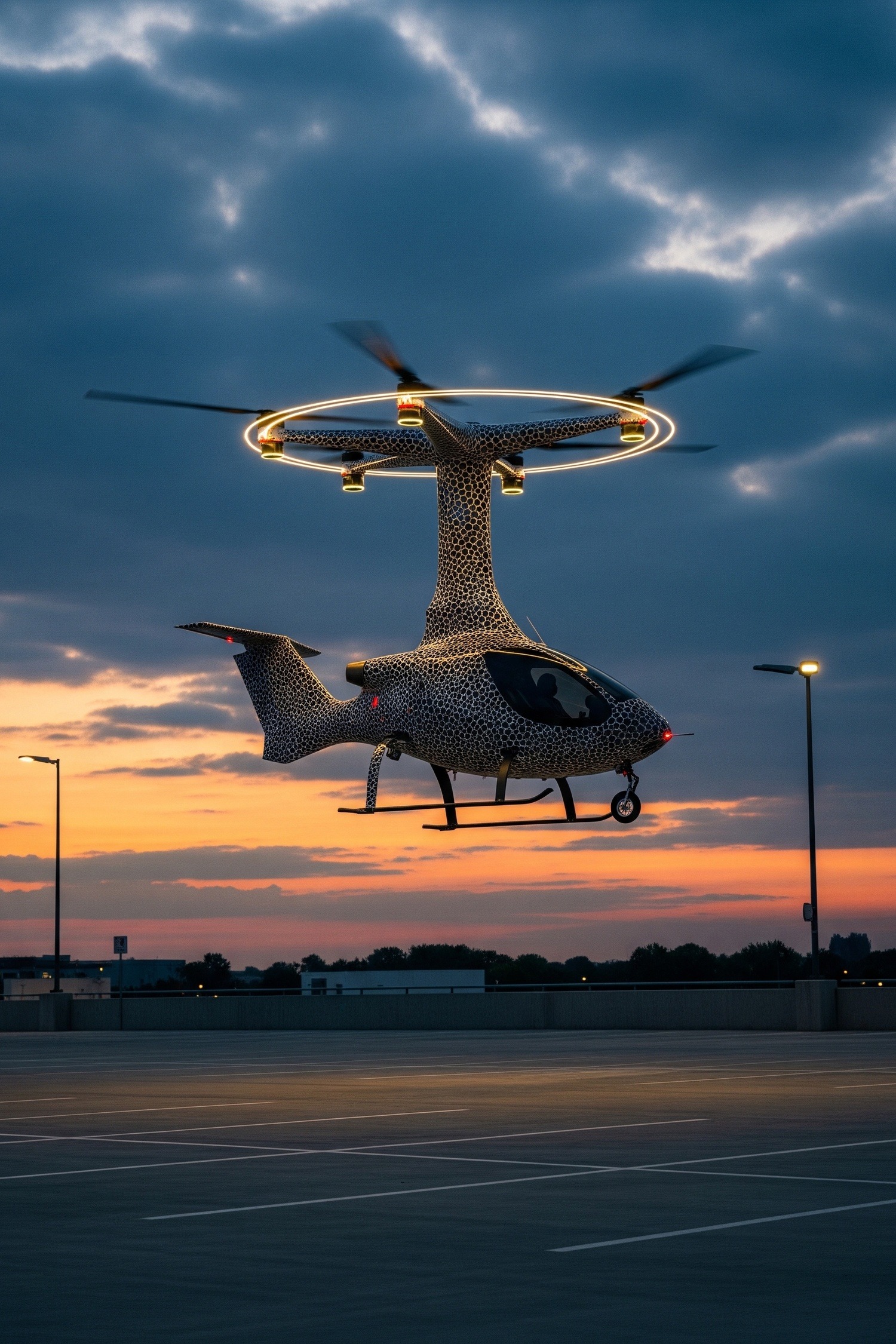
What does the Alef flying car FAA certification actually mean?
A Special Airworthiness Certificate is a specific, limited approval. The FAA issues it for aircraft operating in restricted categories, including experimental ones, and it permits flight for defined purposes such as research and development. The broader framework is described in the agency’s guidance on airworthiness certificates. What Alef received in June 2023 was not a green light to sell consumer sky-cars. It was permission to fly the Model A legally, for testing, in the eyes of the federal regulator.
The distinction is the whole story. Plenty of flying-car prototypes have lifted off in private hangars or remote test sites. Very few have held a document that says, in regulatory language, this machine is real enough to be governed. The certificate moves the conversation from engineering demo to regulated airspace. A restricted category certificate also comes loaded with conditions: where the craft may fly, who may operate it, what data must be logged. Each flight effectively reports back to the regulator, building the evidence file that any future full certification would rest on.
That feedback loop is why this kind of approval matters more than a flashy test hop. A demonstration flight proves an aircraft can leave the ground. A federal airworthiness certificate proves an institution has examined the design closely enough to attach legal limits to it. One is engineering. The other is the slow machinery of how new aircraft genuinely enter the world.
That’s a smaller claim than the headlines suggest, and a more important one.
Is it a car that flies, or a plane that drives?
The design philosophy is what sets the Model A apart from a century of failed flying-car attempts. It’s built to drive on roads at low speed, park in a standard parking space, and lift off vertically with no runway and no trailer. Earlier concepts almost always compromised in one direction, becoming either an awful car or an awful plane. We’ve tracked similar leaps in everyday transport technology where the breakthrough was integration rather than raw power.
Alef’s solution uses a mesh-like body and distributed rotors, allowing the cabin to rotate and stay level while the vehicle transitions to flight. The mechanism matters: by keeping the occupant gimbaled upright during the pivot to forward flight, the company addresses one of the oldest problems in roadable aircraft, the awkward transition between modes. The open-mesh chassis is the clever part, letting air pass through the structure so the whole body can act as a lifting surface in flight while still presenting as a compact car on the road.
Historically, the roadable aircraft graveyard is large. From Waldo Waterman’s Arrowbile in the 1930s to the Taylor Aerocar of the 1950s, designers kept bolting wings onto cars or wheels onto planes, and the result was always heavy, fragile, and good at neither job. Alef’s bet is that integration, designing one machine from scratch to do both, rather than welding two together, is what finally cracks a problem nearly a century old.
It drives slowly. It flies short. But it does both, from a normal parking spot.
Why the Alef flying car certification broke a 63-year pattern
The flying car has been culture’s favourite unfulfilled promise. The Jetsons aired in 1962, and for the six decades since, the flying car was the perpetual punchline of transport futurism, always arriving, never arrived. According to BBC reporting in 2023, Alef’s certificate marked the first time the FAA had cleared a vehicle of this exact roadable, vertical-takeoff type for airspace testing.
Here’s the thing: a regulator certifying something for test flights is not the same as that something working at scale. Range is currently limited. The charging and air-traffic infrastructure for urban air mobility barely exists. Rules for everyday operation are still being written in real time. None of that vanished in June 2023.
Still, the symbolic weight is real. For sixty years the flying car functioned as shorthand for a future that never quite arrived, alongside jetpacks and meal-in-a-pill dinners. The reason it stayed a punchline wasn’t a failure of nerve but of physics and law: the machine was too hard to build and too dangerous to govern. A certificate doesn’t fix the physics, but it does break the law’s silence, signalling that regulators no longer treat the whole category as fantasy.
What shifted was institutional. A government agency looked at a flying car and chose to regulate it rather than ignore it.
The hard limits the Alef flying car still faces
Honesty about the obstacles is more useful than hype. The Model A’s flight range is short, the kind of figure that suits demonstration hops far more than cross-city travel. Battery energy density, the same ceiling that constrains every electric aircraft, sets a hard physical limit that no certificate can wave away. Research groups including NASA, through its Advanced Air Mobility program begun around 2019, have spent years mapping exactly these constraints.
Then comes airspace itself. Letting individual vehicles join air-traffic corridors raises questions of collision avoidance, weather tolerance, pilot qualification, and noise that regulators are still working through. The August 2025 agreements for testing at California airports are a step toward answering them, not proof they’re answered. Cause and effect: each test flight generates the data the rulebook needs, and the rulebook governs the next flight.
Noise alone could prove decisive. A handful of vertical-takeoff vehicles is a curiosity; thousands lifting off from suburban driveways at rush hour is an acoustic problem no city has solved, and communities have killed quieter projects than this. There’s also the harder question of who flies them. A vehicle marketed as needing no traditional pilot’s licence still has to prove that an ordinary operator can manage a transition to flight safely, the moment when most experimental aircraft accidents happen.
This is incremental, deliberate, and slow. That’s how aviation safety has always advanced.
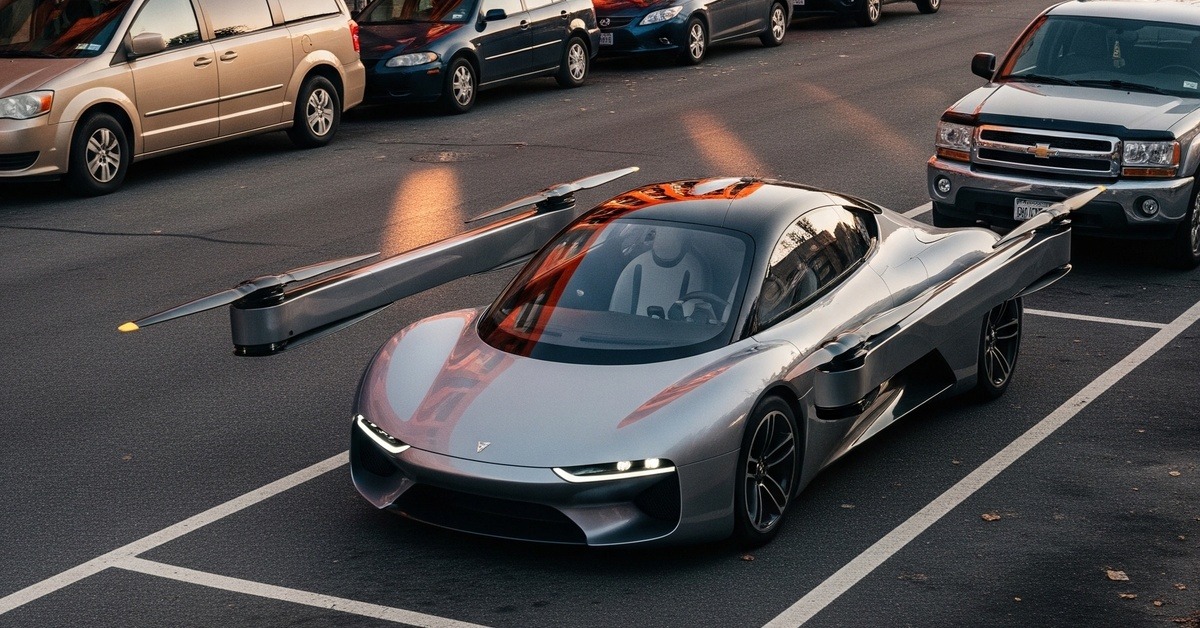
How It Unfolded
- 1962 — The Jetsons debuts, cementing the flying car as a cultural symbol of the future.
- 2015 — Alef Aeronautics is founded to build a genuinely roadable, vertical-takeoff vehicle.
- 2023 — The FAA grants the Model A a Special Airworthiness Certificate in June.
- 2025 — Agreements are signed in August for testing at real California airports within active air corridors.
By the Numbers
- 63 years — span from The Jetsons (1962) to mainstream flying-car testing approvals.
- 9 years — rough development time at Alef Aeronautics before certification.
- 2023 — the year the FAA issued the Model A airworthiness certificate.
- 0 — runways required; the vehicle takes off vertically from a standard space.
- 2025 — year California airport testing agreements were signed.
Field Notes
- A Special Airworthiness Certificate is routinely granted to experimental and kit aircraft, so the document type itself isn’t exotic; applying it to a roadable car is what made the 2023 case notable.
- The Model A’s gimbaled cabin is designed to keep occupants level as the body pivots from drive mode to flight, solving a transition problem that doomed earlier designs.
- NASA’s Advanced Air Mobility work treats vehicles like Alef’s as part of a future layered airspace, not standalone novelties, which is why infrastructure, not the vehicle, is the real bottleneck.
- Engineers still can’t fully resolve the energy-density trade-off: more battery means more range but more weight, and weight is the enemy of vertical takeoff, an unsolved tension for the entire eVTOL field.
Frequently Asked Questions
Q: Is the Alef flying car actually approved to fly?
It holds a Special Airworthiness Certificate from the FAA, granted in June 2023, which legally permits the Model A to fly in US airspace for testing and development. This is not the same as full certification to sell and operate the vehicle commercially. It allows controlled test flights, and in August 2025 Alef signed agreements to conduct that testing at real California airports.
Q: Can you really drive the Alef flying car on a road?
Yes, that’s central to the design. The Model A is built to drive on public roads at low speed and park in a standard space, then take off vertically with no runway. Its mesh body and distributed rotors let it transition between driving and flying. This roadable-plus-vertical-takeoff combination is exactly what made the FAA’s 2023 approval distinct from earlier flying-car prototypes.
Q: When will I be able to buy a flying car?
Not soon, and the 2023 certificate doesn’t change that. Range remains limited, the supporting air-traffic and charging infrastructure barely exists, and the rules for everyday urban air mobility are still being written. The certification proves regulators take the concept seriously enough to test it. Mass availability depends on years of further data, rule-making, and infrastructure that does not yet exist.
Q: Why have flying cars taken so long to arrive?
The challenge was never imagination; The Jetsons popularised the idea in 1962. The real barriers are physics and regulation. Vehicles must be good cars and good aircraft at once, fight battery weight limits, and integrate safely into crowded airspace. Each constraint compounds the others, which is why a working, regulator-recognised design like Alef’s took roughly nine years of dedicated engineering to reach test-flight approval.
Editor’s Take — Dr. James Carter
Strip away the sci-fi framing and the 2023 certificate reads as something narrower and more durable: a regulator deciding a flying car was worth the paperwork. That’s not the future arriving. It’s the future becoming a problem serious people now have to solve. The Model A’s range is short and its rulebook unwritten, but for the first time the unwritten rulebook exists at all. Tedious progress beats permanent fantasy.
For 63 years the flying car lived in cartoons and concept art, always two decades out. A single regulatory document didn’t put one in your driveway, but it changed the category of thing the flying car is, from daydream to test article. The infrastructure will lag the certification by years. Still, when the rules finally catch up, what does a city look like from the air at rush hour, when anyone can join it?
Illustrations are AI-generated. Article fact-checked and human-edited.