Andean Condors Released in Patagonia: Coast to Coast
Andean condors released in Patagonia have done something no living person had ever seen: for the first time in roughly 170 years, the giant scavenger can now be spotted coast to coast across Argentina. That is the headline. Behind it sits a quieter, more astonishing number — close to 80 condor chicks hatched and hand-reared in total human isolation, then set free, with almost every one surviving in the wild. Two countries, dozens of birds, three decades of patient work. Here is how it happened, and what it actually means.
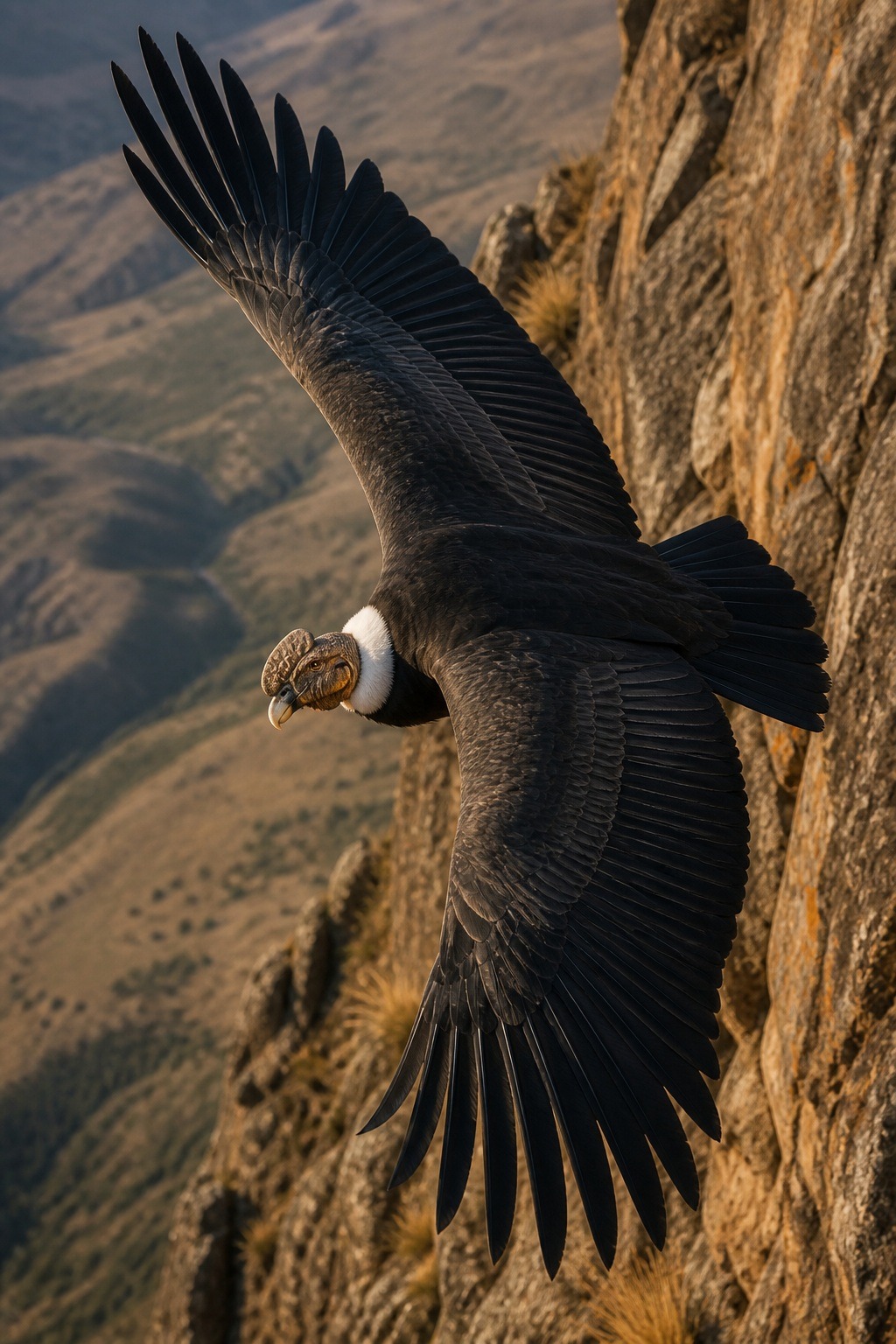
- Wingspan: up to about 3 m (10 ft); weight up to ~15 kg — the heaviest flying bird alive.
- Status: IUCN Vulnerable, with an estimated 6,700 mature adults left across the Andes.
- Argentina (PCCA / Fundación Bioandina, founded 1991): ~80 chicks reared and released; 64 condors returned to Patagonia’s Atlantic coast since 2003.
- Chile (Manku Project / Rewilding Chile, since 2014): 25 condors released, the latest three — Carmen, Auquinco and Farellón — in January 2026.
- Lifespan: up to 70 years, one of the longest of any bird.
Key Facts
- Argentina’s PCCA (Fundacion Bioandina, founded 1991) has reared and released close to 80 condor chicks; 64 returned to Patagonia’s Atlantic coast since 2003.
- Chile’s Manku Project (since 2014) has released 25 condors, the latest three (Carmen, Auquinco and Farellon) in January 2026.
- The Andean condor has a wingspan up to about 3 m, weighs up to about 15 kg, lives up to 70 years, and is IUCN Vulnerable with about 6,700 mature adults.
- The bird can now be seen coast to coast across Argentina for the first time in roughly 170 years, having been locally extinct at Sierra Pailleman that long.
- Isolation-rearing with a condor-head hand puppet gives a survival rate above 90%; the main threat is lead bullets and poisoned bait.
In short: Argentina’s PCCA has hand-reared and released about 80 Andean condors since 1991, returning 64 to the Atlantic coast at Sierra Pailleman, where the bird had been gone for roughly 170 years. With Chile’s 25 releases, the condor can now be seen coast to coast across Argentina, a first in about 170 years.
So how many Andean condors were released in Patagonia — and where?
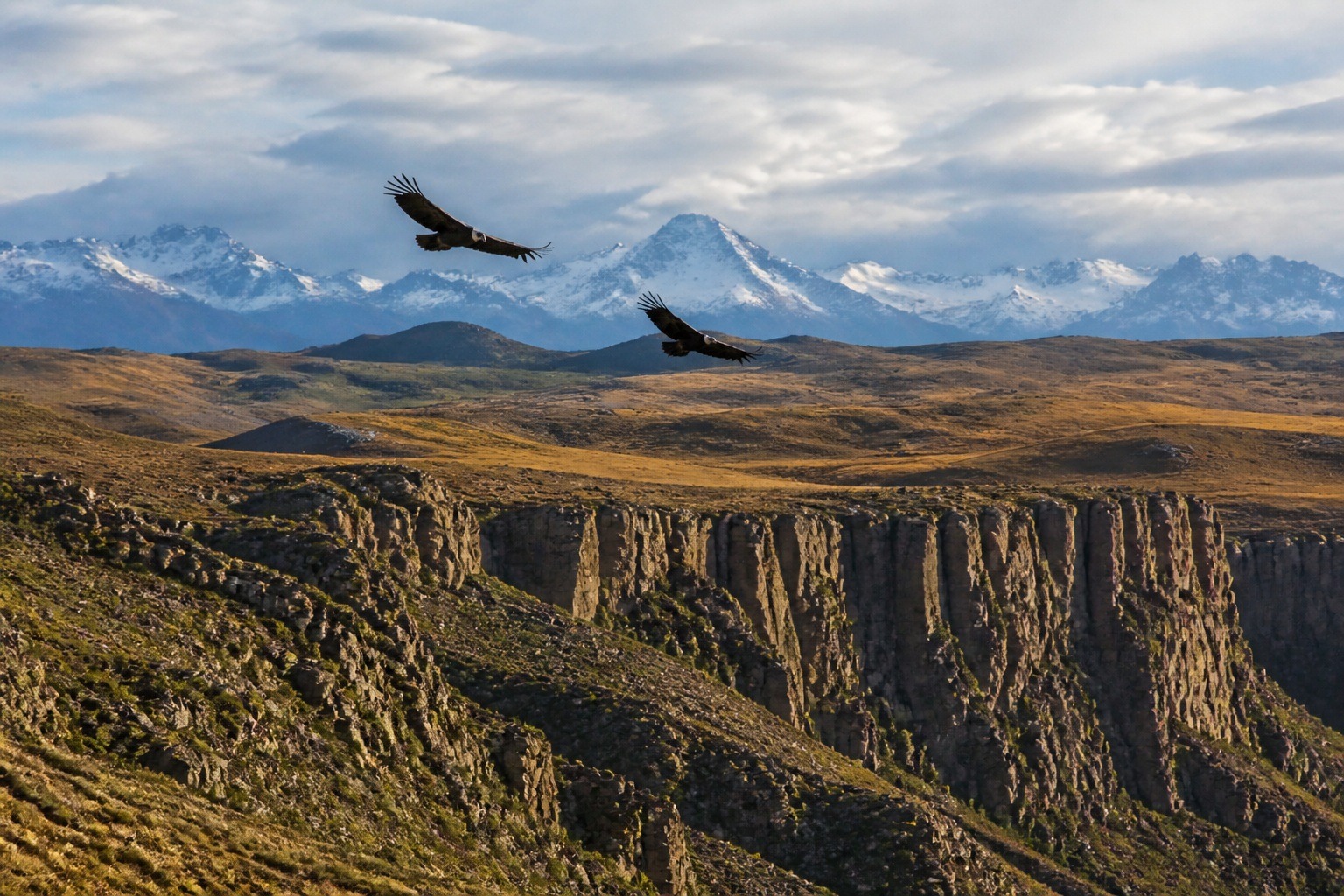
Let’s answer the search plainly first. Argentina’s Andean Condor Conservation Program (PCCA), run by Fundación Bioandina, has hatched and released close to 80 condor chicks since it began in 1991. Of those, 64 have been reintroduced along the Atlantic side of northern Patagonia at a site called Sierra Pailemán, where the species had been gone for well over a century. Across the border, Chile’s Manku Project has released 25 condors into Patagonia National Park, most recently a trio in January 2026.
What makes those figures remarkable isn’t the count — it’s the survival. According to PCCA director Luis Jácome and executive director Vanesa Astore, nearly every bird raised in the program’s isolation-rearing method has lived on in the wild, a success rate above 90% that is almost unheard of in raptor reintroduction. Rescue and release combined, the program has handled more than 370 condors over its history, a group larger than 5% of the entire wild population.
The single best way to grasp the milestone is geographic. An Andean condor fledged in a Buenos Aires incubator can now, as an adult, ride thermals over the Andes on Argentina’s western edge or soar above the cliffs of the Atlantic coast in the east. That coast-to-coast spread is the real story — and it is brand new.
Coast to coast for the first time in 170 years
Sierra Pailemán, on the wind-scoured steppe of Río Negro province, is where the map got redrawn. The Andean condor had been locally extinct there for roughly 170 years — shot out, poisoned out, gone. In 2003, the PCCA opened a release enclosure high on the sierra and let the first captive-reared birds go.
The chronology that followed reads like a slow, deliberate victory. First came the pioneer releases in the early 2000s. Then, crucially, the first wild-born chick — proof the reintroduced birds were not just surviving but breeding. After 2019, satellite transmitters revealed just how far these condors ranged. And by 2024, the population had knit together with the western Andean birds closely enough that biologists could say, for the first time in about 170 years, the Andean condor could be seen from one Argentine coast to the other.
That phrase — “for the first time in 170 years” — is doing a lot of work, and it deserves respect. It marks the return of an apex scavenger to an entire region that had learned to live without it.
{IMAGE_2}
Meet the condors: named birds with real backstories
Conservation on this scale is not anonymous. Every released condor is an individual with a name and a history, and the recent Chilean releases show why that matters.
In January 2026, the Manku Project freed three birds in Patagonia National Park’s Valle Chacabuco. Carmen, a female, was born in captivity in 2023. Auquinco, a male, had been rescued after a critical incident near Lago Ranco. Farellón, another male, was recovered from the mountains of Chile’s central Metropolitan Region. Two years earlier, in February 2024, the same project had released four condors — Bagual, Chicoco, Cuyén and Eclipse — a mix of rehabilitated wild birds and captive-hatched youngsters.
Here’s the thing about those backstories: they tell you the program is doing double duty. Some condors are bred; others are broken birds nursed back from poisoning, collisions or gunshot wounds. Both paths end at the same cliff-top enclosure, and the same open cage door.
How do you build a wild condor in a lab?
You do it by never letting the chick know you exist. The PCCA’s method, described in a peer-reviewed 2017 protocol in the International Zoo Yearbook, is built around one obsession: the bird must not imprint on humans, because a condor that trusts people is a condor that will die near them.
Eggs are artificially incubated. When a chick hatches, keepers feed it using a condor-head hand puppet, working behind blinds so the growing bird sees only its own kind. There is no petting, no cooing, no human face. Once old enough, each condor is moved to a pre-release enclosure high in the mountains — often for about two months — to acclimatize to wind, weather and altitude before the door opens.
After release, the work doesn’t stop. Radio and, since 2019, satellite telemetry track where the birds go. That monitoring has produced a genuinely new dataset: some tagged condors cover more than 300 km in a single day and use ten or more separate protected areas, stitching the landscape together in ways researchers could only guess at before. In the Andes, a condor’s range is not a dot on a map — it is a continent-sized commute.
The silent killer: lead bullets and poisoned bait
If the releases are the hopeful half of the story, this is the hard half. The number one threat to Andean condors is not habitat loss or hunting directly — it is what they eat. Condors are scavengers. They clean up the dead. And the dead are increasingly full of poison.
Two toxins do most of the damage. The first is lead. When a rancher shoots an animal with lead ammunition and leaves the carcass, the bullet shatters into tiny fragments through the meat. A condor swallows them. Lead then does something insidious: even a sub-lethal dose can paralyze the crop — the muscular pouch where food is stored — so the bird slowly starves on a full stomach. A single dead condor in the PCCA’s care, named Suyán, was found to have ingested lead from a bullet.
The second is deliberate poison bait. To kill pumas and foxes that threaten livestock, some ranchers lace carcasses with agricultural pesticides. Condors, arriving to scavenge, are collateral damage — and because dozens can feed on one carcass, a single poisoned cow can wipe out an entire local flock at once. This is why researchers such as Sergio Lambertucci, who heads the IUCN’s vulture specialist group, describe secondary poisoning as the central obstacle to recovery. You can breed condors faster than you can if a poisoned carcass keeps killing the adults.
One species, two countries: how Argentina and Chile compare
The Andean condor doesn’t recognize the border that runs down the spine of the Andes, and neither does its rescue. Two parallel programs — one on each side — have been quietly converging, and satellite data now shows released birds crossing freely between Chilean and Argentine Patagonia.
| Argentina — PCCA / Bioandina | Chile — Manku Project | |
|---|---|---|
| Founded | 1991 | 2014 |
| Flagship site | Sierra Pailemán, Atlantic-coast Patagonia | Patagonia National Park, Valle Chacabuco |
| Birds released | ~80 chicks reared; 64 on the Atlantic coast since 2003 | 25 condors over the past decade |
| Latest release | Coast-to-coast milestone confirmed by 2024 | Carmen, Auquinco, Farellón — January 2026 |
| Lead figures | Luis Jácome, Vanesa Astore | Eduardo Pavez, Cristián Saucedo |
Zoom out and the picture is continental. Beyond these two flagship efforts, condor recovery and chick-rearing programs also operate in Bolivia, Peru, Colombia and Ecuador — the same species, the same slow craft, up and down the Andes. What no single competitor page tends to say out loud is worth saying here: this is arguably the most coordinated cross-border effort to save a single bird anywhere in the Southern Hemisphere.
What 2026 looks like — and how to see a condor yourself
Momentum is real, but so is fragility. New releases continue in Argentine Patagonia, satellite maps grow richer each year, and Chile’s January 2026 trio has already been tracked settling in among wild birds. Yet the poison problem is unsolved, and 6,700 mature adults is not a comfortable number for a bird that breeds this slowly — a pair typically raises just one chick every two years.
Want to see one? Andean condors are most reliably watched in the Andes at sites like Argentina’s Quebrada del Condorito National Park and around Patagonia National Park in Chile, usually mid-morning when rising thermals lift them off the cliffs. Look up on a clear day near a rock face and scan for a broad, plank-straight silhouette with fingered wingtips — that flat, motionless glide is the giveaway.
The practical takeaway is smaller than a park visit, though. If you ever hunt or know someone who does, non-lead ammunition is the single change that most directly keeps these birds alive. That is not advice about your health or your money — it is simply the mechanism, stated plainly, behind whether the biggest bird in the sky gets to stay in it.
Quick Answers
How many Andean condors have been released in Patagonia?
Argentina’s PCCA has reared close to 80 chicks and reintroduced 64 to the Atlantic coast since 2003; Chile’s Manku Project has released 25, most recently in January 2026.
Why is the “first time in 170 years” claim significant?
The condor had been locally extinct on Argentina’s Atlantic coast for about 170 years; recent releases mean it can now be seen from one coast of Argentina to the other again.
What is killing Andean condors?
Poisoning. Lead fragments from bullets in scavenged carcasses and deliberately poisoned bait meant for pumas are the leading causes of death.
How are the chicks raised without tameness?
Eggs are artificially incubated and chicks are fed with a condor-head puppet behind blinds, so they never imprint on humans before a two-month mountain acclimatization and release.
Sources and Notes
- Fundación Bioandina Argentina / Andean Condor Conservation Program (PCCA) — official program data.
- Astore V., Estrada R., Jácome L. (2017), “Reintroduction strategy for the Andean Condor Conservation Program, Argentina,” International Zoo Yearbook (Wiley).
- Fundación Rewilding Chile — Manku Project release announcements, including January 2026.
- National Geographic — reporting on the Andean condor recovery effort.
- IUCN Red List — Andean condor (Vultur gryphus), Vulnerable assessment.
A condor doesn’t flap so much as lean on the wind, and watching one return to a sky it vanished from a century and a half ago is about as close as conservation gets to reversing time. The birds are back on both coasts. Keeping them there now depends less on incubators than on what we choose to leave in the carcasses they clean up.
Frequently Asked Questions
Q: How many Andean condors were released in Patagonia?
Argentina’s Andean Condor Conservation Program has hatched and released close to 80 condor chicks since 1991, of which 64 have been reintroduced at Sierra Pailleman on the Atlantic coast. Across the border, Chile’s Manku Project has released 25 condors into Patagonia National Park, most recently a trio, Carmen, Auquinco and Farellon, in January 2026.
Q: Why is the coast-to-coast milestone significant?
The Andean condor had been locally extinct at Sierra Pailleman for roughly 170 years, shot and poisoned out. By 2024 the reintroduced eastern birds had knit together with the western Andean population closely enough that, for the first time in about 170 years, the condor could be seen from one Argentine coast to the other, marking the return of an apex scavenger.
Q: How are the condors raised without taming them?
By never letting the chick know humans exist. Eggs are artificially incubated, and keepers feed hatchlings using a condor-head hand puppet from behind blinds, so the growing bird sees only its own kind, with no petting or human face. Each condor then spends about two months in a mountain pre-release enclosure. The isolation method yields a survival rate above 90%.
Q: What is the biggest threat to Andean condors?
What they eat. As scavengers that clean up carcasses, condors are poisoned by lead fragments from bullets in animal remains and by poisoned bait left out for predators. Habitat loss and direct hunting matter less than this contamination of their food, which remains the number one danger to the released birds across their vast range.
Illustrations are AI-generated. Article fact-checked and human-edited. Our editorial standards.