The Only Animal That Can Survive in Space
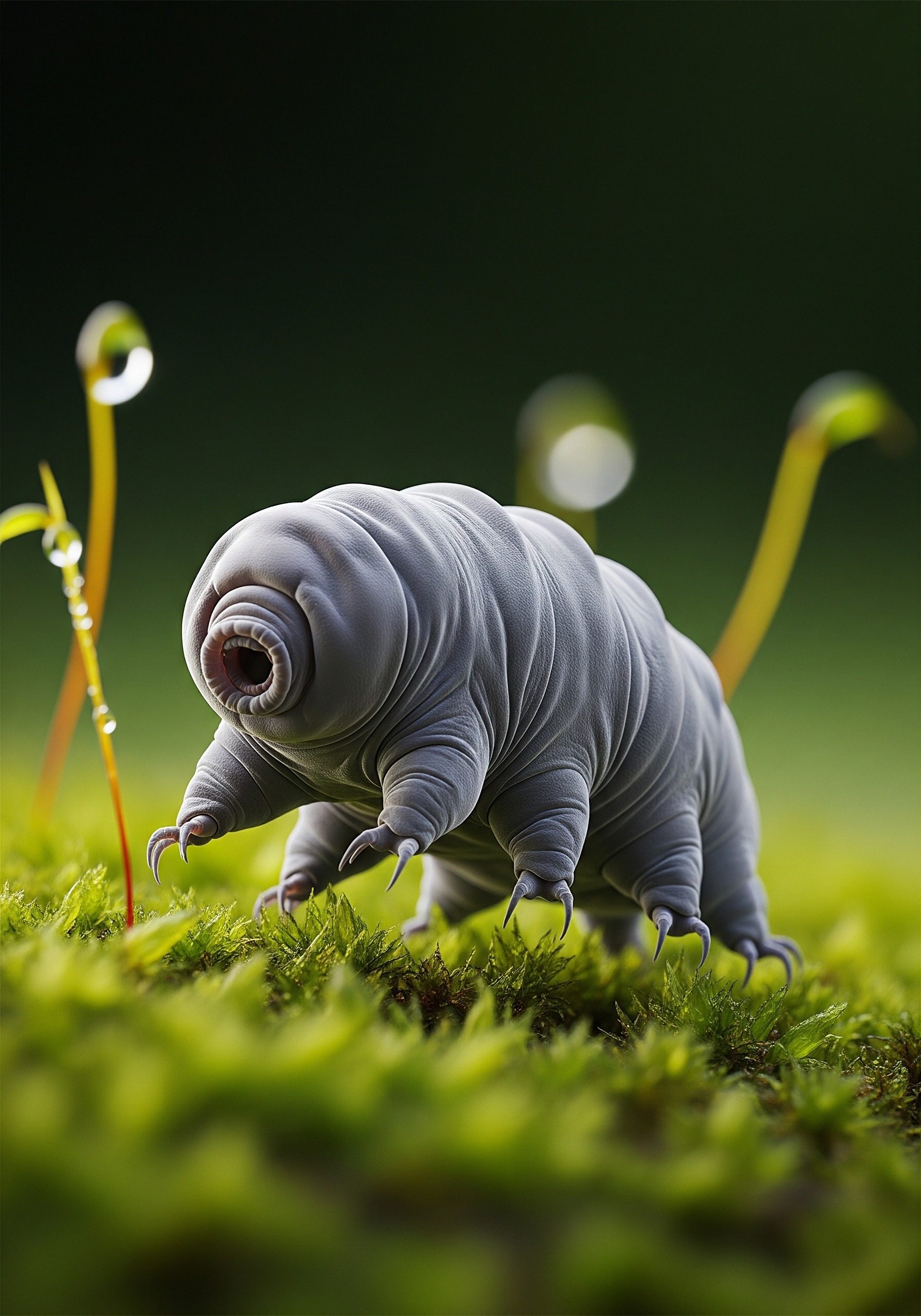
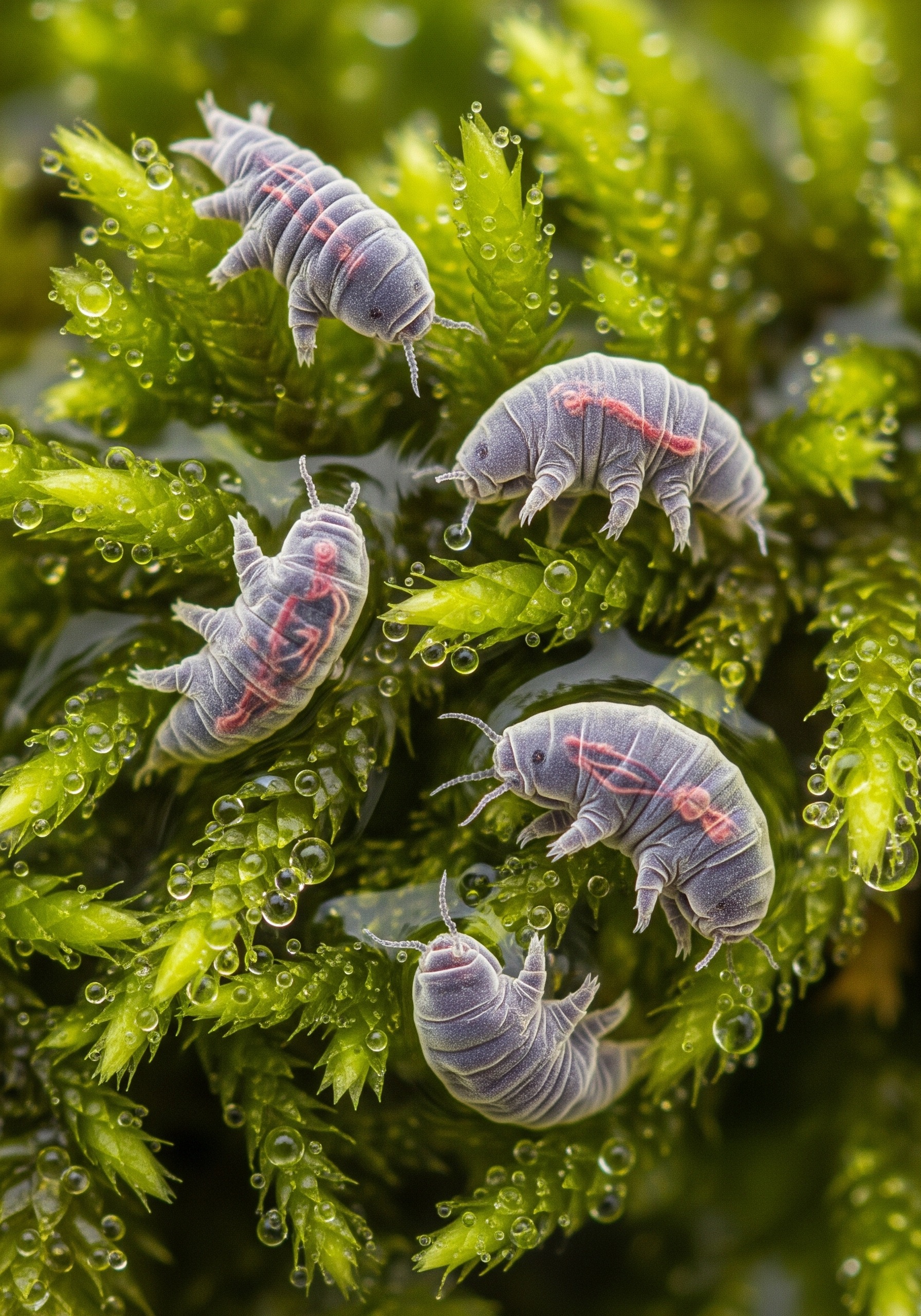
The only animal that can survive in space — naked, no suit, no capsule, just frozen vacuum and an avalanche of cosmic radiation — is half a millimeter long, walks on eight stubby legs, and looks like a microscopic gummy bear. Its name is the tardigrade. And every other creature humans have ever tried this with has died.
Key Facts
- Tardigrades are the only animals proven to survive direct, unshielded exposure to the vacuum of space, confirmed by the European Space Agency’s FOTON-M3 mission in September 2007.
- In that experiment, more than 68% of the vacuum-exposed tardigrades reanimated within roughly 30 minutes of being rehydrated back on Earth.
- Their secret is cryptobiosis: when water disappears, they curl into a dehydrated “tun” with metabolism reduced to less than about 0.01% of normal.
- Several tardigrade species shrug off ionizing radiation in the 4,000-to-6,000 gray range — roughly 1,000 times the dose that kills a human (about 5 grays).
- A 2016 University of Tokyo study found that a tardigrade protein called Dsup, transferred into cultured human cells, cut X-ray DNA damage in those cells by roughly 40%.
In short: One animal — the tardigrade, also called the water bear — can survive the open vacuum of space. The trick is a dehydration state called cryptobiosis, paired with a homemade DNA shield. Every other creature humans have launched has only survived inside the hull of a spacecraft.
Key Facts
- Tardigrades are the only animals proven to survive direct, unshielded exposure to the vacuum of space, confirmed by the ESA FOTON-M3 mission in September 2007.
- In that experiment, more than 68% of the vacuum-exposed tardigrades reanimated within roughly 30 minutes of being rehydrated on Earth.
- Their secret is cryptobiosis: when water disappears they curl into a dehydrated tun, with metabolism reduced to less than about 0.01% of normal.
- Several tardigrade species shrug off ionizing radiation in the 4,000-to-6,000 gray range roughly 1,000 times the dose of about 5 grays that kills a human.
- A 2016 University of Tokyo study found that the tardigrade protein Dsup, transferred into human cells, cut X-ray DNA damage by roughly 40%.
In short: The tardigrade, or water bear, is the only animal proven to survive direct exposure to the vacuum of space, confirmed by the European Space Agency’s 2007 FOTON-M3 mission, where over 68% revived after rehydration. Its trick is cryptobiosis a dehydrated tun state with metabolism below 0.01% of normal plus a DNA-shielding protein.
The Only Animal That Can Survive in Space
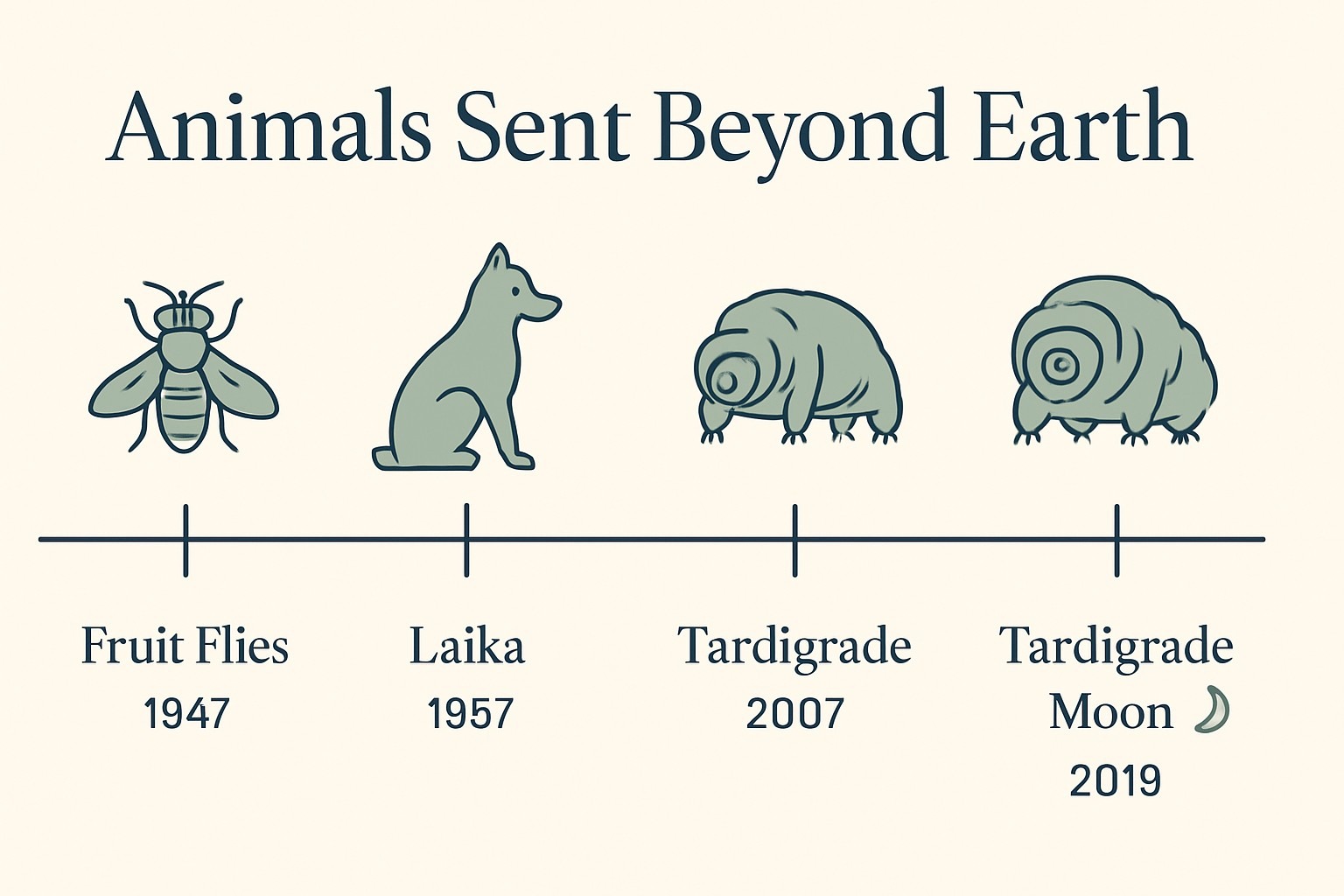
Plenty of creatures have flown above the atmosphere. Fruit flies rode a V-2 rocket in 1947. Laika orbited in 1957. Spiders, mice, jellyfish, roundworms, and quail eggs have all ridden along since. But they all flew the way you would — inside a hull, breathing borrowed air.
The harder question is different. Strip away the spacecraft. Open the airlock. Hold a creature in raw vacuum at temperatures swinging toward minus 270°C, while solar UV nearly a thousand times stronger than at Earth’s surface pounds it for days. Only one animal walks away.
The tardigrade.
{IMAGE_2}
The 2007 Experiment That Proved It
On 14 September 2007, the European Space Agency launched the FOTON-M3 capsule from Baikonur with a strange payload bolted to its outer skin: dried tardigrades. The experiment, called TARDIS — short for Tardigrades in Space — was led by Swedish evolutionary ecologist K. Ingemar Jönsson of Kristianstad University.
Two species rode along: Richtersius coronifer and Milnesium tardigradum. Both had been dehydrated to under 3% water content before launch. Some were exposed only to vacuum. Others were hit with vacuum plus the full spectrum of solar UV. For ten days, they sat in low Earth orbit absorbing conditions that would dissolve a human in seconds.
Back in the lab, Jönsson’s team dripped water on them and waited. Within half an hour, most of the vacuum-only animals stretched out their legs and walked. Some laid viable eggs days later. The paper, published in Current Biology in 2008, made tardigrades the first animals on record to survive direct exposure to space.
How They Do It (and Why You Can’t)
Cryptobiosis is the trick. When a tardigrade dries out, it pulls in its legs and head, curls into a barrel-shaped “tun,” and replaces most of its body water with a sugar called trehalose. The trehalose forms a glassy matrix that locks proteins, membranes, and DNA in place. Metabolism drops to less than 0.01% of normal. There is, for all practical purposes, no living animal there. Just a particle, waiting.
In that state there is no liquid water to boil off in vacuum, no soft tissue to rupture, no metabolic process to derail. The animal is closer to dust than to flesh.
So why can’t humans do this? Because you are 60% water and that water has nowhere to go.
The radiation problem is harder, and tardigrades solved it differently. In 2016, biologists Takuma Hashimoto and Takekazu Kunieda at the University of Tokyo sequenced the genome of Ramazzottius varieornatus and found a protein no other animal makes. They named it Dsup — short for “damage suppressor.” It wraps around DNA like a shield, blunting the hydroxyl radicals that ionizing radiation creates. When the Tokyo team spliced the Dsup gene into cultured human cells, X-ray damage to those cells dropped by roughly 40%.
The genome itself also fights back. More recent work on tardigrade species shows they dramatically upregulate DNA-repair genes within minutes of radiation exposure. They don’t just shield the damage. They patch it on the fly.
Everything Else That Has Tried Space
Here is the brutal scoreboard. The line that matters is whether the animal survived the vacuum of space — not whether it survived a shielded ride inside a capsule. Even Earth’s toughest cold-adapted mammals, like the Arctic foxes that shrug off −90°F winters, would be dead within seconds at the temperatures a dried tardigrade simply ignores.
Animals exposed to space — what actually happened
| Animal | Mission | Exposure | Outcome |
| Tardigrade | FOTON-M3, 2007 | Open vacuum ± UV, 10 days | ~68% revived (vacuum-only) |
| Tardigrade | STS-134 / TARDIKISS, 2011 | Inside ISS, microgravity + radiation | Survived and reproduced |
| Fruit fly | V-2 rocket, 1947 | Inside capsule, suborbital | Recovered alive |
| Roundworm (C. elegans) | STS-107 Columbia, 2003 | Inside capsule, broke up on re-entry | Found alive in wreckage |
| Jumping spider | ISS, 2011 | Inside ISS, microgravity | Adapted hunting, built atypical webs |
| Any vertebrate (mouse, dog, primate, human) | — | Open vacuum | Death within roughly 90 seconds |
The bacteria and seeds tell the same story. Bacillus subtilis spores deposited on cotton wool survived more than two years bolted to the outside of the ISS, and moss spores returned from a nine-month exposure with over 80% still viable. But spores are not animals. Among animals, the club has one member.
What Space Can Still Kill
The tardigrade story is usually told as if these creatures are indestructible. They aren’t.
Bring them up wet, and they die almost immediately — no time to form a tun, no trehalose glass, just a tiny ruptured animal. Sustained heat above roughly 150°C kills active ones. Pile on too many days of unshielded solar UV and survival collapses: in the 2007 TARDIS experiment, the group hit by vacuum plus the full spectrum of solar UV had only a handful of survivors, while the vacuum-only group sailed through. Even cryptobiosis isn’t a forever pass. Each round of drying out costs the animal a little, and the longer the dry-out, the worse the return.
The real lesson is narrower than the headline. Tardigrades can survive space if they are dried first, shielded from the sun’s UV, and brought home before too much radiation accumulates. They are not magic. They are extremely well prepared.
A Capsule Full of Water Bears on the Moon
In April 2019, an Israeli spacecraft called Beresheet — the first privately funded lunar lander — clipped the Moon and crashed into the Sea of Serenity. Onboard, tucked into a metal payload by the U.S.-based Arch Mission Foundation, were thousands of dehydrated tardigrades sealed in epoxy resin.
For about a week, the headlines read like a science-fiction title card: The Moon now has life. The truth was duller. Researchers — including Jönsson, when reporters asked — pointed out the obvious. Even if some animals survived the impact intact, they had no food, no liquid water, and no plausible path to ever wake up. They are not colonizing anything. They are almost certainly still up there in their tuns, sitting in lunar dust, waiting on water that will never come.
It is the strangest entry on humanity’s lunar artifact list. A small bag of microscopic animals frozen mid-life on another world.
Why This Animal Matters to Us
None of this would matter much if the tardigrade were just a curiosity. It isn’t.
The Dsup protein is the most direct lead biology currently has on shielding human cells from cosmic radiation — the single biggest medical obstacle to sending astronauts to Mars. Long-duration deep-space crews accumulate dose levels that current spacecraft shielding cannot fully block, and the cancer-risk math gets worse the longer the trip.
Turns out the most useful piece of biology for getting humans to Mars might be a gene borrowed from a moss-dwelling micro-animal. The Hashimoto-Kunieda Tokyo experiments don’t promise a tardigrade-human hybrid. They suggest something more useful: a protein, isolatable and sequenceable, that other cells can be coaxed to make. Labs in Japan, the U.S., and Europe are now testing Dsup variants in everything from skin cells to retinas, looking for the dose-response curve that would actually protect an astronaut’s chromosomes on a six-month flight.
The water bear is the only animal that can survive in space. It might also be the reason we can.
Frequently Asked Questions
Q: What animal can survive in space without oxygen or water?
A: The tardigrade. It enters a state called cryptobiosis, in which it dries out and lowers its metabolism to nearly nothing. With almost no liquid water inside it, the vacuum has nothing to boil off — and with no metabolism, it doesn’t need oxygen at all. As soon as water returns, it reanimates.
Q: How long can a tardigrade survive in space?
A: At least ten days has been directly confirmed in orbit, the length of the FOTON-M3 mission in 2007. Laboratory experiments with dried tardigrades suggest viability of years and possibly decades. Eventually accumulated radiation damage outruns the animal’s repair systems.
Q: Are any other animals that can survive in vacuum?
A: Not directly demonstrated. Some bacterial spores and moss spores have survived long-duration exposure outside the ISS, but those are not animals. Rotifers — tiny relatives of tardigrades — share remarkable radiation tolerance but haven’t been tested in open vacuum. Tardigrades remain the only confirmed animal survivors.
Q: Could tardigrades live on Mars?
A: Probably not actively. Mars is too dry, too cold, and too irradiated for them to feed and reproduce. But a dried tardigrade dropped on the Martian surface and shielded from UV could likely sit there in its tun state for a very long time — not living, exactly, but not gone either.
Sources
- K. Ingemar Jönsson et al., “Tardigrades survive exposure to space in low Earth orbit,” Current Biology, 2008.
- European Space Agency — TARDIS / FOTON-M3 mission communications, 2008.
- Takuma Hashimoto, Takekazu Kunieda et al., “Extremotolerant tardigrade genome and improved radiotolerance of human cultured cells by tardigrade-unique protein,” Nature Communications, 2016.
- NASA — Houston We Have a Podcast: Water Bears in Space.
- American Museum of Natural History — Ology: Tardigrade.
The next time someone tells you the universe is hostile to life, remember the half-millimeter creature still sitting on the Moon, dried into a glassy speck, perfectly fine.
Illustrations are AI-generated. Article fact-checked and human-edited. Our editorial standards.