Posts written

Vintage Coney Island boardwalk hot dog stand bustling with curious onlookers in 1910s attire

The Fake Doctors Who Made Nathan’s Famous a Legend

In 1916, Nathan Handwerker had a problem: his hot dogs were too cheap to trust. Americans were terrified of cheap meat after Upton Sinclair's The Jungle, and nobody was buying. So Nathan tried something almost theatrical — a borrowed white coat and a little public theater. What happened next built one of America's most iconic food brands from almost nothing.

Read More
This Amazing World

How Did Early Man Discover Fire? The Million-Year Story

From burnt bone in a South African cave 1 million years ago to flint-and-pyrite strike-a-lights in Ice Age England, the real story of how humans tamed fire is older, slower, and stranger than the cartoon version.

Read More
This Amazing World

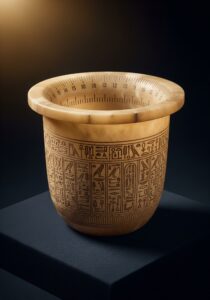
How Did Ancient People Tell Time Before Clocks?

Before clocks, people read the sun, the stars, dripping water and burning candles. Here is the global story of how ancient civilizations told time.

Read More
Tiny Yorkshire Terrier sitting among WWII soldiers in a jungle warzone camp

The $6 Dog Who Changed History From a Foxhole

She weighed four pounds. She was found abandoned in a jungle foxhole in the middle of World War II. A soldier paid $6.44 for her — and had no idea he'd just bought a piece of history. Smoky the Yorkie survived air raids, flew combat missions, and then did something no dog had ever been documented doing before. This is the story they left out of the history books.

Read More
This Amazing World

How Did Ancient People Drink Water Safely?

From Egyptian alum and Sanskrit charcoal filters to Roman aqueducts, Persian qanats and the new science of Maya reservoirs — how ancient civilisations turned river water into safe drinking water.

Read More
A Regulus I cruise missile launches from a submarine deck over open Atlantic waters

The Day the U.S. Navy Delivered Mail by Missile (1959)

On June 8, 1959, the USS Barbero fired a nuclear-capable Regulus I missile — not at an enemy, but at a Florida naval air station. Stuffed with 3,000 letters, it covered more than 100 miles in 22 minutes. Postmaster General Arthur Summerfield called it the future of mail. It was, in reality, the Cold War's most ambitious — and absurd — publicity stunt.

Read More
This Amazing World

How Did Ancient Egyptians Build the Pyramids? A Modern Answer

From the Diary of Merer to the buried Ahramat Branch of the Nile, here is the modern, evidence-based answer to how ancient Egyptians built the pyramids — without iron, wheels, or pulleys.

Read More
This Amazing World

How Did Ancient Civilizations Get Clean Water? A Real Comparison

From Mohenjo-daro's 700 wells to Persian qanats and Roman aqueducts, a head-to-head look at how the ancient world solved drinking water — and what they got wrong.

Read More
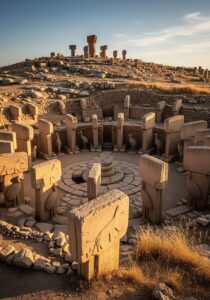
Photorealistic hero image of the Göbekli Tepe archaeological site at golden hour in southeastern Türkiye, monumental T-s

Göbekli Tepe: The Oldest Civilization Older Than Civilization

Built by hunter-gatherers around 9500 BCE, Göbekli Tepe is older than agriculture, pottery and writing — and it has rewritten what we mean by the first civilization.

Read More
A colorful stack of children's books on a rural porch mailbox at golden hour

The Woman Who Mailed 200 Million Books to Poor Kids

She grew up in a one-room cabin in the hills of East Tennessee, one of twelve kids with almost nothing. Decades later, Dolly Parton built a program so quietly powerful it has mailed over 200 million free books to children who might never have owned one. No income checks. No paperwork. Just books — every single month.

Read More
Ancient Bronze Age dagger with intact hilt and blade recovered from Polish Baltic cliffside sediment

Bronze Age Dagger Found in Poland Still Bears Blade Marks

A Bronze Age dagger nearly 3,000 years old has emerged from an eroding Baltic cliffside in Poland — hilt, blade, and all. Under magnification, its microscopic wear patterns tell a startling story: this was no ceremonial piece. Someone used it, deliberately, repeatedly. Then it was buried in clay and swallowed by silence for three millennia.

Read More
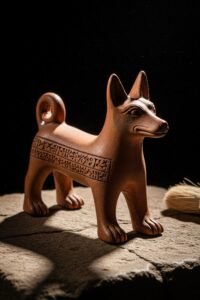
Ancient Assyrian clay dog figurine with cuneiform inscription on terracotta surface

The Tiny Guard Dogs Buried in Assyria’s Walls for 2,700 Years

Buried inside the walls of Nineveh over 2,700 years ago, a set of tiny clay dogs were given one job: protect. Each one carried a name pressed into the clay — not a pet name, but a war name. 'Biter of his foe.' 'Expeller of evil.' And one that stops you cold. The Assyrians believed words and form together created something real. Turns out, they weren't wrong.

Read More