Crows Leave Gifts for People Who Feed Them
A family in Seattle started leaving peanuts on their porch. Two years later, they’d collected 27 objects the crows had left behind — and nobody knew why. Turns out, crow gift-giving behavior isn’t folklore. It’s real. It’s documented. And it’s way stranger than anyone expected.
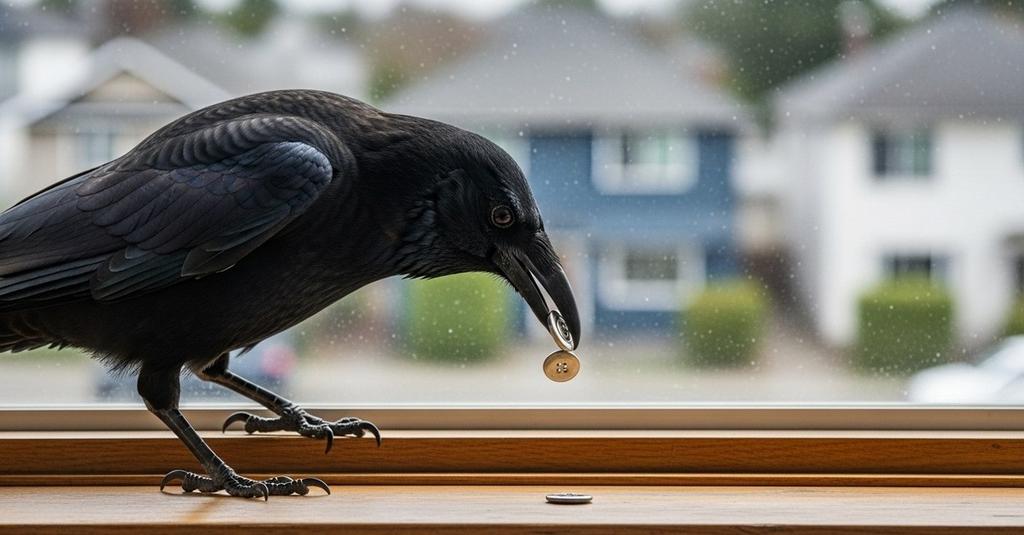
It started with a button. Then a bent paperclip. Weeks later, blue glass worn smooth by weather showed up on the windowsill. The family had been consistent with the peanuts every single morning. The crow, apparently, had been keeping score.
Key Facts
- A Seattle family led by Gabi Mann collected 27 distinct objects from crows over two years after consistently feeding them peanuts
- Research by John Marzluff at the University of Washington documented that crows remembered faces of ‘dangerous’ humans and held grudges for over 5 years, teaching those warnings to other crows
- Crows have a brain-to-body ratio comparable to great apes, with a problem-solving region called the nidopallium caudolaterale
- A single American crow can live 17 years in the wild
- In Japan, crows have learned to drop nuts at crosswalks for cars to crack, then retrieve the pieces when the light turns red
In short: Crow gift-giving behavior is real, documented science. A Seattle family collected 27 objects from crows over two years. University of Washington research led by John Marzluff shows crows recognize individual human faces, remember ‘dangerous’ ones for over 5 years, and teach warnings to other crows. Gifts only go to humans they know and have interacted with repeatedly.
Crow Gift-Giving Behavior Is Real, Documented Science
Gabi Mann was the one who started writing it down. Her Seattle family had fed the neighborhood crows long enough that something shifted — the birds began leaving objects in the exact spot where food appeared. Researchers at the University of Washington, led by ornithologist John Marzluff, took notice. They’ve spent years studying crow cognition, and what they found is this: these birds don’t just tolerate humans. They distinguish between individual people. They track behavior over time. They remember. And they respond.
The question isn’t whether the gifts are real.
It’s what they mean.
Scientists don’t all agree. Some argue it’s reciprocity — crows extending to humans the same social behavior they use within their own flocks. Others say it’s learned association: food appears, so something should appear back. Both explanations work. Neither fully lands.
Crows Remember Your Face — And They’re Teaching It to Their Kids
Here’s where it stops being cute and starts being eerie. Research from the University of Washington showed that crows can recognize and remember specific human faces for years. Not the general shape of a person. Not clothing. Your actual face. Your features. The way you look.
In one experiment, researchers trapped crows while wearing masks. Afterward, the birds scolded those masked faces — and only those faces — for years. And then they taught other crows to do the same. A crow you’ve never met might already hate you because of something your neighbor did.
That’s not instinct anymore. That’s inherited grudge. That’s culture.
What Are They Actually Leaving?
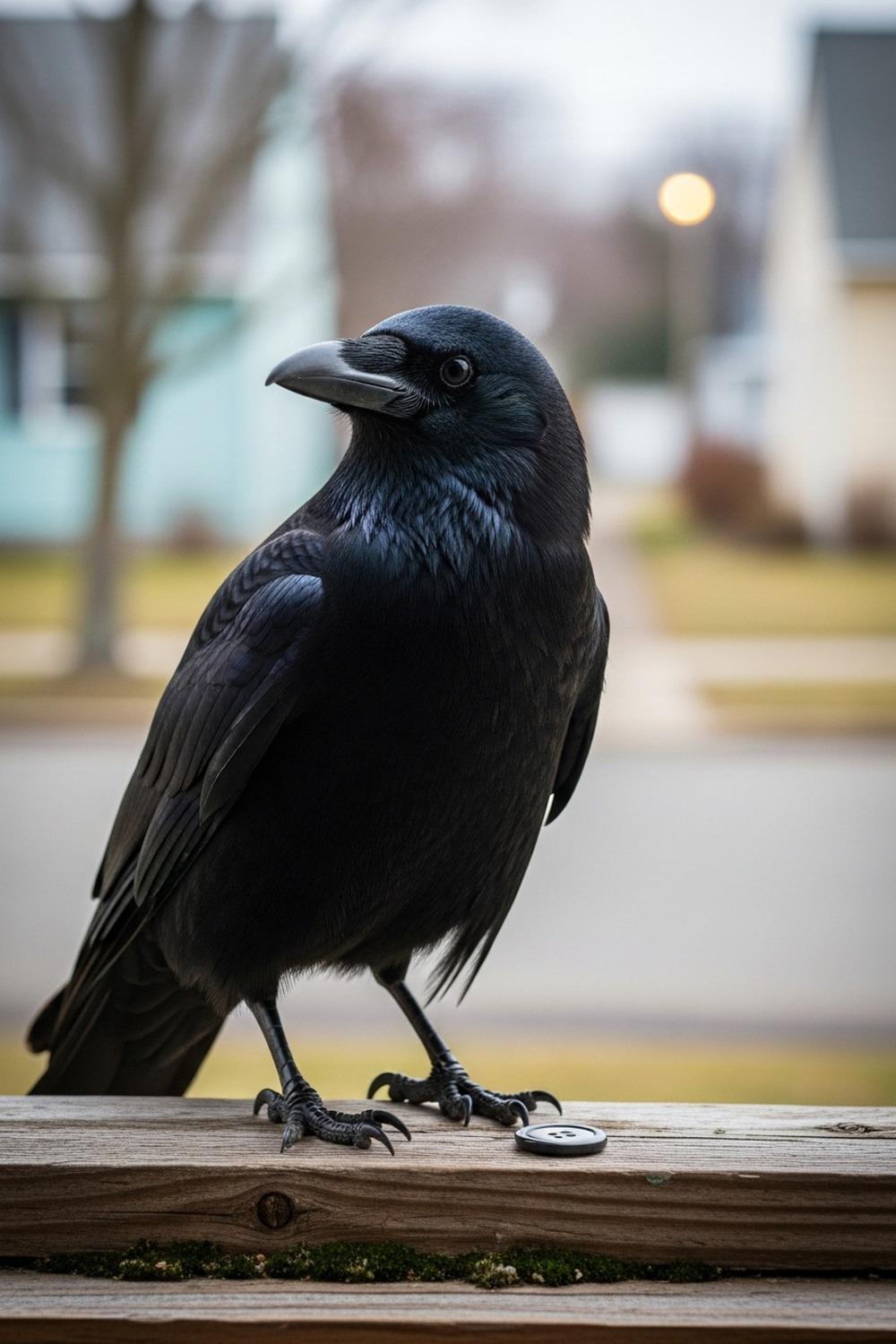
The objects are small. Shiny, usually. A button. A bead. A screw. Reflective foil. Once, a single pearl earring — the same one a family had lost months before. Whether the crow had found it nearby or been saving it, nobody knows. Both possibilities are remarkable.
There’s intentionality in the selection. The spot is deliberate. The placement is careful. Then the crow waits to see if you notice.
Turns Out, They Don’t Do This for Strangers
The crucial detail that changes everything: crows only gift-give to people they know. Not acquaintances. Not random humans. People they’ve interacted with repeatedly, consistently, over weeks or months. It’s not a reflex. It’s earned.
Researchers think crows are treating their human feeders as extended flock members. Applying the same reciprocal behaviors they’d use with other crows. Which means when a crow leaves something on your windowsill, it’s treating you like a trusted companion. Not a vending machine. Not a curiosity.
A neighbor with wings.
By the Numbers
- In 2012, John Marzluff at the University of Washington documented that crows remembered faces of “dangerous” humans and held grudges for over 5 years.
- They taught those warnings to other crows.
- Gabi Mann’s family collected 27 distinct objects over two years.
- Crows have a brain-to-body ratio comparable to great apes. Their prefrontal-equivalent region — the nidopallium caudolaterale — shows problem-solving activity that mirrors primate cognition in ways neuroscientists still don’t fully understand.
- A single American crow can live 17 years in the wild. One bird could recognize the same human across multiple decades of someone’s life.
Field Notes
- Crows gather silently around dead crows. They avoid the area afterward. This isn’t instinct — it’s social processing. They’re grieving.
- In Japan, crows have learned to use traffic lights. They drop nuts at crosswalks, wait for cars to crack them, then retrieve the pieces when the light turns red. That last fact kept me reading for another hour.
- New Caledonian crows manufacture tools. They bend wire into hooks to retrieve food. Once, only humans and great apes did this. Now crows do too.
Why Crow Gift-Giving Behavior Rewires What We Think Intelligence Actually Is
We’ve always drawn a clear line. Gifts, reciprocity, memory, grudges, loyalty — those belong to humans. Animals perform. They respond to stimuli. They don’t build relationships. But crow gift-giving behavior doesn’t care about our categories. These birds aren’t performing tricks for treats. They’re engaging in something that looks, functionally, identical to relationship-building. They assess. They decide. They give. And the giving only happens after trust has been earned over time — which is more honest than most human transactions.
What’s quietly humbling is the asymmetry of it all. You’re not obligated to feed a crow. The crow owes you nothing. There’s no contract. No language. And yet, over weeks of small kindnesses, the bird starts watching your routine. Starts placing weight on your presence. Starts leaving things behind.
A wild animal, with no agreement between you, deciding you’re worth something.
That’s not nothing.
The moment a crow starts watching your routine, learning your face, deciding whether you’re trustworthy — you’re already inside a relationship neither of you formally agreed to. And somewhere, a small shiny object is waiting on a windowsill, placed there by something that remembered you. That kind of story doesn’t stop. More strange animal intelligence research is at this-amazing-world.com.
Frequently Asked Questions
Q: Do crows really leave gifts for people who feed them?
Yes. The Mann family in Seattle began collecting objects after consistently leaving peanuts on their porch, and over two years they accumulated 27 distinct items — buttons, beads, smooth glass, a paperclip, even a lost pearl earring. Researchers at the University of Washington, led by ornithologist John Marzluff, have studied crow cognition for years and confirmed these birds distinguish between individual people, track behavior over time, and respond. The gifts are deliberate in placement and selection, not random debris dropping.
Q: Can crows actually remember individual human faces?
Research from the University of Washington showed that crows can recognize and remember specific human faces for years. In one experiment, John Marzluff’s team trapped crows while wearing masks, and afterward the birds scolded only those masked faces — for over five years — and taught other crows to do the same. A crow you have never met might already react aggressively because of what someone else did. That is no longer instinct; it is inherited social knowledge passed across generations.
Q: Why do crows only gift-give to people they know?
Researchers believe crows are treating their human feeders as extended flock members and applying the same reciprocal behaviors they would use with other crows. Gifts only appear after weeks or months of repeated, consistent interaction — they are earned, not reflexive. The bird assesses, decides, and gives. When a crow leaves a small shiny object on a windowsill, it is acting as if you are a trusted neighbor in its social network, not a vending machine or a random food source.
Q: How intelligent are crows compared to other animals?
Crows have a brain-to-body ratio comparable to great apes, and their problem-solving region — the nidopallium caudolaterale — shows activity that mirrors primate cognition in ways neuroscientists are still mapping. New Caledonian crows manufacture tools, bending wire into hooks to retrieve food, a behavior once believed unique to humans and great apes. Japanese crows have learned to drop nuts at crosswalks, let cars crack them, and retrieve the pieces when the light changes. A single American crow can live 17 years in the wild.
Illustrations are AI-generated. Article fact-checked and human-edited. Our editorial standards.