Did Tinned Food Kill the Franklin Expedition?
Ask most people did tinned food kill the Franklin expedition, and the answer comes back fast and confident: yes — poorly soldered cans leaked lead, poisoned 129 men, and doomed the most ambitious Arctic voyage the Royal Navy ever launched. It is a clean, satisfying story. It is also, according to the last two decades of chemistry, mostly wrong.
The Franklin expedition set sail from England in May 1845 to force the Northwest Passage — the fabled sea route across the top of North America. Neither ship, HMS Erebus nor HMS Terror, was ever seen again by European eyes. What science has spent forty years reconstructing is not a single crime but a slow-motion catastrophe with at least four suspects, and the tins are looking less guilty every year.
- Sailed: May 1845, England → the Northwest Passage. Two ships, HMS Erebus and HMS Terror, 129 officers and men under Sir John Franklin.
- The tins: ~8,000 cans of preserved meat, soup and vegetables from contractor Stephen Goldner, sealed with solder that was roughly 90% lead.
- The graves: three sailors buried on Beechey Island in the winter of 1845–46, exhumed by Owen Beattie’s team in 1984.
- The bombshell: crew bone lead measured around 200+ parts per million — roughly ten times the level in local Inuit remains.
- The reversal: a 2013 Western University study found the lead was spread evenly through each man’s skeleton — a lifelong pattern, not an Arctic spike.
Key Facts
- The Franklin expedition sailed from England in May 1845 with HMS Erebus and HMS Terror carrying 129 officers and men under Sir John Franklin to force the Northwest Passage
- The ships carried about 8,000 tins of preserved meat, soup and vegetables from contractor Stephen Goldner, sealed with solder that was roughly 90% lead; the contract was awarded 1 April 1845 and the ships sailed about seven weeks later
- In 1984 forensic anthropologist Owen Beattie of the University of Alberta exhumed three sailors buried on Beechey Island in the winter of 1845-46, finding bone lead around 200 to 226 ppm versus about 22 to 36 ppm in local Inuit remains
- A cairn note’s first entry dated May 1847 said ‘all well’, while a margin entry dated 25 April 1848 reported the ships abandoned and 24 men dead, including Franklin
- A 2013 Western University study led by chemistry professor Ron Martin, published in Applied Physics A, used a synchrotron and found the crew’s lead was distributed uniformly through the bone, indicating lifelong exposure rather than a fresh Arctic spike
In short: The 1845 Franklin expedition of 129 men vanished seeking the Northwest Passage. Its 8,000 tins had 90%-lead solder, and 1984 exhumations found crew bone lead near 200-226 ppm. But a 2013 Western University synchrotron study showed the lead was spread evenly across a lifetime, so the tins alone likely did not cause the fatal poisoning.
May 1845: the proudest fleet the Royal Navy ever launched
Picture the send-off. Two bomb ships, reinforced against pack ice, their bows plated in iron. Steam engines lifted from the London & Croydon Railway, ready to push them through calm water at four knots. Libraries of more than a thousand books. Fine china, cut glass, and provisions for three years. This was not a shoestring dash; it was the Victorian state flexing every muscle it had.
Whalers spotted the ships in Baffin Bay in July 1845, moored to an iceberg, waiting for a lane to open. Then nothing. For years the Admiralty assumed the expedition was simply overwintering. It was, in fact, already dying — locked in the ice off King William Island, its men beginning a retreat on foot that none of them would survive.
The one document recovered, a note left in a cairn and updated twice, tells the whole arc in a few lines. Its first entry, dated May 1847, ends cheerfully: “all well.” The second, scrawled in the margins a year later on 25 April 1848, reports the ships abandoned and 24 men dead — Franklin among them. Something had gone catastrophically wrong in the space of twelve months.
The contract that should never have been signed
Here is where the tins enter, and where the story gets genuinely damning — just not in the way most people think. The Admiralty awarded the provisioning contract to Stephen Goldner on 1 April 1845. The ships sailed roughly seven weeks later.
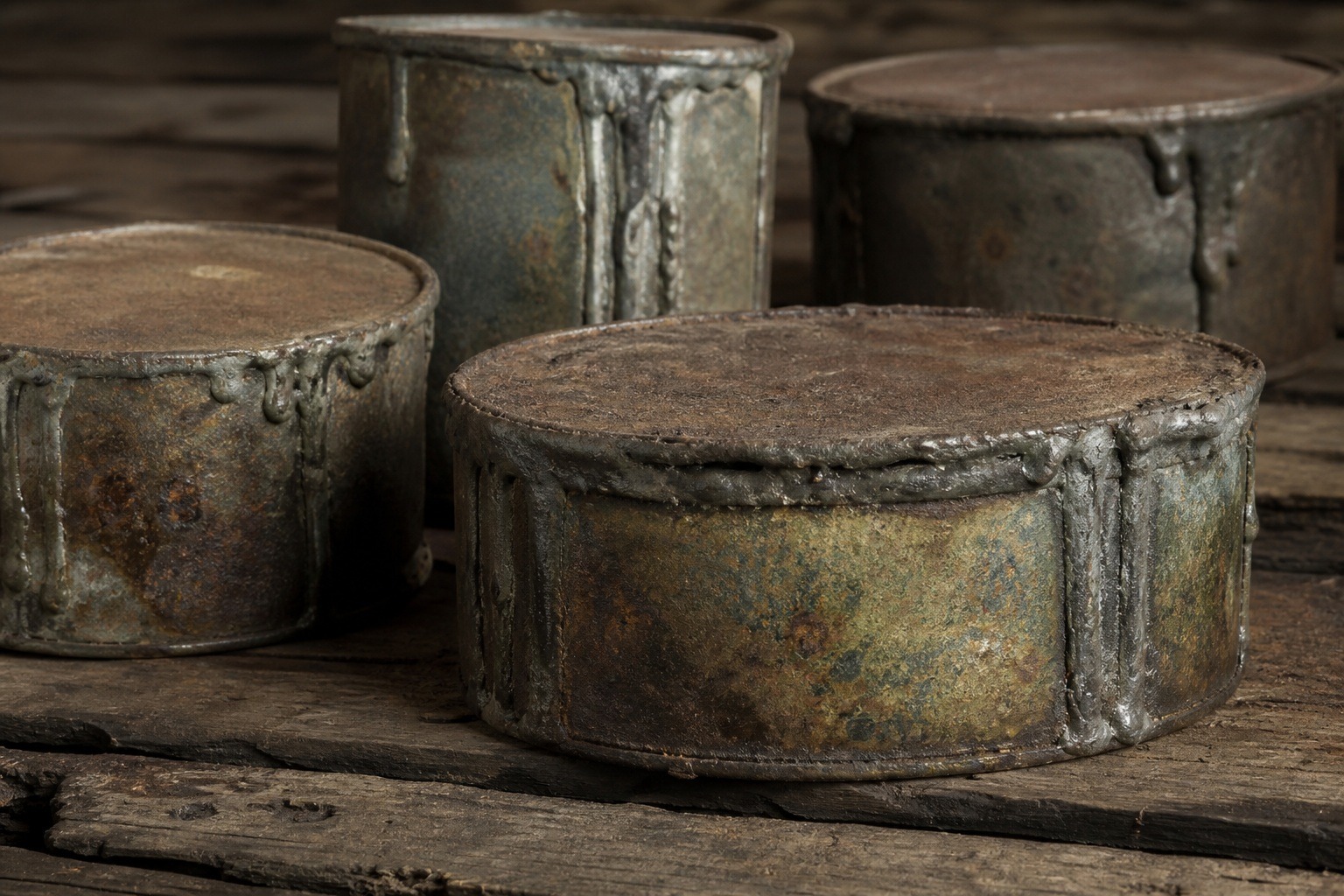
Seven weeks to produce around 8,000 tins of meat, soup and vegetables. Goldner had underbid five competitors to win the job, then faced a deadline that bordered on impossible. Corners got cut, and it shows: when investigators later examined surviving cans and the solder on the exhumed remains, the seams were described as thick and sloppy, dripped on like candle wax. That solder was about 90% lead.
{IMAGE_2}
So the procurement scandal is real. A cheap bid plus a frantic timeline produced shoddy cans, and those cans did leach lead into the food. The question the popular story never asks is the one that matters most: was it enough lead, absorbed fast enough, to kill? For a long time, everyone assumed yes. Then somebody actually looked at the bones.
Beechey Island, 1984: the frozen face and the 226 ppm bombshell
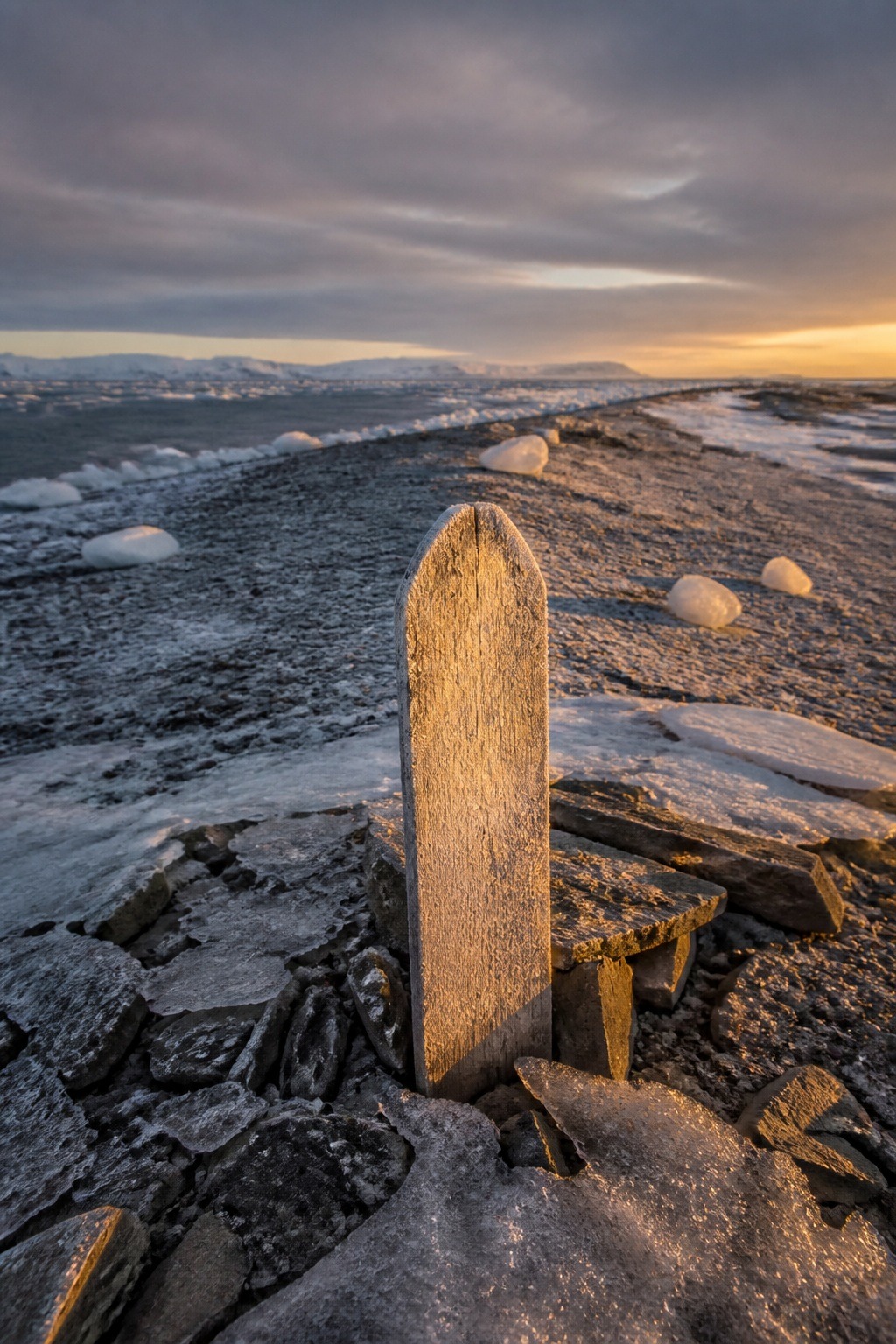
On a windswept spit of gravel called Beechey Island lie three graves — sailors who died during the expedition’s first winter and were buried before the disaster fully unfolded. In 1984, forensic anthropologist Owen Beattie of the University of Alberta exhumed them. The Arctic permafrost had done something uncanny: the men were essentially frozen intact. The face of 20-year-old stoker John Torrington, blue-eyed and startled, stared back at the 20th century.
Beattie’s team ran the tissue and bone through toxicology. The numbers were staggering — bone lead in the region of 200 to 226 parts per million, many times the level found in the remains of Inuit who lived in the same environment. Beattie’s 1987 book Frozen in Time laid out the case that became gospel: the tins had poisoned the crew, addling their judgement and wrecking their bodies until scurvy, cold and starvation finished the job.
- ~200–226 ppm — lead in Franklin crew bone (Beattie, 1980s)
- ~22–36 ppm — lead in local Inuit control bones from the same era
- ~1 tonne / hour — freshwater the ships’ distilling systems could consume while steaming (Battersby’s estimate)
- Uniform, not spiked — 2013 finding: the crew’s lead was spread evenly across a lifetime of bone growth
Did tinned food kill the Franklin expedition? What the 2013 chemistry showed
Bone is a slow diary. It records lead exposure over years, laying down new mineral like tree rings. If the tins had suddenly flooded these men with lead in the Arctic, you would expect to see it: a fresh, concentrated band of lead in the newest bone. That is the specific thing a team at Western University in Ontario went looking for in 2013.
Led by chemistry professor Ron Martin, the researchers put crew bone under a synchrotron — a particle accelerator that maps exactly where atoms sit inside a sample. Their finding, published in Applied Physics A, quietly demolished the popular theory. The lead was distributed uniformly throughout the bone, the signature of decades of steady exposure. It was not a fresh Arctic dose. As Martin’s team put it, the voyage was simply too brief for the men to absorb, from cans, the enormous burden their skeletons carried.
And that burden had a mundane explanation. Victorian Britain was a lead world — lead pipes, lead paint, lead glazes, lead in wine and cosmetics. These sailors were already saturated before they left port. The tins may have added a little; they did not deliver the killing blow. This is the piece almost every documentary still skips, and it changes the whole shape of the mystery.
A second suspect: the ships’ own water pipes
If not the cans, then what carried so much lead into these particular men? British engineer and Franklin researcher William Battersby offered the most elegant candidate in 2008: the ships themselves.
Erebus and Terror were fitted with then-modern equipment to melt ice and distill fresh water for their steam engines and their crews. Battersby estimated the systems could churn through something like a tonne of water an hour under steam — and the water ran through lead piping and lead-lined tanks. Day after day, month after month, the men were quite possibly drinking their own ships. A steady trickle from the plumbing fits the “uniform, chronic” chemistry far better than a sudden hit from dinner ever did.
It is worth being honest here: Battersby’s pipes remain a hypothesis, not a proven fact, and the uniform-lifetime reading of the bones argues that much of the burden predated the voyage entirely. But as a shipboard source, the plumbing is a more plausible villain than the tins — and a far stranger, more human one. The technology meant to keep the crew alive may have been quietly poisoning them.
The sailor who starved beside tonnes of meat
Then, in 2016, a single thumbnail rewrote another chapter. Jennie Christensen, an environmental scientist with the firm TrichAnalytics, obtained a preserved nail from John Hartnell, one of the three Beechey sailors, and read it like a tape recorder. A nail grows over months, banking a chemical record of what its owner was eating — and not eating.
Hartnell’s nail told a bleak story. He was severely zinc-deficient. His body showed the fingerprint of a man eating almost no meat, even though the holds around him groaned with tinned beef and pork. Zinc starvation cripples the immune system, and Christensen’s team argued this is what let a latent case of tuberculosis flare up and kill him. Crucially, the nail showed his lead levels were within a normal range and only climbed at the very end — a final surge as his failing, starving body pulled lead out of his own bones.
Why would a man refuse meat he was surrounded by? Perhaps the tins were spoiling faster than anyone admitted, or perhaps sickness had already killed his appetite. Either way, the image is haunting: death by malnutrition in the middle of a floating warehouse of food.
Botulism, scurvy, tuberculosis — the many-headed killer
The list of plausible contributors keeps growing. In 2003, toxicologist Bruce Horowitz published a paper raising a chilling alternative: botulism. Improperly sealed tins are a textbook home for Clostridium botulinum, and the Arctic harbours a cold-loving type E strain. Horowitz noted spore evidence in an exhumed crewman’s gut. A bad batch of tins might have killed not by lead but by toxin — fast, and early.
Layer these together and the real picture emerges. Scurvy from vanishing vitamin C. Tuberculosis riding in on collapsed immunity. Possible botulism from the very tins that were supposed to save them. Chronic lead they mostly carried from home. Then the endgame: hypothermia, starvation, and — confirmed by John Rae’s Inuit testimony in 1854 and by cut-marked bones studied by modern osteologists — cannibalism among the last survivors hauling boats across the ice.
The honest verdict is not that the old story was wrong so much as too tidy: a single villain for a death that clearly had several. No one thing killed the Franklin expedition. A cascade did.
Questions Readers Ask
Did the tinned food actually poison the Franklin crew? The tins did contain lead-heavy solder and did leach some lead, so they were a genuine hazard. But the 2013 Western University bone study showed the crew’s lead was a lifelong, evenly-distributed burden, not an Arctic spike from the cans — so the tins were, at most, a minor contributor, not the cause of death.
If not the tins, where did all the lead come from? Two answers. Most of it likely predated the voyage — Victorian Britain was soaked in lead pipes, paint and glazes. On board, the leading suspect is the ships’ lead-lined freshwater distilling system, which the men drank from daily.
What really killed them, then? A combination: starvation, scurvy, tuberculosis worsened by zinc deficiency, cold, and possibly botulism from spoiled tins — a cascade of causes rather than one poison.
Have the ships ever been found? Yes. Parks Canada located the wreck of HMS Erebus in 2014 and HMS Terror in 2016, both near King William Island, remarkably well preserved. Divers are still recovering artefacts, and the fullest answers may still be down there.
Sources and Notes
- Owen Beattie & John Geiger, Frozen in Time: The Fate of the Franklin Expedition (University of Alberta Press) — the Beechey Island exhumations and original bone-lead findings.
- Ronald R. Martin et al., “Pb distribution in bones from the Franklin expedition,” Applied Physics A, Western University, 2013 — synchrotron evidence of uniform, lifelong lead exposure.
- Jennie Christensen et al., “Hartnell’s time machine,” Journal of Archaeological Science: Reports, 2016 (TrichAnalytics) — nail micro-analysis showing severe zinc deficiency and tuberculosis.
- Bruce Z. Horowitz, “Polar Poisons: Did Botulism Doom the Franklin Expedition?,” Clinical Toxicology, 2003 — the type E botulism hypothesis.
- William Battersby, “Identification of the probable source of the lead poisoning observed in members of the Franklin Expedition,” Journal of the Hakluyt Society, 2008 — the shipboard distillation-pipe hypothesis.
- Parks Canada — Wrecks of HMS Erebus and HMS Terror National Historic Site — provisioning details and the 2014/2016 discoveries.
Forty years of chemistry have turned a simple morality tale — the cheap cans that killed a crew — into something richer and stranger: a puzzle still being solved, one thumbnail and one dive at a time. The tins have been largely acquitted. The pipes, the germs, and the slow arithmetic of starvation remain under suspicion. And somewhere in the cold hulls of Erebus and Terror, in the sediment and the sealed cabins Parks Canada has yet to open, the last witnesses may still be waiting to testify.
Frequently Asked Questions
Q: Did tinned food kill the Franklin expedition?
Probably not on its own. The expedition’s roughly 8,000 tins were sealed with solder about 90% lead and did leach lead into the food, and 1984 exhumations found crew bone lead around 200 to 226 ppm, far above local Inuit levels. But a 2013 Western University synchrotron study found that lead was distributed uniformly through the bone, the signature of decades of steady exposure rather than a fresh Arctic dose. The voyage was simply too brief for the tins to build up such a burden.
Q: When and why did the Franklin expedition set out?
The expedition sailed from England in May 1845 to force the Northwest Passage, the fabled sea route across the top of North America. It comprised two reinforced bomb ships, HMS Erebus and HMS Terror, carrying 129 officers and men under Sir John Franklin, with steam engines, libraries of more than a thousand books, fine china, and three years of provisions. Whalers spotted the ships in Baffin Bay in July 1845, moored to an iceberg, and neither vessel was ever seen again by European eyes.
Q: What did the Beechey Island graves reveal?
Three sailors who died during the expedition’s first winter were buried on Beechey Island in 1845-46. In 1984 forensic anthropologist Owen Beattie of the University of Alberta exhumed them, finding the Arctic permafrost had frozen the men essentially intact, including 20-year-old stoker John Torrington. Toxicology showed bone lead around 200 to 226 ppm, many times the roughly 22 to 36 ppm found in Inuit remains from the same era. Beattie’s 1987 book Frozen in Time argued the tins had poisoned the crew.
Q: What did the 2013 chemistry study prove?
A team at Western University in Ontario, led by chemistry professor Ron Martin and published in Applied Physics A, placed crew bone under a synchrotron, a particle accelerator that maps exactly where atoms sit inside a sample. If the tins had suddenly flooded the men with lead in the Arctic, a fresh concentrated band would appear in the newest bone. Instead the lead was distributed uniformly throughout, the signature of decades of steady exposure. The voyage was too brief for the men to absorb their skeletal burden from cans.
Illustrations are AI-generated. Article fact-checked and human-edited. Our editorial standards.