Does a Praying Mantis Bite? The Honest Answer
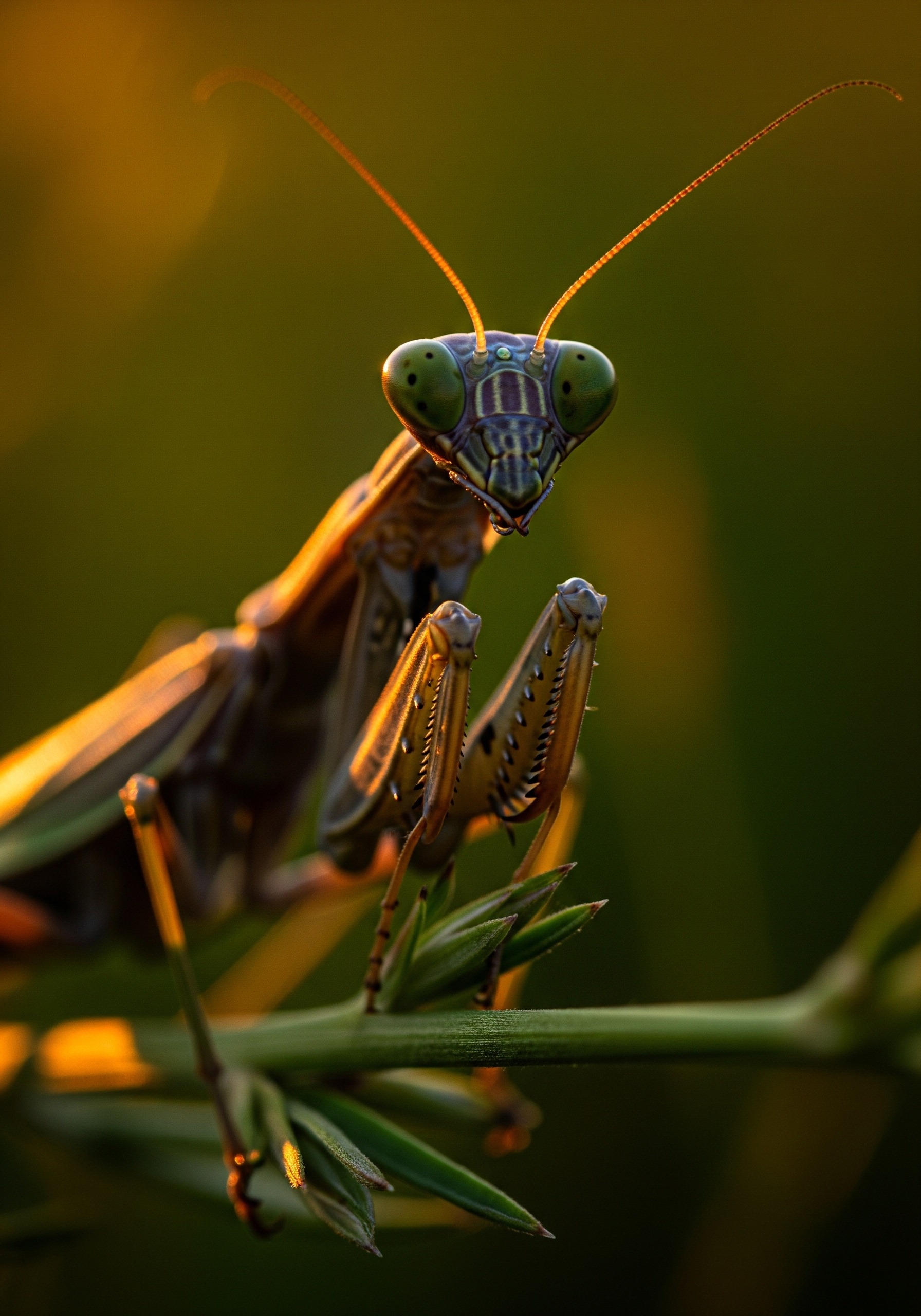
So you want to know about the praying mantis bite — whether it draws blood, whether it hurts, whether the strange little alien sitting on your windowsill is something you should worry about. Short answer first: no. A praying mantis bite is one of the most overhyped insect “attacks” in the garden, and most of what people remember as a bite isn’t even a bite.
Key Facts
- Praying mantises have mandibles, not fangs or stingers. They are not venomous, not poisonous, and have no sting.
- Documented mantis bites on humans are extremely rare. When they do happen, the wound is comparable to a pinprick — usually no broken skin.
- What most “bite” stories actually describe is the grip of the raptorial forelegs — rows of sharp spines that work like a folding jackknife.
- A 2017 review in The Wilson Journal of Ornithology, led by zoologist Martin Nyffeler at the University of Basel, found 147 documented cases of mantises killing small birds. Hummingbirds at garden feeders are the most frequent victims.
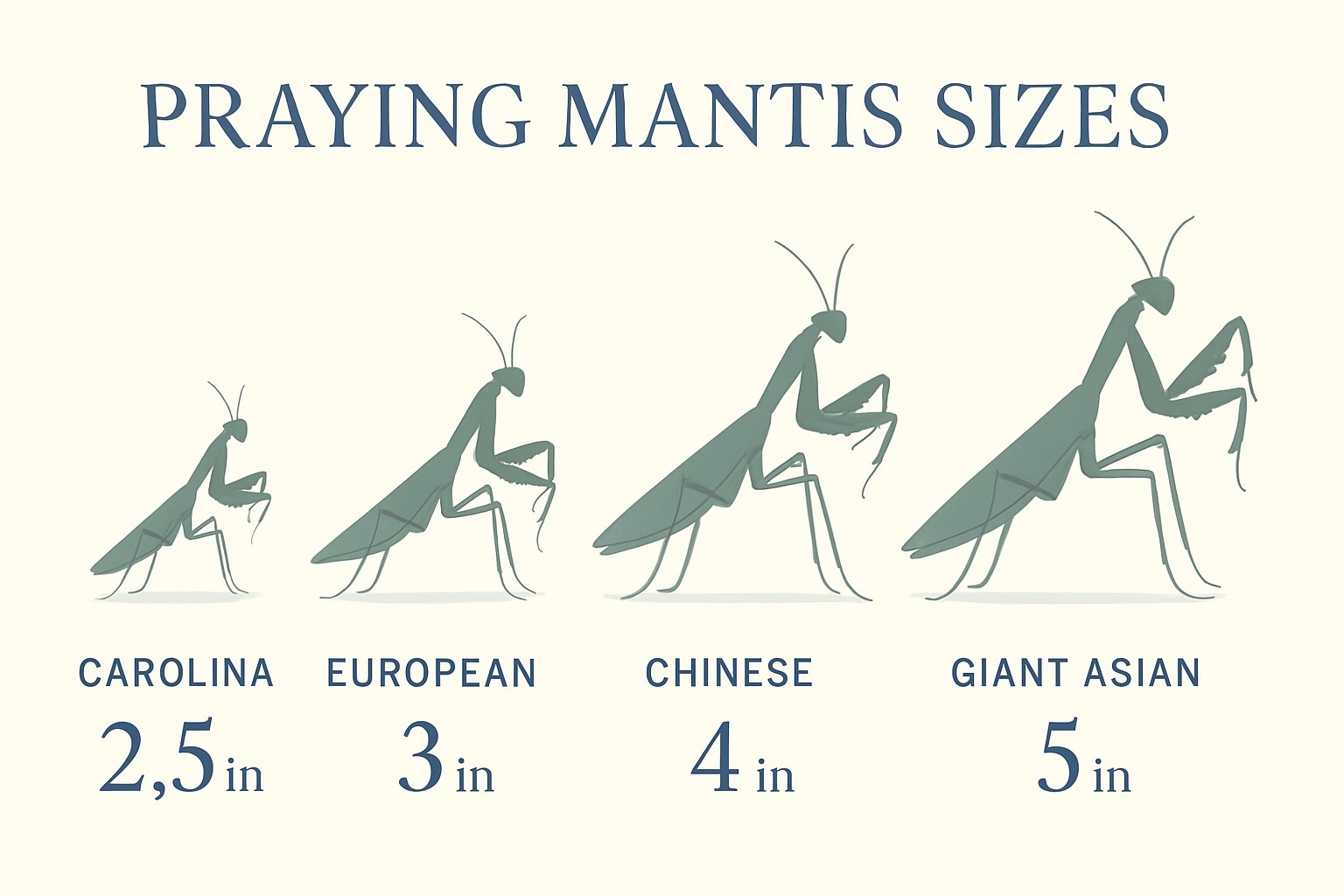
- The biggest mantis in U.S. yards — the introduced Chinese mantis (Tenodera sinensis) — can reach 4 inches; the native Carolina mantis tops out near 2.5 inches. Size matters for how memorable a grip feels.
In short: A praying mantis can bite you, but the chance is tiny and the damage is nothing. The real surprise is what the forelegs can do — and what those forelegs do to other animals.
Key Facts
- Praying mantises have mandibles, not fangs or stingers; they are not venomous, not poisonous, and none of the roughly 2,400 described species has ever evolved a sting.
- Documented mantis bites on humans are extremely rare, and the wound is comparable to a pinprick, usually without broken skin.
- Most reported ‘bites’ are actually the grip of the raptorial forelegs, whose interlocking rows of spines close like a folding jackknife to hold prey still.
- A 2017 review in The Wilson Journal of Ornithology, led by zoologist Martin Nyffeler at the University of Basel, found 147 documented cases of mantises killing small birds, often hummingbirds at feeders.
- The introduced Chinese mantis (Tenodera sinensis) can reach 4 inches, while the native Carolina mantis tops out near 2.5 inches; a 2025 Scientific Reports study described the foreleg spines as a mineralized lever system.
In short: A praying mantis can technically bite with its mandibles, but the chance is tiny and the wound is no worse than a pinprick. Mantises have no venom and no sting. Most ‘bites’ are really the grip of the spined forelegs. The real danger is to small prey — a 2017 review documented 147 mantises killing birds.
Does a praying mantis bite, really?
Technically yes. Functionally, almost never. Mantises have working mandibles — paired side-to-side jaws built to shear soft-bodied prey — and if a frightened mantis is pressed against your skin and has nothing else to grab, it can clamp down. Reports collected by entomologists describe a quick pinch, sometimes a faint red mark, occasionally a tiny break in the skin on thin areas like the webbing between fingers. Then it lets go.
What you almost never see in the literature is anything worse than that. No infections traced to mantis saliva. No allergic syndromes. No envenomation, because there is no venom. Medical references including Healthline note that mantis jaws are not strong enough to break the skin in most cases — a view consistent with what entomologists at the Smithsonian and other natural-history institutions have said for decades.
Here’s the thing that confuses people, though. Most “praying mantis bit me” stories are not bites at all.
What a “bite” usually turns out to be
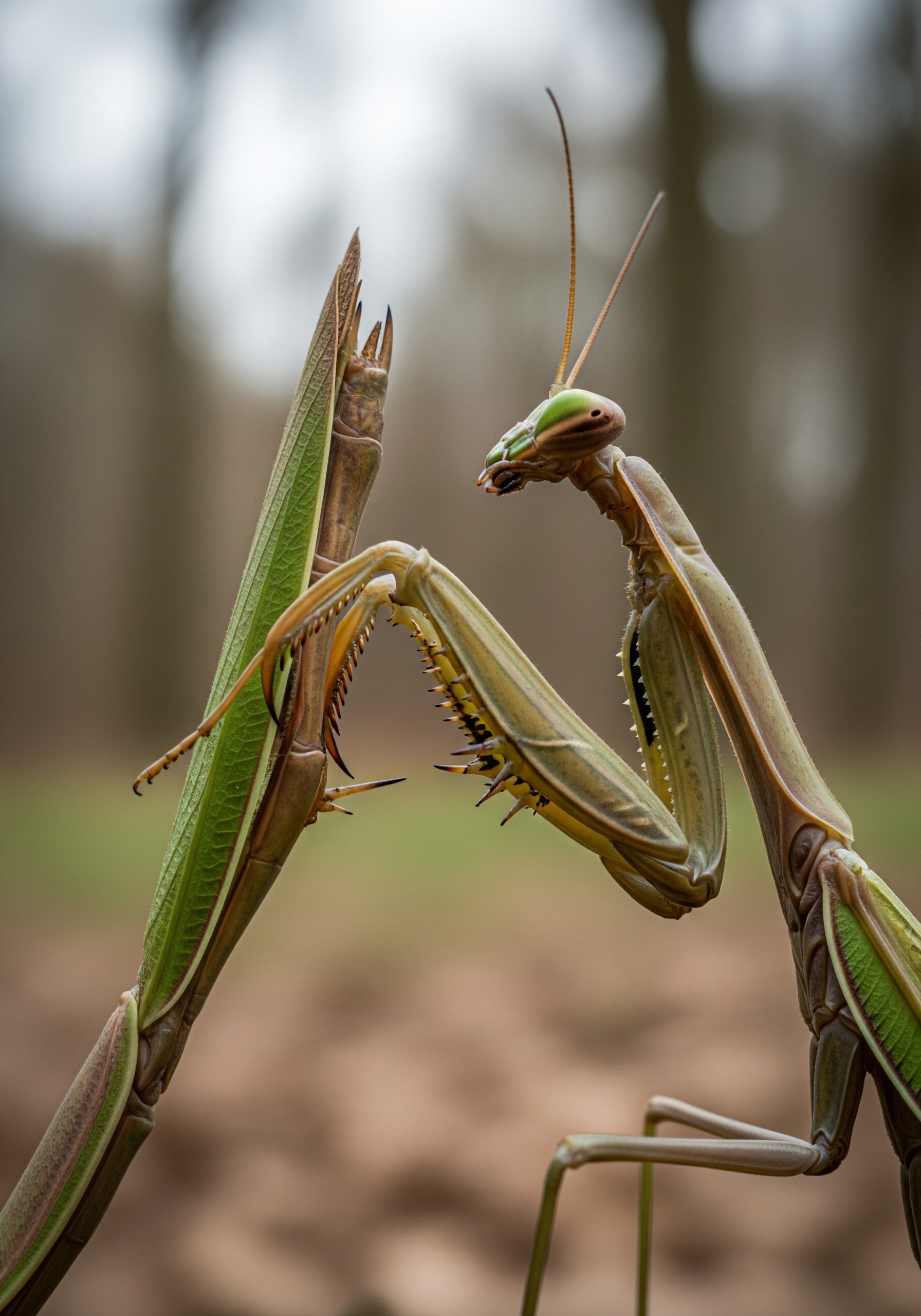
Pick up a mantis carelessly and you’ll feel something sharp. Sharp, fast, and surprising. That sensation is almost always the raptorial forelegs — the folded “praying” arms — snapping shut on your finger.
Each foreleg carries two rows of spines on the tibia and a single row on the femur. When the leg flexes, the spines interlock like a closing jackknife. A 2025 study in Nature’s Scientific Reports — examining foreleg cuticle in the species Gongylus gongylodes and Sphodromantis lineola — described the spines as a hardened, mineralized lever system built to grip without slipping. That is not a mechanism meant to break human skin. It is meant to hold prey absolutely still while the mandibles do the actual eating.
{IMAGE_2}
The result, on a human finger: a row of pinpoint pricks, mild stinging, no blood for most people. It feels exactly like what it is — being briefly held by an animal much smaller than you. Remove the finger gently and the mantis releases. Yank, and the spines drag.
Are praying mantises poisonous, venomous, or do they sting?
No, no, and no. This is the single most-asked question about mantises, and the answer is unusually clean for a wild insect.
Praying mantises produce no venom. They have no stinger — none of the roughly 2,400 described mantis species has ever evolved one. They are not poisonous to touch or to eat; predators including birds, lizards, and small mammals consume them routinely with no ill effect. The internet myth that an angry mantis “spits venom” appears to be a confusion with whip scorpions and certain assassin bugs. Mantises don’t spit anything. Their entire defensive repertoire is: stand still, look bigger, raise the forelegs, and hope.
That’s the whole arsenal.
Anything you read about a “praying mantis sting” is either wrong or a loose use of the word “sting” to describe the prick of the foreleg spines. There is no sting in the entomological sense.
When a bite — or a grip — is actually likely
Mantises don’t hunt people. Their eyes are tuned for movement at short range, and a hand is, to a mantis, a blurry slab of background. They bite, or grip, only when they feel trapped. The common scenarios:
You scoop one up suddenly and it lands upside-down. You trap it against a window. You hold it too tight and a foreleg fires off reflexively. A gravid female, hungry and edgy in late summer, mistakes a wiggling fingertip for prey at very close range — rare, but documented.
Species matters, too. The Chinese mantis (Tenodera sinensis), introduced to North America in the 1890s and now common from Massachusetts to California, can hit four inches. Its grip is memorable. The European mantis (Mantis religiosa), introduced around the same time, sits in the 2.5- to 3-inch range. The native Carolina mantis (Stagmomantis carolina) stays small — and the smaller the mantis, the less you feel anything at all. Tropical giants like the African Sphodromantis or the Indian Hierodula can exceed five inches in captivity, and keepers of those species describe a sharper grip — never a damaging one.
An honest editorial note from someone who has spent years around these insects: the only people I’ve ever met with a real “mantis injury” were keepers who grabbed a startled adult from behind. That is the entire pattern.
What mantises can hurt: a perspective check
For humans the mantis is essentially harmless. So why give the forelegs so much attention? Because for animals smaller than your thumb, the picture is very different — and this is the context most pop articles leave out.
In 2017, Martin Nyffeler of the University of Basel, with co-authors Mike Maxwell (National University, La Jolla) and J.V. Remsen Jr. (Louisiana State University), published a global review in The Wilson Journal of Ornithology documenting 147 confirmed cases of praying mantises killing and eating small birds. The cases came from 13 countries and every continent except Antarctica. More than 70 percent occurred in the United States, and the most frequent victim was the Ruby-throated Hummingbird (Archilochus colubris), ambushed at backyard feeders.
Subsequent field observations have extended the list to nestlings of Purple Sunbirds in Iran, Warbling White-eyes in Taiwan, and several New World songbirds. Mantises have also been documented eating small lizards, mice, frogs, and — in at least one famous case — a small bat.
This is the honest cognitive correction the top-ranking articles skip: a praying mantis is not dangerous to you, but it is a serious predator of animals smaller than your thumb. The same raptorial forelegs that feel like a pinch on a fingertip are lethal hooks on a hummingbird’s neck.
Handling a praying mantis without getting bitten
This is not handling instruction — just what experienced people do. Approach from the front, slowly, with an open flat palm. A mantis will usually step onto a finger or palm on its own, the way it would step onto a branch. Don’t pinch it from above; that triggers the defensive strike everyone calls a “bite.” Don’t squeeze. Keep your hand steady and let the animal walk. When you want to put it down, lower your hand to a leaf and let it step off. No spines fire. No mandibles come into play.
If a foreleg does grip you, freeze. The mantis releases within a few seconds once it realizes there is nothing edible. The instinct to pull is exactly the wrong move — pulling is what drags the spines.
Myth vs. evidence
| Claim | Reality |
|---|---|
| “Praying mantises spit venom.” | No venom, no spit. No mantis species has venom glands. |
| “A mantis bite can be deadly.” | No recorded human death from a mantis bite has ever been published. |
| “They’re harmless to other animals.” | Documented predators of hummingbirds, lizards, mice, even a small bat. |
| “It’s illegal to kill one in the U.S.” | A persistent urban legend. No federal law protects praying mantises. |
| “The ‘praying’ pose means they’re peaceful.” | It’s an ambush stance — forelegs cocked for a strike. |
Frequently Asked Questions
Q: Does a praying mantis bite hurt?
A: Most reported incidents feel like a brief, sharp pinch — often less painful than a paper cut. The mandibles rarely break skin. What people remember as pain is usually the prick of the foreleg spines, not the bite itself.
Q: Should I see a doctor if a praying mantis bites me?
A: For a normal interaction with a healthy mantis, ordinary wound care is what general medical references describe — wash the area with soap and water and keep it clean. Any wound that becomes red, swollen, warm, or shows other signs of infection deserves the same attention you’d give any other insect-related injury.
Q: Are praying mantises poisonous if a child or pet eats one?
A: No. Mantises contain no toxins. Birds and lizards eat them routinely. A curious dog or cat that swallows one will generally be fine, though the spines could briefly scratch the mouth on the way down.
Q: Why does my praying mantis lunge at my hand?
A: It’s almost always a threat display, not an attempt to eat you. Mantises rear up, spread their forelegs, and sometimes flash colored wings to look bigger when startled. Move slowly and the display ends.
Sources
- Nyffeler, M., Maxwell, M.R., and Remsen, J.V. — “Bird Predation by Praying Mantises: A Global Perspective,” The Wilson Journal of Ornithology (2017).
- Scientific Reports (Nature, 2025) — Morphology and material composition of raptorial foreleg cuticles in praying mantises Gongylus gongylodes and Sphodromantis lineola.
- Healthline — medically reviewed reference on praying mantis bites.
- Smithsonian National Museum of Natural History — Mantodea entomology collections and identification resources.
- Journal of Orthoptera Research — field observations of Mantis religiosa nest predation.
If a praying mantis ever turns to look at you with that quiet, swivelling head and those huge compound eyes, you are not being threatened — you are being studied. Hand on the windowsill, palm flat, no rush. The worst that happens is a pinprick you’ll forget by lunch. And in return, for a few seconds, you get to be examined by one of evolution’s strangest little hunters.
Illustrations are AI-generated. Article fact-checked and human-edited. Our editorial standards.