Two Elephants Hadn’t Seen Each Other in 22 Years
Nobody was watching for it. The keepers at a Tennessee elephant sanctuary were just doing a routine introduction when the steel bars started bending.
Their names were Shirley and Jenny. They’d spent a brief stretch of their early lives together in a traveling circus, then been pulled apart by the chaos of the exotic animal trade — shipped to different facilities, different states, different worlds. Twenty-two years passed. Then one sanctuary brought them back together, and nobody was prepared for what happened next.
Key Facts
- Shirley and Jenny were reunited at The Elephant Sanctuary in Hohenwald, Tennessee — founded in 1995 by Carol Buckley and Scott Blais — when Shirley arrived in 1999 after 22 years apart.
- The sanctuary spans 2,700 acres and has provided refuge to over 30 elephants since its founding in 1995, more than any comparable facility in North America.
- Solomon James, Shirley’s longtime caretaker at the Louisiana Purchase Gardens and Zoo, accompanied her to the sanctuary for the handoff and wept openly in the barn.
- PBS documentary The Urban Elephant, which aired in 2000, captured the reunion and became one of the most-watched nature documentaries of the era.
- Elephants can detect infrasound rumbles from other elephants up to 6 miles away, according to research published in the journal Bioacoustics.
In short: Shirley and Jenny — two elephants briefly together in a 1970s circus — were reunited in 1999 at The Elephant Sanctuary in Hohenwald, Tennessee after 22 years apart. They bent the steel bars between them. PBS’s 2000 documentary The Urban Elephant captured it. Elephants can detect infrasound up to 6 miles away.
The Elephant Reunion Sanctuary Nobody Expected to Work
The Elephant Sanctuary in Hohenwald, Tennessee, was founded in 1995 by Carol Buckley and Scott Blais specifically to give retired captive elephants a place to decompress, socialize, and live out their years with some dignity. When Shirley arrived in 1999, keepers knew she had a history with another elephant somewhere out there. What they didn’t know — and couldn’t have predicted — was how intact that history still was inside her. The sanctuary spans 2,700 acres. Could space alone explain what came next?
Jenny had already been living there. She was younger, smaller, and by all accounts, a bit of a handful. When staff began introducing Shirley to the property, the two elephants hadn’t physically seen each other since the late 1970s.
Most humans can barely remember a face from three years ago. These two remembered everything.
Steel Bars Bend. Keepers Stand Back Speechless.
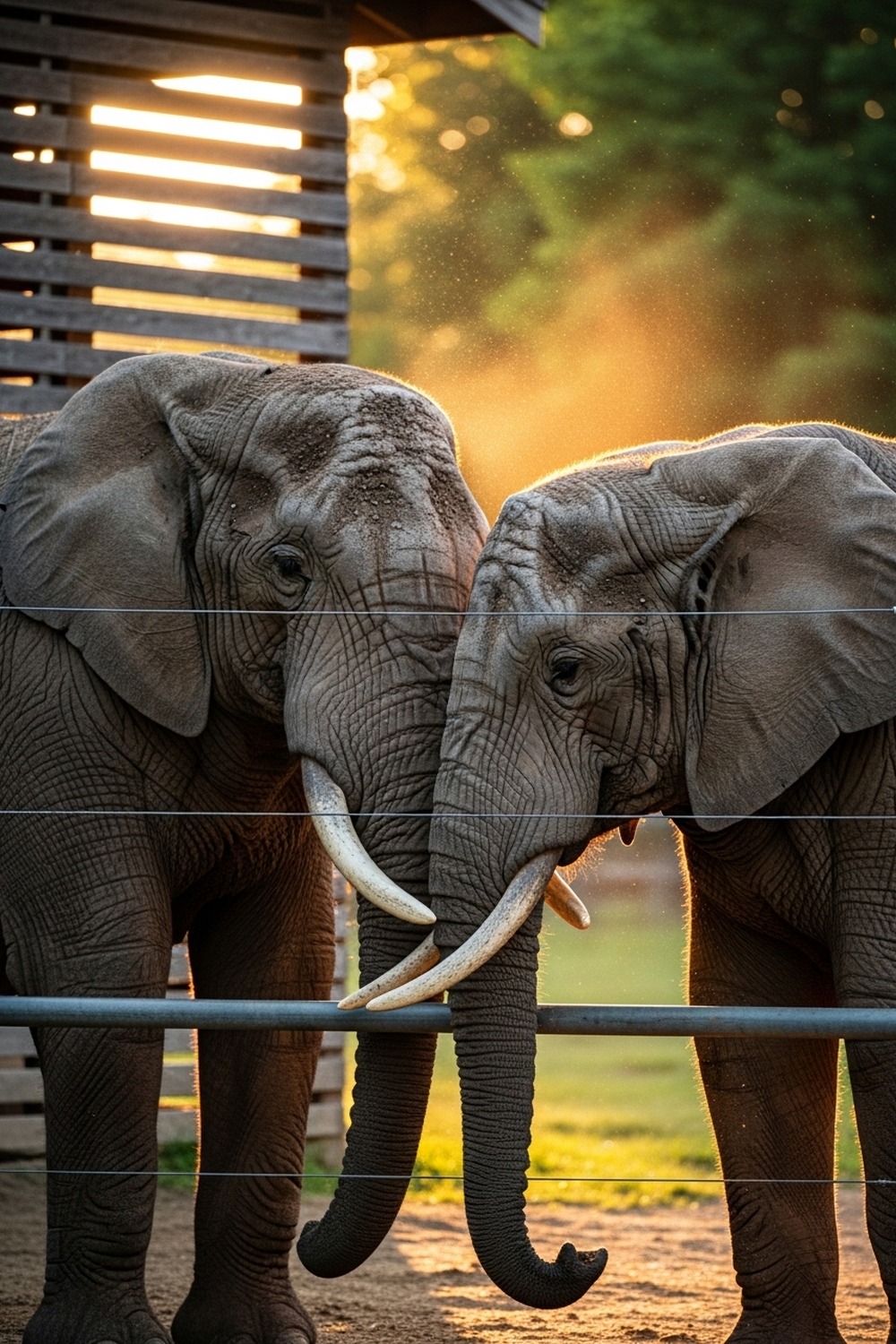
The moment they were placed in adjacent stalls, something broke loose. Shirley and Jenny slammed their bodies against the metal barriers between them — not aggressively, not out of fear, but with a kind of frantic urgency that looked, to every human watching, like pure desperate joy. The bars physically bent. Keepers who’d worked with elephants for years said they’d never seen anything like it. You can read about animal bonds at this-amazing-world.com, but watching it live is something else entirely.
Solomon James, Shirley’s longtime caretaker at the Louisiana Purchase Gardens and Zoo, had traveled with her to the sanctuary for the handoff. He’d spent years with this animal.
He wept openly in the barn.
That detail alone tells you something the camera couldn’t fully capture.
What Elephants Are Actually Saying to Each Other
Here’s the part that kept me reading about this for another hour after I thought I was done: Shirley and Jenny may have been communicating long before anyone introduced them. Elephants use infrasound — low-frequency rumbles that travel through the ground and air, completely below the threshold of human hearing — to reach each other across distances that can exceed a mile. Researcher Cynthia Moss, who spent decades studying elephant behavior in Amboseli, has documented how elephants use these calls to coordinate, grieve, and maintain relationships across vast distances. The elephant reunion sanctuary may have been buzzing with conversation long before the first bar bent.
Which changes the picture considerably. The “moment” of reunion the cameras captured? It might have been act two.
The reunion might have started the instant they were close enough to feel each other’s vibrations through the ground. Science keeps making this story weirder in the best possible way.
The Memory Question That Scientists Can’t Fully Answer
Elephant memory isn’t a myth or a metaphor — it’s been documented, tested, and verified across decades of field research. Elephants recognize individual faces, voices, and scents after separations of many years. They’ve been filmed reacting with visible agitation to the bones of elephants they once knew. The elephant reunion sanctuary reunion between Shirley and Jenny added one more data point to a growing body of evidence that these animals carry emotional maps of their social lives, detailed and durable in ways we’re still figuring out.
But here’s the uncomfortable edge of it: if they remember that vividly, they also remember everything that happened in between. The hooks. The chains. The concrete floors. The isolation.
And they show up anyway, rumbling through steel, reaching for each other.
The Documentary That Changed How People See Elephants
Turns out, the reunion was filmed. A PBS documentary called The Urban Elephant, aired in 2000, captured the whole thing — Shirley’s arrival, the barn introduction, the bending bars, Solomon James crying beside the animal he’d cared for like family. It became one of the most-watched nature documentaries of that era, not because of exotic locations or dramatic predator chases, but because two elephants pressed their faces together through bent steel and people couldn’t look away. The footage is still circulating online decades later, still wrecking people the first time they see it.
What it did to public understanding of elephant cognition is hard to overstate. Before that documentary, the emotional lives of elephants were still largely a scientific debate. After it, the debate quietly shifted. The footage didn’t prove anything in a peer-reviewed sense.
But it changed the questions people thought were worth asking.
By the Numbers
- As of 2023, The Elephant Sanctuary in Hohenwald has provided refuge to over 30 elephants since its founding in 1995 — more than any comparable facility in North America.
- Elephants can detect infrasound rumbles from other elephants up to 6 miles away, according to research published in the journal Bioacoustics — meaning Shirley and Jenny may have been “talking” well before keepers introduced them.
- The longest documented separation between two elephants who later showed recognition behaviors is believed to exceed 25 years, based on sanctuary records across multiple facilities.
- Wild African elephants maintain social bonds across groups of up to 100 individuals, recognizing the calls of family members they haven’t encountered in over a decade — a feat of acoustic memory with no real human equivalent in scale.
Field Notes
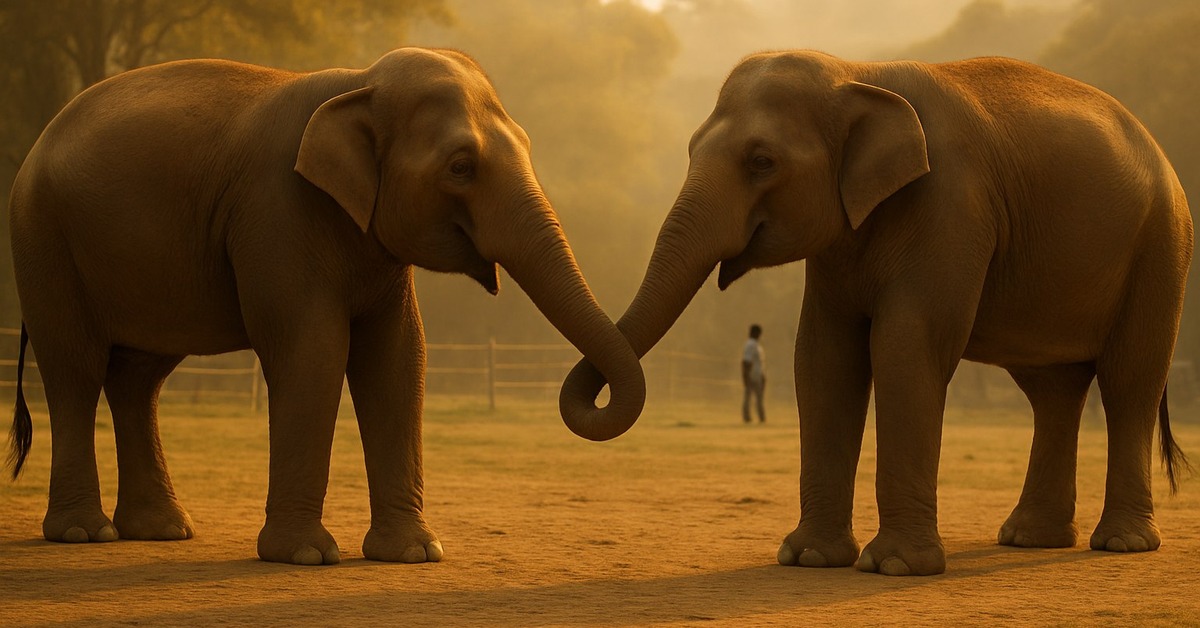
- Jenny died in 2006, just seven years after the reunion. Those years were spent with Shirley as her constant companion. Sanctuary staff reported that Shirley showed signs of grief after Jenny’s death that lasted for months — refusing to leave her side even after she collapsed.
- A specialized fatty pad laced with nerve endings in each elephant’s foot detects seismic vibrations from other elephants’ calls through the ground. Essentially a sixth sense, invisible to the naked eye.
- Shirley carried a permanent limp from a serious leg injury earlier in her life. Jenny — despite being much younger — almost immediately began matching her pace when they walked together.
- Nobody trained her to do that.
Why This Story Still Matters, All These Years Later
The elephant reunion sanctuary story isn’t just a feel-good moment that went viral before viral was even a concept. It sits at the center of a much larger shift in how humans understand animal consciousness. In the years since Shirley and Jenny pressed their bodies against those bars, the scientific consensus has moved steadily toward acknowledging that many animals — elephants especially — experience grief, joy, loyalty, and longing in ways that are functionally similar to our own. That’s not sentimentality. That’s peer-reviewed science catching up to what sanctuary workers have known for decades.
And it has consequences. For policy, for captivity law, for the way zoos and circuses are regulated, and for how we weigh the costs of keeping highly intelligent, deeply social animals in isolation.
A bent steel bar turned out to be evidence. It just took the rest of the world a while to read it correctly.
Shirley still lives at the sanctuary in Hohenwald. She’s in her fifties now, moving slowly, but surrounded by other elephants who have their own tangled histories and their own complicated memories. The story didn’t end with the reunion. It just changed shape. If this kind of story keeps you up at night, there’s more at this-amazing-world.com — and the next one is even stranger.
Frequently Asked Questions
Q: Where was the Shirley and Jenny elephant reunion?
The reunion happened at The Elephant Sanctuary in Hohenwald, Tennessee, founded in 1995 by Carol Buckley and Scott Blais specifically to give retired captive elephants a place to decompress, socialize, and live with dignity. The sanctuary spans 2,700 acres. Shirley arrived in 1999 after staff learned she had a history with another elephant from her circus days. Jenny was already living there. The two elephants hadn’t physically seen each other since the late 1970s — roughly 22 years apart.
Q: What happened the moment Shirley and Jenny were reunited?
When the two elephants were placed in adjacent stalls, both slammed their bodies against the metal barriers between them with a kind of frantic urgency that looked, to every human watching, like pure joy. The steel bars physically bent. Solomon James, Shirley’s longtime caretaker at the Louisiana Purchase Gardens and Zoo, had traveled with her for the handoff and wept openly in the barn. Keepers with years of elephant experience described having never seen anything like it before in their careers.
Q: Can elephants really remember each other after 22 years?
Yes. Elephant memory has been documented, tested, and verified across decades of field research. Elephants recognize individual faces, voices, and scents after separations of many years, and have been filmed reacting visibly to bones of elephants they once knew. The Shirley-Jenny reunion added another data point to a body of evidence showing these animals carry emotional maps of their social lives. Wild African elephants maintain bonds across groups of up to 100 individuals, recognizing the calls of family members not encountered in over a decade.
Q: How did Shirley and Jenny communicate before they met physically?
Elephants use infrasound — low-frequency rumbles that travel through the ground and air below human hearing — to reach each other across distances exceeding a mile. Research published in the journal Bioacoustics indicates they can detect these rumbles from up to 6 miles away. Researcher Cynthia Moss, who spent decades in Amboseli, has documented how elephants use these calls to coordinate, grieve, and maintain relationships. The cameras may have captured act two — the reunion likely began the moment they were close enough to feel each other.
Illustrations are AI-generated. Article fact-checked and human-edited. Our editorial standards.