The Bee Dance That Took a Scientist 20 Years to Crack
A honeybee comes back from foraging, lands on the vertical wall of her hive, and starts shaking her abdomen in a figure-eight. Her sisters crowd around in complete darkness — they can’t see her, can’t see anything — and somehow they understand exactly where she’s been and whether it’s worth the trip. No words. No light. Just movement.
It sounds impossible until you realize it’s real, and then you realize it’s been happening for millions of years, and then you start wondering what else we’ve missed because we weren’t paying attention.
Inside a hive right now, thousands of bees are making decisions about where to fly, what to collect, and whether a food source justifies burning through their energy reserves. They’re not guessing. They’re reading each other’s bodies like a language — one so precise that it took a dedicated entomologist the better part of two decades just to believe it was real, let alone understand how it works.
Key Facts
- Karl von Frisch published his foundational paper on the waggle dance in 1946 after more than 20 years of observation.
- Von Frisch accepted the Nobel Prize in Physiology or Medicine in 1973 at age 87, one of the few entomologists to receive the honor.
- A single honeybee colony may send out up to 80,000 foragers on a productive day.
- A one-second waggle run signals a food source roughly one kilometre away; duration encodes distance and angle encodes direction.
- Dancing bees update their waggle angle to compensate for the sun shifting about 15 degrees per hour using an internal clock.
In short: The honeybee waggle dance is a figure-eight movement performed in total darkness on the vertical comb, encoding a food source’s direction, distance, and quality through angle, duration, and intensity. Karl von Frisch spent over 20 years decoding it before his 1946 paper and a 1973 Nobel Prize confirmed bees navigate with coordinate-level precision.
The Waggle Dance: Nature’s Most Precise GPS Signal
The honeybee waggle dance is a figure-eight movement performed on the vertical face of the honeycomb. Here’s what happens: a bee runs a straight line — the waggle run — while shaking her abdomen side to side, then loops back and does it again. Over and over.
What Karl von Frisch discovered was that this isn’t random at all.
The angle of the waggle run relative to vertical gravity maps almost perfectly to the angle of the food source relative to the sun. Every single time. And the duration? A one-second waggle run means roughly one kilometer away. Two seconds means two kilometers. Duration equals distance. Direction equals angle. It’s a coordinate system built entirely from movement, and it’s accurate enough to make GPS engineers jealous.
The math is almost unsettling.
Von Frisch Spent Twenty Years Watching Bees Dance
It started in the 1920s with a simple question: could bees see color? Karl von Frisch was curious. One observation led to another. By the 1940s he had a theory, but he didn’t stop there — he spent decades more watching individual bees marked with tiny paint dots, recording hundreds of dances, cross-referencing them against actual flower locations. Painstaking doesn’t cover it.
When he finally had the full picture, it was 1946.
The scientific community didn’t believe him at first.
He kept working. Kept watching. Kept proving it. By 1973, when he was 87 years old, he accepted the Nobel Prize in Physiology or Medicine. One of the very few entomologists in history to receive that honor. Some discoveries are worth the wait.
How Bees Actually “Read” Another Bee’s Performance
This is where it gets dense. When a forager returns and dances, other bees gather around her in darkness so complete they can’t see anything. They follow her movements by touch, feeling her vibrations through the comb with their antennae. The hive isn’t lit. These bees are reading a dance they literally cannot see.
And there’s more encoded in the dance than just direction. If the food source is rich — high sugar concentration, abundant flowers — the dancer performs harder. More runs. Faster pace. More intensity. Other foragers read this like a review score. Rich source? Worth the trip. Mediocre flowers? Skip it and wait for better intel.
It’s quality-of-life information built into the performance itself.
You can explore more about how insects communicate in ways we’re only beginning to understand over at this-amazing-world.com.
The Dance Encodes More Than Just Location
The honeybee waggle dance isn’t a single-channel signal. Direction, distance, and food quality all get transmitted simultaneously through the combination of angle, duration, and energy. Some researchers have also found evidence that the sounds bees produce during the dance — vibrations piping through the comb itself — add another layer of information entirely.
We’ve been studying this for nearly a century.
We’re still finding new dimensions to it.
There’s also the question of dialect. Different bee subspecies around the world have slightly different calibrations — the same waggle duration doesn’t always mean the same distance everywhere. Regional accents encoded in muscle memory.
And here’s something that stopped me cold while I was reading: researchers once put bees in an elevator and moved them vertically while they tried to forage. The bees got confused. They couldn’t recalibrate their gravity compass. The entire dance system broke down because it’s fundamentally dependent on a stable gravitational reference point. That single small experiment revealed just how intricately the system is built.
Bees Can Also Vote — And They Do It Through Dance
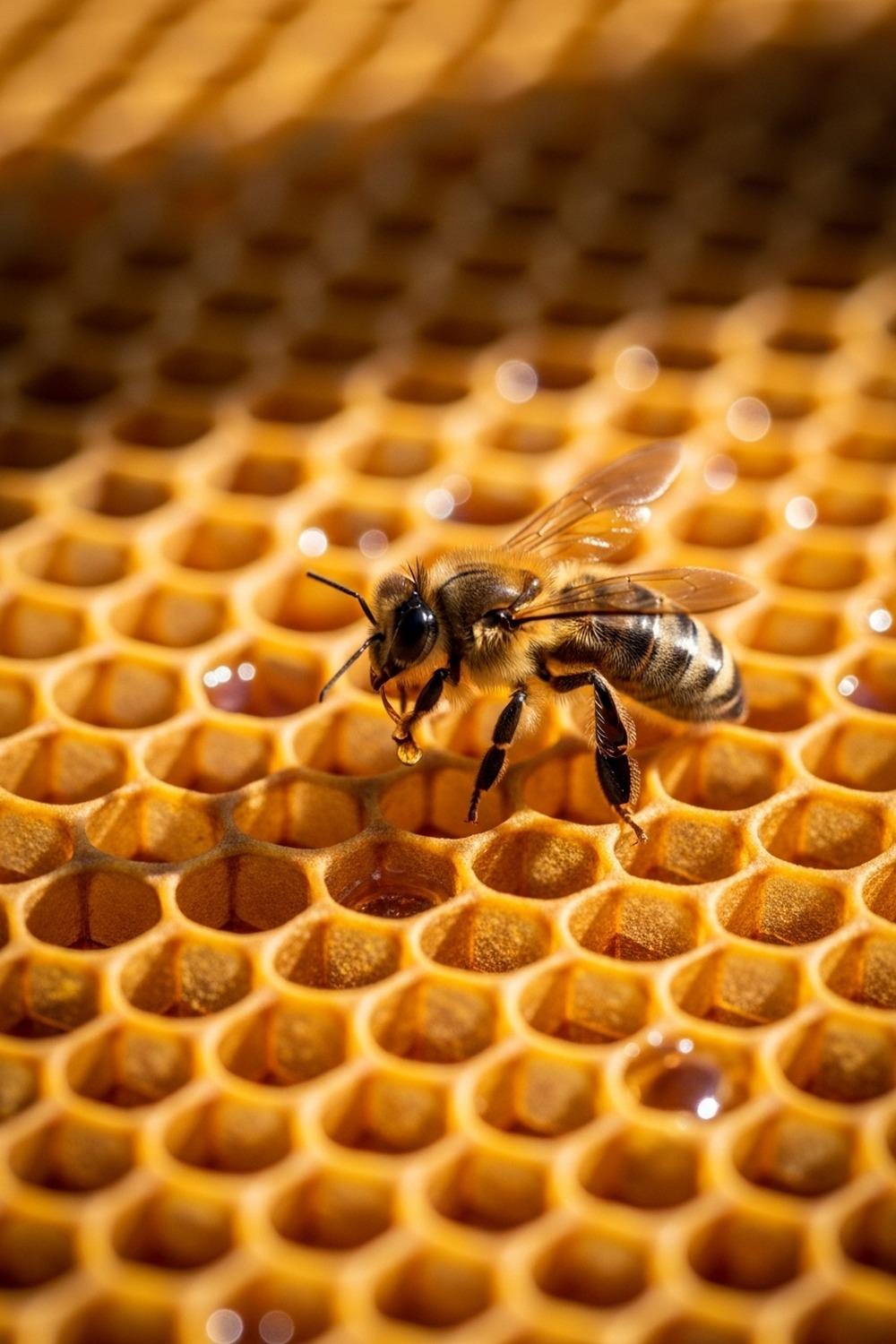
The waggle dance isn’t only about food. When a colony swarms — when thousands of bees leave together to find a new home — scout bees inspect potential locations and return to dance about them. Different scouts dance for different sites. Better location equals more enthusiastic dancing. More persistent dancers. Other bees watch, get recruited, check the site themselves, and if they agree, they come back and add their dances to the campaign.
The colony votes with its dancing.
The site with the most passionate dancers wins. Eventually a threshold of agreement is reached and the entire swarm launches as one coordinated unit. Thomas Seeley at Cornell University has spent decades studying this process. He calls it a model of collective decision-making that’s actually more efficient and more accurate than many systems humans have designed for the same purpose.
By the Numbers
- Von Frisch published his foundational paper in 1946, after more than 20 years of observation.
- A single honeybee colony may send out up to 80,000 foragers on a productive day, all navigating using information decoded from dances witnessed inside the hive.
- The waggle run duration is precise to fractions of a second — bees distinguish food sources only 25 meters apart from locations over a kilometer away.
- A forager bee performs the same dance 50 to 100 times in a row to ensure enough nestmates receive the message. Repetition as redundancy. The same principle that underlies digital error correction.
Field Notes
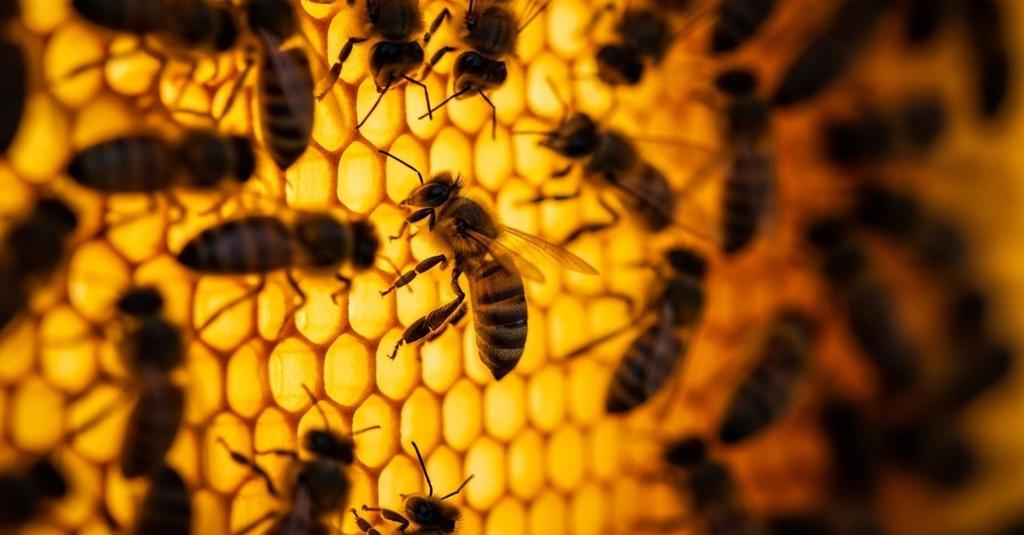
- Complete darkness on the vertical face of the comb — the entire communication happens through touch and vibration.
- When the sun moves across the sky during the day, dancing bees automatically update the angle of their waggle runs to compensate. They have an internal clock precise enough to account for the sun shifting roughly 15 degrees per hour.
- Bees that have been artificially displaced — flown to a new location before release — can use dance information to navigate toward a food source they’ve never visited. The dance encodes actual spatial coordinates, not just a follow-me instruction.
Why the Waggle Dance Should Change How We Think
Here’s what forces a reckoning: a bee’s nervous system contains roughly one million neurons. A human’s contains 86 billion. And yet this tiny insect encodes direction, distance, and quality into a physical performance so precise that it took one of the 20th century’s most dedicated scientists twenty years to crack. Modern researchers are still finding new things inside it. That gap between brain size and behavioral sophistication is worth sitting with for a while.
The practical applications matter too. Understanding how bees communicate about food sources is directly relevant to colony collapse disorder, to designing better pollinator habitats, to figuring out why some populations are failing in fragmented agricultural landscapes. The dance isn’t just beautiful. It’s a window into whether colonies are healthy, stressed, or struggling.
A bee returned from a field and ran a figure-eight on wax in the dark. She told her sisters exactly where to go. No language. No maps. Just a body moving through space with extraordinary purpose. Karl von Frisch watched this happen thousands of times before he understood it. Now you know what he saw.
Frequently Asked Questions
Q: What information does the honeybee waggle dance actually encode?
The waggle dance transmits at least three pieces of information at once. The angle of the straight waggle run relative to vertical maps to the food source’s direction relative to the sun, while the run’s duration encodes distance, with roughly one second meaning one kilometre. The intensity and number of repetitions signal food quality. Bees can distinguish food sources only 25 meters apart from locations over a kilometre away, making it a remarkably precise navigation system.
Q: How do bees read the dance in a completely dark hive?
Inside the hive the vertical comb is in total darkness, so following bees cannot see the dancer at all. Instead they crowd around her and read her movements through touch and vibration, feeling the dance with their antennae as it travels through the comb. A forager typically repeats the same dance 50 to 100 times in a row to ensure enough nestmates receive the message, using repetition as redundancy much like digital error correction.
Q: Who discovered the honeybee waggle dance and when?
Austrian ethologist Karl von Frisch decoded the waggle dance, publishing his foundational paper in 1946 after more than 20 years of patient observation that began in the 1920s with a question about whether bees see color. The scientific community initially doubted him, but he kept proving it with marked bees and cross-referenced flower locations. In 1973, at age 87, he accepted the Nobel Prize in Physiology or Medicine for the work.
Illustrations are AI-generated. Article fact-checked and human-edited. Our editorial standards.