The Paintball Gun Outsmarting Thieves Across Europe
A thief walks into a shop in Manchester. They case the joint, clock the exits, maybe grab something small to test the waters. Then they see it — a bright yellow sticker near the door warning about a dye launcher system. And they just… leave. Most of them don’t even try.
That’s the strange part. The technology works best when nobody actually fires it.
Here’s what happens when someone does: A handheld launcher fires a capsule roughly the size of a paintball. It hits a jacket, an arm, a bag — doesn’t matter. The capsule bursts on impact and releases fluorescent dye that bonds to fabric and skin in seconds. Not the kind of dye that washes out in a shower. We’re talking days of visibility. Every camera becomes useful. Every passerby becomes a witness. Every police officer on the street suddenly knows exactly who they’re looking for. The criminal doesn’t get to disappear into the crowd.
Key Facts
- UK retailers lost 1.76 billion pounds to shoplifting in 2022-23, according to the British Retail Consortium annual crime survey.
- Stores using visible dye launcher signage reported theft attempt reductions up to 40% in early-2020s pilot programs across Northern European chains.
- Bank dye packs, the technology’s precursor, have been operational since the 1960s and can stain skin for up to a week without specialist removal agents.
- A dye launcher system costs 300 to 800 pounds to install, against an average annual shoplifting loss of over 3,000 pounds per UK small retailer.
- Dr. Marcus Felson’s routine activity theory shaped modern loss-prevention thinking around making crime visible rather than merely punishable.
In short: The anti-theft dye launcher fires a paintball-sized capsule that bursts on impact, marking a thief with fluorescent dye that bonds to skin and fabric for days. Its real power is deterrence: visible signage alone cut theft attempts up to 40%, rewriting the criminal’s cost-benefit calculation before any capsule is ever fired.
How the Anti-Theft Dye Launcher Actually Works
The system itself isn’t complicated. That’s the genius of it.
A handheld or mounted launcher fires dye-filled capsules engineered to burst on contact. The formulation is the critical part — not standard paint at all. Some versions use synthetic dyes that fluoresce under UV light, meaning a quick change of clothes doesn’t solve the problem. The suspect touches a car door, a lamppost, a bus seat. Everything they touch becomes marked. Researchers studying crime prevention strategy have noted that visibility-based deterrents fundamentally shift how criminals calculate risk. Dr. Marcus Felson’s work on routine activity theory shaped modern loss prevention thinking around a simple principle: making crime *visible* is often more powerful than making it punishable.
The dye itself is forensically useful in ways most shop owners don’t even realize. Some commercial formulations include chemical markers unique to individual retailers — meaning law enforcement can potentially trace a stained suspect back to the specific store that deployed the capsule. That technology came directly from bank dye packs, those exploding security devices that coat stolen cash in permanent marker. Turns out the overlap between banking security and high-street retail protection is where the real technical development happened, quietly, over the better part of two decades.
A marked suspect isn’t just visually identifiable. They’re provably linked to a crime scene.
Before the Launchers: The Egg Era
Shop owners in the UK were keeping cartons of eggs behind counters. Literally eggs. This was their best option for marking fleeing thieves — messy, unreliable, with terrible range. The fact that this was considered acceptable security strategy tells you how desperate retailers felt and how little institutional support they thought they had.
When the professional security industry finally caught up with an engineered solution, adoption was immediate. The demand had been quietly building for years.
That historical context matters. It explains why dye launchers spread across European retail so fast once they hit the market.
The Real Innovation Nobody Talks About
Here’s the part that kept me reading for another hour: the anti-theft dye launcher is most effective when it’s never used.
Stores that display clear signage — a bright yellow sticker near the entrance warning about the system — report measurable drops in theft attempts before a single capsule has ever been fired. Thieves case locations before they rob them. They look for vulnerabilities. A threat of permanent fluorescent marking is a vulnerability they didn’t plan for. And they walk away from a job that suddenly doesn’t look worth it.
No chase. No confrontation. No injury. Just a credible threat that rewrites the cost-benefit calculation in seconds. That’s the actual innovation — not the launcher, but the logic behind it.
The Dye Formula: Forensics as Design
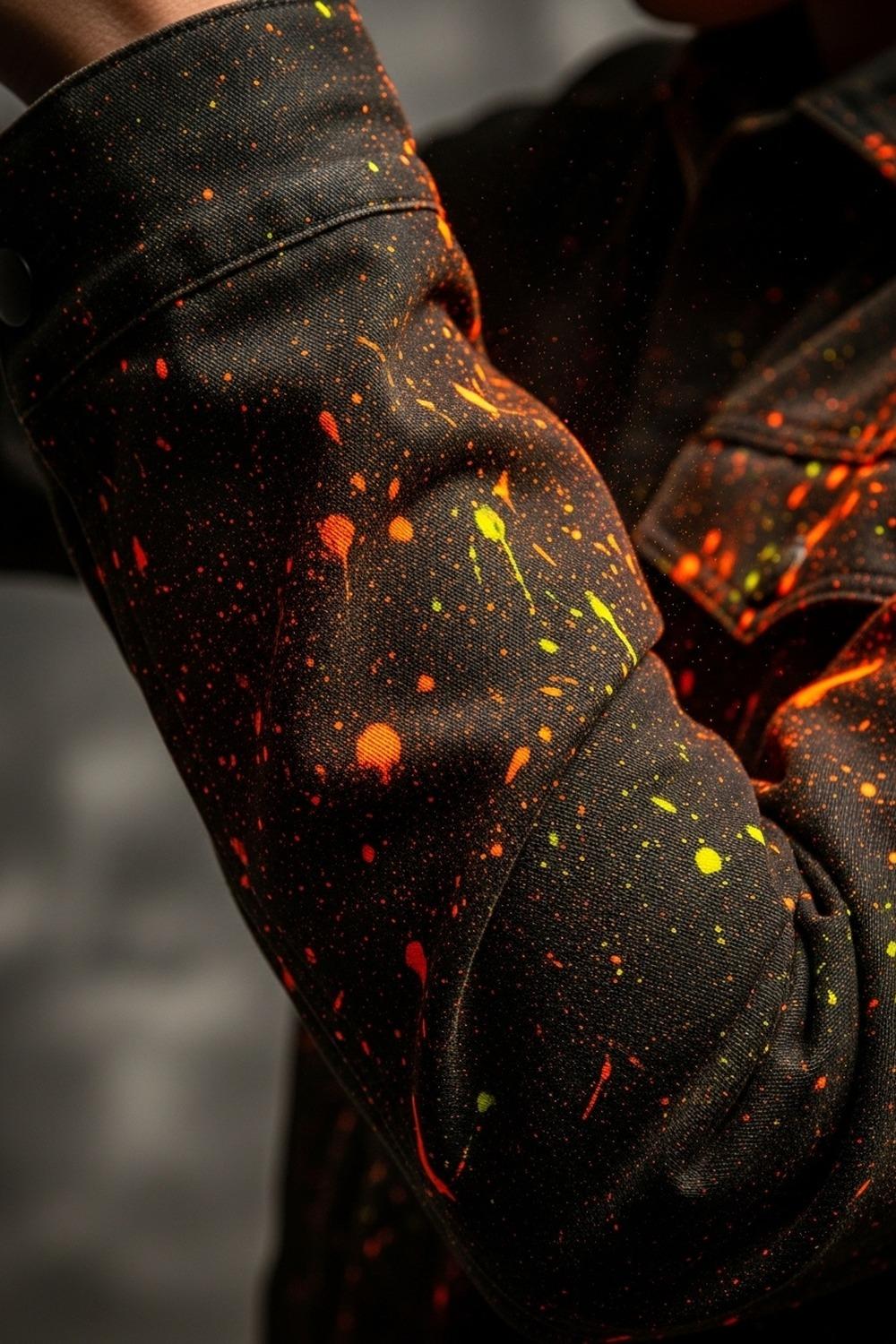
The forensic element is stranger than you’d expect. Commercial formulations aren’t just vivid under normal light. They remain visible under standard UV light sources — the kind of UV torch that nightclub door staff carry. A marked suspect glows under UV inspection long after the dye has faded to naked-eye invisibility. That’s forensic visibility built into the product design itself.
It means a suspect who thinks they’ve cleaned up enough might walk right past a security officer with a UV torch and immediately reveal themselves.
That’s the chain of custody built into the dye itself.
What the Numbers Actually Show
- UK retailers lost £1.76 billion to shoplifting in 2022–23 (British Retail Consortium annual crime survey), a figure climbing for five consecutive years.
- Stores using visible dye launcher signage reported theft attempt reductions up to 40% in pilot programs across Northern European chains in the early 2020s. The signage alone worked.
- Bank dye packs have been operational since the 1960s, with modern formulations staining skin for up to a week without specialist removal agents.
- Installation cost: £300–£800 per system. Average annual shoplifting loss per UK small retailer: over £3,000. The ROI math is unusually straightforward.
Field Notes From the Real World
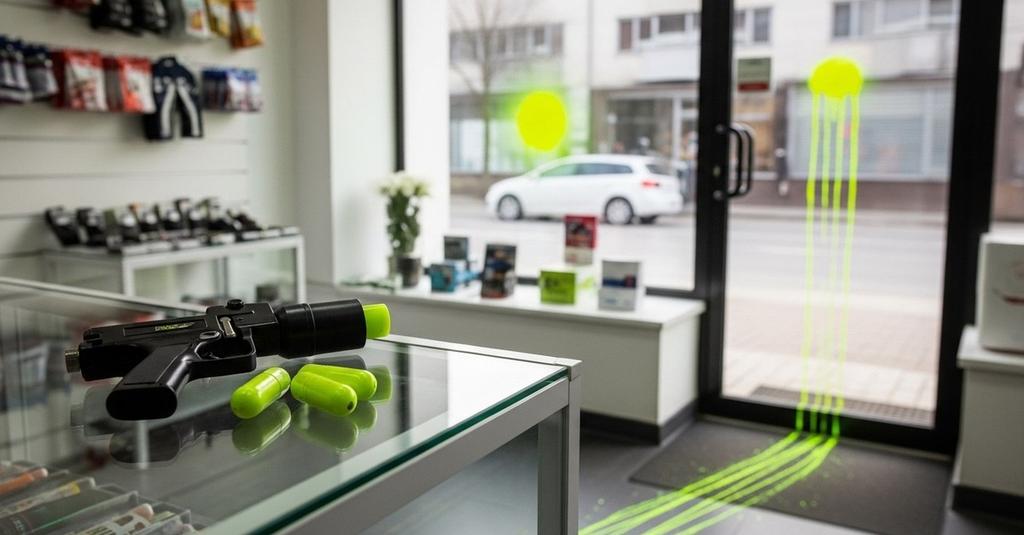
- Some systems integrate with CCTV triggers — the launcher fires automatically when a sensor detects theft in progress. Two seconds, no human decision required, suspect marked before they hit the exit.
- Amsterdam’s city centre retailers coordinated a visible dye launcher signage campaign. CCTV footage shows planned thieves noticing the warnings and abandoning approaches mid-theft. They didn’t even try.
- High-end systems use fluorescent compounds that remain visible under UV light — meaning a marked individual can be identified long after the dye fades to normal sight.
Why This Matters Beyond Retail
The anti-theft dye launcher represents a shift in how security professionals think about deterrence. The old model was reactive — catch the thief after the crime, prosecute if possible, absorb losses as a business cost. That model was failing. Conviction rates for retail theft in the UK have been stubbornly low. Police resources for low-value property crime are stretched thin.
The dye launcher moves toward *consequence at the moment of crime*. It shifts the burden back onto the criminal rather than the retailer or justice system. That’s a fundamentally different philosophy with implications beyond retail — for transit systems, warehouses, vehicle security, anywhere a visible persistent marker can do the work that surveillance footage and after-the-fact policing can’t.
It’s a question worth sitting with: Who bears the cost of crime, and can technology rebalance that equation without anyone getting hurt?
A compact launcher. A capsule filled with forensic dye. A criminal who suddenly can’t risk it. The anti-theft dye launcher didn’t arrive with fanfare — it arrived because shop owners were desperate and the old tools weren’t working. Now it’s quietly reshaping how theft gets attempted across an entire continent. Simple ideas applied precisely tend to travel fast. If stories like this keep you reading at 2 AM, there’s more at this-amazing-world.com.
Frequently Asked Questions
Q: How does an anti-theft dye launcher actually work?
A handheld or mounted launcher fires a dye-filled capsule, roughly the size of a paintball, that bursts on contact with a suspect’s clothing or skin. The fluorescent dye bonds in seconds and stays visible for days, with some formulations glowing under UV light. Modern bank-derived versions, operational since the 1960s, can stain skin for up to a week without specialist removal agents, making the marked individual easy to identify on camera or by police.
Q: Does the dye launcher reduce theft even when it is never fired?
Yes, and that is its primary value. Stores displaying clear warning signage near entrances reported theft attempt reductions of up to 40% in pilot programs across Northern European chains in the early 2020s, before any capsule was deployed. Thieves case locations in advance, and the threat of permanent fluorescent marking is a vulnerability they did not plan for, so many simply abandon the attempt and walk away.
Q: How much does an anti-theft dye launcher system cost a retailer?
Installation typically costs between 300 and 800 pounds per system. Against that, the average UK small retailer loses over 3,000 pounds annually to shoplifting, and the wider sector lost 1.76 billion pounds in 2022-23 according to the British Retail Consortium. With losses climbing for five consecutive years and conviction rates low, the return-on-investment math is unusually straightforward, which helps explain the technology’s rapid spread across European retail.
Illustrations are AI-generated. Article fact-checked and human-edited. Our editorial standards.