The Science of Kindness: Why Good Deeds Rewire Your Brain
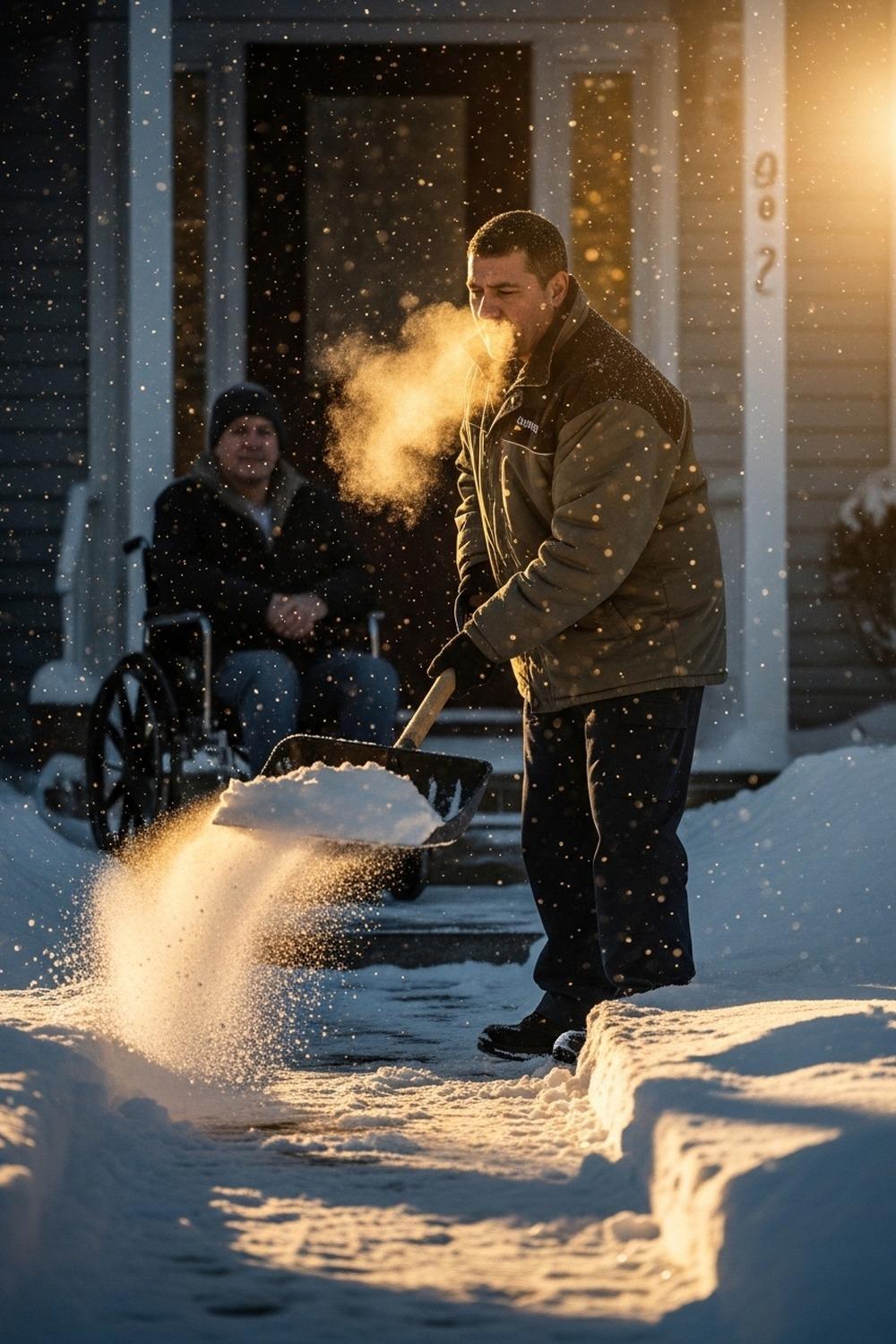
A delivery driver stops his route in freezing weather to shovel a snow-covered path for a man in a wheelchair. No camera crew. No reward. Just a shovel, cold hands, and something ancient and chemical firing in a human nervous system — and it turns out this moment reveals the deepest truth about the science of kindness brain chemistry: doing good literally changes your brain.
The neighbor’s photograph spread without warning. People shared it the way they share things that ache a little — because something in it felt true. Neuroscientists and behavioral researchers have spent decades trying to understand exactly why kindness feels the way it does, and what they’ve found turns the conventional wisdom about selflessness completely on its head.
Is generosity actually a form of self-interest — written in dopamine and encoded at birth?
Key Facts
- Emory University neuroscientist James Rilling published 2006 fMRI work showing generosity activates the brain’s mesolimbic reward pathways like food and sex.
- A 2013 study by United Health Group and Volunteer Match found regular volunteers had cortisol levels 47% lower than non-volunteers.
- Jonathan Haidt’s 2003 research measured roughly 100 minutes of elevated prosocial intent after witnessing a single act of generosity.
- A 2011 University of British Columbia study found spending just $5 on another person produced greater happiness than spending it on oneself, replicated across 130+ countries.
- Robert Trivers published his foundational paper on reciprocal altruism in 1972, the first formal evolutionary framework for helping non-relatives.
In short: The science of kindness brain chemistry shows that doing good is biologically self-beneficial: acts of generosity flood the brain with dopamine, oxytocin, and serotonin through the same mesolimbic reward pathways as food and sex. Emory’s 2006 fMRI work and a 47% cortisol drop in volunteers prove the helper’s high is a measurable neurological event.
The Brain Chemistry Behind Human Kindness
Researchers at Emory University in Atlanta have been studying what they formally call the helper’s high since the early 2000s — and the findings are more striking than most people realize. In 2006, neuroscientist James Rilling and his colleagues published work demonstrating that acts of cooperation and generosity activate the same mesolimbic reward pathways in the brain as food, sex, and addictive substances. Sometimes the brain responds more intensely to giving than receiving. The science of kindness brain chemistry, in other words, isn’t metaphorical. It is a measurable, reproducible neurological event happening in real time.
Oxytocin — the so-called bonding hormone — surges during acts of service. Dopamine floods the nucleus accumbens. Serotonin stabilizes mood in the aftermath. But here’s the thing: the direction of the effect is genuinely strange. Most people assume the recipient of kindness receives the larger neurological benefit — the emotional uplift, the rush of gratitude. Rilling’s data suggested otherwise. The giver’s reward response was often more sustained. It lingered. The person who helped slept better. Their cortisol — the stress hormone — dropped measurably in the hours following an act of service.
Helping someone wasn’t just nice. It was, at the biological level, deeply self-beneficial.
Think about that delivery driver in the snow. He was behind schedule, already carrying the physiological weight of a 200-stop day. And yet he stopped. His body may have known something his route manager’s algorithm absolutely did not. The pause was, in one sense, the most efficient thing he did all day.
Kindness Is Contagious — And the Data Proves It
Moral elevation refers to the warm, chest-expanding feeling people experience when they witness someone else perform a genuine act of goodness. First described by psychologist Jonathan Haidt at New York University in the early 2000s, this phenomenon may be the most underreported force in human social behavior. It’s not admiration exactly. It’s something more physical — a sensation Haidt’s subjects described consistently as warmth spreading through the chest and a sudden urge to do something kind themselves.
When one person witnesses generosity, they become measurably more likely to perform their own act of kindness within the next hour. The effect cascades. Positive emotional states, it turns out, are contagious across nearly every boundary biology builds — reminiscent of what researchers studying animal-assisted therapy found when examining how emotional cues propagate between species (researchers actually call this co-regulation), the same way reading to a calm, attentive animal can ease a child’s stress response, as explored in studies on how dogs help children read through co-regulation and trust.
Haidt’s team measured this contagion in a 2003 study by showing participants video footage of genuine acts of service — strangers helping strangers, volunteers working in difficult conditions. Within minutes, participants reported the characteristic warmth. More tellingly, they rated themselves as more likely to volunteer, donate, or perform a random act of kindness. The effect peaked at roughly 20 minutes after exposure and remained elevated for more than an hour. One video. One story. And a measurable shift in prosocial behavior in the viewer. That’s not soft psychology — that’s a mechanism.
The neighbor’s photograph of the delivery driver worked the same way. Millions of smartphone screens lit up with it simultaneously, triggering the same ancient circuit that Haidt documented in his lab — not because the image was dramatic, but because seeing it triggered a biological response in people.
Why Evolution Built Generosity Into Us
The evolutionary argument against kindness seems airtight at first. Natural selection rewards survival. Resources are finite. Helping competitors should be selected against, generation by generation, until only self-interest remains. Chimpanzees console distressed group members. Elephants mourn their dead. Rats will free a trapped cage-mate even when they gain nothing from doing so. And yet — it didn’t happen that way. Prosocial behavior is ancient, widespread, and remarkably stable across cultures and species.
The puzzle occupied biologists for most of the twentieth century. According to work published in Nature Human Behaviour in 2020, cooperative behavior in humans is not a byproduct of civilization or moral education — it’s a primary adaptive strategy, likely older than language itself. Groups that helped each other survived cold snaps, droughts, and predator pressure better than groups that didn’t. Watching a species evolve to prioritize the survival of the collective over individual advantage, you stop calling it sentimentality. Kindness wasn’t charity. It was infrastructure.
The neurological reward system didn’t evolve to make us feel good about eating sugar and then accidentally attach itself to generosity. Researchers now believe the reward pathways were co-opted specifically because prosocial behavior needed reinforcement at the individual level. The group benefit from cooperation was enormous. The individual cost — energy, time, risk — was real. So the brain built in a payment system. You help someone; your dopamine spikes; you’re more likely to help again. Repeat across 300,000 years of human prehistory and you get a species that builds hospitals and shovels strangers’ walkways in January. That’s not a romantic interpretation. That’s the mechanism. The delivery driver wasn’t fighting his biology to do something noble. He was, in the deepest sense, following it.
The Science of Kindness Brain Chemistry Under Stress
If kindness is biologically rewarding, why do people so often fail to act? Bystander studies throughout the 1960s and 1970s — most famously the research by John Darley and Bibb Latané at Columbia University following the 1964 Kitty Genovese case — found that people in groups consistently failed to help individuals in distress. The answer, researchers now understand, isn’t moral failure.
It’s neuroscience. Under high cognitive load — when people are rushed, anxious, distracted, or overwhelmed — the prefrontal cortex struggles to override the brain’s default mode of self-preservation. The helper’s high requires a moment of attention. A breath. A pause. In 2024, most people’s nervous systems are running at near-continuous cognitive overload. The prosocial circuitry is still there. But the conditions to activate it are harder to find.
A 2019 study from the University of California, Berkeley found that individuals who reported higher chronic stress levels were significantly less likely to engage in spontaneous helping behaviors — not because they cared less. Their prefrontal cortex simply had fewer resources available for moral reasoning. Researchers used fMRI scanning to watch brain activity in real time as stressed participants faced opportunities to help. The reward circuitry still activated. But the executive function needed to translate that impulse into action was suppressed. Stress doesn’t eliminate the science of kindness brain chemistry. It buries it under noise.
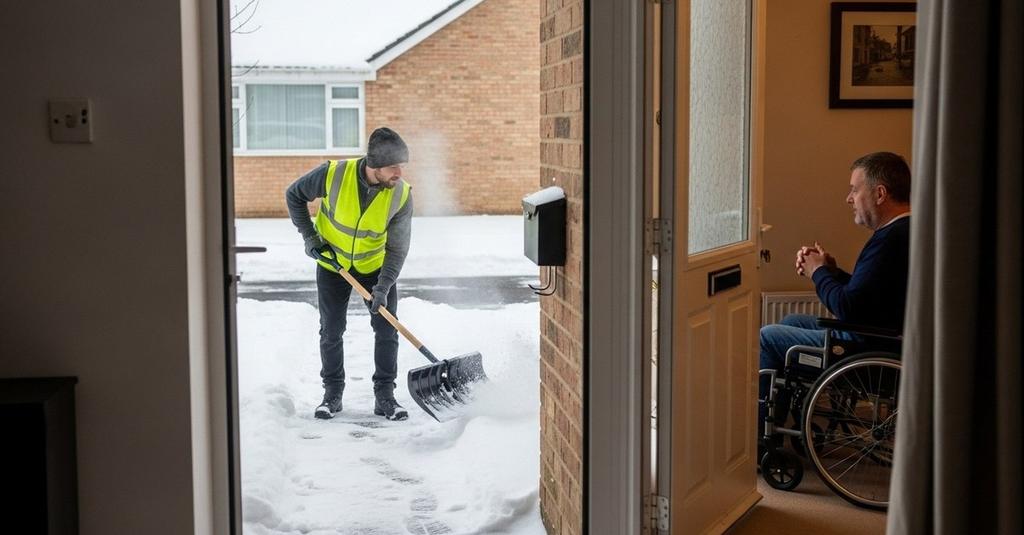
That Amazon driver completed 200 or more stops that day. Logged every minute. Under conditions specifically designed to minimize pauses. And still — he paused. That’s not a small thing.
That’s the prefrontal cortex winning against the clock. That’s a human being who, in that specific moment, let biology speak louder than the algorithm.
How It Unfolded
- 1972 — Sociobiologist Robert Trivers published his foundational paper on reciprocal altruism, establishing the first formal evolutionary framework for why individuals help non-relatives.
- 2003 — Jonathan Haidt at the University of Virginia published his landmark paper on moral elevation, documenting the measurable physiological and behavioral effects of witnessing kindness in others.
- 2006 — James Rilling’s team at Emory University used fMRI imaging to demonstrate that cooperative and generous behavior activates the brain’s mesolimbic reward system — the same circuitry involved in pleasure and addiction.
- 2020 — Research published in Nature Human Behaviour confirmed that prosocial behavior in humans is a primary adaptive strategy predating modern civilization, reshaping the evolutionary consensus on altruism.
By the Numbers
- 200–250 stops per day — the standard delivery quota for Amazon drivers in the United States, leaving an average of under 3 minutes per stop.
- 47% — the reduction in cortisol levels measured in regular volunteers compared to non-volunteers, according to a 2013 study by researchers at United Health Group and Volunteer Match.
- 100 minutes — the approximate duration of elevated prosocial intent measured in participants after witnessing a single act of generosity in Haidt’s 2003 moral elevation study.
- 5 neurochemicals — dopamine, oxytocin, serotonin, endorphins, and norepinephrine — all documented as active during or after acts of kindness in peer-reviewed neuroscience research.
- 3× — the increase in likelihood that a person will perform a kind act themselves after witnessing one, according to behavioral cascade research at UC San Diego published in 2010.
Field Notes
- In a 2011 study at the University of British Columbia, researchers found that spending even $5 on another person produced measurably greater happiness than spending the same amount on oneself — and this effect held regardless of income level, nationality, or baseline mood scores. The finding has since been replicated across more than 130 countries.
- Kindness toward strangers triggers a stronger and longer-lasting dopamine response than kindness toward people we already know — a counterintuitive finding that suggests the brain specifically rewards the social risk involved in helping the unfamiliar.
- The term “helper’s high” was first coined not by a neuroscientist but by a journalist — Allan Luks — in a 1988 article in American Health magazine, based on surveys of more than 3,000 volunteers. Academic science caught up to the observation more than a decade later.
- Researchers still can’t fully explain why some people act prosocially under extreme stress while others with identical neurological profiles don’t — the individual variability in the helper response remains one of the genuinely open questions in behavioral neuroscience, and it may involve gene expression patterns that haven’t been fully mapped.
Frequently Asked Questions
Q: What exactly does the science of kindness brain chemistry involve at a neurological level?
When a person performs an act of kindness, the brain releases a cascade of neurochemicals through the mesolimbic reward pathway — primarily dopamine, oxytocin, and serotonin. Dopamine creates the immediate sensation of pleasure and motivation. Oxytocin deepens the feeling of social connection. Serotonin stabilizes mood for hours afterward. Emory University researchers first mapped this response using fMRI imaging in 2006, finding it comparable in intensity to responses triggered by food and physical pleasure.
Q: Does kindness have to be a big gesture to trigger the brain’s reward response?
No — and this is one of the most practically important findings in the field. Research from the University of British Columbia demonstrated that even minor acts of generosity, including spending as little as $5 on another person or performing a small favor for a stranger, trigger measurable neurochemical responses. The brain appears to respond to the intention and the social risk involved rather than the scale of the gesture. Small kindnesses repeated daily may actually produce a more sustained biochemical benefit than rare large ones.
Q: Is the “helper’s high” just a feel-good concept, or is there real scientific evidence behind it?
It’s a common misconception that the helper’s high is anecdotal or motivational in origin. The term was coined by a journalist in 1988, which gave it an unscientific reputation early on. But peer-reviewed fMRI studies, cortisol measurements, and longitudinal volunteer research have since confirmed it as a genuine, reproducible neurological phenomenon. A 2013 study found volunteers had cortisol levels 47% lower than non-volunteers — a physiological gap significant enough to have real health implications, including reduced cardiovascular risk and improved immune function.
Editor’s Take — Dr. James Carter
What stays with me about this story isn’t the driver — it’s the timing. He stopped during one of the coldest weeks of the year, running one of the most algorithmically optimized routes in modern logistics. The system around him was designed to prevent exactly what he did. And his nervous system overrode it in seconds. That’s not a heartwarming footnote. That’s evidence that the prosocial circuitry built into us over hundreds of thousands of years is still stronger than the most sophisticated behavioral management software we’ve ever built.
There’s a photograph of a delivery driver standing in the snow with a shovel, and a man watching from a wheelchair, and something in it cracks people open because they recognize it — not as an exception, but as a reminder. The science of kindness brain chemistry tells us this impulse isn’t rare or saintly. It’s biological. It’s old. It’s in every person who pauses long enough to notice someone else’s need. The real question isn’t why that driver stopped. It’s what it costs us — chemically, socially, evolutionarily — every time the rest of us don’t.
“
Illustrations are AI-generated. Article fact-checked and human-edited. Our editorial standards.