How Far Is Voyager 1 From Earth? (2026 Light-Day)
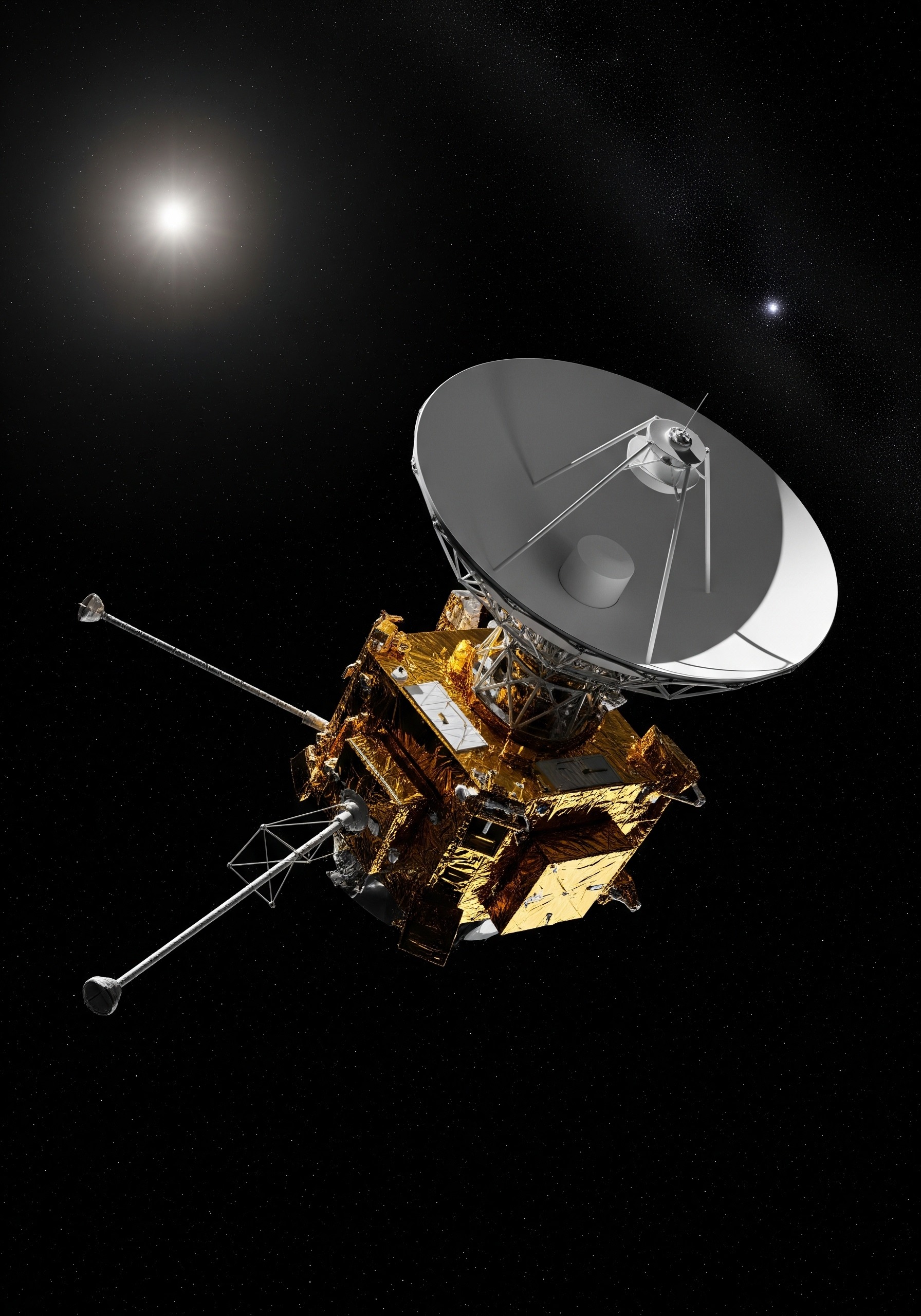
How far is Voyager 1 from Earth right now? As of March 2026, the most distant object humans have ever built is roughly 25.8 billion kilometres (about 16.0 billion miles, or 172.59 astronomical units) from home — and every single day it adds another 1.46 million kilometres to that gap. By mid-November 2026 it will cross a line nothing made by human hands has ever crossed: one full light-day from Earth.
Key Facts
- As of March 2026, Voyager 1 sits about 172.59 AU from Earth — ≈25.8 billion km, ≈16.0 billion miles.
- Around 13–15 November 2026 it becomes the first human-made object one full light-day away (≈25.9 billion km).
- It is moving at about 17 km/s (≈61,000 km/h) toward the constellation Ophiuchus — roughly 1.46 million km farther each day.
- Launched 5 September 1977; crossed into interstellar space on 25 August 2012.
- A one-way radio command now takes ~24 hours; a command-and-confirm loop will soon take a full 48 hours.
In short: Voyager 1 is about 25.8 billion km from Earth in early 2026 and accelerating away by 1.46 million km a day. In mid-November 2026 it reaches one light-day — a symbolic threshold where its radio whisper takes 24 hours each way. Its plutonium heart is fading, and contact will likely end in the mid-2030s.
Key Facts
- As of March 2026, Voyager 1 sits about 172.59 AU from Earth, roughly 25.8 billion km or 16.0 billion miles.
- Around 13-15 November 2026 it becomes the first human-made object one full light-day away, about 25.9 billion km.
- It is moving at about 17 km/s (roughly 61,000 km/h) toward the constellation Ophiuchus, adding roughly 1.46 million km each day.
- Voyager 1 launched on 5 September 1977 and crossed into interstellar space on 25 August 2012.
- A one-way radio command now takes about 24 hours, and a command-and-confirm loop will soon take a full 48 hours.
In short: Voyager 1 is about 25.8 billion km from Earth in early 2026 and accelerating away by 1.46 million km a day. In mid-November 2026 it reaches one light-day, a symbolic threshold where its radio whisper takes 24 hours each way. Its plutonium heart is fading, and contact will likely end in the mid-2030s.
The number that matters today: how far is Voyager 1 from Earth in 2026
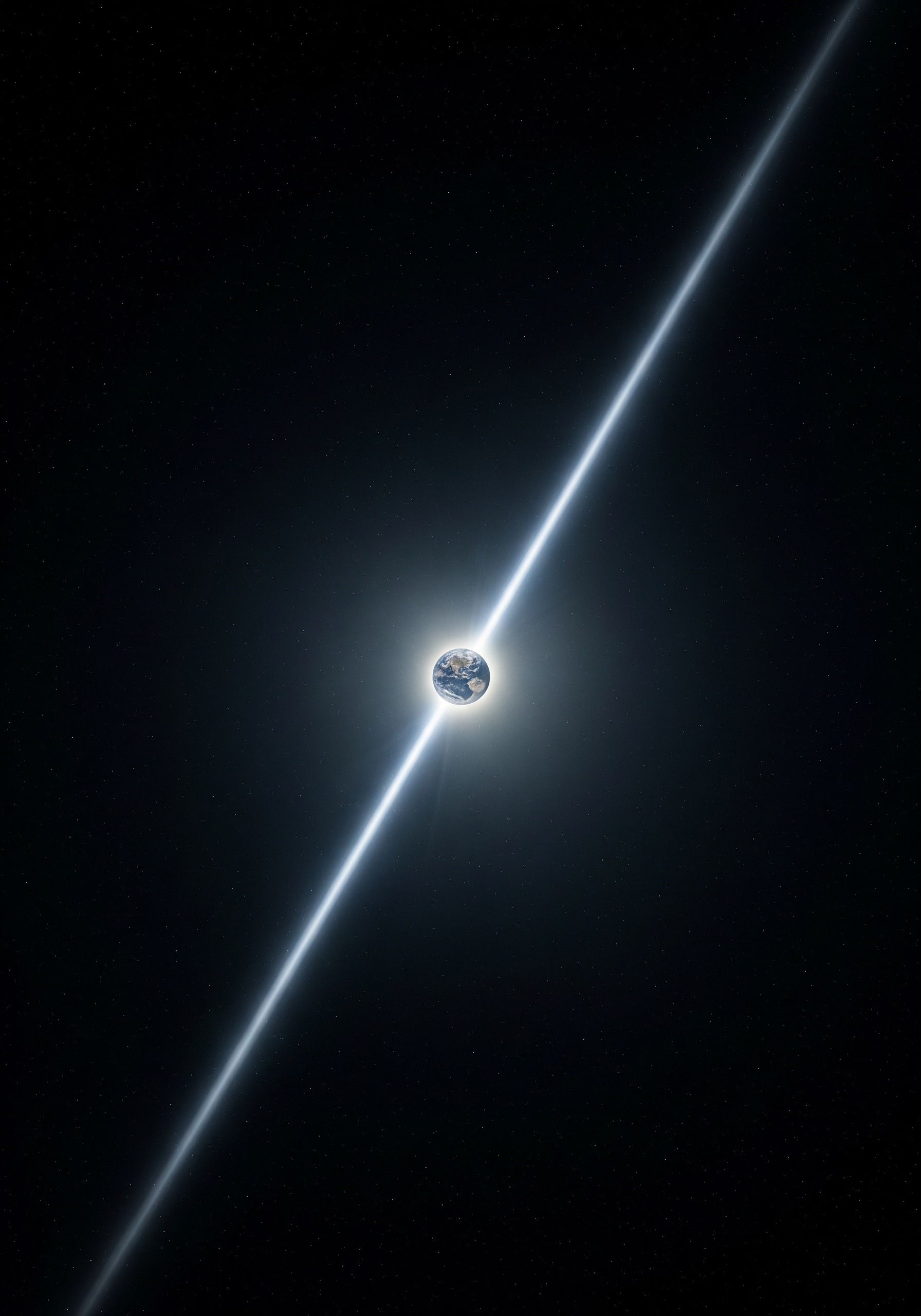
Pin it down: 172.59 astronomical units. One AU is the distance from Earth to the Sun, so Voyager 1 is sitting 173 times farther out than the Sun. Translate that into the units we use on the ground and it lands near 25.8 billion kilometres, or 16.0 billion miles.
Numbers that large stop meaning anything. So feel it instead. The distance from Earth to the Moon — the journey that took Apollo crews three days — would have to be stacked end to end about 67,000 times to reach Voyager 1. If you shrank the entire Earth–Sun gap to the width of your thumb, Voyager would be a hand’s-length away. It is, by a wide margin, the loneliest piece of machinery in existence.
And it does not hold still. Voyager 1 is coasting outward at roughly 17 kilometres per second — about 61,000 km/h — which works out to nearly 1.46 million kilometres of fresh distance every day. The figure you read this morning is already wrong by the time you finish your coffee.
{IMAGE_2}
One light-day from Earth: the November 2026 milestone
A light-year gets all the attention. A light-day almost never comes up — because until now, nothing we built had ever been one. That changes this autumn.
A light-day is simply how far light travels in 24 hours: about 25.9 billion kilometres. When Voyager 1 reaches that mark, a radio signal leaving the spacecraft will take a full Earth day to arrive. According to the Voyager team at NASA’s Jet Propulsion Laboratory, whose projections were detailed in December 2025 reporting by CNN and the BBC’s Sky at Night Magazine, the crossing falls around 13–15 November 2026.
Here’s the honest caveat, because the dates float a little. “One light-day” depends on exactly when the measured Earth-to-spacecraft distance — which wobbles slightly as Earth orbits the Sun — ticks past 24 light-hours. Most outlets cite mid-November 2026; a few quote late January 2027 for a stricter definition. Either way the achievement is the same: forty-nine years after launch, a 1977 spacecraft becomes the first object made by humans to stand one full day of light from the planet that made it.
- Distance: ≈25.8 billion km · 16.0 billion miles · 172.59 AU
- Daily gain: ≈1.46 million km/day (≈17 km/s)
- Signal delay: ≈23 hours one way, climbing toward 24
- Heading: toward Ophiuchus, north of the ecliptic plane
- Power: ≈225 watts and falling ~4 W per year
The 24-hour signal delay — and the 48-hour problem NASA lives with
Light is the universe’s speed limit, and even light needs nearly a day to cross this gulf. So a command typed at JPL leaves the Deep Space Network’s giant dishes, races outward for about 24 hours, reaches Voyager — and then any reply takes another 24 hours to crawl back. Round trip: roughly 48 hours.
Think about what that does to the people flying it. There is no live feedback. None. You cannot nudge the spacecraft and watch what happens; you send an instruction into silence and wait two days to learn whether it worked. So the Voyager flight team writes every command as a self-contained, fail-safe sequence — designed to do something sensible even if the next message never arrives, and to leave the spacecraft in a stable state no matter what. Flying Voyager 1 in 2026 is less like driving a car and more like mailing a letter to a friend who can only write back by mail, with each letter taking a day to arrive.
This is the quiet heroism of the mission that almost never makes the headlines: a small team, three of the world’s largest radio antennas, and the patience to converse across 25 billion kilometres one full day at a time.
Why Voyager 1 outran its own twin
Voyager 1 and Voyager 2 are identical siblings — yet Voyager 1 is both faster and farther, despite launching sixteen days after its twin. The reason is a single, beautifully judged slingshot.
Both probes used gravity assists, stealing a sliver of a planet’s orbital momentum to fling themselves outward. But Voyager 1’s 1979 pass through the Jupiter system, followed by a 1980 encounter with Saturn, was aimed to make a close swing past Saturn’s giant moon Titan. That trajectory bent Voyager 1 up and out of the ecliptic — the flat plane in which the planets orbit — and onto a steeper, faster escape path. Voyager 2 was sent on the slower “grand tour” to visit Uranus and Neptune instead.
The payoff: Voyager 1 now leaves the Solar System at about 17 km/s, while Voyager 2 trails at roughly 15 km/s. A two-kilometre-per-second edge, compounded over half a century, is why one twin is the record-holder and the other is second place.
How to estimate Voyager 1’s distance on any day: the 1.46 million km rule
You don’t need NASA’s tracking page to make a solid estimate of where Voyager 1 is on a given date. Here is a back-of-the-envelope tool you can carry in your head, and it is more accurate than most people expect.
Start from the March 2026 anchor of 25.8 billion km. Voyager 1 adds about 1.46 million km per day. So:
Distance ≈ 25.8 billion km + (days since 1 March 2026 × 1.46 million km)
Want it for 1 September 2026? That’s roughly 184 days later: 184 × 1.46 million ≈ 269 million km added, giving about 26.07 billion km. The estimate drifts a touch because Earth’s own orbit changes the gap by tens of millions of kilometres over a year — small against 26 billion. As a mental model it’s excellent. Turns out the most distant machine ever built can be tracked with arithmetic a ten-year-old could do.
| Signal delay reached | Approx. year | What it meant |
|---|---|---|
| 1 light-hour | ~1990 | Beyond the planets; Pale Blue Dot era |
| 12 light-hours | ~2011 | On the doorstep of interstellar space |
| 23 light-hours | ~2025 | Nearly a full day each way |
| 24 light-hours | Nov 2026 | One full light-day — a first for humanity |
The plutonium death clock: how long can it keep talking?
Voyager 1 has no solar panels — sunlight this far out is far too feeble. It runs on three radioisotope thermoelectric generators, RTGs, fueled by plutonium-238. The plutonium decays steadily, with a half-life of about 87.7 years, and that decay both powers the craft and seals its fate.
At launch in 1977 the RTGs produced about 470 watts. They lose roughly 4 watts every year, and by 2026 output has dropped to somewhere around 225 watts. To stretch the remaining power, engineers have switched off instrument after instrument; by 2026 only two science instruments are still running on Voyager 1 — the magnetometer and the plasma wave subsystem, which together keep listening to the magnetic field and charged-particle waves of interstellar space.
The math sets a hard floor. As output keeps sliding, the spacecraft will eventually lack the wattage to run even one instrument or keep its transmitter warm. NASA’s working estimate puts the end of useful contact in the mid-2030s, around 2036. After that Voyager 1 will fall silent — still moving, still carrying its cargo, but beyond our hearing.
From the Pale Blue Dot to one full Earth-day away
In February 1990, from about 6 billion km out, Voyager 1 turned its camera back toward home and took the photograph Carl Sagan made famous: Earth as a single pale dot suspended in a sunbeam, “a mote of dust,” in his words. It was a portrait meant to humble us, and it did.
Now consider the bookend. The same spacecraft, the same machine that took that picture, is more than four times farther away today — and bolted to its side is the Golden Record, the gold-plated disc of greetings, music and sounds of Earth assembled under Sagan’s direction in case anything, ever, finds it. In 1990 it showed us how small we are. In November 2026 it quietly marks how far we can reach: one full day of light, sent outward and still arriving.
That is the part worth sitting with. A device built with 1970s electronics, less computing power than a modern key fob, has been working for nearly fifty years and is about to set a distance record no object has ever held — carrying, on purpose, a message of hope to whoever might be out there.
Frequently Asked Questions
Q: How far is Voyager 1 from Earth right now?
A: As of March 2026, about 25.8 billion km (16.0 billion miles, or 172.59 AU). It moves away by roughly 1.46 million km per day, so add ~1.46 million km for each day since then to estimate the current figure.
Q: When does Voyager 1 reach one light-day from Earth?
A: Around 13–15 November 2026, per NASA JPL projections. A few sources cite late January 2027 under a stricter definition, but mid-November 2026 is the widely reported date for the milestone.
Q: How long does it take to send a signal to Voyager 1?
A: About 24 hours one way once it reaches one light-day — so a command-and-reply round trip takes roughly 48 hours. There is no live feedback, which is why every command is written to fail safe.
Q: When will Voyager 1 stop working?
A: Its plutonium-238 power supply loses about 4 watts a year. NASA expects contact to end in the mid-2030s, around 2036, when output drops below what the instruments and transmitter need.
Sources
- NASA Jet Propulsion Laboratory — Voyager Mission Status and tracking data
- NASA Science — “Where Are Voyager 1 and 2 Now?” instrument-status overview
- CNN Science (December 2025) — Voyager Project light-day milestone reporting
- BBC Sky at Night Magazine — Voyager 1 one-light-day coverage
- Wikipedia, “Voyager 1” (2026 revision) — distance, speed and RTG figures
Somewhere past the edge of the Sun’s reach, a small, cold, fading spacecraft keeps drifting into the dark — and for a few more years, if we keep our biggest dishes pointed the right way, it will still answer. Catch the November 2026 milestone while you can. There won’t be another first light-day.
Illustrations are AI-generated. Article fact-checked and human-edited. Our editorial standards.