The 10 Oldest Civilizations by Date (Ranked, 2026)
Ranking the oldest civilizations by date sounds simple until you try it. Pick a strict definition — cities, writing, organized labour, a state apparatus — and the list shrinks to a handful of independent breakthroughs across three continents, none later than the Bronze Age, the earliest pushing past 4,500 BCE.
Key Facts
- The oldest civilization on most archaeological timelines is Sumer in southern Mesopotamia, with urban centres at Uruk and Eridu emerging by roughly 4500 BCE and cuneiform writing appearing around 3200 BCE.
- Norte Chico (Caral-Supe) in coastal Peru — confirmed by Ruth Shady’s 2001 paper in Science with Jonathan Haas and Winifred Creamer — is the oldest known civilization in the Americas, with monumental architecture by about 3500 BCE.
- Göbekli Tepe in Turkey is older still (c. 9500 BCE) but is not a civilization: it has no agriculture proper, no writing, and no urban settlement, according to its excavator Klaus Schmidt.
- By geographical extent, the Indus Valley (Harappan) civilization was the largest of the Bronze Age — covering roughly 1.25 million square kilometres at its peak around 2600 BCE.
- The Xia Dynasty, traditionally dated to c. 2070 BCE, is now most often identified by archaeologists with the Erlitou culture (c. 1900–1500 BCE) in the Yellow River basin.
In short: Sumer is first by almost any measure, with Norte Chico, Egypt, and the Indus Valley clustering behind it in the fourth millennium BCE. Almost everything you’ll see called “ancient” — Rome, Greece, the Aztecs, the Inca — comes thousands of years later.
Key Facts
- The oldest civilization on most archaeological timelines is Sumer in southern Mesopotamia, with urban centres at Uruk and Eridu emerging by roughly 4500 BCE and cuneiform writing appearing around 3200 BCE.
- Norte Chico (Caral-Supe) in coastal Peru — confirmed by Ruth Shady’s 2001 paper in Science with Jonathan Haas and Winifred Creamer — is the oldest known civilization in the Americas, with monumental architecture by about 3500 BCE.
- Göbekli Tepe in Turkey is older still (c. 9500 BCE) but is not a civilization: it has no agriculture proper, no writing and no urban settlement, according to excavator Klaus Schmidt.
- By geographical extent, the Indus Valley (Harappan) civilization was the largest of the Bronze Age, covering roughly 1.25 million square kilometres at its peak around 2600 BCE.
- The Xia Dynasty, traditionally dated to c. 2070 BCE, is now most often identified with the Erlitou culture (c. 1900–1500 BCE) in the Yellow River basin.
In short: Ranking civilizations by date, Sumer comes first by almost any measure, with Norte Chico, Egypt and the Indus Valley clustering behind it in the fourth millennium BCE. Almost everything commonly called ‘ancient’ — Rome, Greece, the Aztecs, the Inca — came thousands of years later.
What actually counts as a “civilization”?

This is where most rankings quietly cheat. They lump Bronze Age city-states with Iron Age empires, then sort by fame. The archaeologist V. Gordon Childe set the working definition back in 1950: a civilization needs cities, full-time specialists, monumental public works, long-distance trade, social stratification, and — almost always — writing or proto-writing. Strip those out, and “oldest” becomes “biggest” or “most famous.” That’s a different list.
Hunter-gatherer cultures and Neolithic farming villages can be staggeringly old. Aboriginal Australian society has continuous threads stretching past 50,000 years. Jericho was a walled settlement by 8000 BCE. Neither is a civilization in Childe’s sense, and the distinction matters: it’s the leap from village to city — the urban revolution — that the entries below all share.
{IMAGE_2}
The 10 oldest civilizations by date
Below is the list ordered strictly by earliest reasonable archaeological start date — not by popularity, not by when each peaked. Where dates are genuinely contested (Xia, Indus origin) we’ve gone with the current scholarly consensus rather than the most generous claim.
| Rank | Civilization | Earliest date (BCE) | Region |
|---|---|---|---|
| 1 | Sumer (Mesopotamia) | c. 4500 | Modern Iraq |
| 2 | Norte Chico / Caral-Supe | c. 3500 | Coastal Peru |
| 3 | Indus Valley (Early Harappan) | c. 3300 | Pakistan / NW India |
| 4 | Ancient Egypt | c. 3150 | Nile Valley |
| 5 | Minoan Crete | c. 2700 | Aegean |
| 6 | Maya (Preclassic) | c. 2000 | Mesoamerica |
| 7 | Xia / Erlitou | c. 1900 | Yellow River, China |
| 8 | Mycenaean Greece | c. 1600 | Mainland Greece |
| 9 | Olmec | c. 1500 | Gulf coast of Mexico |
| 10 | Phoenicia | c. 1500–1200 | Levantine coast |
Sumer: the world’s first cities (c. 4500 BCE)
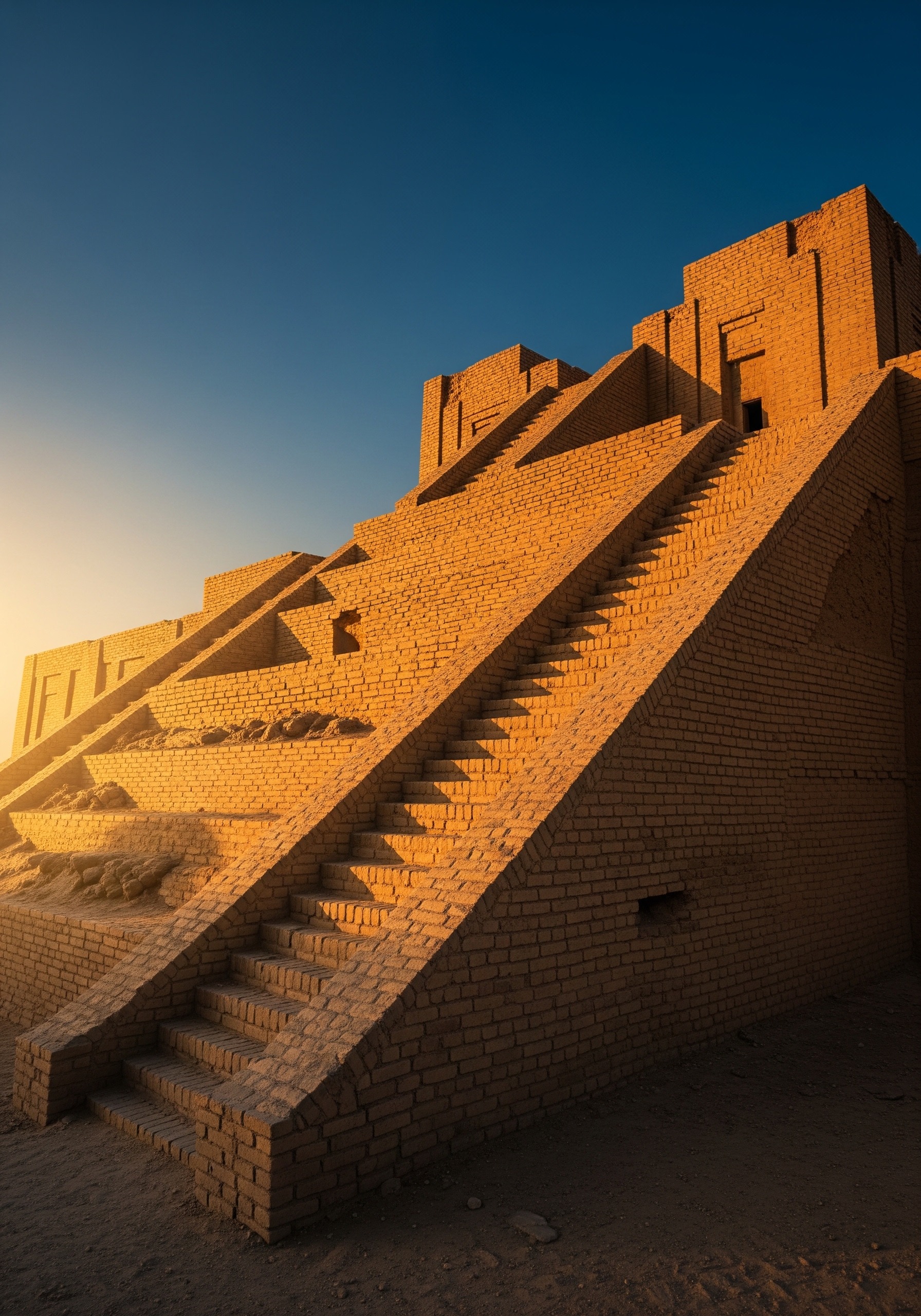
Between the Tigris and the Euphrates, a cluster of mudbrick villages did something nobody had done before. They scaled. Uruk grew to perhaps 40,000 people by 3100 BCE — the largest city on Earth at the time. Eridu, Lagash, Ur, Nippur — the southern Mesopotamian plain became a constellation of competing city-states, each with a stepped temple complex (a ziggurat) at its centre.
The Sumerians invented the wheel for transport, the plough, irrigation engineering at scale, and — most consequentially — writing. Cuneiform, scratched into wet clay with a cut reed, started around 3200 BCE as an accountant’s shorthand for grain receipts and grew into the substrate of literature, law, and astronomy. The earliest surviving written name belongs to a Sumerian scribe called Kushim, attached to a ledger of barley. A bookkeeper, fittingly, opened the written record of humanity.
Caral, Egypt, and the Indus: three independent leaps (3500–3150 BCE)
Within roughly four centuries of one another, three civilizations rose on three continents with no plausible contact between them. That parallel ignition is the single most important fact about ancient history, and most lists bury it.
In Peru’s Supe Valley, the Peruvian archaeologist Ruth Shady began excavating Caral in 1994. Her 2001 paper in Science, co-authored with Jonathan Haas and Winifred Creamer, dated the site’s monumental pyramids to between 2627 and 2100 BCE, with earlier settlement at Huaricanga reaching back to around 3500 BCE. There was no pottery and no clear writing — only a possible proto-writing system in the form of knotted-cord quipus. Yet six platform pyramids, sunken plazas, and a planned urban grid sat in the desert a millennium before the first stone went up at Giza. Civilization, Caral proved, doesn’t need pots or papyrus.
On the Nile, the Naqada cultures of Upper Egypt coalesced under a single king — traditionally Narmer — around 3150 BCE, fusing two long river kingdoms into one. Hieroglyphic writing emerges in the same window, on labels and ceremonial maces. Within four centuries Egyptians were stacking 2.3 million blocks of limestone into the Great Pyramid.
Further east, along the Indus and the now-dry Ghaggar-Hakra river system, the Early Harappan phase begins around 3300 BCE at sites such as Mehrgarh and Rakhigarhi, maturing into the planned cities of Mohenjo-daro and Harappa by 2600 BCE. Here’s the thing about the Indus: it was the largest of the Bronze Age civilizations by area, with standardised brick sizes, municipal drainage, and a script no one has yet decoded. The University of Wisconsin–Madison archaeologist Jonathan Mark Kenoyer has spent decades arguing that the absence of obvious palaces and royal tombs points to a remarkably distributed political system — corporate rather than monarchical.
Minoan, Maya, and Xia: the Bronze Age awakenings (2700–1900 BCE)
The second wave is more regional. On Crete, the Minoan palace cultures of Knossos and Phaistos emerge around 2700 BCE, with frescoed throne rooms, indoor plumbing, and the still-undeciphered Linear A script. Europe’s first civilization came not from the mainland but from an island.
Across the Atlantic, the Maya Preclassic begins around 2000 BCE with farming villages in the Petén lowlands. The famous stone cities — Tikal, El Mirador, Calakmul — are still a thousand years away, but the cultural foundation is laid early.
In China, the question of the Xia Dynasty has been a fault line in archaeology for a century. Traditional history dates it to 2070–1600 BCE; sceptical historians once called it mythological. The Erlitou site, excavated since 1959 by teams from the Chinese Academy of Social Sciences, has a palace complex and bronze workshops dating to roughly 1900–1500 BCE — the right place, the right time, the right scale. Most Chinese archaeologists now identify Erlitou as Xia or its immediate successor; many Western scholars prefer to call it simply “the Erlitou culture.” The bronze is real either way.
Mycenaean, Olmec, and Phoenicia: the late entries (1600–1200 BCE)
Now we’re skipping. The Mycenaean Greeks build their citadels at Mycenae, Pylos, and Tiryns around 1600 BCE, using a syllabic script (Linear B) that Michael Ventris deciphered in 1952 as an early form of Greek — the language of Homer, eight centuries before Homer.
The Olmec rise on the humid Gulf coast of Mexico around 1500 BCE, carving the famous colossal basalt heads at San Lorenzo and La Venta and seeding the religious vocabulary that Maya and Aztec inheritors would later expand. And the Phoenicians, working from coastal cities such as Tyre, Byblos, and Sidon, dominate Mediterranean trade from about 1200 BCE — leaving behind something arguably more important than any monument: a 22-letter alphabet that became the parent of Greek, Latin, Arabic, and Hebrew scripts. Most of the words you are reading run on Phoenician circuitry.
The Göbekli Tepe question: why “oldest” isn’t always “first civilization”
And here is where most lists collapse under their own enthusiasm. Göbekli Tepe in southeastern Turkey, excavated by the German archaeologist Klaus Schmidt from 1995 until his death in 2014, dates to between 9500 and 8000 BCE — five thousand years older than Sumer. Its T-shaped limestone pillars, carved with foxes, scorpions, and vultures, are the oldest monumental architecture on Earth.
But Schmidt himself was careful. The builders were hunter-gatherers supplementing their diet with proto-domesticated grain. There is no city. There is no writing. There is no full-time specialist class beyond what a seasonal gathering of clans could sustain. Göbekli Tepe is the oldest known monumental ceremonial site, not the oldest civilization. Same goes for Jericho’s 8000 BCE walls and the Neolithic mega-village of Çatalhöyük — these are the prologue to civilization, not its first chapter. The distinction is not academic snobbery; it’s the difference between a temple in a field and a temple in a tax-collecting state.
The honest answer to “what’s the oldest civilization?” is therefore Sumer — by date, by definition, and by a margin of roughly a thousand years over its nearest competitor.
Frequently Asked Questions
Q: What is the oldest civilization in the world?
A: Sumer in southern Mesopotamia, with cities such as Uruk and Eridu emerging by around 4500 BCE and the first writing system, cuneiform, appearing about 3200 BCE.
Q: Is Göbekli Tepe older than Sumer?
A: The site is older — roughly 9500 BCE — but it is a Pre-Pottery Neolithic ceremonial complex, not a civilization. Its builders were hunter-gatherers, with no cities, agriculture at scale, or writing.
Q: What is the oldest civilization in the Americas?
A: Norte Chico (also called Caral-Supe), on the Peruvian coast, with monumental architecture dating to around 3500 BCE. Ruth Shady’s team established its chronology in Science in 2001.
Q: Why isn’t Ancient Greece or Rome on this list?
A: Both come thousands of years after Sumer. Classical Greece flourished after 800 BCE and Rome’s republic began around 509 BCE — long after the ten civilizations above had risen, peaked, or collapsed.
Sources
- Cradle of civilization (Wikipedia) — overview of the six commonly recognised primary cradles.
- Göbekli Tepe (Wikipedia) — excavation history under Klaus Schmidt and current dating.
- Caral-Supe civilization (Wikipedia) — Ruth Shady’s chronology and the 2001 Science paper with Jonathan Haas and Winifred Creamer.
- Sumer (Encyclopaedia Britannica) — Uruk-period dating and cuneiform origins.
- Harappa.com — Jonathan Mark Kenoyer’s open archive of Indus Valley research.
Strip away the famous names and the long timelines, and what’s left is startling: six or seven small groups of people, on different rivers, on different continents, within a few centuries of each other, all decided to build cities and write things down. We’ve been living in the world they made ever since.
Illustrations are AI-generated. Article fact-checked and human-edited.