The Free Supermarket Changing How Canada Feeds Its People
Imagine a place where “food bank” doesn’t mean shame. Where 25,000 people walk through doors every single day and find themselves inside something that looks exactly like a grocery store — fluorescent lights, produce sections, refrigerated cases, baskets in hand — and discover that the Community Food Hub Regina free food bank has reorganized the entire architecture of charitable food around one radical principle: you choose. Not someone else. You.
Saskatchewan’s capital is home to something that shouldn’t have taken forty years to build. At 1881 Broad Street, the Regina Food Bank opened its doors with no pre-packed hampers, no counter transactions, no signal that you’re receiving charity. Registered clients book appointments every two weeks. They take up to $200 worth of groceries per visit. They walk out with dignity intact — which, it turns out, changes everything about whether they come back.
Key Facts
- The Community Food Hub opened at 1881 Broad Street in Regina, Saskatchewan, designed to serve 25,000 people daily
- Registered clients book appointments every two weeks and can take up to $200 worth of groceries per visit
- Canada’s first food bank opened in Edmonton in 1981 as a temporary recession measure
- Food Banks Canada recorded 1.9 million monthly visits in 2023, a 32% increase from the prior year
- 14.8% of Regina’s population lived below the poverty line in 2022 (Statistics Canada), above the national average
In short: The Regina food bank, operated as the Community Food Hub at 1881 Broad Street, reinvents charity as a free supermarket where clients choose their own groceries. Designed to serve 25,000 people daily with up to $200 per visit every two weeks, it replaces pre-packed hampers with dignity and choice.
Inside Regina’s Free Supermarket Changing Everything
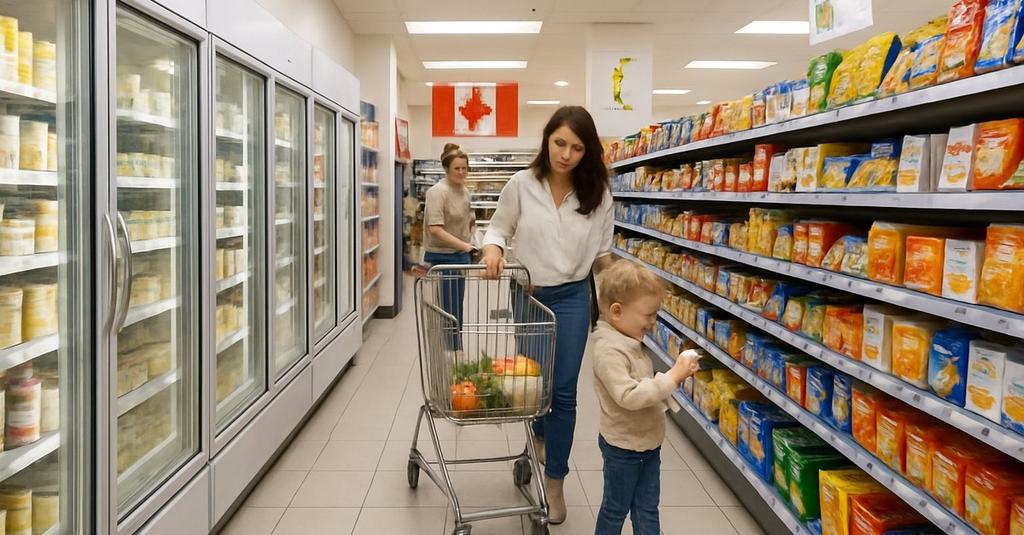
The architecture speaks first. Broad Street was designed to feel indistinguishable from a regular grocery store — fluorescent sections, produce up front, refrigerated cases built into the floor plan from the start, not retrofitted after. The Regina Food Bank’s leadership understood something that food insecurity researchers have been arguing for decades: environment shapes dignity. When the University of Toronto’s food bank researchers published analysis in 2019 examining client experience across Canada, one finding cut through the rest. The single greatest barrier to return visits wasn’t location or hours. It was shame.
The physical arrangement of traditional food banks — the counter, the pre-filled box, the transaction that felt nothing like shopping — sent a quiet, devastating signal. You don’t get to choose. You take what you’re given. The Hub is a direct answer to that finding, built in steel, glass, and refrigeration units.
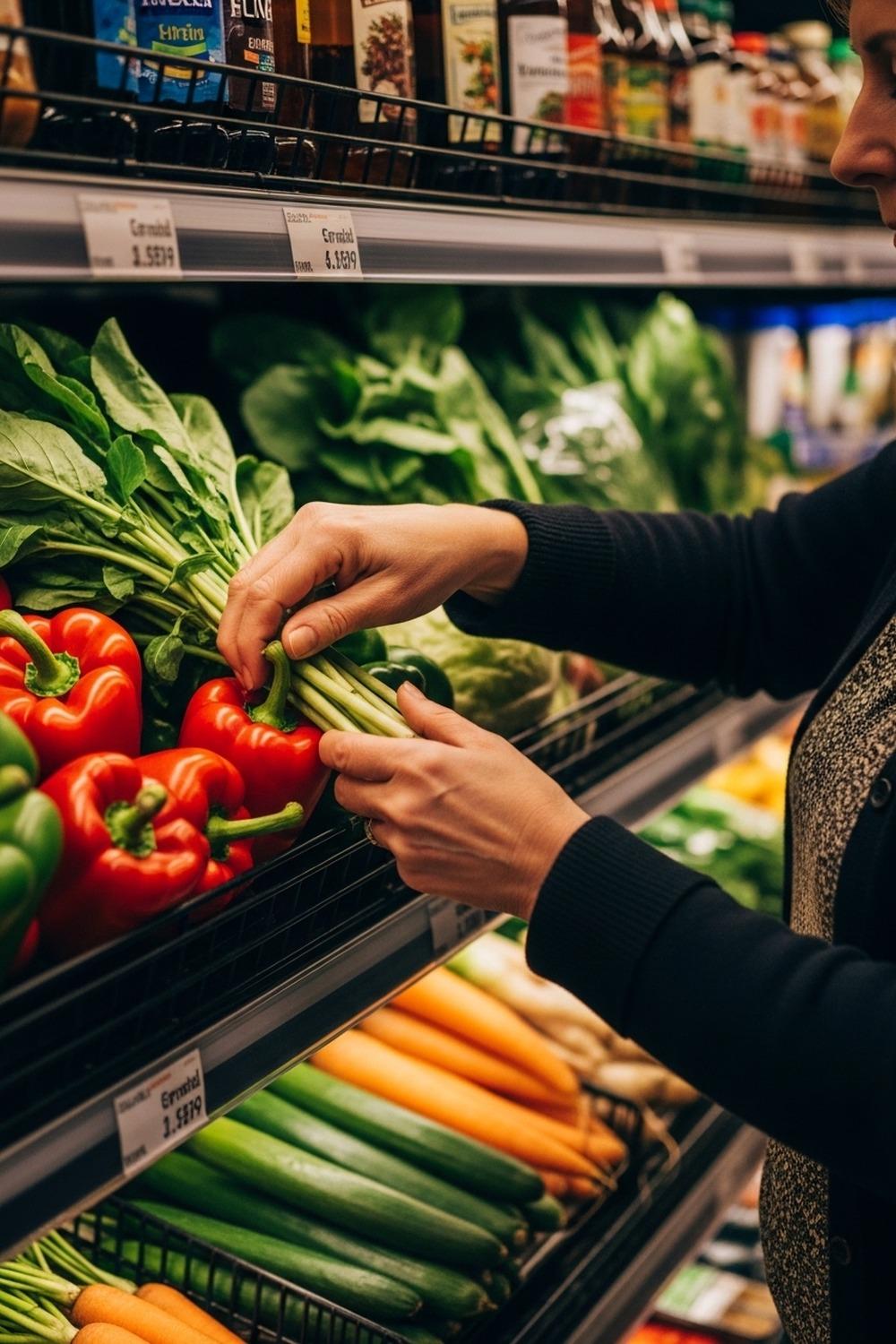
Walk the aisles yourself and the difference is immediate. There are refrigerated cases. There are household cleaning supplies on actual shelves. Clients carry baskets. They deliberate. They pick up one item, put it down, choose another. These are gestures of normalcy so small they’re almost invisible — and so profound, for someone who’s spent months collecting hampers, that several clients have described their first visit as genuinely emotional. Not sad. Relieved.
A grandmother managing her blood pressure doesn’t want the canned soup loaded with sodium. A child with texture sensitivities won’t touch canned peas. A family observing halal dietary guidelines needs to see the ingredients on what they’re choosing. Here’s the thing: the Hub makes all of that possible. Choice isn’t a luxury. It’s nutrition.
How Four Decades of Hampers Got Here
Canada’s food bank system was never supposed to last this long. The first Canadian food bank opened in Edmonton in 1981 — a temporary response to a recession that everyone assumed would end. Over the following four decades, a stopgap became infrastructure. The recession passed, the food banks stayed, and their fundamental model remained largely unchanged: centralized sorting, pre-packed hampers, scheduled distribution.
By 2023, Food Banks Canada reported over 1.9 million visits per month across the country, a 32% increase from the previous year. There’s something quietly remarkable about the staying power of a solution designed to be temporary. It’s the same stubborn inertia that keeps us clinging to things that no longer serve us, a human tendency that shows up in everything from food policy to the way we process our own resilience.
Food Banks Canada’s 2023 HungerCount report documented something the numbers alone don’t fully capture: more than half of food bank users in Canada are visiting for the first time. They aren’t the chronically food-insecure population that policy discussions tend to imagine. They’re people who lost a job, had a medical crisis, faced a rent increase in a housing market that’s become structurally inaccessible to mid-income earners.
In Regina specifically, Statistics Canada data from 2022 showed that 14.8% of the city’s population was living below the poverty line — a figure that sits well above the national average. The Hub was built for the full complexity of that number. And when you calculate what food security actually requires, the numbers change the conversation entirely.
The $200 per visit figure matters more than it might initially seem. That’s not an arbitrary ceiling. Regina Food Bank’s operational team calculated it against actual grocery costs for a family of four in Saskatchewan in 2024 pricing. It covers the week. It covers real meals, not supplemental ones.
The Science of Choosing Your Own Food
Why does environment matter so much to how people recover from food insecurity?
Because a meaningful body of research now shows that the physical layout of a space directly modulates stress hormones. A landmark 2021 study published on environmental psychology confirmed what architects and behavioural economists had suspected for years: spaces that mimic familiar, safe environments — like supermarkets — reduce cortisol responses in people who’ve experienced chronic stress. People who regularly experience food insecurity show elevated cortisol baselines. They’re living in a state of low-grade physiological alarm. Walking into a sterile, institutional, counter-fronted space activates that alarm. Walking into something that looks like a grocery store doesn’t. The Community Food Hub Regina free food bank is, whether explicitly framed this way or not, a physiological intervention.
The nutritional dimension compounds this effect significantly. Pre-packed hampers, for all their efficiency, can’t account for individual dietary needs at scale. A 2020 analysis by Dietitians of Canada found that hamper contents across food banks nationally met only 68% of nutritional adequacy standards for a family of four. The gap was sharpest for fresh produce, which is expensive to source, difficult to distribute, and the first thing to go when donations thin out. The Community Food Hub Regina carries fresh produce as a permanent, prioritized section.
That’s a supply chain commitment, not an aspiration.
When people can choose food that they’ll actually eat, food waste drops. Nutritional outcomes improve. Agency — that harder-to-measure sense of control — starts to rebuild. (And this matters more than it sounds: agency is one of the strongest predictors of health recovery across almost every chronic stress pathway researchers have mapped.) The Hub isn’t just feeding people. It’s restoring a function.
What the Community Food Hub Regina Model Means for Canada
Across Canada, a handful of food banks have been quietly reimagining their model along similar lines. The North York Harvest Food Bank in Toronto began a choice-based pilot in 2020. Calgary’s operation has integrated a client-choice element since 2018. But what the Regina Food Bank has built at Broad Street is different — the most complete implementation of the supermarket model in the country, a full-scale facility designed from the ground up for this purpose, rather than a retrofit of existing charity infrastructure. The Regina Food Bank’s leadership has framed this not as a pilot but as a permanent shift. That framing matters. Pilots get cancelled. Infrastructure gets used.
The 25,000 daily visits figure — the capacity target the Hub is designed to serve — represents roughly one in eight Regina residents. That’s not a fringe program serving a small vulnerable population. That’s a city-scale food system.
And it raises a question that Canadian food policy researchers at the University of Manitoba’s Food and Human Nutritional Sciences department have been pressing for several years: if charitable food infrastructure is now operating at city scale, does it function as a subsidy to a housing and wage system that isn’t paying people enough to eat? The Hub is a genuine, extraordinary achievement. Watching a system this comprehensive serve this many people, you have to acknowledge what it reveals — that the gap it fills shouldn’t exist in the first place.
The people walking those aisles on any given day know both things simultaneously. They’re grateful and they’re pragmatic. They take their basket, they choose what their family needs, and they carry it out. That’s the point. That’s the whole design.
How It Unfolded
- 1981 — Canada’s first food bank opens in Edmonton, Alberta, conceived as a temporary recession measure that becomes the template for a national system.
- 2019 — University of Toronto researchers publish analysis identifying shame and loss of agency as the primary barriers to food bank return visits, fuelling a rethink of the hamper model.
- 2020-2021 — Choice-based food bank pilots emerge in Calgary and Toronto, testing whether supermarket-style distribution is logistically viable at scale.
- 2024 — The Regina Food Bank opens the Community Food Hub at 1881 Broad Street, the most complete full-scale free supermarket model in Canadian history, designed to serve 25,000 people daily.
By the Numbers
- 1.9 million — monthly food bank visits recorded across Canada in 2023, a 32% increase from the prior year (Food Banks Canada HungerCount 2023).
- $200 — the maximum grocery value a registered Hub client can take per visit, every two weeks, calibrated to Saskatchewan 2024 food pricing for a family of four.
- 68% — the proportion of nutritional adequacy standards met by typical hamper contents in Canadian food banks, per a 2020 Dietitians of Canada analysis.
- 14.8% — percentage of Regina’s population living below the poverty line in 2022 (Statistics Canada), above the national average.
- 25,000 — the daily visitor capacity of the Community Food Hub Regina, equivalent to approximately one in eight city residents.
Field Notes
- The Regina Food Bank’s Broad Street facility was designed with refrigerated cases built into the floor plan from the start — not added after. This is significant: most food bank retrofits treat cold storage as secondary, which limits fresh produce access. Making it structural made it permanent.
- Clients register every two weeks, which creates a scheduling rhythm that food bank researchers describe as psychologically stabilising — regular, predictable access reduces the anxious hoarding behaviour often observed in pure drop-in models.
- The $200 per-visit value ceiling isn’t just a budget tool. It’s framed internally by the Regina Food Bank as a dignity benchmark — enough to cover a real week of real meals, not a supplement to someone else’s calculation of what you need.
- Researchers still can’t definitively measure the long-term health impact of choice-based food access versus hamper access at population scale. The Hub’s data, collected over the coming years, may be the first dataset large enough to produce a statistically meaningful answer.
Frequently Asked Questions
Q: Who can access the Community Food Hub Regina free food bank, and how does registration work?
Any Regina resident experiencing food insecurity can access the Community Food Hub Regina, operated by the Regina Food Bank — no income threshold documentation is required. Clients register with the food bank and book appointments every two weeks. There’s no means-testing interview. The process is designed to reduce the administrative barrier that prevents many people from seeking help until their situation is critical.
Q: How is a free supermarket model financially sustainable compared to a traditional hamper system?
The Hub relies on the same donation and funding ecosystem as traditional food banks — corporate and individual donations, food drives, and government grants — but it redirects logistics costs. Instead of labour-intensive sorting, packing, and hamper assembly, resources go toward stocking and maintaining the retail-style space. The Regina Food Bank has also developed dedicated supply chain relationships with producers and retailers to ensure consistent fresh produce, which is typically the hardest category to maintain in charitable food distribution.
Q: Doesn’t giving people $200 worth of free groceries every two weeks risk replacing the need for systemic change?
This is the sharpest question in food policy right now, and the honest answer is: yes, and no. Critics including researchers at the University of Manitoba argue that large-scale charitable food infrastructure can reduce political pressure to address wage stagnation and housing costs that are the root drivers of food insecurity. The Hub’s leadership doesn’t dispute this tension. Their position is that people need to eat while systemic change is being argued about — and that a dignified model of food access is more honourable than a shameful one, regardless of what policy does next.
Editor’s Take — Sarah Blake
What strikes me hardest about the Community Food Hub isn’t the scale or the design. It’s the two-week appointment. Because that rhythm — regular, predictable, yours — is what the hamper system never offered. It treated food insecurity as an emergency to be managed, not a condition to be navigated with some stability. The Hub treats it as a reality that people live inside, and designs accordingly. That shift in framing is, I think, more significant than any single policy change. It says: we expect you to come back. We built this for you to come back.
Food banks were never supposed to become permanent infrastructure. They were crisis responses that outlasted their crises, calcified into systems, and spent four decades largely unchanged. What the Regina Food Bank has built at Broad Street is something different — a place where the architecture itself argues that the person walking in deserves to choose. That argument is being made in steel and refrigeration and open aisles, to 25,000 people a day. And somewhere in the produce section right now, someone is putting down a can of peas and picking up something their family will actually eat. What does it mean that it took this long to let them?
“
Illustrations are AI-generated. Article fact-checked and human-edited. Our editorial standards.