Why Are Roman Coins Found in India? A 2,000-Year Riddle
The short answer to why are Roman coins found in India is trade: for roughly three centuries, Rome paid for Indian pepper, gemstones and fine cotton in hard silver and gold, and a river of that money ended up in the south of the subcontinent. But the deeper answer — the one most retellings skip — is what Indians then did with those coins. They didn’t just spend them. They slashed them, buried them in temple pots, sewed them onto jewellery, laid them inside Buddhist shrines, and eventually copied them. The coins outlived the empire that struck them.
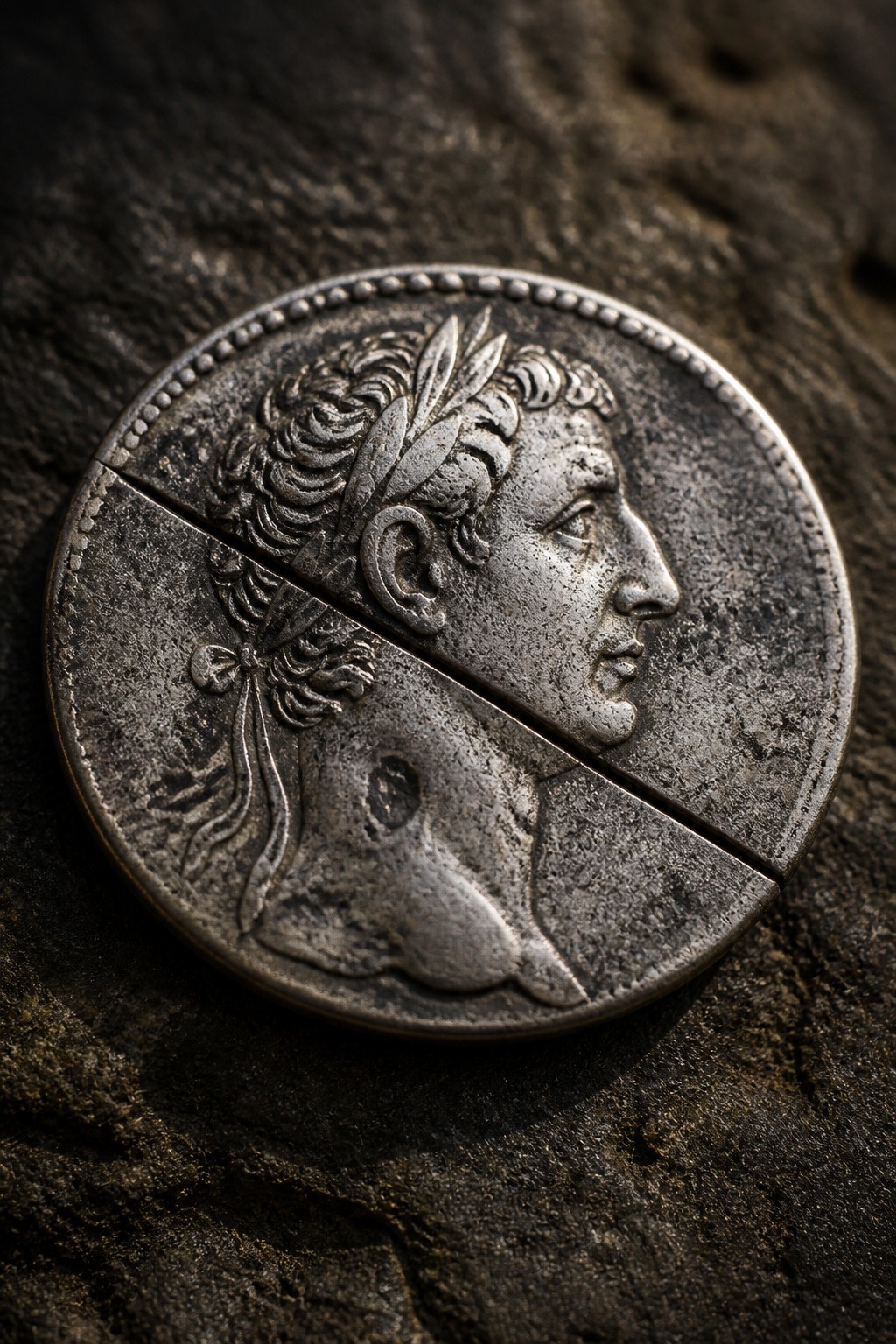
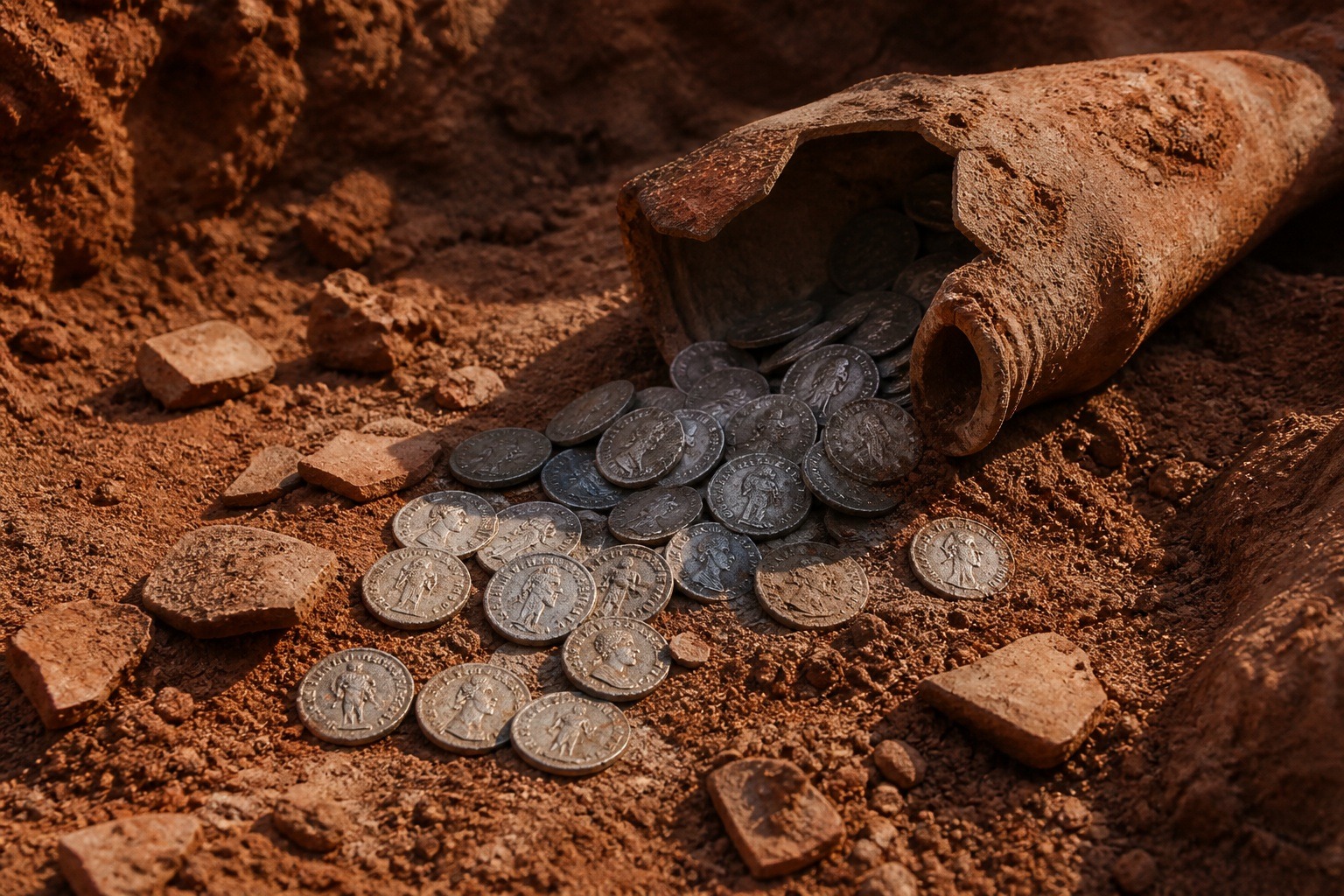
- The famous find: the HAL Airport hoard — 256 silver denarii of Augustus and Tiberius, unearthed in 1965 inside a clay pot during airport work in Bengaluru.
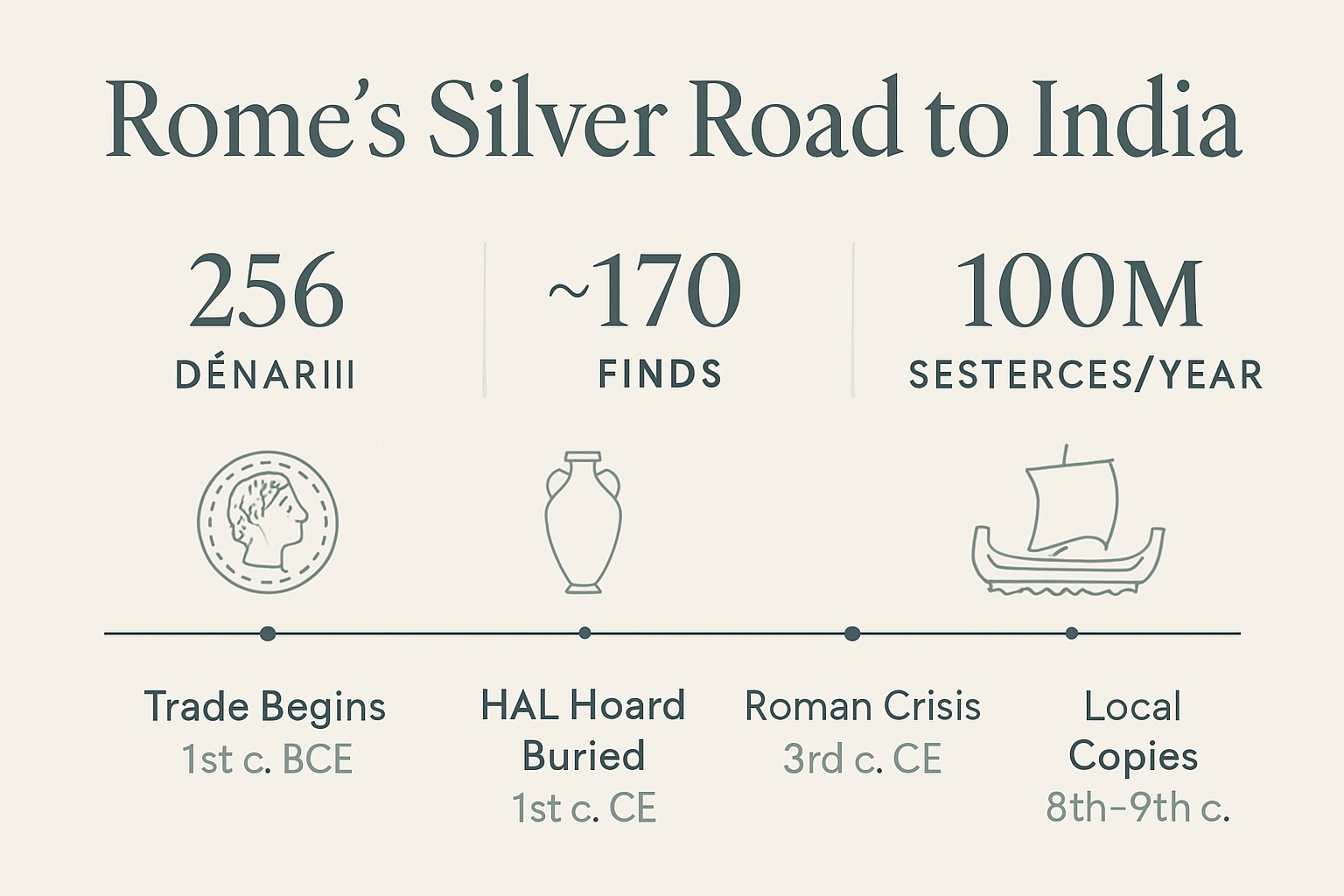
- Scale: roughly 170 recorded Roman coin finds across about 130 sites in India.
- Peak era: late 1st century BCE to 3rd century CE — the Tamil Sangam age.
- The gold drain: Pliny the Elder complained that India, China and Arabia together siphoned at least 100 million sesterces a year out of Rome — India’s share about half of it.
- The hotspots: the Krishna valley in Andhra, and Coimbatore–Karur in Tamil Nadu, clustered near the lost ports of Muziris and Arikamedu.
Key Facts
- The HAL Airport hoard is 256 silver denarii of Augustus and Tiberius, found in 1965 inside a clay pot during airport work in Bengaluru.
- Roughly 170 recorded Roman coin finds are spread across about 130 sites in India.
- The peak era of trade was the late 1st century BCE to 3rd century CE, the Tamil Sangam age.
- Pliny the Elder complained that India, China and Arabia together drained at least 100 million sesterces a year from Rome.
- Finds cluster near the Krishna valley in Andhra and the Coimbatore-Karur area in Tamil Nadu, close to the lost ports of Muziris and Arikamedu.
In short: Roman coins are found in India because Rome paid in silver and gold for Indian pepper, gemstones and cotton for roughly three centuries. About 170 finds cluster across 130 sites in the south. Indians reused the coins as jewellery, temple offerings and bullion, so they outlived the empire that struck them.
So why are Roman coins found in India at all?
Picture a warehouse on the Kerala coast around 50 CE. Sacks of black pepper, sandalwood, pearls and bales of cotton muslin are stacked for a ship riding the summer monsoon back toward Egypt. In exchange, a Roman merchant is counting out silver — coin after coin stamped with the face of a dead emperor. That exchange, repeated across generations, is the engine behind almost every Roman denarius that turns up in Indian soil today.
Rome wanted what India grew. Pepper alone was so prized in Roman kitchens that it was stored like treasure. The Tamil kingdoms of the far south, and the trading networks of the Deccan, wanted silver and gold they could weigh, melt or hoard. It was, at heart, a swap of spice for money — and both sides came out ahead, even as Roman moralists grumbled about the cost.
Here’s the thing, though. Reducing these coins to “small change that drifted east” is the single biggest mistake the popular story makes. The denarii meant very different things on the two ends of the route, and that difference is where the real history lives.
The pepper road: how Rome’s silver reached Muziris and Arikamedu
The Indo-Roman trade ran on the monsoon. Once Greek and Roman sailors worked out the wind pattern — south-west winds to carry a ship to India in summer, north-east winds to bring it home in winter — the crossing shrank from a coast-hugging crawl to a direct blue-water sprint. A first-century Greek merchant’s handbook, the Periplus of the Erythraean Sea, reads almost like a shipping manifest: which ports took which goods, and where the “Roman money” changed hands.
Two names dominate. Muziris, on the Kerala coast, was the great pepper emporium — long lost, now identified by most archaeologists with the excavation site at Pattanam, where digging has turned up Mediterranean amphora shards, Roman glass and the debris of a working port. Arikamedu, near modern Puducherry on the east coast, produced Roman-style pottery and beads. These were not sleepy villages. They were cosmopolitan hubs where Tamil, Roman and Arab traders met.
And the Romans noticed the bill. Pliny the Elder, writing his Natural History in the first century CE, fumed that the empire was bleeding silver eastward — at least 100 million sesterces a year to India, China and Arabia combined, with India singled out as the worst offender. Whether his number was precise or a rhetorical jab, the archaeology backs the basic claim: a lot of Roman metal went to India and did not come back.
{IMAGE_2}
The hoards, and the map that tells the story
The star witness is the HAL Airport hoard. In 1965, workers extending the Hindustan Aeronautics Limited airfield in Bengaluru broke open a long-necked clay pot and found 256 silver denarii inside — coins of the emperors Augustus and Tiberius, the earliest Roman rulers, buried and forgotten for nearly two thousand years. It remains one of the signature Roman coin finds of southern India.
It is far from alone. Scholars have catalogued on the order of 170 Roman coin finds spread over roughly 130 Indian sites — the definitive survey being Paula J. Turner’s Roman Coins from India, published by the Royal Numismatic Society. Individual finds range from a couple of stray coins to hoards of hundreds. Even a century-old survey in the Journal of the Royal Asiatic Society was already logging clusters, including a batch of Augustus and Tiberius denarii from the Hazara district in the north.
Now look at where they land. The finds are not scattered evenly. They bunch tightly — around the Krishna river valley in Andhra Pradesh, and around Coimbatore and Karur in Tamil Nadu, exactly where the overland routes fed the coastal ports. Plot the hoards and you are not looking at a random dusting of loot. You are looking at the pepper road drawn in silver.
From money to offering: denarii in temples and stupas
The coins were never just money.
This is the part the standard “trade money” account tends to bury, and it is the most human piece of the whole story. In peninsular India, Roman coins repeatedly turn up in contexts that have nothing to do with buying and selling — folded into ritual deposits, placed at shrines, worn as ornaments. A gleaming foreign coin bearing a strong, unfamiliar portrait made a natural votive gift: a small, precious, exotic thing to offer a deity. A 2016 conference paper for the Classical Association of the Middle West and South, titled Gold for Pepper, laid out these “multiple roles” plainly — the same denarius could serve as currency, as raw bullion, as jewellery, and as a ritual offering, depending on whose hands it fell into.
Farther north, in the Buddhist heartland of the Gandhara region — today’s Pakistan and Afghanistan — Roman and Roman-style coins were sealed inside stupa relic deposits, tucked in alongside the sacred objects that consecrated a shrine. So were these coins spent like cash? Sometimes. But just as often they were given away on purpose, to gods and to the memory of the Buddha, in a way no Roman merchant ever intended. That is a use the top search results almost never explain — and it is the truest sense in which Roman denarii became “temple offerings.”
Why did Indians slash the emperor’s face?
Handle enough Roman coins from Tamil sites and you notice something odd: many carry deliberate cuts — thin knife or chisel gashes, a millimetre or two deep, often straight across the emperor’s portrait. These are not accidents of the plough. They were done on purpose.
There are two overlapping explanations, and both are probably right at different moments. One is practical: a cut into a silver coin tests whether it is solid metal or a plated fake, and it also marks that the coin has been checked and accepted. The other is political. In the Tamilakam of the Sangam age, a foreign emperor’s face carried no authority. By defacing the portrait — and in some cases countermarking or re-issuing the coin — local rulers stripped the denarius of Caesar and stamped it, symbolically, as their own. A slash across Augustus was a small act of sovereignty.
Either way, the gesture tells you these coins were valued for their silver and their strangeness, not for the empire behind them. The person doing the slashing did not care who Tiberius was.
When India copied Rome: Lakshmi on a “Roman” coin
Once a coin type is trusted, it gets imitated. Indian and Sri Lankan workshops began producing their own versions of Roman gold and silver — some faithful copies meant to pass as the real thing, others frankly local reinterpretations. On these imitations the Roman portrait sometimes gives way to Indian imagery: temple motifs, or the goddess Lakshmi, standing where a Caesar’s head used to be. The form is Roman; the soul has become Indian.
This is where a leading voice earns a mention. Pankaj Tandon, an economist at Boston University and a serious scholar of South Asian coinage who built the reference archive CoinIndia, has spent decades reading how foreign designs — Greek, Roman, Persian — were absorbed and transformed on the subcontinent’s coins. His work is a reminder that “imitation” here is not forgery so much as translation: a design crossing a cultural border and picking up a new accent on the way.
| Use | What it meant | Tell-tale evidence |
|---|---|---|
| Currency / bullion | Trusted silver and gold, valued by weight | Buried hoards like the HAL Airport 256 |
| Ritual offering | A precious, exotic gift for a deity or shrine | Coins in temple pots and Buddhist stupa deposits |
| Sovereignty marker | Foreign authority cancelled, local power stamped | Deliberate slash-marks across the emperor’s face |
| Template for local coinage | A trusted design worth copying and adapting | Imitations swapping in Lakshmi and temple motifs |
How the trade faded — and the copies began
Nothing golden lasts. The steady flow of fresh Roman coins into India thinned during the turmoil of the third century CE, when Rome’s own currency was debased and its economy convulsed. The final door closed further east: when Arab armies took Egypt between roughly 639 and 646 CE, the old Red Sea route that had funnelled Mediterranean silver toward the Indian Ocean was cut for good.
But demand for the familiar “Roman” look did not vanish with the supply. South Indian and Sri Lankan mints kept producing imitation Roman-style coins for centuries afterward, into the eighth and ninth centuries — a ghost of the trade, long after the last real denarius arrived. The empire was gone; its coinage had become a local tradition.
One honest caveat worth stating: because so many of these coins were dug up by chance — the HAL hoard by airport workers, others by farmers — their archaeological context was often lost before anyone recorded it. Historian Rebecca Darley, who has studied Indian Ocean coin finds including the Bengaluru hoard, has emphasised how much we still cannot say precisely because coins were pulled from the ground without their surroundings noted. We know the “why” in broad strokes. Many of the fine-grained “hows” are gone.
Common questions
Where in India are Roman coins found? Overwhelmingly in the south and the Deccan — the Krishna valley in Andhra Pradesh and the Coimbatore–Karur belt in Tamil Nadu are the densest clusters, feeding the ancient ports of Muziris and Arikamedu. There are scattered northern finds too, including Augustus and Tiberius denarii from the Hazara district.
Why did Indians deface Roman coins? Two reasons at once. A cut tested the silver for purity and marked it as accepted; it also symbolically cancelled the foreign emperor’s authority so a local ruler could treat the coin as his own.
Are Roman coins found in India valuable today? Historically, enormously — they are prime evidence of ancient Indo-Roman trade. As objects, value depends on rarity and condition. In India, note that genuinely ancient coins are protected antiquities under national law, so their handling and ownership are regulated rather than a free-for-all market.
How many Roman coins have been found in India? Roughly 170 recorded finds across about 130 sites, ranging from single stray coins to hoards of hundreds like the 256-coin HAL Airport pot.
Sources and notes
- Paula J. Turner, Roman Coins from India — Royal Numismatic Society (the standard catalogue of Indian finds).
- Pliny the Elder, Natural History (1st century CE) — the contemporary complaint about silver draining east.
- Pankaj Tandon, Boston University, and the CoinIndia reference archive — on ancient Indian coinage and Roman imitations.
- Gold for Pepper: The Multiple Roles of the Roman Coins in India — CAMWS conference paper (2016), on currency, bullion, jewellery and ritual use.
- Journal of the Royal Asiatic Society, “Roman Coins Found in India” (1904) — early systematic survey, including the Hazara district finds.
- Archaeology of Pattanam / Muziris (Kerala) — excavation evidence for the lost Chera–Roman port.
If you ever hold one of these coins — or see one behind museum glass — look for the slash. That thin, deliberate scar across an emperor’s cheek is the whole story in miniature: a piece of Rome, carried across an ocean for pepper, then claimed, tested, worshipped and finally copied by a world that made it entirely its own.
Frequently Asked Questions
Q: Why are Roman coins found in India?
They arrived through trade. For about three centuries Rome bought Indian pepper, gemstones and fine cotton, paying in hard silver and gold, and much of that money ended up in southern India. The monsoon winds made the sea crossing fast, and ports like Muziris and Arikamedu became cosmopolitan hubs where Roman coin changed hands for spice.
Q: What is the HAL Airport hoard?
It is the most famous Indian find of Roman coins: 256 silver denarii of the emperors Augustus and Tiberius, unearthed in 1965 inside a long-necked clay pot during work extending the Hindustan Aeronautics Limited airfield in Bengaluru. The coins had been buried and forgotten for nearly two thousand years and remain a signature find of southern India.
Q: How many Roman coins have been found in India?
Scholars have catalogued on the order of 170 Roman coin finds spread over roughly 130 Indian sites, the definitive survey being Paula J. Turner’s Roman Coins from India. Individual finds range from a couple of stray coins to hoards of hundreds, clustering tightly near the Krishna valley and the Coimbatore-Karur region where overland routes fed the ports.
Q: Did Indians use the coins as money?
Not only as money. Roman coins repeatedly appear in ritual contexts, folded into temple deposits, placed at shrines, or worn as ornaments. A gleaming foreign coin with an unfamiliar portrait made a natural votive gift. The same denarius could serve as currency, bullion, jewellery or a religious offering depending on whose hands it fell into along the route.
Illustrations are AI-generated. Article fact-checked and human-edited. Our editorial standards.