Why Feeding That Fox in Your Garden Is a Mistake
You put down a bowl of scraps. The fox comes back. And then something shifts — not in how it looks, but in what it’s stopped doing. By the time you notice, the calculus of its entire life has changed.
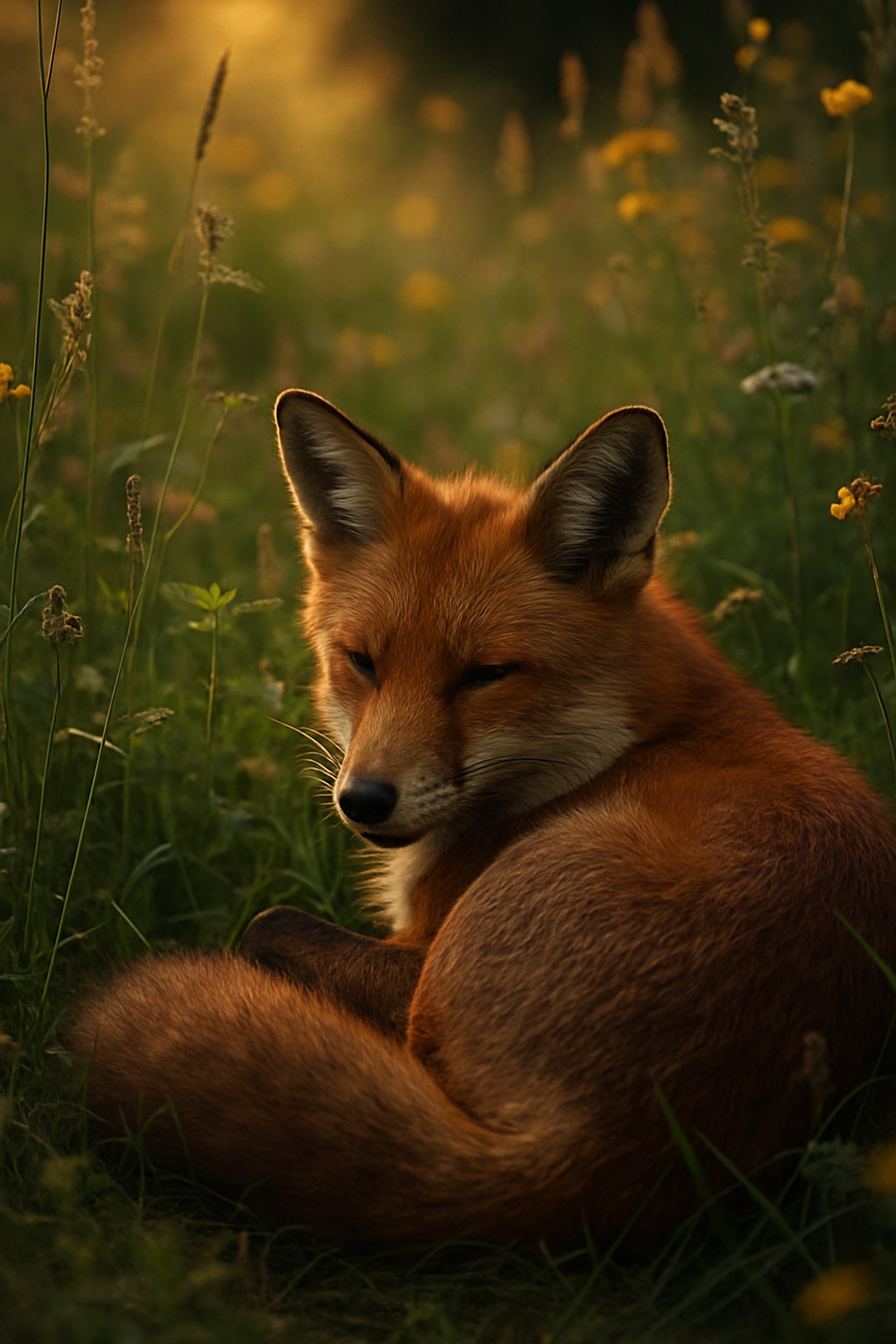
That peaceful curl in your garden, nose tucked under its tail? Biologists have spent decades watching what comes after that first meal, and the story doesn’t end with a cozy fox.
You see the animal settle into the corner of your lawn and something softens in your chest. It looks cold. It looks hungry. Your kitchen is right there. But wildlife researchers watching urban fox populations have documented what happens over weeks and months — and it’s not what most people expect.
Key Facts
- Red foxes (Vulpes vulpes) are built for distance—a healthy wild fox covers up to 10 kilometres in a single night, mapping its territory by scent.
- Researcher Stephen Harris at the University of Bristol has spent decades documenting urban fox behavior.
- In the UK alone, an estimated 100,000 foxes are killed by vehicles every year—the leading cause of death, ahead of disease or predators.
- Regular feeding erodes neophobia, the wariness of new things that keeps wild animals alive, and that wariness does not return.
- Red foxes are among the most widely distributed wild carnivores on Earth, found across Europe, Asia, North America and parts of Africa.
In short: Feeding a garden fox seems kind but changes the animal: red foxes (Vulpes vulpes) normally roam up to 10 km a night hunting, and a reliable bowl replaces that behavior. It also erodes neophobia—the caution that keeps foxes alive—drawing them closer to roads, where an estimated 100,000 UK foxes die yearly.
What Feeding Urban Foxes Actually Does to Them
Red foxes (Vulpes vulpes) are built for distance. A healthy wild fox covers up to 10 kilometres in a single night, reading scent trails, learning seasonal prey patterns, mapping every lane and hedgerow in its territory like it’s reading a book written in smell. Researcher Stephen Harris at the University of Bristol has spent decades documenting this. He’s watched it work. He’s watched it fall apart.
When that ranging stops, everything else stops too.
One bowl becomes an expectation. An expectation becomes a routine. And a routine becomes something you can’t undo — a fundamentally different animal, not tamed exactly, but redirected. The fox hasn’t learned to trust you. It’s learned that you’re a more efficient food source than the landscape. Which, logically speaking, is a problem.
Because logic doesn’t keep you alive in the city.
Why a Fox Is Designed to Roam, Not to Wait
To understand what feeding takes away, it helps to understand what a fox is for. The red fox is one of the most widely distributed wild carnivores on Earth — found across Europe, Asia, North America, and parts of Africa, thriving everywhere from Arctic tundra to desert fringe to the centre of major cities. That success isn’t an accident. It’s the product of an animal whose entire body and behaviour are tuned for opportunism across a wide and unpredictable range.
A fox is an omnivore that eats almost anything the season offers: rodents, rabbits, earthworms, beetles, fallen fruit, carrion, the eggs of ground-nesting birds. To find that ever-shifting menu, it has to keep moving. The nightly patrol isn’t restlessness — it’s the search algorithm of a generalist predator, sampling dozens of micro-habitats and updating a mental map of where food appears and when.
Strip that out and replace it with a single reliable bowl, and you haven’t simplified the fox’s life. You’ve amputated the behaviour that defines it. A fox that no longer needs to range stops practising the very skills — patience, stealth, the slow accumulation of local knowledge — that took it months to build. The animal is still physically capable of hunting. It has simply stopped doing the work that keeps that capability sharp.
Urban Foxes Already Live in a Minefield
The city is not a safe place for a fox — it never was. In the UK alone, an estimated 100,000 foxes are killed by vehicles every year. That’s the leading cause of death. Not disease. Not predators. Roads. And when you add in the territorial dynamics of urban fox populations, the competition for space, the constant pressure of human activity — you start to understand how finely tuned their survival instincts actually need to be.
So what happens when those instincts recalibrate toward you?
A fox conditioned to associate people with food gets closer. Closer to doors. Closer to roads. Closer to the moments that turn fatal. It’s not aggression. It’s not illness. It’s a perfectly logical animal following a reward signal we accidentally created. And that logic kills them.
The Behaviour Shift Nobody Talks About
When people mention feeding urban foxes, the conversation usually lands on disease — mange, toxoplasmosis, bites. Those are real. But the deeper problem is subtler, and harder to reverse once it’s happened. Feeding urban foxes consistently changes the animal’s relationship to risk itself.
A fox that’s been fed regularly begins to lose something ecologists call neophobia — the wariness of new things that keeps wild animals alive. Once that wariness fades, it doesn’t come back. The fox that used to bolt at a door now lingers. It investigates. It waits.
Neophobia is one of the quiet engines of wild survival. It’s the reason a fox treats a new object, a new smell, or an unfamiliar human as a potential threat first and a curiosity second. That bias toward caution costs the animal the occasional easy meal, but it also keeps it from walking into traps — literal and figurative. Conditioning erodes that bias one reward at a time. Each safe encounter with a person who brings food teaches the fox that proximity pays and rarely punishes, until the threat-detection system that took a lifetime to calibrate has been gently, generously switched off.
That calm-looking animal by your back step isn’t relaxed.
It’s changed.
That’s the part nobody mentions when they share the photo.
What a Garden Can Actually Offer a Fox
Here’s where it gets interesting, because the answer isn’t “do nothing.” Dense shrubs. Log piles. Undisturbed corners with leaf litter and long grass — these are what urban foxes actually need from human spaces. Shelter without dependency. A stopping point on a long night’s route, not a reason to stop roaming altogether.
If you want to understand how urban wildlife uses garden habitats, there’s more context at this-amazing-world.com, which covers how wild animals navigate human landscapes — and it’s always more complicated than it looks.
A garden that offers structure rather than scraps becomes part of the fox’s territory in a healthy way. It passes through. It rests. It moves on. You catch a glimpse at dusk and feel that quiet privilege of proximity to something genuinely wild.
The distinction matters more than it first appears. A pile of logs or an unmown corner gives a fox cover from which to hunt the slugs, worms, and small rodents that naturally gather in such places — it supports the foraging behaviour rather than replacing it. A bowl of scraps does the opposite: it short-circuits the search, concentrates the reward at one fixed point, and trains the animal to return to a single human-controlled spot. One habitat feature invites a wild animal to keep being wild. The other quietly recruits it into your routine.
That’s worth protecting.
The Road That Runs Between You and the Fox
There’s a moment most of us don’t think about: the journey the fox makes to reach your garden. Every night, it crosses roads. Cuts between fences. Reads traffic patterns in ways we can barely imagine. That navigation is learned intelligence built up over months of ranging through a dangerous landscape.
When feeding urban foxes becomes a habit on your street — not just you, but multiple households — the cumulative effect reshapes how entire family groups move and interact with roads. Researchers have noted that fox territories in heavily fed urban areas shrink dramatically. Smaller territory. Less movement. More time near houses.
And houses are near roads.
The fox doesn’t know what a road is. It knows you have food.
What Happens When the Food Stops Coming
Here’s the thing — dependency created by regular feeding doesn’t dissolve when the food disappears. When households move, go on holiday, or simply stop putting scraps out, the foxes that have restructured their lives around that food source face an acute crisis. They haven’t been hunting. They haven’t been ranging. Their territory has shrunk to a radius that may not support natural prey. The kindness that felt harmless in week one can leave an animal genuinely ill-equipped for survival by month six.
This is documented. Urban foxes in areas with consistent supplemental feeding show measurably lower foraging competence over time. They find less natural food. They take more risks near humans. When the feeding stops — suddenly, as it often does — they’re caught between two worlds with the skills for neither. That last fact kept me reading for another hour, because it’s the part that actually breaks the equation we’ve built in our heads about what feeding means.
The Disease Problem Feeding Quietly Amplifies
Set aside behaviour for a moment and the physical risks of concentrated feeding are stark in their own right. When you create a fixed feeding point, you don’t just attract one fox — you attract several, often more than would ever naturally tolerate sharing a patch of ground. That clustering is exactly the condition under which contagious diseases spread fastest.
Sarcoptic mange, caused by a burrowing mite, is the most visible threat. It spreads through direct contact and contaminated surfaces, and a feeding station is a near-perfect transmission hub: animals brush past the same spot night after night. An advanced mange infection can kill a fox over a matter of months, stripping its fur, cracking its skin, and leaving it too weakened to hunt — the cruel irony being that the easy meals which gathered the foxes together also helped make them sick.
Then there’s diet itself. Foxes are adapted to a varied, protein-rich wild menu; a steady stream of bread, leftovers, or processed scraps is poorly matched to their physiology and can leave a well-fed-looking animal quietly malnourished — the worst of both worlds: more disease exposure and worse nutrition than the animal would have secured on its own.
By the Numbers
- 100,000 foxes killed by UK roads annually
- Urban fox territories in heavily fed neighbourhoods shrink to 0.1 square kilometres, compared to the 2–5 square kilometre ranges of non-fed urban populations — a reduction so dramatic it’s almost hard to visualize what that means for an animal built for movement.
- A single vixen and her 4–6 cubs
- Supplementally fed foxes in Bristol spent up to 40% less time foraging than unfed foxes in comparable territories — a significant shift in how they use their energy and entire environment.
Field Notes
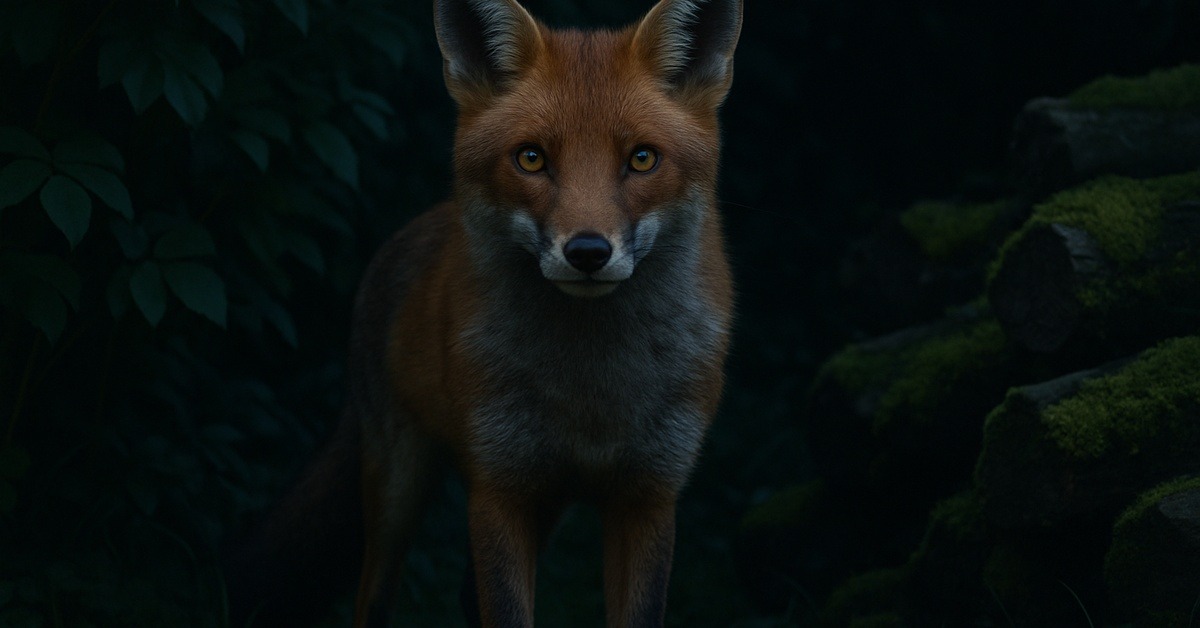
- Vertically slit pupils, like cats — exceptional low-light vision built for independence, not waiting
- Urban fox populations are largely self-regulating. When food is abundant, litter sizes increase and survival rates improve temporarily, which means feeding programmes can lead to population spikes followed by sharper crashes when feeding stops. It’s a boom-and-bust cycle we’re engineering without knowing it.
- A fox’s hearing is precise enough to locate a mouse moving under 3 inches of snow. That same sensory intelligence, redirected toward predicting human routines, works in completely the wrong direction for the animal’s long-term survival.
Why This Matters Beyond One Garden
It’s tempting to treat the fox in your garden as an isolated case — one animal, one bowl, one private kindness. But urban foxes don’t live in isolation, and neither do the consequences of feeding them. A single household’s habit ripples outward: it shifts where foxes concentrate, how boldly they approach people, and how the wider neighbourhood comes to perceive them.
Boldness is the tipping point. A fox that has learned people mean food doesn’t reserve that lesson for the household that taught it. It carries that confidence onto the next street, into the next garden, up to the next back door — including the doors of people who don’t want a fox there at all. That’s how a well-meaning feeding habit becomes the spark for complaints, calls for culling, and the very conflict that gets foxes labelled a nuisance. The animal pays for our generosity twice: once in lost survival skills, and again in the human backlash that boldness invites.
There’s a broader principle at work, one that wildlife managers repeat across continents and species: a fed animal is, too often, a doomed animal. It applies to bears at campsites, to gulls at seaside towns, to monkeys at temple gates — and to foxes in suburban gardens. The specifics differ, but the mechanism is the same. Habituation removes the buffer of wariness that lets a wild animal share space with humans safely. Once that buffer is gone, the encounters that follow tend to end badly for the wildlife, not the people.
What Wild Actually Costs, and Why It Matters
The real question buried in all of this isn’t about foxes. It’s about what we want from proximity to wild animals. Because feeding urban foxes feels generous — feels like bridge-building between species. But the bridge runs in one direction only. We don’t enter their world. We pull them into ours, with all the roads and routines and dangers that come with it.
An animal that chooses to move through a human landscape while remaining fundamentally wild is doing something genuinely remarkable. We don’t get to interrupt that balance and expect it to hold.
The fox in your garden doesn’t need your food. It needs your restraint. That’s harder to give, because it offers nothing back to us — no gratitude, no return visit guaranteed, no sense of connection. But it keeps the animal alive on its own terms.
Frequently Asked Questions
Q: Is it ever okay to feed a fox in my garden? The safest answer is no — not as a regular habit. Occasional, accidental access to scraps won’t transform an animal overnight, but a reliable feeding routine is what rewires a fox’s behaviour, erodes its wariness, and shrinks its territory. If you want to help, offer habitat (cover, undisturbed corners) rather than food, and let the fox keep doing the foraging it’s built for.
Q: A fox already visits and seems to expect food — how do I undo it? Stop the feeding gradually rather than all at once if you can, and remove the fixed feeding point entirely so there’s no spot to return to. Make your garden less of a reward and more of a thoroughfare. Recovery of full foraging competence isn’t guaranteed, which is exactly why not starting is so much easier than stopping.
Q: Won’t the fox starve if I don’t feed it? A healthy wild fox is an exceptionally capable generalist that has been finding its own food across cities, farmland, and forest for as long as the species has existed. The far greater risk to its survival is the road traffic, disease clustering, and lost wariness that feeding tends to create — not the absence of a bowl on your lawn.
Watch the fox. Let it rest. Let it leave. The wildness you protect by not feeding it is worth more than any moment of closeness food could buy. There’s something profound in being chosen by a wild animal that hasn’t learned to rely on you — a kind of trust that runs both ways. If this kind of story keeps you thinking, there’s more at this-amazing-world.com — and the next one is even stranger.
Illustrations are AI-generated. Article fact-checked and human-edited.