6 Inmates Could Have Escaped. They Saved His Life Instead.
The van was unlocked. The gun was right there on the ground. Six men looked at both of those things, and then they called 911 instead.
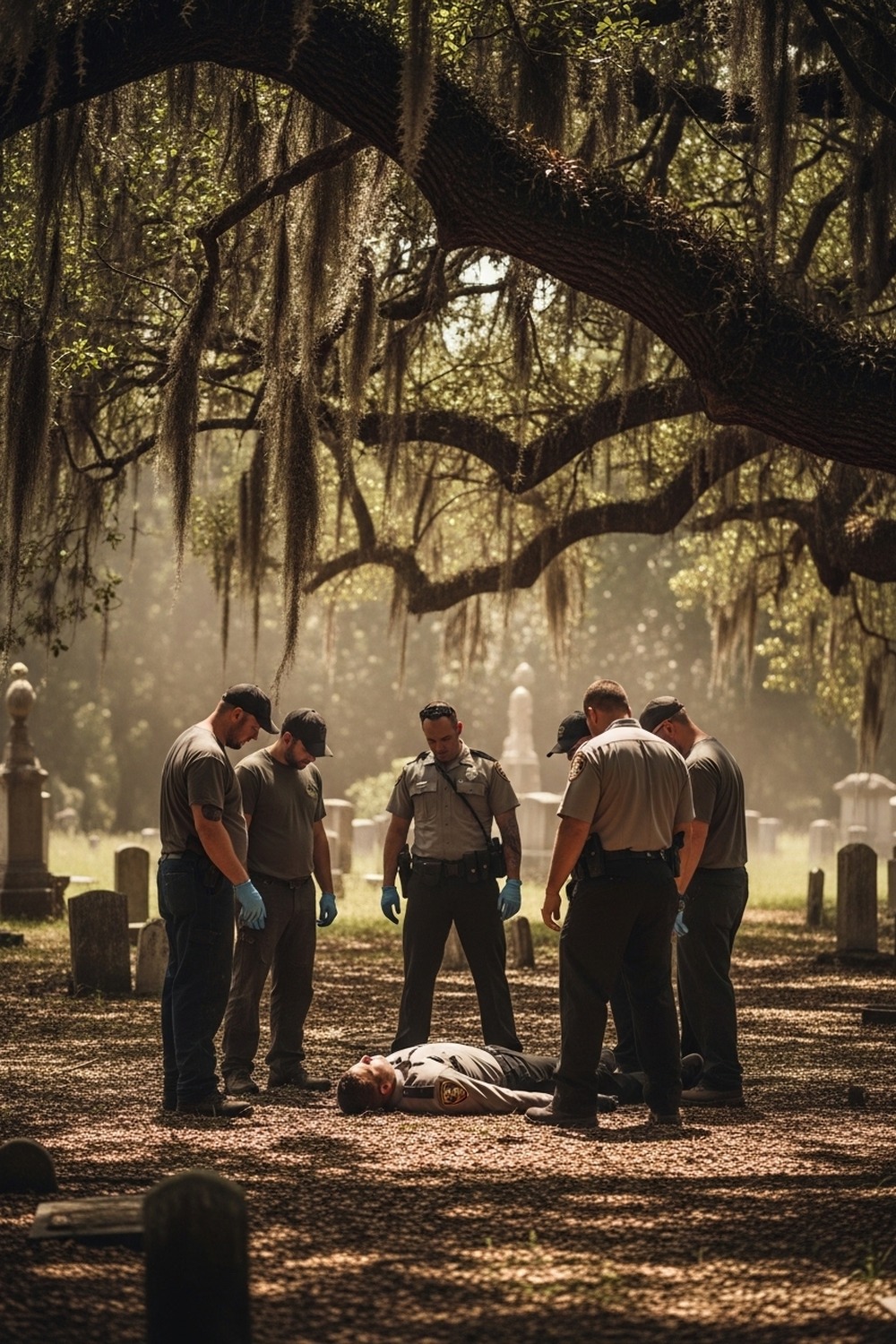
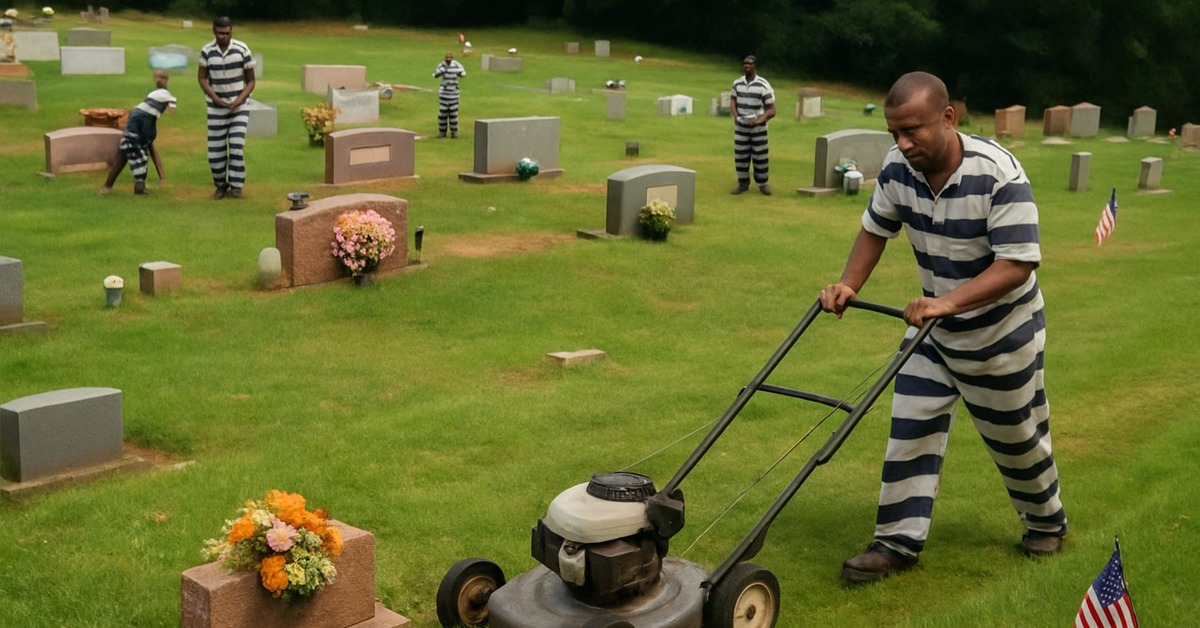
June, rural Polk County, Georgia. Deputy Warren Hobbs is supervising an inmate work crew at a cemetery — a routine county detail, a hot afternoon, nobody else around — when he goes down. Face-first into the dirt, unconscious, post-surgical body overwhelmed by heat that was pushing past 95°F with the kind of Georgia humidity that makes every breath feel like drinking warm water. The six men he was guarding had every tool for disappearance sitting within arm’s reach. What they did instead is the part that’s hard to stop thinking about.
Key Facts
- In June, in rural Polk County, Georgia, six inmates on a cemetery work crew aided collapsed Deputy Warren Hobbs.
- Deputy Hobbs had recently undergone surgery, impairing heat regulation, and collapsed in temperatures above 95F.
- The inmates removed his protective vest, took his phone, and called 911 despite an unlocked van and his firearm being accessible.
- Heat stroke kills roughly 700 Americans per year and is highly preventable with bystander response in the first minutes (CDC, 2023).
- The Polk County Sheriff’s Office thanked the men with a pizza party plus homemade desserts baked by Hobbs’s family.
In short: When six inmates save a deputy in rural Polk County, Georgia, the choice stands out: with an unlocked van and Deputy Warren Hobbs’s firearm within reach, the men instead removed his vest and called 911 as heat stroke set in. He recovered, and the sheriff’s office thanked them with pizza and family-baked desserts.
How Inmates Save a Deputy’s Life in Seconds
They moved fast. Pulled off his heavy protective vest so he could actually breathe. Grabbed his phone. Dialed 911.
Deputy Hobbs had undergone surgery recently, which meant his body’s ability to regulate heat was already compromised before the temperature even started climbing. According to research on heat stroke from the National Institutes of Health, untreated heat-related collapse can turn fatal within minutes — not hours, minutes. The inmates understood, on some level, that the clock was running. And nobody told them to start it. Nobody was watching them. There was no guard standing over their shoulder with consequences dangling in the air.
They just acted. That’s the part that keeps snagging.
The instinct to help — to pull a vest off a man you don’t know well, a man whose job is to keep you from leaving, and call for help on his behalf — that’s not something you can fake. You either do it or you don’t, and you do it fast, because there isn’t time to weigh the options. These six men didn’t weigh anything. They just moved.
The Van Was Unlocked. The Weapon Was Right There.
It’s worth being specific about what the situation actually looked like in those moments.
The van’s keys were reachable. Deputy Hobbs’s firearm was on his person — his now-unconscious person, collapsed on the ground, in a rural cemetery with no witnesses. Georgia had just been rattled by a separate, high-profile prison escape at another facility. Every law enforcement agency in the state was on edge. The public was nervous in the particular way a community gets nervous when escape feels suddenly imaginable. These six men were exactly the kind of opportunity that writes its own worst-case headline.
They chose something else entirely.
They stayed in that cemetery. In the heat. Waiting with the man whose entire job description included making sure they didn’t do exactly what they could have done. That’s not a footnote. That’s the whole story.
Why This Hit Georgia Differently
The timing wasn’t coincidental — it was almost unsettling in how precisely it cut against the prevailing fear.
This story broke in the immediate wake of that other escape. Law enforcement was tense. Local news was feeding a narrative around incarcerated individuals from rural county work details that ran on suspicion and worst-case assumptions. The public had just been handed a story that confirmed every fear. And then, within days: six convicted men sitting in a cemetery, voluntarily, calling emergency services for the officer they could have left behind. The story of inmates saving a deputy’s life landed in the middle of all that like something thrown into still water.
The ripples went in every direction at once.
It forced a particular kind of discomfort — the kind you get when a narrative you’d quietly accepted turns out to be incomplete. Not wrong, exactly. Just insufficient. Six men made it insufficient on a Tuesday afternoon in June with nobody watching.
The Pizza Party Nobody Expected to Throw
The Polk County Sheriff’s Office response wasn’t a press conference. No podium, no cameras in a formal row, no prepared statement about the value of community cooperation.
It was pizza. And then it was homemade desserts, baked by Deputy Hobbs’s own family, brought to share with the six inmates who’d kept him alive. There was formal recognition, yes — but the gesture that actually landed was the one that said something harder to put in a press release: we see you as people. Not as a liability that happened not to run. Not as an institutional outcome. As people who made a real choice on a terrible afternoon and deserve to be thanked like human beings, which means fed, celebrated, seen.
The family whose father came home that night because of these men showed up to say thank you in the most personal language they had available. Food. Presence. Acknowledgment.
That last detail kept me reading about this story for another hour.
There’s something in that gesture — a family baking for the men who saved their person — that doesn’t fit the usual shape of these stories. It’s too specific to be symbolic. It’s just people being grateful in the most human way they knew how.
By the Numbers
- Heat stroke kills roughly 700 Americans per year — and is one of the most preventable weather-related deaths when bystanders respond in the first few minutes (CDC, 2023).
- Georgia’s prison and county jail system held over 50,000 incarcerated individuals in 2023. Inmate-on-officer assaults, while tracked carefully, represent a small fraction of the daily interactions between inmates and correctional staff — a statistical reality that rarely makes headlines.
- Approximately 2 million people are currently incarcerated in the United States — the highest rate in the world. Individual acts of compassion are easy to lose in that number.
- Post-surgical patients lose heat much faster. The body’s thermoregulation is already strained, which means Hobbs likely had almost no warning before he collapsed.
- Research on prosocial behavior in low-oversight, high-stress situations shows that people are actually more likely to help when they perceive the victim as genuinely vulnerable — the social relationship between helper and victim matters less than we tend to assume.
Field Notes
- Inmate work details in Georgia are standard county jail operations. Participants are typically lower-risk offenders who’ve earned work privileges — but they’re not screened for emergency response scenarios. There’s no training for what happened in that cemetery. There was just a decision.
- No pre-screening for emergencies.
- Research on moral decision-making in correctional populations shows that incarcerated individuals demonstrate the full range of human ethical behavior. Acts of profound compassion aren’t statistically rare in this population. They’re just rarely reported — which is a different problem entirely.
- The Polk County Sheriff’s response — the pizza, the family desserts, the deliberate human acknowledgment — was not standard protocol. Someone made a call to do it differently.
What This Story Actually Says About People
The easy version: six inmates save a deputy’s life, everyone feels good for a news cycle, we scroll on.
The harder version is about the assumptions underneath. About who we’ve quietly decided is capable of doing the right thing, and who we’ve already written off before the moment even arrives. These six men had every reason, by the coldest imaginable logic, to run. They didn’t run because cold strategic logic isn’t how most humans actually function — even humans the system has decided are beyond the point of trust. Maybe especially them.
We build enormous institutional structures around the assumption that certain people cannot be trusted with an unlocked van and a moment of no consequences. And then six men in a Georgia cemetery quietly take that assumption apart on an unremarkable Tuesday, in the worst heat of the summer, with no audience.
No cameras. No credit pending. Just a choice.
Deputy Hobbs recovered fully. He went home to the family that would later show up with desserts for the men who made that possible. The Polk County Sheriff’s Office threw a pizza party. Six people who could have been gone by the time ambulances arrived instead stayed with an unconscious man and made sure he wasn’t alone.
That’s the outcome. But the question it leaves behind — about who gets to be seen as capable of goodness, and what we do with the answer — that one doesn’t close so neatly.
A hot afternoon. A collapsed man. Six people who had absolutely no obligation to stay, and stayed anyway. Deputy Hobbs is alive. His family brought dessert. And somewhere in Polk County, Georgia, the story of exactly what human beings are capable of — all of them, any of them — got a little more complicated and a little more true. There’s more at this-amazing-world.com, and the next one is stranger still.
Frequently Asked Questions
Q: What did the six inmates do to save Deputy Hobbs?
When Deputy Warren Hobbs collapsed unconscious from heat in a Polk County, Georgia cemetery, the six inmates on his work crew acted within seconds. They pulled off his heavy protective vest so he could breathe, grabbed his phone, and dialed 911. They did this despite an unlocked van with reachable keys and Hobbs’s firearm on his collapsed body, choosing to stay with him rather than attempt escape.
Q: How dangerous was the deputy’s condition?
Extremely dangerous. Deputy Hobbs had recently undergone surgery, which already compromised his body’s ability to regulate heat, and he collapsed in temperatures pushing past 95F with heavy Georgia humidity. Heat stroke kills roughly 700 Americans per year, according to the CDC, and untreated heat-related collapse can turn fatal within minutes rather than hours, making the inmates’ rapid 911 call genuinely life-saving.
Q: Why was this story significant in Georgia at the time?
The timing cut sharply against prevailing fear. The story broke in the immediate wake of a separate high-profile prison escape at another Georgia facility, when law enforcement statewide was tense and the public was nervous about escapes. Against that backdrop, six convicted men voluntarily staying in a cemetery to call emergency services for the officer guarding them complicated a narrative that had assumed the worst.
Q: How did authorities thank the inmates?
The Polk County Sheriff’s Office response was not a formal press conference but a pizza party, followed by homemade desserts baked by Deputy Hobbs’s own family and brought to share with the six men. There was formal recognition as well, but the gesture that landed hardest was the personal one. Deputy Hobbs recovered fully and went home to the family that later showed up with desserts.
Illustrations are AI-generated. Article fact-checked and human-edited. Our editorial standards.