How Portland Gave Homeless People Jobs — and 70% Found Homes
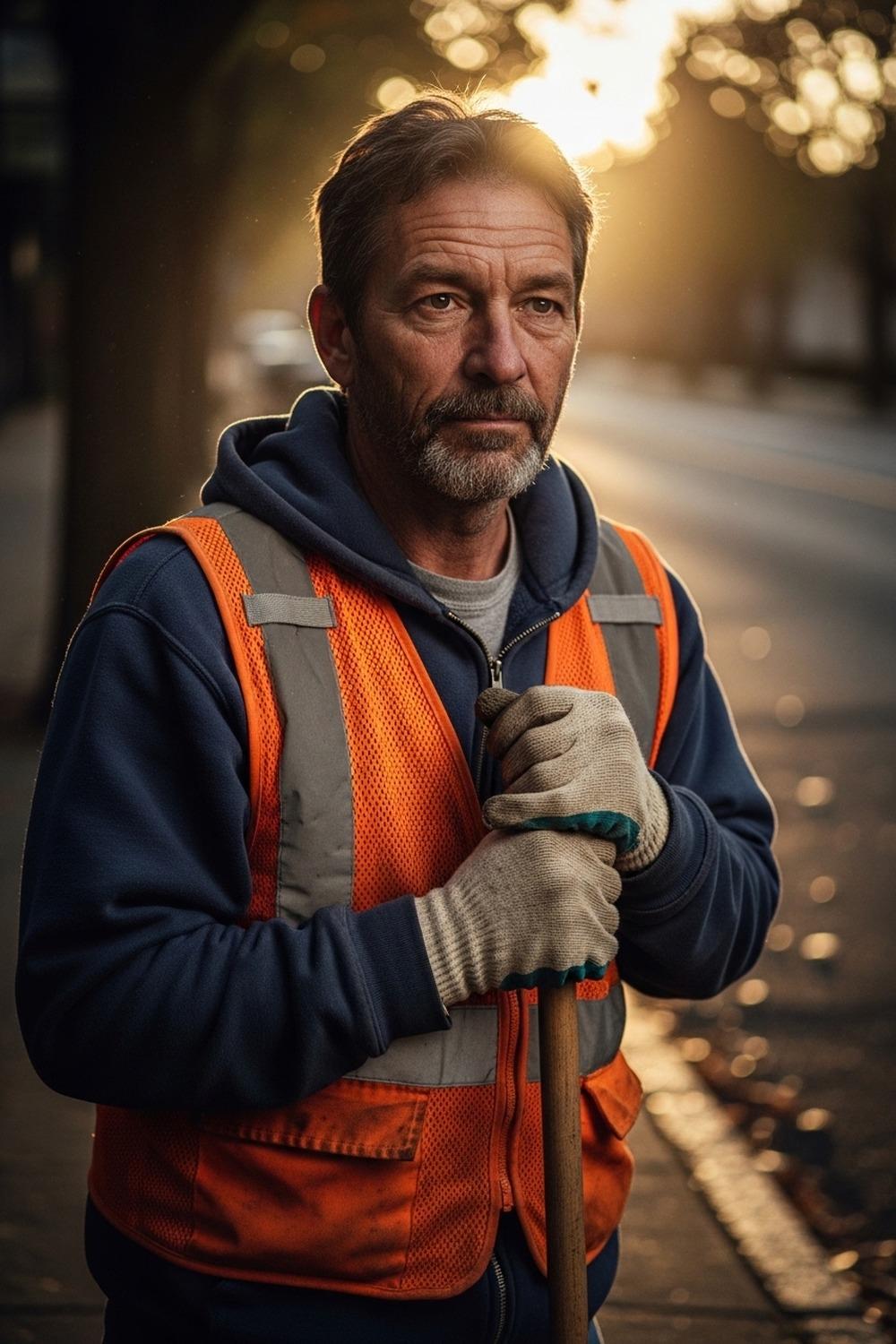
Something as ordinary as a broom became the hinge point for Portland’s most successful experiment in ending homelessness. Not through legislation, not through emergency shelter expansion — but by offering people experiencing chronic street homelessness a reason to show up, to be counted, to earn real wages. The Portland homeless employment program housing model now achieves a 70% success rate moving people into stable housing, a figure that emerged not from policy papers but from the precise mechanics of combining paid work with housing navigation.
Central City Concern, the Portland-based nonprofit behind it, started something unexpected in the early 2010s. The organization took the Housing First philosophy — that stable housing, not sobriety or employment prerequisites, is the entry point for ending chronic homelessness — and layered directly on top of it something most cities had stopped trying: real paid work. Participants join structured crews. Clock in at actual hours. Receive wages that accumulate into documentation. By 2022, approximately 70% of participants had moved into stable housing during or shortly after program involvement. That’s not marketing language. That’s a system that actually works.
Key Facts
- Central City Concern, the Portland nonprofit behind the model, was founded in 1979 and accelerated its employment-first programs starting around 2010.
- By 2022, approximately 70% of employment program participants had moved into stable housing during or shortly after program involvement.
- Central City Concern served over 13,000 individuals across its various programs in 2017 alone.
- Albuquerque’s There’s a Better Way program, launched in 2015, paid unhoused individuals $9 an hour to clean public spaces, citing Portland’s model as an influence.
- A 2021 Corporation for Supportive Housing report found participants who received at least 180 days of continuous support were roughly twice as likely to maintain housing at the 12-month mark.
In short: The Portland homeless employment program, run by Central City Concern, pairs paid public-space cleanup crews with housing navigation and behavioral health services. By 2022 roughly 70% of participants moved into stable housing. Founded in 1979, the nonprofit served over 13,000 people in 2017, proving dignity and a paycheck outperform charity alone.
Portland’s Homeless Employment Program Is Rewriting the Rules
Central City Concern was founded in 1979 and operated various housing services for decades, but its employment-first momentum accelerated starting around 2010. The jobs themselves carry no glamour. Crews pick up needles from sidewalks. They sweep corners. They haul trash bags out of encampments not so different from where they slept weeks before.
But here’s the thing: there’s something psychologically precise about that arrangement. You’re not cleaning a park in a wealthy neighborhood for strangers who ignore you. You’re cleaning the blocks you know, the corners that matter, the community you’re part of. Portland’s Old Town and Chinatown neighborhoods — historically among the city’s highest-need areas — have seen measurable cleanliness improvements alongside the program’s growth. The work is visible. The worker is visible too.
Some participants have cycled back into the program as supervisors. That detail matters more than it might seem — (researchers actually call this the “return to leadership” signal) — it means the program has a career ladder, not just an entry door. It signals permanence. That’s rare.
Why Dignity, Not Charity, Drives the Results
Chronic homelessness is rarely a single problem with a single solution. It tends to involve layered trauma, mental health challenges, interrupted employment histories, and above all, a collapse in what researchers call self-efficacy: the belief that one’s own actions can produce meaningful outcomes. When that belief erodes completely, conventional charity often reinforces it. A food bag handed through a car window doesn’t rebuild agency.
A paycheck does.
This dynamic isn’t unique to Portland. The same psychological machinery shows up in studies of long-term unemployment globally — from post-industrial towns in the American Midwest to rural communities across the developing world. It even echoes in research on animals: the way that purpose and structured activity reduce stress responses in highly social species. The attachment needs that drive a baby monkey to cling to a surrogate for years reveal just how fundamentally social belonging shapes survival — human or otherwise.
Integration matters. Central City Concern’s model layers behavioral health services, addiction recovery support, and housing placement assistance — all under the same organizational roof. That’s not accidental design. In 2017, the organization served over 13,000 individuals across its various programs. The employment component feeds into housing placement, which feeds into long-term stability tracking. The 70% housing outcome figure emerges from that full ecosystem, not just the job placement alone. But something’s worth saying plainly: watching a city actually house the people it claims to want to help, at this scale and this consistency, you stop calling it a trend and start calling it what it is — proof that the system itself was the problem all along.
What the Research Says About Work and Housing Stability
A 2019 analysis published by the Urban Institute examined transitional employment programs across multiple American cities and found that paid work — even temporary, subsidized work — consistently accelerated participants’ exits from homelessness when paired with housing navigation support. Portland wasn’t the only city experimenting with this model, but it was among the most consistent in tracking long-term outcomes.
The National Alliance to End Homelessness has documented how communities that combine employment services with housing placement outperform those that offer housing alone, particularly for individuals with histories of long-term street homelessness. American cities that adopted integrated employment and housing models during the 2010s saw recidivism into homelessness drop measurably compared to emergency shelter-only approaches, according to reporting by BBC News. The data isn’t perfect, but the directional finding is consistent enough across enough cities that dismissing it requires deliberate effort.
What’s counterintuitive is how quickly income stability translates to housing stability — often faster than the traditional pathway of sobriety first, then housing. Why does having a job open housing doors so reliably? Because landlords making rental decisions respond strongly to income regularity and predictability — qualities that even a modest part-time wage provides. Researchers at Portland State University’s Homelessness Research and Action Collaborative have noted that participants who gain even part-time wages quickly develop the financial predictability that landlords require. It’s not always about the total amount of money. It’s about the regularity.
A consistent $800 a month tells a prospective landlord something that an inconsistent $1,200 does not. That single insight reshaped how housing navigators in Portland approach their work. They stopped waiting for participants to reach a financial threshold. They started working with the rhythm of income instead.
Portland’s Program Model Is Spreading — and Evolving
By the mid-2010s, cities including Seattle, Denver, and Albuquerque were watching Portland’s employment-first hybrid model closely. 2015 brought Albuquerque’s There’s a Better Way program — which paid unhoused individuals $9 an hour to clean public spaces, eventually offering bridge housing to participants. In its first two years, the Albuquerque program diverted hundreds of individuals from the criminal justice system and connected a significant portion with permanent housing or treatment services. Denver’s Road Home program incorporated similar employment components. None of these programs copied Portland exactly, but all operated from the same principle: when the city’s public space problem and an individual’s income problem are solved simultaneously, the outcome is more durable than solving either one alone.
Central City Concern has presented its model at national conferences on homelessness policy, and its staff have been consulted by municipal planners in at least a dozen American cities since 2018. But the model isn’t without criticism. Some housing advocates argue that employment prerequisites — even soft ones — risk excluding the most severely disabled or mentally ill individuals who can’t maintain work schedules.
Central City Concern has addressed this partially by making employment participation voluntary and by offering graduated involvement for people managing significant health barriers. The harder critique is about scale: Portland’s homelessness crisis, like those in Seattle, Los Angeles, and San Francisco, has grown faster than any single program can absorb. The 70% housing outcome is real. But it applies to a subset of the total unhoused population, not everyone sleeping outdoors on a given night. Critics and advocates can both be right at once.
What Portland Gets Right That Other Cities Still Miss
Continuity. Most cities consistently underinvest in it. It’s not enough to hand someone a job for three weeks and call it a pathway. Central City Concern’s most effective cohorts are those who stayed engaged with the organization for six months or longer — long enough to accumulate references, work history, and the kind of documented reliability that opens private rental markets. A 2021 report from the Corporation for Supportive Housing found that participants in employment-linked housing programs who received at least 180 days of continuous support were roughly twice as likely to maintain housing at the 12-month mark compared to those who received shorter interventions. Portland understood this early. The program wasn’t designed as a sprint.
It was designed as a scaffold. Housing retention specialists — staff whose sole job is to keep housed people housed — handle landlord disputes, utility emergencies, lease renewals, and the cascading small crises that can unravel a tenancy before it takes root. This is unglamorous, operational work. It doesn’t make headlines. But it’s the difference between a 70% success rate and a 40% one. Evidence from the National Low Income Housing Coalition consistently shows that eviction prevention and retention services add more to long-term housing stability than initial placement services alone. Portland funds both ends of that pipeline.
Other cities spend heavily on shelter beds and lightly on what comes after placement. It turns out the investment ratio matters enormously.

How It Unfolded
- 1979 — Central City Concern is founded in Portland, Oregon, initially focused on alcohol recovery housing for low-income adults.
- Early 2010s — The organization expands its employment-first programs, launching paid outdoor work crews specifically targeting individuals experiencing street homelessness.
- 2015 — Albuquerque’s There’s a Better Way program launches, directly citing Portland’s employment-linked housing model as an influence on its design.
- 2022 — Central City Concern reports a 70% housing placement rate among employment program participants, drawing national attention from housing policy researchers and municipal planners.
By the Numbers
- 70% — the proportion of Central City Concern employment program participants who secured stable housing during or shortly after the program (reported 2022)
- 13,000+ individuals served across Central City Concern’s full range of programs in 2017 alone
- 180 days of continuous support doubles the likelihood of maintaining housing at the 12-month mark, per the Corporation for Supportive Housing (2021)
- 2× — participants receiving longer-term support were roughly twice as likely to stay housed compared to those in shorter interventions
- $9/hour — the starting wage offered by Albuquerque’s comparable program in 2015, which diverted hundreds from the criminal justice system in its first two years
Field Notes
- In Portland’s Old Town neighborhood, several former program participants returned to the same crews as paid supervisors — a detail that Central City Concern staff describe as one of the most reliable indicators of long-term housing retention. When someone returns to supervise, they almost never leave housing again.
- The psychological mechanism behind the program’s effectiveness isn’t primarily financial. Researchers at Portland State University’s Homelessness Research and Action Collaborative have noted that the social structure of the work crew — showing up, being counted, having colleagues — predicts housing success almost as well as the wage level itself.
- Housing retention specialists, not placement specialists, may be the single most cost-effective role in the entire program — yet they’re often the first position cut when municipal funding tightens.
- Researchers still can’t fully explain why the 70% figure holds so consistently across different participant demographics within the program. Whether it would replicate at significantly larger scale — serving thousands simultaneously rather than hundreds — remains an open and genuinely contested question in homelessness research.
Frequently Asked Questions
Q: What exactly is the Portland homeless employment program housing model, and how does it work?
Central City Concern operates the model primarily, placing individuals experiencing homelessness into paid outdoor work crews — typically cleaning public spaces — while simultaneously connecting them with housing navigation services, behavioral health support, and addiction recovery resources. Participation is voluntary and graduated to accommodate varying health and ability levels. The employment component provides both income and the documented work history that helps participants access private rental markets. The integrated support structure is what distinguishes it from simpler job-placement programs.
Q: Why does having a job make it so much easier to find housing?
It’s not just about the total income. Landlords making rental decisions respond strongly to income regularity and predictability — qualities that even a part-time structured wage provides. A consistent paycheck, however modest, signals reliability in ways that one-time payments or emergency assistance don’t. Employment also provides a social structure — scheduled hours, colleagues, supervisors — that reinforces the routine behaviors, like keeping appointments and maintaining communication, that stable tenancy requires. Portland State University’s Homelessness Research and Action Collaborative has documented this pattern extensively. The income and the social scaffolding work together.
Q: Does the program only work for people who are physically able to work outdoors?
This is one of the most common misconceptions about employment-first homeless programs. Central City Concern’s model is specifically designed to accommodate a spectrum of ability levels, with graduated participation options for individuals managing significant physical or mental health challenges. The outdoor cleaning crews are the most visible part of the program, but the organization also connects participants with a range of internal and external employment options suited to different capacities. Critics are right that the most severely disabled individuals may need housing-first approaches with no employment component at all — and Central City Concern operates those services too.
Editor’s Take — Sarah Blake
What stays with me about this program isn’t the 70% figure — it’s the detail about participants coming back as supervisors. That’s not a data point. That’s a person deciding the place that helped them is worth staying in. Most homeless policy operates on the assumption that once someone is housed, the story ends. Portland figured out that the story actually starts there. The retention specialists, the continuity funding, the work history that accrues over months — those are the unglamorous parts that nobody funds until it’s too late to matter.
Portland’s program doesn’t solve homelessness. It solves it for the people it reaches — which is a meaningfully different thing, and a more honest one. The gap between those two statements is where most policy debates get stuck and most funding decisions get made badly. What a broom and a paycheck actually give someone isn’t just income. It’s the experience of being a person the city needs. That feeling doesn’t show up in a housing outcome report. But it’s probably the reason the report says what it does. The real question isn’t whether this model works. It’s why so few cities have built it at the scale the problem demands.
Illustrations are AI-generated. Article fact-checked and human-edited. Our editorial standards.