The ‘Natural’ Cancer Cure That Was Actually Cyanide
“`html
In 1976, American cancer patients were crossing into Tijuana for injections of a yellowish liquid that was, essentially, bottled cyanide. Nobody was hiding a miracle cure. What they were actually paying for was poison — and the strange part? The same compound is naturally sitting in your kitchen right now, in your fruit bowl.
Picture it: a clinic just south of the border, terminal patients lined up because their own country won’t let them have this treatment. They’ve been told the FDA is hiding a cure. The medical establishment doesn’t want them to know. They’ve exhausted everything else, so they cross anyway. That desperation — that specific kind of fear mixed with rage at feeling abandoned — is what gets people to make decisions they’d never make otherwise.
How a Fake Cancer Cure Took Over
Amygdalin. That’s the actual molecule. It’s in apple seeds, apricot pits, cherry stones — all the stone fruits. French chemists isolated it back in 1830. Seemed like an interesting chemical fact, nothing more. Then in the 1950s, a biochemist named Ernst T. Krebs Jr. took it, rebranded it as “Laetrile,” and proposed something bold: cancer cells are uniquely vulnerable to the cyanide that gets released when your body metabolizes amygdalin.
On paper, it made sense. Almost too much sense.
Krebs never actually published controlled clinical trials. What he had instead was case reports. Testimonials. Stories from patients who were also, conveniently, receiving actual cancer treatment at the same time. But the narrative he was selling — natural cure, suppressed by the establishment, simple answer to something terrifying — that traveled faster than any peer-reviewed paper. Way faster.
A Movement Built on Fear
By the 1970s, this wasn’t fringe anymore. It was a full movement. Thousands of Americans were streaming to clinics in Mexico. Advocates were lobbying state legislatures. Over 27 states actually legalized Laetrile for personal use before the feds stepped in. The FDA became the villain. The American Cancer Society became the villain. The National Cancer Institute became the villain. And when you’re terrified and sick, having a villain to blame feels almost as good as having a cure.
The thing about terminal diagnoses is they short-circuit how people normally think. There’s no time for caution. There’s no room for “we don’t have enough data yet.” You’re looking at a death sentence, and someone’s offering you hope with a completely straight face.
Laetrile’s promoters understood this. They were very good at providing enemies.
What the Real Science Said
The National Cancer Institute didn’t just dismiss it. Under pressure from advocates and even members of Congress, they ran actual clinical trials. Proper ones. Double-blind, controlled, published in the New England Journal of Medicine in 1982. The lead researcher was Dr. Charles Moertel from the Mayo Clinic.
Zero benefit. Not “limited benefit.” Not “showed promise in some cases.” Zero.
The trial participants who took Laetrile developed cyanide toxicity symptoms — headaches, dizziness, nausea. Some people got sicker. Nobody got better. The FDA banned interstate sales of Laetrile in 1980, but banning something and actually making it disappear are completely different things. The Mexican clinics kept operating. The books kept selling. And if you go looking on certain corners of the internet right now, the belief is still there.
The Poison That’s Already in Your House
Here’s where this gets genuinely weird.
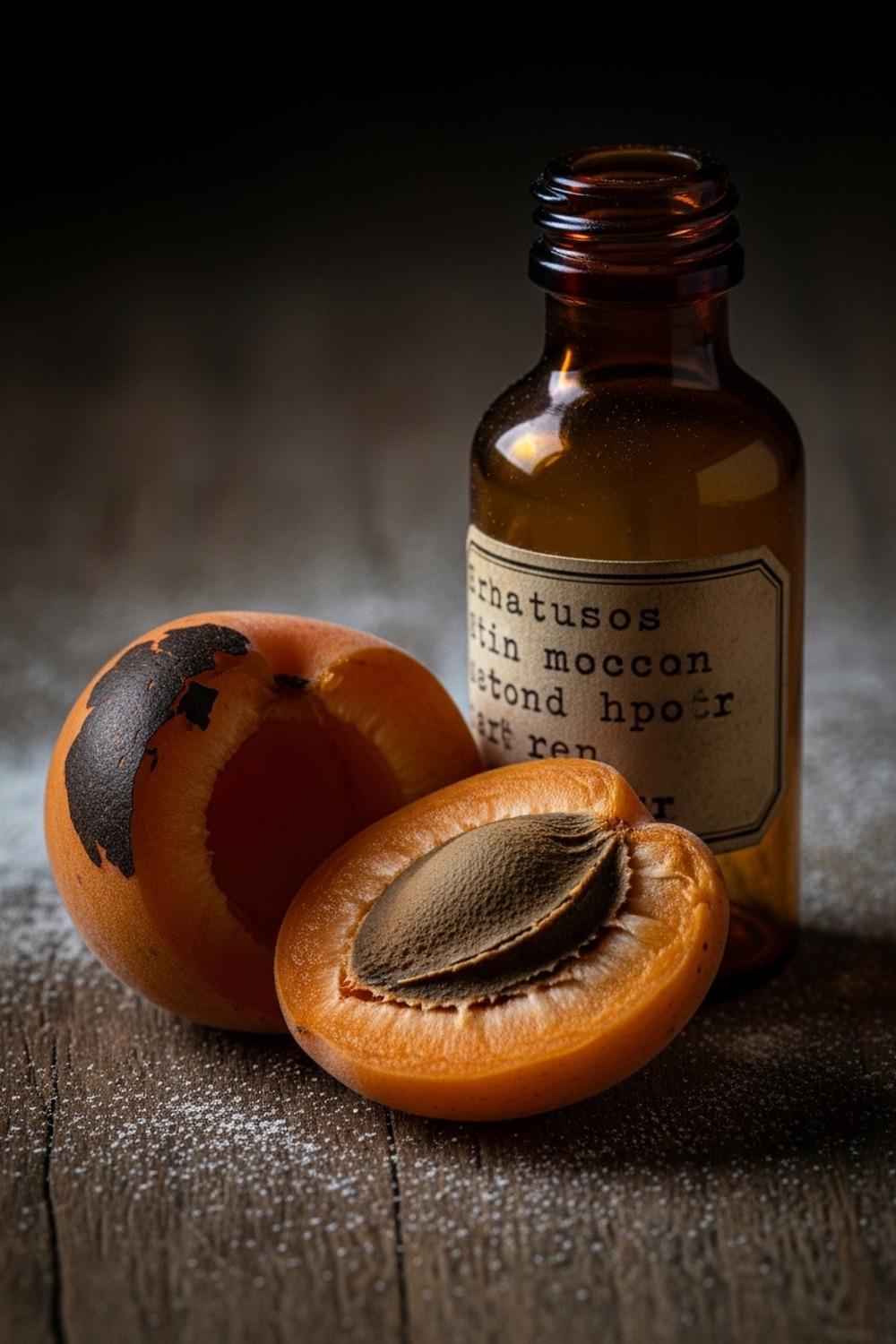
Amygdalin — the exact same compound that was supposed to cure cancer and turned out to just poison people — exists naturally in foods most people keep at home. You probably have some right now. Apple seeds. Apricot pits. Peach pits. Bitter almonds. The chemistry doesn’t care about your intentions.
But here’s the crucial part that separates “fine” from “dangerous”: quantity and processing.
A single apple seed contains about 0.6 milligrams of amygdalin. Swallow it whole and the hard seed coat mostly passes through your digestive system intact. The compound never fully releases. You’re fine. Completely fine. But take those same seeds and crush them deliberately, grind apricot kernels into a paste, start consuming them in quantity — suddenly the math changes.
The distance between safe and toxic isn’t comfortable. It’s measured in tablespoons.
This Actually Happens
This isn’t theoretical. The European Food Safety Authority documented actual cases of cyanide poisoning from apricot kernels sold as health supplements. In 2016, they determined that three small apricot kernels could push an adult to the upper safe limit of cyanide exposure in one sitting. For a child? One kernel gets you there. Hospitals have treated patients showing up with classic cyanide poisoning symptoms after following natural health advice they found online.
Your body converts amygdalin into hydrogen cyanide through enzyme reactions. Hydrogen cyanide blocks cytochrome c oxidase — an enzyme your cells need to actually use oxygen. In high doses, it’s the same compound used in chemical weapons. That last fact kept me reading for another hour trying to figure out if I was understanding it correctly. I was.
The irony of marketing a “natural” cancer cure that chemically works like a chemical weapon is so sharp it cuts.
By the Numbers
- 70,000+ American cancer patients used Laetrile by the late 1970s
- 27 states legalized it before the FDA shut it down in 1980
- The 1982 Mayo Clinic trial showed zero tumor responses among 178 patients. Participants developed measurable cyanide toxicity instead.
- A lethal dose of hydrogen cyanide for an adult: 1-3 milligrams per kilogram of body weight. You can achieve that by eating crushed bitter almonds or apricot kernels deliberately. Not hypothetically. Actually.
Some Additional Details Worth Knowing
- Ernst T. Krebs Jr., the guy who created Laetrile and built this whole empire? He claimed a doctorate he never actually earned. His “Dr.” title came from an honorary degree, not medical training. His promotional materials never mentioned this.
- Bitter almonds — the wild variety, not the sweet ones in grocery stores — contain so much amygdalin they’ve been banned for raw sale in the U.S. for decades. A handful of them can kill a child.
- Despite being completely debunked, Laetrile and apricot kernel supplements are still sold online and in health stores across many countries. The marketing materials get creative about what they claim, stopping just short of language that would trigger regulatory action.
Why This Matters Right Now
The Laetrile story isn’t history. It’s a template. It’s still running. The same machinery that made it so persuasive in the 1970s — institutional distrust, the appeal of natural solutions, desperation from serious illness, the seductive narrative that someone powerful is hiding the truth — all of that is operating at full speed today across dozens of health topics. Understanding how it worked then is genuinely useful when you’re navigating a world full of wellness claims that sound just plausible enough to be dangerous.
The patients who lined up in Tijuana weren’t stupid. They were frightened. Someone handed them a story with a villain, a hero, and a solution. That’s an incredibly hard combination to resist when you’re running out of options and running out of time. It doesn’t excuse the people who profited from their desperation. But it does explain how a compound that literally breaks down into cyanide got rebranded as hope.
Some of the most dangerous ideas in history have worn the costume of common sense. Laetrile looked natural because it came from fruit pits. It felt subversive because someone powerful was supposedly hiding it. It spread because fear is a better engine than evidence ever will be. The apricot kernels are still on shelves. The testimonials are still online. The gap between “natural” and “safe” remains exactly as wide as it’s always been — which is to say, enormous. There’s more strange history like this at this-amazing-world.com, and I promise the next one gets even weirder.
“`