The 512-Year-Old Stone That Started a Global Sport
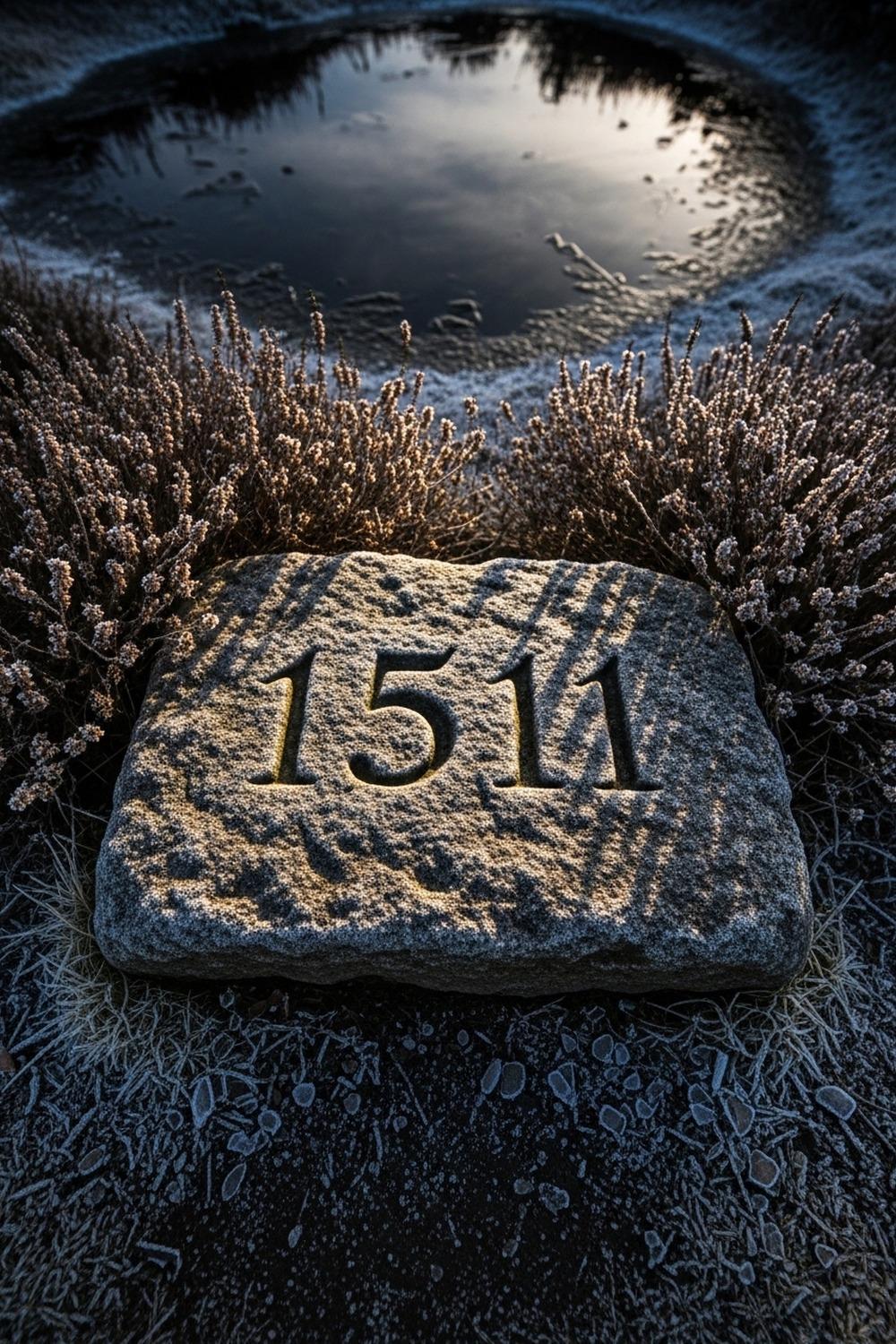
A stone sits in a Scottish museum with the year 1511 carved into it. Someone, whose name we’ll never know, shaped it by hand and slid it across frozen water just to see what would happen. That casual experiment became a sport that now has 1.5 million competitive players.
It’s wild to think about. This isn’t some ancient Olympic artifact with centuries of pageantry behind it. It’s a rock. A very old rock. And it changed everything.
Key Facts
- The oldest curling stone, known as the Stirling Stone, is inscribed with the year 1511, making it over 512 years old and one of the earliest dated sporting artifacts ever found.
- More than 1.5 million competitive curlers across 50-plus countries play the game today, according to World Curling Federation membership data.
- Canada has claimed more than 35 World Curling Championship titles in men’s and women’s competition combined.
- Curling became a full Olympic medal sport at the 1998 Nagano Winter Olympics, reaching an estimated 2 billion potential viewers.
- Modern curling stones weigh exactly 42 pounds and are sourced from Ailsa Craig (Scotland) and a quarry in Trefor, Wales, with competition sets costing $8,000 to $10,000.
In short: The oldest curling stone, the Stirling Stone, bears the date 1511 and is one of the earliest dated sporting artifacts ever recovered. From frozen Scottish lochs during the Little Ice Age, the sport spread to Canada via Scottish emigrants and became an Olympic medal event in 1998, now played by over 1.5 million people worldwide.
The Oldest Curling Stone: What We Actually Know
The discovery happened near Stirling, Scotland. The stone bears the inscription “1511” — making it one of the oldest dated sporting artifacts ever recovered. For context, that’s four years before the Battle of Flodden Field. Martin Luther wouldn’t nail his theses to that church door for six more years. Historian John Burnett, who’s spent years studying Scottish winter sports, confirmed that the Stirling stone isn’t some weird outlier. It fits a pattern. Frozen-loch recreation was documented across lowland Scotland in the 16th century.
But here’s what gets me: nobody knows who made it.
No name. No record. No family story passed down through the generations. Just a rough granite disc and a date, sitting in the mud for five centuries.
Frozen Lochs Made This Sport Possible
It is 1500. Scotland’s winters are brutal in ways we don’t really experience anymore. The Little Ice Age — a period of cooling that gripped Europe from roughly 1300 to 1850 — froze rivers and lochs so solid that people walked on them for weeks. Flat, open ground was scarce. But ice? That was everywhere.
Villagers started doing what humans have always done when they’re cold and bored: they turned necessity into a game. Heavy stones. Smooth ice. The competitive instinct that never goes away, no matter the century.
The early “rules” were basically just arguments settled by whoever’s stone ended up closest to the mark. No officials. No scorecards. No one keeping official records of anything.
Just people shouting across frozen water.
You can read about other surprising origins of everyday things over at this-amazing-world.com — some of them are even weirder than a 512-year-old rock game.
How a Stone Slid Its Way Across the Atlantic
The oldest curling stone tells us where the game started. But the real explosion happened later — when Scottish emigrants packed their lives into ships and headed to Canada. By the late 1700s, Scottish soldiers stationed in Quebec were already playing on the St. Lawrence River. By the 1800s, curling clubs had formed in Montreal, Halifax, and Toronto. That last fact kept me reading for another hour. Canada didn’t just adopt the sport. It absorbed it completely, built it into the national identity, and then started dominating. Canada has claimed more World Curling Championship titles than any other nation by a significant margin.
What happens when a game fits a landscape perfectly? You get a country that lives it. Canada had the cold. Canada had the space. And Canada had tens of thousands of homesick Scots who already knew the rules.
The Moment Everything Changed for Curling
For most of its existence, curling was regional. Beloved in Scotland and Canada. Barely known anywhere else.
Then 1998 happened.
The Nagano Winter Olympics added curling as a full medal sport, and suddenly 2 billion potential viewers were watching people sweep ice with brooms while shouting instructions at each other. Reactions ranged from bewildered to completely obsessed. Viewership spiked dramatically. New clubs opened across the United States, Japan, Switzerland, and even South Korea — which would go on to become a serious competitive force.
The sport had gone from a village game on a frozen loch to prime-time television in about 500 years. Somehow, that feels fast.
But here’s where the story gets genuinely strange.
The Stones Haven’t Really Changed That Much
Modern curling stones still come from two places in the world. Ailsa Craig, a remote volcanic island off the Scottish coast. And a quarry in Trefor, Wales. Ailsa Craig granite is prized specifically because it has almost zero water absorption — it doesn’t crack when it hits ice.
The island is now a protected nature reserve.
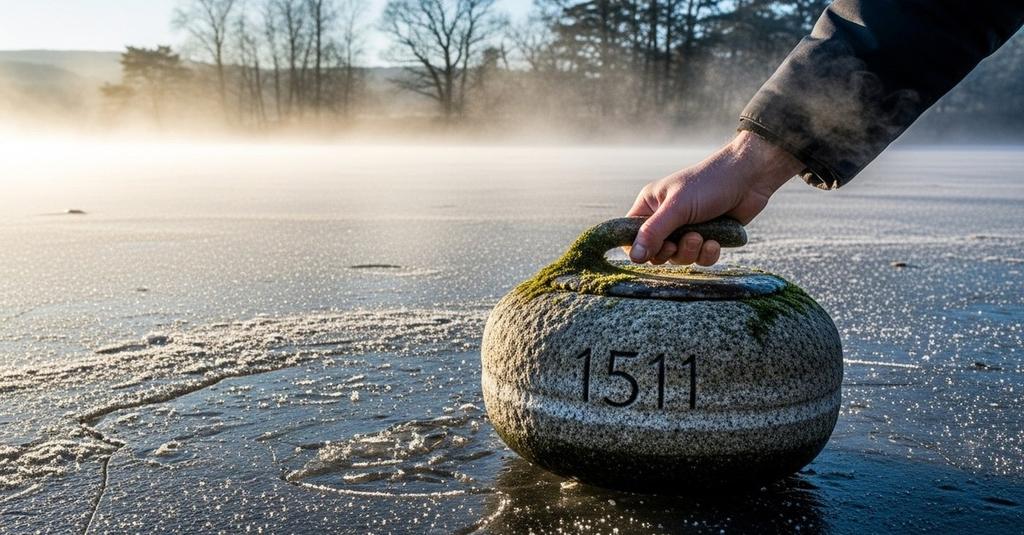
That means the only granite available comes from boulders that have already been removed. There’s a finite supply, and curlers are quietly aware that one day, it runs out. Modern stones weigh exactly 42 pounds, are polished to near-mirror smoothness, and cost upwards of $600 each. But they’re still granite discs, shaped and slid across ice. The person who made that 1511 stone would recognize what they’re looking at immediately.
By the Numbers
- The Stirling Stone dates to 1511 — over 512 years old, one of the earliest dated sporting artifacts ever discovered.
- More than 1.5 million competitive curlers across 50+ countries play the game today, according to World Curling Federation membership data.
- Canada dominates: more than 35 World Curling Championship titles in men’s and women’s competition combined.
- Competition-grade curling stones cost between $8,000 and $10,000 per matched set. The granite island that supplies most of them? Protected bird sanctuary. No active quarrying. Think about that.
Field Notes
- Early Scottish curling stones weren’t standardized at all — players used whatever granite they could find, which meant stones varied wildly in weight, shape, and behavior. Standardization didn’t come until the 19th century, when clubs started demanding fairness.
- The sweeping motion in curling actually works by creating a thin layer of friction-melted water that guides the stone’s path. Elite sweepers can adjust a stone’s trajectory by several feet over its entire travel.
- Japan became one of the fastest-growing curling nations after their women’s team won silver at the 2022 Beijing Winter Olympics — club membership in Japan surged by double digits the following year.
Why a 512-Year-Old Stone Still Matters Today
The oldest curling stone isn’t just a curiosity. It’s proof that sports don’t come from boardrooms or broadcast deals. They come from boredom, cold weather, and the very human need to compete over something meaningless. Someone in 16th-century Scotland was trying to get through winter. They couldn’t have imagined Olympics broadcasts, million-dollar sponsorships, or dedicated curling arenas in Seoul and Tokyo. They just wanted to see whose stone was closer to the mark.
That’s the thing about games. They start small. They spread because they’re fun, because they fit the landscape, because people carry them when they move.
Five hundred and twelve years after someone carved a date into Scottish granite, the game they accidentally invented is played on six continents. The stone survived. The sport survived. And somewhere in a Scottish field, there are probably more stones like it, still waiting to be found. If this kind of story keeps you up at night, there’s more at this-amazing-world.com.
“
Frequently Asked Questions
Q: How old is the oldest curling stone?
The oldest curling stone, called the Stirling Stone, is inscribed with the year 1511, making it over 512 years old. It was discovered near Stirling, Scotland, and ranks among the earliest dated sporting artifacts ever recovered. For context, 1511 was four years before the Battle of Flodden Field and six years before Martin Luther posted his theses. Historian John Burnett confirmed it fits a documented pattern of frozen-loch recreation across lowland Scotland in the 16th century.
Q: How did curling spread from Scotland to Canada?
Curling crossed the Atlantic with Scottish emigrants who carried the game to Canada. By the late 1700s, Scottish soldiers stationed in Quebec were already playing on the frozen St. Lawrence River. Through the 1800s, curling clubs formed in Montreal, Halifax, and Toronto. Canada had the cold, the open space, and tens of thousands of homesick Scots who knew the rules, and it went on to win more than 35 World Curling Championship titles, more than any other nation.
Q: Where do modern curling stones come from?
Modern curling stones come from just two places: Ailsa Craig, a remote volcanic island off the Scottish coast, and a quarry in Trefor, Wales. Ailsa Craig granite is prized because it has almost zero water absorption, so it does not crack when it hits ice. The island is now a protected nature reserve, meaning only previously removed boulders can be used. Each stone weighs exactly 42 pounds, and a matched competition set costs between $8,000 and $10,000.
Q: When did curling become an Olympic sport?
Curling became a full Olympic medal sport at the 1998 Nagano Winter Olympics, suddenly exposing the game to an estimated 2 billion potential viewers. Viewership spiked dramatically, and new clubs opened across the United States, Japan, Switzerland, and South Korea. The sport had gone from a village game on a frozen Scottish loch around 1511 to prime-time global television in roughly 500 years.
Illustrations are AI-generated. Article fact-checked and human-edited. Our editorial standards.