The $350 Iron Man Arm That Changed a Boy’s Life
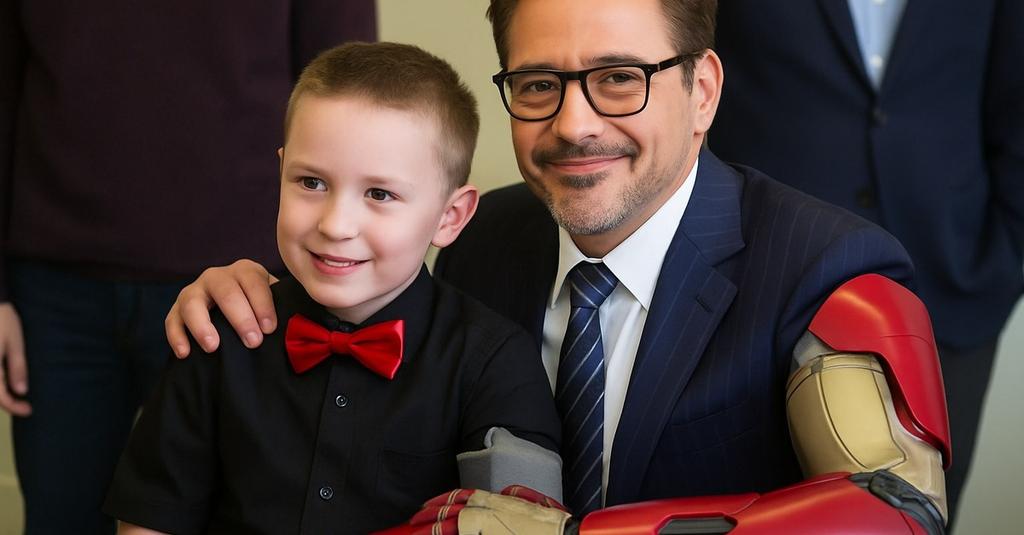
Robert Downey Jr. showed up in full Iron Man costume to hand a seven-year-old boy a prosthetic arm that cost $350 to build. Nobody planned for the moment to mean as much as it did.
In 2015, Alex Pring from Orlando — born with a partially developed right arm — became the kid who got the superhero upgrade. A University of Central Florida engineering student named Albert Manero had spent months designing a custom bionic limb on a 3D printer. Then the video went everywhere, and something strange happened: it wasn’t just heartwarming. It was disruptive.
Key Facts
- A custom 3D printed prosthetic arm built by Limbitless Solutions costs under $350 each, versus $5,000 to $70,000 for traditional myoelectric prosthetics.
- In 2015, Robert Downey Jr. delivered an Iron Man-styled bionic arm to seven-year-old Alex Pring of Orlando.
- University of Central Florida engineering student Albert Manero designed the limb, working through his nonprofit Limbitless Solutions.
- About 1 in 1,900 American children are born with upper limb difference, according to the CDC.
- Within three years of the 2015 viral moment, Limbitless had distributed arms to children in over a dozen countries.
In short: In 2015, Robert Downey Jr. handed seven-year-old Alex Pring an Iron Man-styled 3D printed prosthetic arm costing just $350, versus $5,000 to $70,000 for traditional limbs. Built by UCF student Albert Manero’s nonprofit Limbitless Solutions, the open-source design proved medical device manufacturing could be radically disrupted.
How a 3D Printed Prosthetic Arm Costs $350
Traditional prosthetic limbs for children run $5,000 to $70,000. Before they need replacing again because the kid grew two inches.
Manero, working through his nonprofit Limbitless Solutions, used consumer-grade 3D printers and open-source designs to crack it. Fully functional, custom-fitted arms. Under $350 each. The part that kept me reading for another hour — why’d it take until 2015 for someone to try this?
Medical device manufacturing had calcified into a system that assumed expense was inevitable. Regulation, yes. Safety checks, absolutely. But somewhere along the way, the industry forgot to ask whether the entire cost structure made sense. Then desktop 3D printing arrived and a grad student with a laptop basically said: watch this.
Albert Manero Built Something the Industry Wouldn’t
He wasn’t a seasoned biomedical engineer. That’s important.
Manero was a PhD student in aerospace engineering who saw a gap and decided it was his problem to solve. His designs were lightweight. Modular. Built around the truth that children grow — meaning replacement every 12 to 18 months, not as a luxury upgrade but as a biological necessity. At this-amazing-world.com, we’ve covered breakthroughs that started in garages, and this one belongs in that list.
What he understood — and the medical industry somehow didn’t — was that a prosthetic for a child isn’t just hardware. It’s identity. It’s the difference between hiding your arm and owning it. So he made it look like armor.
The Iron Man Moment
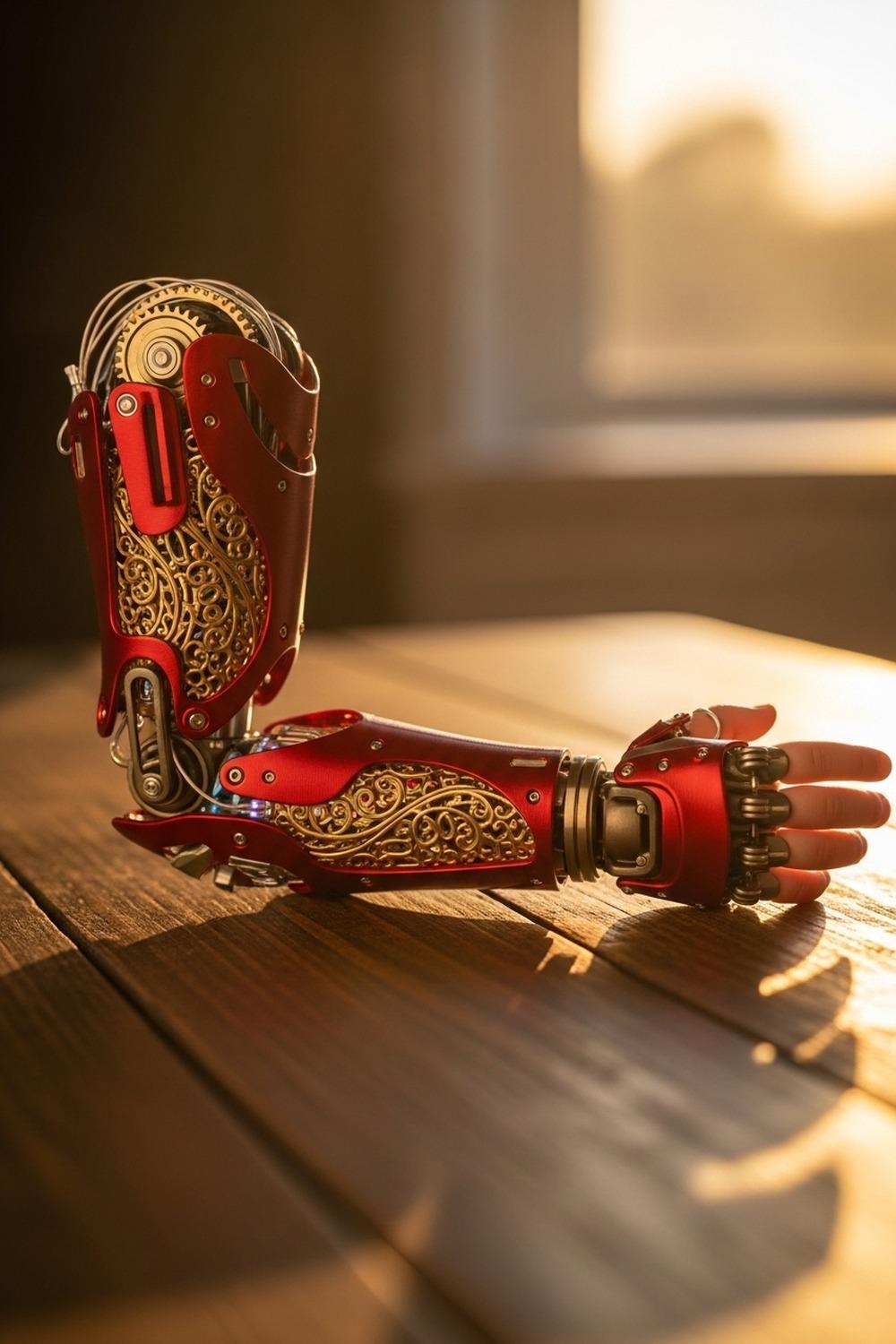
The 3D printed prosthetic arm wasn’t just painted red and gold. It matched the aesthetic of the Iron Man suit. Clean lines. Metallic finish. The entire visual language of technology that looked powerful. When Robert Downey Jr. agreed to deliver it, he showed up in full costume, in character, presenting the device as a “mission upgrade.”
Alex had spent years self-conscious about his arm.
Then one afternoon, he had a limb that looked like it belonged to an Avenger. For a seven-year-old, that’s not feel-good news. That’s everything. The video went viral because the emotion wasn’t manufactured — it was genuine shock at suddenly having something worth showing off.
But here’s what most people missed.
The Viral Moment Was Just the Beginning
The Iron Man handoff wasn’t the story. It was the spark.
After the video spread in early 2015, Limbitless Solutions was flooded. Requests from families everywhere. Hospitals. Universities. Manero’s team scaled up, and suddenly Microsoft was interested. The U.S. government was interested. The $350 arm wasn’t a one-off feel-good story anymore — it was proof that the entire business model of medical device manufacturing could be disrupted by someone willing to ignore how it had always been done.
One student helping one child became a movement. Limbitless Solutions has since provided bionic arms to children across multiple countries, and they did something the industry almost never does: they released their designs open-source. No patent walls. No licensing fees. Engineers can build on the work freely. On purpose. Because the point wasn’t to make money. The point was to make limbs.
By the Numbers
- Traditional myoelectric prosthetics for kids: $5,000 to $70,000 (Amputee Coalition, 2023). The $350 price point is 99% cheaper.
- 1 in 1,900 American children born with upper limb difference according to the CDC — tens of thousands of kids who could benefit from accessible solutions but can’t afford conventional ones.
- Children outgrow prosthetics every 12 to 18 months. A child fitted at five needs 8 to 10 replacements before adulthood. The cost becomes financially impossible for most families.
- Within three years of the 2015 viral moment, Limbitless Solutions had distributed arms to children in over a dozen countries — a scale traditional medical device companies couldn’t match at any price point.
The Technical Part
- EMG sensors. The arm detected muscle signals from Alex’s residual limb and translated them into grip movements.
- Albert Manero studied aerospace engineering, not biomedical engineering — a detail that matters because the most disruptive solutions often come from people who didn’t grow up inside the field’s assumptions.
- Open-source prosthetic files now live on platforms like Thingiverse and the e-NABLE Community network, where thousands of volunteers have printed and donated limbs to children entirely outside the medical system.
Why This Story Is Bigger Than One Boy’s Arm
The 3D printed prosthetic arm Alex Pring received wasn’t just heartwarming. It was a question asked out loud: if a grad student can build a functional, kid-specific bionic limb for $350, what exactly is the medical industry charging $50,000 for?
The answer involves real things — regulatory compliance, clinical trials, liability insurance. It also involves institutional overhead. But it involves something else: a system that wasn’t designed with accessibility as a priority. A system that treated the current price as the only possible price.
Manero’s work handed a blueprint to every parent, engineer, and tinkerer who’d been told that solving this required credentials, a lab, a decade of funding. Turns out, sometimes it requires a 3D printer and the refusal to accept that the problem is unsolvable.
A boy from Orlando got an Iron Man arm. A grad student proved that life-changing medical technology doesn’t have to bankrupt families. A viral moment became the foundation of a nonprofit still building limbs today. The real story is about what happens when someone refuses to believe the problem is impossible. If this keeps you reading, there’s more at this-amazing-world.com.
Frequently Asked Questions
Q: How much does a 3D printed prosthetic arm cost compared to a traditional one?
A custom 3D printed prosthetic arm from Limbitless Solutions costs under $350 each, while traditional myoelectric prosthetics for children run $5,000 to $70,000 according to the Amputee Coalition’s 2023 figures, making the 3D-printed version roughly 99% cheaper. The cost matters because children outgrow prosthetics every 12 to 18 months, meaning a child fitted at age five needs 8 to 10 replacements before adulthood, a cost that becomes financially impossible for most families.
Q: Who built the Iron Man 3D printed prosthetic arm for Alex Pring?
Albert Manero, a PhD student in aerospace engineering at the University of Central Florida, designed the arm through his nonprofit Limbitless Solutions in 2015. He used consumer-grade 3D printers and open-source designs. The arm used EMG sensors that detected muscle signals from Alex Pring’s residual limb and translated them into grip movements. Robert Downey Jr. delivered it in full Iron Man costume, presenting the device to the seven-year-old as a mission upgrade.
Q: Are the 3D printed prosthetic designs available to others?
Yes. Limbitless Solutions released its designs open-source with no patent walls or licensing fees, so engineers can build on the work freely. Open-source prosthetic files now live on platforms like Thingiverse and the e-NABLE Community network, where thousands of volunteers have printed and donated limbs to children entirely outside the medical system. Within three years of the 2015 viral moment, Limbitless had distributed arms to children in over a dozen countries.
Illustrations are AI-generated. Article fact-checked and human-edited. Our editorial standards.