She Left Millions Behind to Save Sri Lanka’s Stray Dogs
Every commute past suffering eventually becomes a choice. Otara Gunewardene watched three million stray dogs cycle through Sri Lanka’s streets for years — and then, at the exact moment her fashion empire hit peak value, she stepped out of the car and never got back in. The Sri Lanka stray dogs crisis she saw every day became the only thing she could afford to ignore.
Start with the scale: three million unowned animals sharing roads with 22 million people. Most nations would call that a public health emergency. Sri Lanka called it Tuesday. The dogs scavenged through garbage, slept on asphalt that burned their paws, died in numbers the government didn’t officially track. Background noise. Gunewardene — who had turned Odel, a single retail outlet, into a national institution worth hundreds of millions of rupees — transferred control of the business and redirected everything she had into the Otara Foundation. A shelter. An advocacy organization. A quiet dismantling of how Sri Lanka thinks about the animals it has long erased.
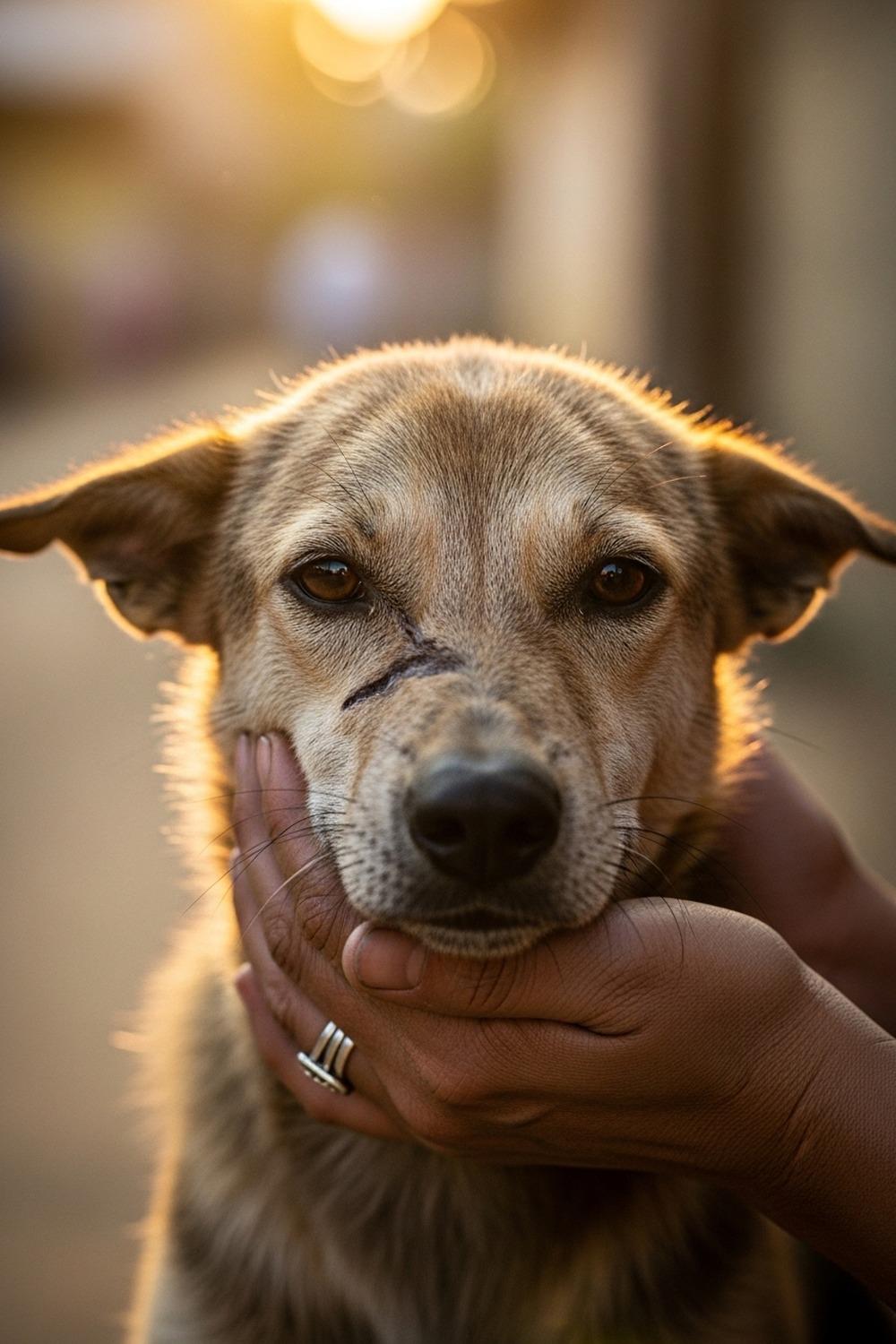
The question that matters: what kind of wealth is actually being built now?
Key Facts
- Sri Lanka has an estimated 3 million stray dogs alongside roughly 22 million people (WHO, 2019 data)
- Rabies kills an estimated 60+ Sri Lankans annually, primarily through dog bites (Ministry of Health, 2018)
- Otara Gunewardene left her retail company Odel to establish the Otara Foundation in the early 2010s
- A 2019 joint WHO, OIE and FAO report concluded culling produces 0% sustained reduction in stray populations
- India’s Animal Birth Control program, formalized under the 2001 ABC Rules, is the regional 20-plus-year TNR benchmark
In short: The Sri Lanka stray dogs crisis involves an estimated 3 million unowned animals among 22 million people, with rabies killing 60-plus people yearly. Entrepreneur Otara Gunewardene left her retail empire to run the Otara Foundation, applying science-backed Trap-Neuter-Return instead of culling, which a 2019 WHO report found ineffective.
Three Million Dogs, One Woman Refusing to Walk Away
Sri Lanka’s stray dog population didn’t appear overnight. The World Health Organization’s 2019 global rabies data placed the island among South and Southeast Asia’s densest stray-populated nations relative to its size. Nearly three million unowned dogs. Roughly 22 million people. The animals weren’t strays in any romantic sense — many were sick, many were broken by vehicles, many carried rabies, which killed an estimated 60 Sri Lankans annually according to health ministry records.
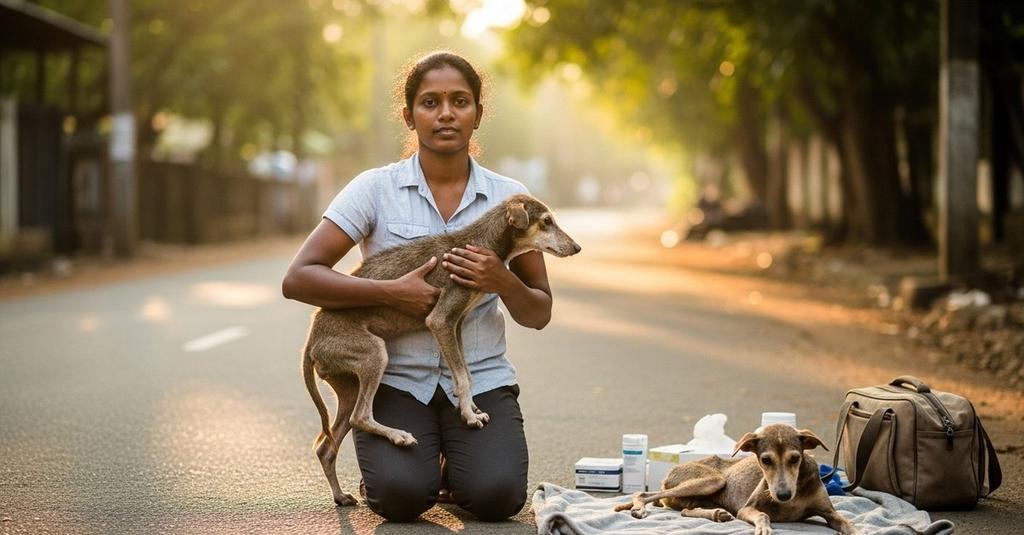
For decades, the government’s response was culling. The WHO itself had stated repeatedly that culling doesn’t work — that population vacuums get filled as fast as they’re created. Gunewardene had watched this cycle grind forward without changing anything. She decided it needed a different kind of interruption.
The Otara Foundation didn’t begin with a master plan — it began with individual dogs. Ones Gunewardene personally pulled off roads at 2 a.m. Ones she personally drove to veterinary clinics. Ones she personally nursed through infections that would have killed them within days. That origin matters because it means the organization’s DNA isn’t bureaucratic. It’s visceral. The shelters reflect a founder who knows what a wounded dog smells like and came back the next morning anyway.
What it looks like now: hundreds of rescued animals at any given time. Sterilization programs. Medical teams. Community education. But the transformation that’s harder to photograph has been happening quietly — a gradual cultural conversation, started by one person who refused to categorize suffering as someone else’s problem.
What It Actually Takes to Leave an Empire Behind
Odel wasn’t a side project. By the time Gunewardene transferred control, the business employed thousands of people across multiple operations and anchored Colombo’s identity as a genuine cultural landmark. The conventional script is known: a board seat, a foundation bearing the company name, perhaps a gala or two. Here’s the thing: Gunewardene did something else entirely. There’s a useful parallel in how some of the world’s most unlikely conservation figures have traded conventional prestige for something quieter and harder — the way an elephant sanctuary in Thailand becomes the fullest expression of what someone actually values, as explored in the story of Somboon’s rescue and the people who refused to give up on him.
Animal welfare organizations in South Asia are chronically underfunded. Veterinary care for stray animals competes with human healthcare for the same donor dollar. Political support is fragile. Public sympathy for unowned animals has historically been thin. Running serious rescue operations — not feeding stations, but surgical intervention, long-term rehabilitation, behavioral recovery — costs sustained money. She funds a significant portion of it herself.
Why does this matter? Because what that looks like on the ground is unglamorous in the best possible way. A dog with a shattered pelvis from a road accident doesn’t need a press release. It needs surgery, a clean kennel, a human being willing to sit next to it while it learns to trust again. That’s the daily reality the foundation operates inside. That’s exactly what Gunewardene chose over a second act that would have been far easier to explain at a dinner party. Most people don’t make that trade. Most people can’t imagine making it.
The Science Behind Why Compassion Works Better Than Culling
The policy debate around stray dog management isn’t just ethical — it’s increasingly scientific. A landmark 2019 report from the World Health Organization, the World Organisation for Animal Health, and the Food and Agriculture Organization concluded definitively that mass culling does not reduce stray dog populations in any measurable, sustained way. Population vacuums created by culling are rapidly filled by surviving dogs and animals migrating from adjacent areas. The report recommended Trap-Neuter-Return programs — often called TNR — combined with community-based sterilization as the only evidence-backed approach to humane and effective population management.
National Geographic’s reporting on the global stray dog crisis has highlighted how this scientific consensus is slowly filtering into national policy across South and Southeast Asia. Sri Lanka is among the countries where advocates are pushing hardest for systemic adoption. The model championed by the Otara Foundation aligns precisely with this evidence base.
Sterilization reduces reproduction rates without cruelty or ineffectiveness. Vaccination campaigns — particularly against rabies — protect both animals and human communities. These aren’t soft positions. They’re the positions supported by the most rigorous animal population research currently available. The foundation’s work isn’t compassion alone. It’s applied science, operating in a country where political will for that science has been slow to materialize. Countries that have implemented consistent TNR programs — India’s Animal Birth Control program, formalized under the 2001 ABC Rules — have documented measurable reductions in both dog population density and rabies transmission in targeted urban zones.
Sri Lanka has the evidence. The Otara Foundation is providing the proof of concept. What remains is the political decision to scale it.
Sri Lanka Stray Dogs Rescue and the Volunteers Who Show Up
The Otara Foundation didn’t stay a one-woman operation for long. That, arguably, is Gunewardene’s most underappreciated achievement — not that she started it, but that she built something others wanted to join. As of 2023, the foundation runs active volunteer programs that draw participants from across Colombo and beyond. Young veterinary students work alongside seasoned shelter staff. Community members in neighborhoods surrounding the shelters have shifted from reporting strays to authorities for removal to calling the foundation’s rescue line instead. Watching a behavioral shift happen at this speed, you stop calling it a trend — it’s a genuine reorientation of how people see the animals they pass. That doesn’t happen by accident. It happens because someone built a model that made participation feel meaningful rather than futile.
The rescued animals undergo behavioral rehabilitation that the foundation’s team approaches with documented patience. Resocialization is the technical term (researchers actually call this the rebuilding of neural association between humans and safety, rather than humans and threat). An animal that arrived in states of acute trauma — struck by vehicles, abused, starved over months — doesn’t simply recover because it’s been fed. A dog that arrived unable to make eye contact might take four months before it approaches a human hand willingly. That timeline can’t be rushed.
Some animals never fully recover the capacity to be homed. They stay. They live out their lives in the shelter. That decision costs the most and demands the most. It’s also the decision that says the most about what the organization actually believes.
What One Foundation Is Teaching an Entire Country to See
The deeper transformation the Otara Foundation is attempting isn’t logistical. It’s perceptual. Sri Lanka, like many countries in the Global South, has a complicated cultural relationship with unowned animals — one shaped by religion, economics, and the practical pressures of a developing nation managing competing public health priorities. Stray dogs have historically occupied a social gray zone: acknowledged as a problem, rarely acknowledged as beings with individual suffering that deserves a response.
What Gunewardene’s work has done — gradually, without a political mandate, without a legislative vehicle — is introduce a different frame. Not “nuisance to be managed.” Something closer to “neighbor to be cared for.” That reframe is slow. But it’s happening.
The foundation’s community education programs, active in schools and neighborhoods around Colombo since approximately 2015, target the generation that will be making Sri Lanka’s animal welfare policy decisions in 2035 and 2045. Teaching a twelve-year-old that a stray dog isn’t a threat to be afraid of — that it’s a living creature that can be vaccinated, sterilized, and treated with dignity — changes what that twelve-year-old will consider acceptable policy when they’re thirty-five. That’s the long game. It doesn’t show up in this year’s rescue statistics. It shows up in the laws a future parliament passes, or doesn’t pass, twenty years from now.
On a street in Colombo, a dog that would have been a statistic — another animal struck and left — is instead in a recovery kennel. A volunteer student sits on the floor next to it, not touching, just being present. That proximity. That patience. The whole argument in miniature.
How It Unfolded
- 2001 — Sri Lanka’s stray dog population begins drawing international attention as WHO rabies elimination campaigns highlight South Asia as a critical zone, with the island nation identified as a high-transmission area.
- Early 2010s — Otara Gunewardene transitions away from active leadership of Odel and formally establishes the Otara Foundation, pivoting her full professional attention toward animal rescue and welfare advocacy in Sri Lanka.
- 2015 — The foundation launches structured community education programs in Colombo schools and neighborhoods, introducing the TNR model and compassion-based animal management to a new generation of Sri Lankans.
- 2019 — A joint WHO, OIE, and FAO report formally endorses TNR and vaccination as the only scientifically supported method of managing stray dog populations, validating the model the Otara Foundation had already been implementing on the ground.
By the Numbers
- ~3 million — estimated stray dog population in Sri Lanka, one of the highest per-capita densities in South Asia (WHO, 2019 data).
- 60+ — approximate number of human rabies deaths in Sri Lanka annually, primarily transmitted through dog bites (Sri Lanka Ministry of Health, 2018).
- Hundreds — animals housed at any given time across Otara Foundation shelters, with an active adoption program placing dogs in permanent homes since the foundation’s inception.
- 0% — the sustained reduction in stray dog populations achieved by culling programs, according to the 2019 WHO-OIE-FAO joint report — compared to measurable reductions seen in consistent TNR programs.
- 20+ years — the span of India’s Animal Birth Control program under the 2001 ABC Rules, the regional benchmark the Otara Foundation’s model most closely mirrors in approach and ambition.
Field Notes
- Dogs in long-term rehabilitation at the Otara Foundation often show the most dramatic behavioral recovery not during direct human interaction, but during quiet cohabitation — the simple act of a human being present without demanding anything from the animal appears to accelerate trust-building in ways that structured handling sessions don’t replicate.
- Sri Lanka’s Buddhist majority might be expected to produce a culture of natural compassion toward animals — but monks and temples have historically treated stray dogs as boundary animals, neither cared for nor harmed, leaving them in a welfare gap that formal organizations are only now beginning to close.
- The rabies vaccination of stray dogs doesn’t just protect those individual animals — it creates herd immunity corridors in urban areas, reducing transmission risk for every human living within a given street radius, a public health benefit that rarely gets credit in the animal welfare conversation.
- Researchers still can’t fully predict which traumatized dogs will successfully resocialize and which won’t — the behavioral tipping points remain poorly understood, and the Otara Foundation’s long-term case data could, if systematically published, contribute meaningfully to that open question in veterinary behavioral science.
Frequently Asked Questions
Q: How serious is the Sri Lanka stray dogs rescue challenge compared to other countries in the region?
Sri Lanka’s estimated three million stray dogs represent one of the densest populations relative to national land area in South Asia. Compared to India — which has an estimated 30 to 35 million stray dogs across a country roughly 22 times Sri Lanka’s size — the island’s population density per square kilometer is significantly higher. That density amplifies both the public health risks, particularly rabies transmission, and the logistical challenge facing any rescue or management organization.
Q: Why doesn’t culling solve the stray dog problem in Sri Lanka?
Culling creates a population vacuum — when dogs are removed from a territory, surviving animals reproduce at higher rates and new animals migrate in from surrounding areas to fill the gap. This is a well-documented phenomenon in animal population ecology, confirmed by a 2019 joint WHO, OIE, and FAO report. The result is that culling costs money, causes suffering, and produces no lasting reduction in dog numbers. Trap-Neuter-Return programs, combined with rabies vaccination, are the only methods with a consistent evidence base for actual population management.
Q: What does a Sri Lanka stray dog rescue operation actually involve day to day?
Most people imagine rescue as the dramatic part — pulling an animal off a road. That’s maybe five percent of it. The other 95 percent is veterinary triage, wound care, medication regimens, behavioral assessment, kennel management, sterilization scheduling, adoption screening, and the unglamorous logistics of feeding and cleaning for hundreds of animals simultaneously. Organizations like the Otara Foundation run what are, in effect, small hospitals combined with long-term care facilities — requiring sustained funding, trained staff, and infrastructure that most people driving past a stray dog never think to connect to that single animal on the road.
Editor’s Take — Alex Morgan
What stops me about Gunewardene’s story isn’t the sacrifice — it’s the specificity of what she chose instead. Not a broad environmental cause. Not a prestigious global charity. Three million dogs on Sri Lankan roads, most of them invisible to the people walking past. There’s something methodologically interesting about that choice: the closer you get to a problem nobody else is looking at, the more your attention is actually worth. She found the gap where impact was enormous and investment was nearly zero. That’s not sentiment. That’s strategy.
Animal welfare has a credibility problem in policy circles — it gets filed under “nice to have” while the harder conversations about public health, economic development, and governance take up the available oxygen. What the Otara Foundation represents is a slow dismantling of that hierarchy: proof that the most marginalized constituency in any country — the one that literally cannot speak — can still become the center of serious, sustained, evidence-based work. The stray dogs of Sri Lanka didn’t ask for an advocate. They got one anyway. Somewhere on a Colombo street tonight, that gap between what an animal needed and what it received just got a little smaller.
Illustrations are AI-generated. Article fact-checked and human-edited. Our editorial standards.