They Dug Through Tons of Trash to Return $5,000 Cash
A woman in Long Beach lost five thousand dollars to the garbage truck. The sanitation crew found it anyway — and then did something that made me stop scrolling and actually read the whole thing.
It was 2016. A mortgage payment envelope, sealed, disappeared into a truck that’d already pulled away from her street. Most people would’ve panicked, called the bank, accepted the loss as one of those horrible mistakes you replay for weeks. The Long Beach Department of Public Works crew didn’t see it that way. They traced the load to a transfer station on Long Island. Then they started digging.
Key Facts
- In 2016, a Long Beach sanitation crew recovered a sealed envelope containing $5,000 from a Long Island transfer station and refused a reward
- The US generates approximately 292 million tons of municipal solid waste per year, about 4.9 pounds per person per day
- New York City moves roughly 12,000 tons of residential waste daily through transfer stations
- The sanitation worker fatality rate was 44.3 deaths per 100,000 workers in 2022, a top-five deadliest US job
- The 1968 New York sanitation strike lasted nine days and left 100,000 tons of uncollected garbage
In short: This story recounts how sanitation workers returned cash, recovering a sealed $5,000 envelope by hand from a transfer station in 2016 and refusing any reward. It uses the act to spotlight one of America’s deadliest professions, a job with a 44.3 per 100,000 fatality rate and almost no cultural recognition.
Bag by bag, in conditions most people can’t imagine
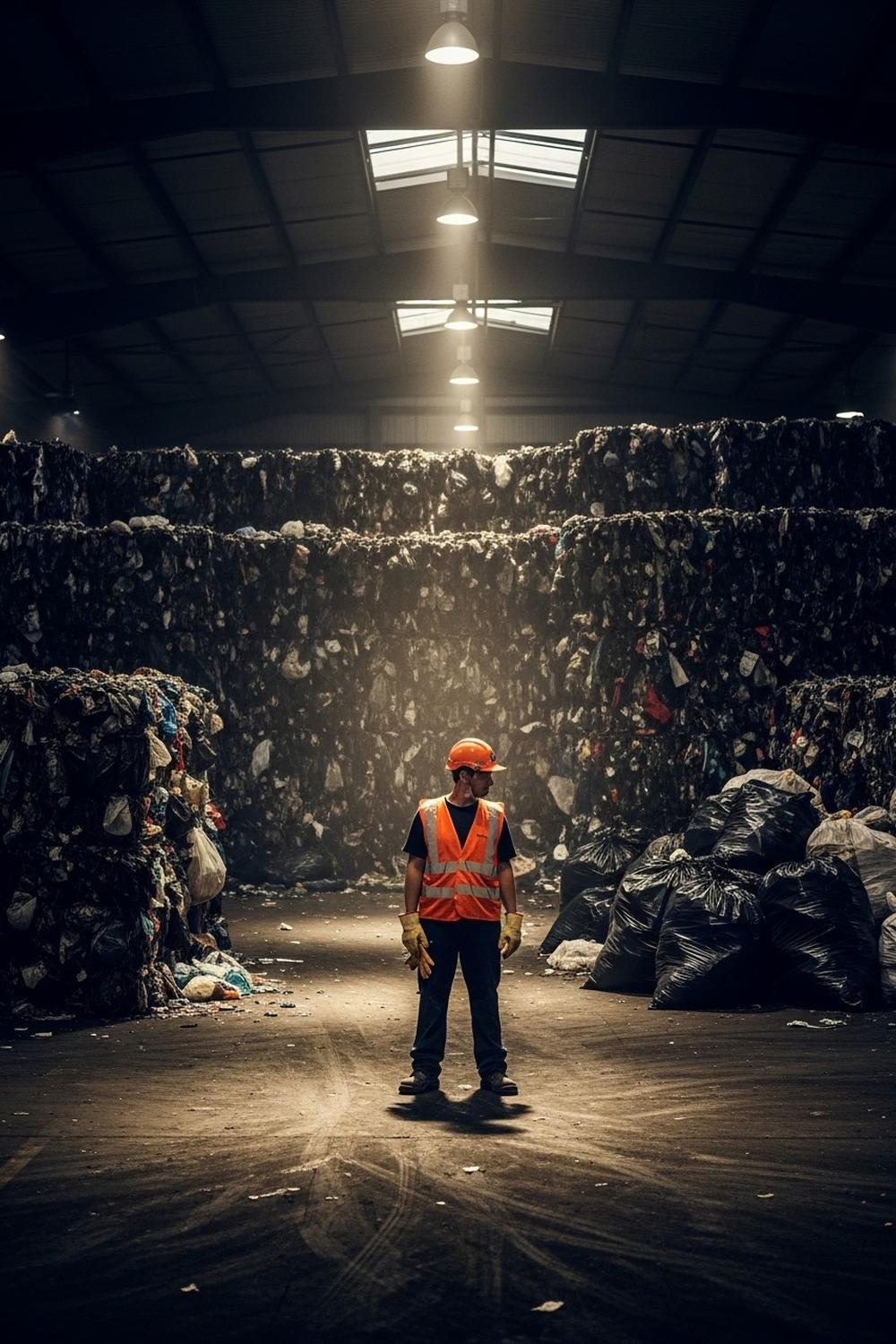
No machines. No industrial equipment sorting through the mess. Just workers moving through mountains of household waste — the kind of work that smells like things you don’t want to think about — looking for one white envelope in an ocean of black plastic bags that all look identical.
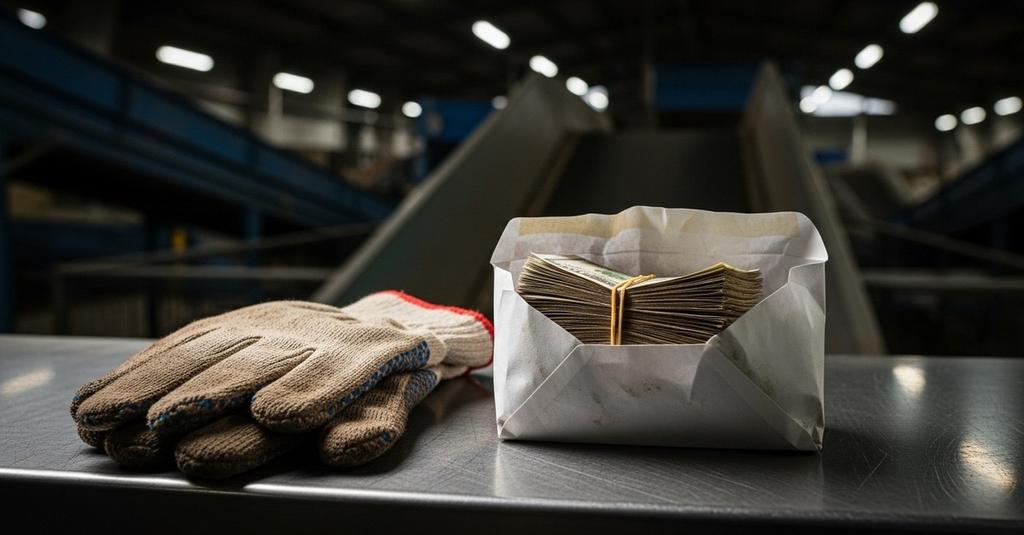
They found it. Intact. Five thousand dollars still inside.
When the woman offered them a reward, they turned it down.
That part’s the real story. Not the money. The refusal. I kept reading about this for hours because something about it felt off in the best way — like watching someone turn down fame on purpose, which almost never happens anymore. No cameras. No social media moment. No dramatic arc where they eventually change their minds and accept the reward at a local ceremony. Just quiet people who did difficult work and decided the work itself was enough.
What happens inside a transfer station
Most of us have never stepped foot in one. They’re designed to be invisible — tucked into industrial zones, rarely photographed, treated like the mechanical guts of a city that we all pretend not to think about. But they’re the critical middle layer between your curb and the landfill. The scale is genuinely hard to wrap your head around.
New York City alone moves roughly 12,000 tons of residential waste every single day through facilities like the one in Long Island where this search happened. That’s the weight of about 1,200 school buses. Every day. Without stopping.
According to the U.S. waste management system, we generate approximately 292 million tons of municipal solid waste per year — roughly 4.9 pounds per person, per day. And somewhere in all of that, mixed in with coffee grounds and broken toys and whatever else someone decided was garbage that Tuesday morning, was one white envelope with five thousand dollars still waiting inside.
The job nobody thinks about until it’s gone
Sanitation workers in the U.S. consistently rank among the most physically dangerous professions in the country. The Bureau of Labor Statistics places refuse and recyclable material collectors in the top five deadliest jobs, year after year. In 2022, the fatality rate was 44.3 deaths per 100,000 workers.
Think about that for a second. That’s roughly 40 times the fatality rate of office work.
And yet the cultural footprint of sanitation work is almost invisible. No prestige. No primetime drama series. No ticker-tape parades. No public education tours like you see in Tokyo, where sanitation workers are sometimes called “expert recyclers” and the city runs facility tours specifically designed to shift how people think about the profession. (The U.S. has no mainstream equivalent.)
What we have instead is people showing up every morning, in the cold, in conditions that get worse the longer you stay, doing work that disappears the moment it’s done well.
The 1968 strike changed everything
It is 1968. New York City’s sanitation workers go on strike for nine days.
By day three, 100,000 tons of garbage pile up on sidewalks across the city. Rats multiply. The smell becomes its own presence. Governor Nelson Rockefeller declares a state of emergency.
People who were in New York during that week still talk about it. The garbage doesn’t disappear when it’s done well — but the moment it stops, you realize you’ve been walking on it your entire life.
What the numbers actually say
- Fatality rate for sanitation workers: 44.3 per 100,000 in 2022, consistently top five deadliest jobs in America
- U.S. annual municipal solid waste generation: approximately 292 million tons
- New York City’s daily residential waste volume through transfer stations: roughly 12,000 tons
- The 1968 sanitation strike lasted nine days and left 100,000 tons of uncollected garbage, prompting a state of emergency declaration by Governor Nelson Rockefeller
- A single large Long Island transfer station: upwards of 3,000 tons of residential garbage per day, roughly equivalent to 500 adult elephants, daily
The mechanical miracle nobody talks about
A garbage truck compacts waste at roughly 1,000 pounds per square inch during normal operation.
One sealed envelope survived that.
Think about it.
Field Notes
- Cash isn’t the strangest recovery from transfer stations — facilities have reported finding loaded firearms, live ammunition, and medical waste incorrectly disposed in household bins, all requiring specialized handling mid-sort
- The Long Beach envelope’s survival as completely intact is a small mechanical miracle on top of everything else
- In Japan, Tokyo’s waste management program includes public education tours of facilities designed to shift cultural perception of the profession — a practice with no mainstream equivalent in the U.S., which feels like a missed opportunity for about a hundred reasons
Why refusing matters more than accepting
Here’s the thing: turning down a reward is actually harder than taking it. Accepting is simple. You did the work, you get compensated, everyone moves on with their day. Refusing means you’ve decided the act itself was the point.
The Long Beach crew didn’t frame their search as heroic. They framed it as just part of the job.
Which makes it more remarkable, not less.
Nobody told them to spend hours digging through waste for a stranger’s mortgage payment. They chose to. That choice tells you something about a professional culture that rarely gets examined — people who’ve developed their own quiet code of conduct, largely outside public view, in conditions most people couldn’t last a single shift through.
For sanitation workers, this wasn’t a story. It was just Tuesday.
What it all means
The headline is the cash. The actual story is learning to see the people doing the work. Sanitation workers returned five thousand dollars in Long Beach in 2016, and barely anyone outside of Long Island heard about it. No viral moment. No three-week news cycle. Just a local report, a quiet thank-you, and then back to the route.
That’s the rhythm of a job that holds cities together from the outside in, every single morning, before most of us are awake.
We celebrate the visible kinds of service — the ones with uniforms that get recognized at sporting events, the ones that photograph well. But the unglamorous infrastructure of daily life runs on people who show up anyway, in the cold, in the smell, in the noise, doing work that vanishes the moment it’s done well.
Five thousand dollars found by hand in a mountain of garbage and returned without asking for anything back. That’s not a feel-good footnote. That’s a story about what integrity looks like when no one’s watching and there’s no upside to getting it right. If this kind of story interests you, there’s more at this-amazing-world.com — and the next one is even stranger.
Frequently Asked Questions
Q: What happened with the $5,000 envelope in Long Beach?
In 2016, a woman in Long Beach accidentally threw out a sealed envelope containing $5,000, a mortgage payment, which was collected by a garbage truck. The Long Beach Department of Public Works crew traced the load to a Long Island transfer station and dug through mountains of waste by hand until they found the intact envelope, money still inside. When she offered a reward, the workers turned it down, treating the search as simply part of the job.
Q: How dangerous is sanitation work in the United States?
Extremely. The Bureau of Labor Statistics consistently ranks refuse and recyclable material collectors among the top five deadliest jobs in America. In 2022, the fatality rate was 44.3 deaths per 100,000 workers, roughly 40 times the fatality rate of office work. Despite this danger, the profession has almost no cultural footprint in the US, with no major awards, parades, or public education tours comparable to those Tokyo runs for its sanitation crews.
Q: How much waste passes through transfer stations?
An enormous volume. The article notes the US generates approximately 292 million tons of municipal solid waste per year, about 4.9 pounds per person each day. New York City alone moves roughly 12,000 tons of residential waste daily through transfer stations, the weight of about 1,200 school buses. A single large Long Island transfer station can process upwards of 3,000 tons of residential garbage per day, roughly equivalent to 500 adult elephants.
Q: What was the 1968 New York sanitation strike?
In 1968, New York City’s sanitation workers went on strike for nine days. By day three, 100,000 tons of garbage had piled up on sidewalks across the city, rats multiplied, and Governor Nelson Rockefeller declared a state of emergency. The strike demonstrated how invisible the work is until it stops. The article uses it to argue that sanitation labor holds cities together, doing work that disappears the moment it is done well.
Illustrations are AI-generated. Article fact-checked and human-edited. Our editorial standards.