He Survived 11 Days Alone — Then His Dog Did This
Eleven days. A man trapped in a wreckage in the Cascades, hypothermic and unable to move, and his dog never left his side. Nobody expected what actually kept him alive.
The vehicle went off the road somewhere remote enough that cell signals die. Winter was closing in. When rescuers finally got there, they found something that shouldn’t have worked — an injured driver who’d survived sub-zero nights in the foothills, and a mixed-breed shepherd that had spent those eleven days doing something no training manual ever teaches.
Key Facts
- A man trapped in a vehicle wreck in the Cascade foothills survived 11 days with his dog at his side
- The human-dog bond stretches back roughly 15,000 years to when wolves first approached human firelight
- A medium-sized dog radiates approximately 100 BTUs of body heat per hour, similar to a small space heater on low
- Hypothermia becomes life-threatening when core body temperature drops below 95 degrees Fahrenheit (35 Celsius)
- Dogs can detect changes in human body chemistry at concentrations as low as one part per trillion
In short: This story of dog survival loyalty recounts how a mixed-breed shepherd kept its injured owner alive for 11 days in the Cascade foothills. By sharing body heat at roughly 100 BTUs per hour, hunting field mice, and fending off scavengers, the dog turned 15,000 years of co-evolution into a literal survival mechanism.
Dog Survival Loyalty: What Actually Happened
The bond between humans and dogs stretches back roughly 15,000 years. That’s when wolves started edging toward firelight instead of running from it. But here’s the thing — knowing the history doesn’t explain what this dog did. Dr. Brian Hare of Duke University’s Canine Cognition Center has spent years documenting how dogs read human emotional states with an accuracy that even our closest primate relatives can’t match. His research shows dogs don’t just respond to distress. They actively orient toward it.
The shepherd in the Cascades oriented toward his person and didn’t stop.
While the owner lay immobilized in twisted metal, the dog did something that looked simple until you think about it: he hunted. Field mice, mostly. Caught them. Returned. Again. Again. Staying close to something that offered him nothing practical in return — just a person who needed warmth more than oxygen.
How a Dog Becomes a Heater
The rescuers’ report was clinical about it, but the details matter. The man’s core body temperature was dangerously low. Sub-zero nights in the Cascades don’t forgive immobile people. They should have killed him.
But the shepherd had been pressing close. Sharing body heat. Covering exposed skin. The thing mammals do instinctively when something they’re bonded to is cold and can’t fix it themselves.
Do the math: a medium-sized dog generates roughly 100 BTUs of heat per hour. Over eleven nights, that’s not a comforting gesture. That’s the difference between dying and not dying. Researchers studying animals that have saved human lives have documented this mechanism, and it’s as straightforward as physics — but it only works if something keeps showing up to press its body against yours.
There’s more.
The shepherd had been standing guard. Rescuers found evidence that scavengers — drawn by blood, by stillness, by the whole thing that says “vulnerable prey” — had approached. The dog had kept them at distance. That’s not learned behavior. That’s something encoded deeper.
Eleven Days in Terrain That Doesn’t Care
The Cascade foothills west of the mountains aren’t a city park. They’re dense old-growth corridors, river drainages that swallow sound, weather systems that arrive without warning. Dog survival loyalty in that environment isn’t about being brave. It’s about making a thousand small decisions — when to move, when to stay, when to hunt, when to press close to something that can barely breathe — and getting every single one right.
The dog had no training for this.
No search-and-rescue certification. No GPS collar. No professional protocol. Just fifteen millennia of co-evolution coded into his nervous system, telling him what to do when his person stopped working.
That kept me reading for another hour.
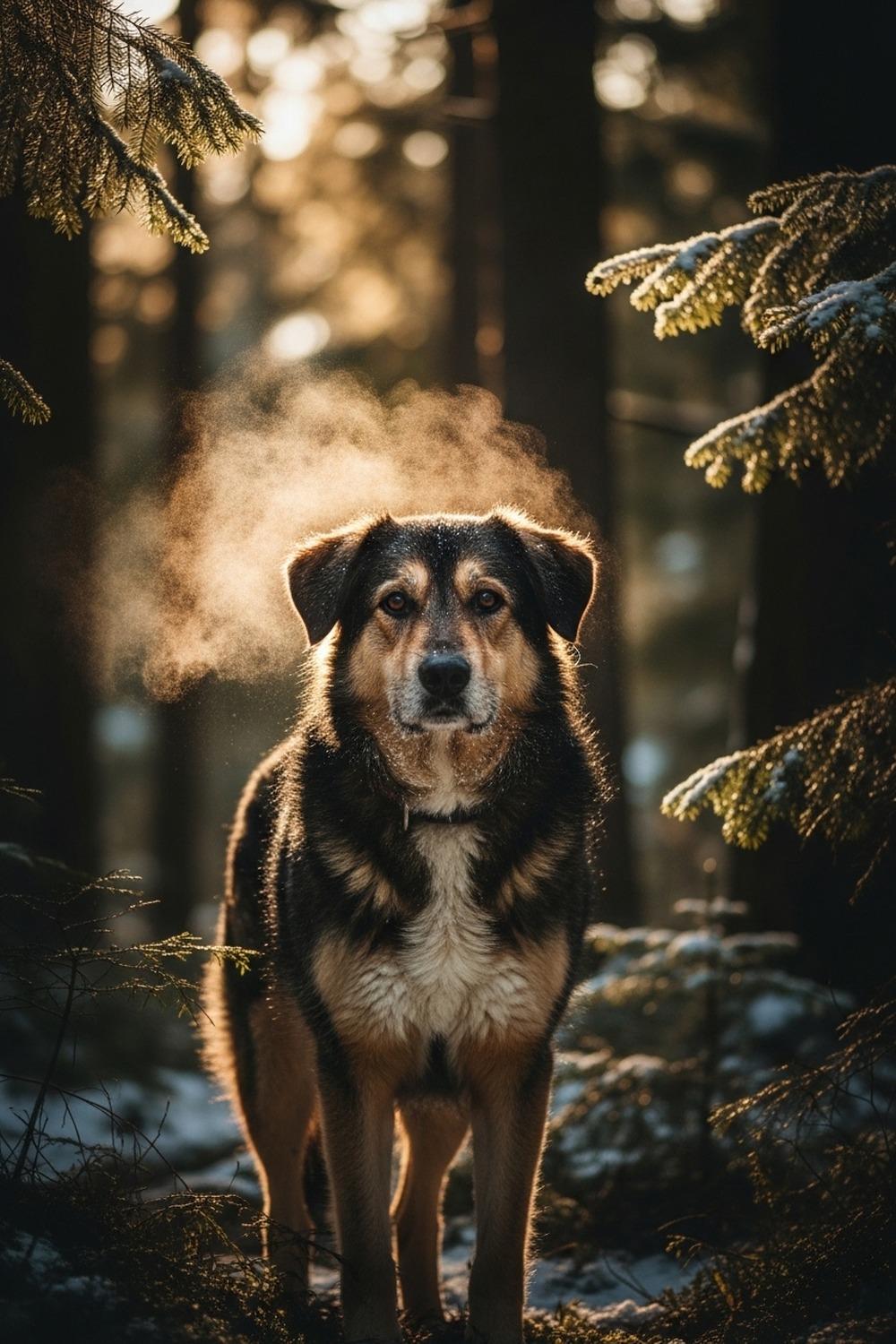
The Neurochemistry of Not Leaving
Here’s where it gets specific: canine loyalty under extreme conditions looks like love because it is, but it’s also deeply, measurably biological. The oxytocin system in dogs activates in response to their primary human the same way it bonds human mothers to infants. Research published in studies on oxytocin and social bonding shows that when a dog gazes at their person, both parties experience a spike. That loop doesn’t switch off when the person is unconscious. If anything, impairment may intensify vigilance — they read physiological distress through scent alone, detecting stress hormones and body temperature changes through their nose.
The shepherd wasn’t being heroic in any conscious sense. He was responding to a chemical signal that said: something is wrong. And the response in his DNA said: stay. So he stayed.
It worked.
By the Numbers
- 15,000 years of domestication — the oldest interspecies bond in human history, based on archaeological and genetic evidence compiled through 2021.
- A medium-sized dog radiates approximately 100 BTUs of body heat per hour. That’s roughly equivalent to a small electric space heater running on low.
- Hypothermia becomes life-threatening when core body temperature drops below 95°F (35°C). An immobile person in sub-zero conditions reaches that threshold in under two hours without external heat.
- Dogs can detect changes in human body chemistry — cortisol, glucose drops — at concentrations as low as one part per trillion. That’s roughly 100,000 times more sensitive than the human nose.
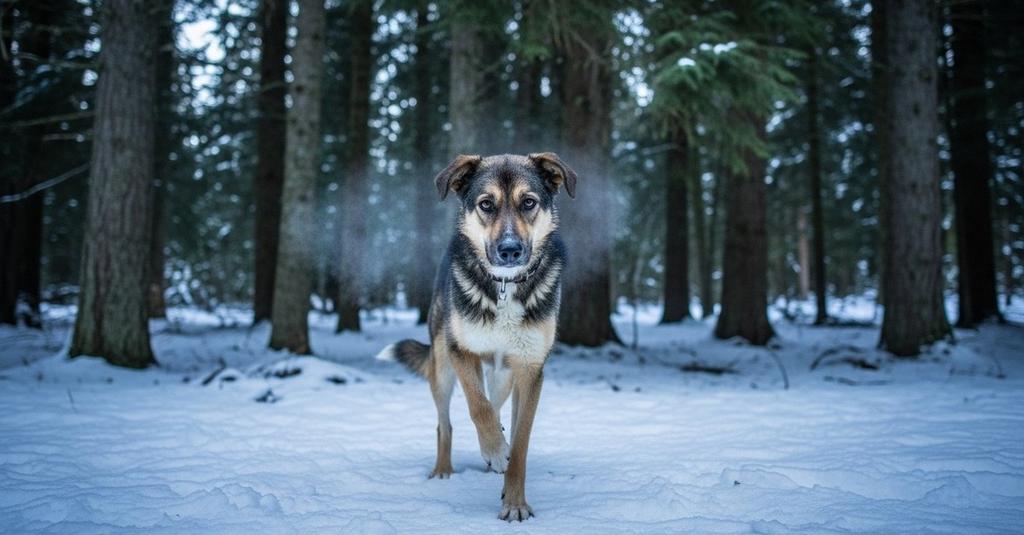
What Actually Happened in the Foothills
- Grief-adjacent vigilance. Dogs have been documented returning to injured owners for days after an incident — a behavior ethologists distinguish from separation anxiety because it’s oriented outward, focused on the person rather than the dog’s own distress.
- The Cascade foothills host black bears, coyotes, and mountain lions. All of them are attracted to blood. A medium-sized shepherd maintaining a perimeter around an injured human in that environment represents a behavioral commitment that most trained guard dogs aren’t even tested for.
- Small mammals like field mice are the caloric backbone of feral dog survival in wilderness. Research on village dogs in low-resource environments shows they can self-sustain on rodent prey alone for weeks without significant muscle loss.
Why This Matters Now
We live in a moment when the human-animal bond gets treated as sentimental — something for greeting cards and social media posts. But dog survival loyalty in a story like this one cuts through all of that. It isn’t cute. It’s functional. It’s 15,000 years of selection pressure building an animal that, when stripped of every convenience and comfort, still defaults to: stay with your person.
That instinct has saved lives we’ll never know about. In places where no one was watching. In weather no one should survive.
The man in the Cascades survived. His dog survived. Both of them did it together — one cold night at a time, pressed close, holding on.
The story keeps insisting on something simple: the bond isn’t metaphorical. It’s thermal. It’s chemical. It’s real in the most physical sense possible — body heat, shared breath, a dog standing between an injured human and the dark. That’s not a story we invented. That’s a story that invented us.
Somewhere in the Cascade foothills, a shepherd waited eleven days for help to arrive and made sure it had something to find. Dog survival loyalty doesn’t ask for recognition. It doesn’t perform. It just stays. And sometimes, staying is everything. If this kind of story gets under your skin, there’s more at this-amazing-world.com — and the next one is even stranger.
Frequently Asked Questions
Q: How did the dog keep its owner alive for 11 days?
The mixed-breed shepherd kept its hypothermic owner alive through several mechanisms over 11 days in the Cascade foothills. It pressed close to share body heat, generating roughly 100 BTUs per hour, equivalent to a small space heater on low, which made the difference in sub-zero nights. It hunted field mice to feed itself and stay close, and it stood guard, keeping scavengers drawn to blood and stillness at a distance. None of this came from training; it was instinctive bonded behavior.
Q: How far back does the human-dog bond go?
The bond between humans and dogs stretches back roughly 15,000 years, based on archaeological and genetic evidence compiled through 2021. That is when wolves began edging toward human firelight instead of running from it, the oldest interspecies bond in human history. The article argues this deep co-evolution is precisely what the shepherd drew on, defaulting to stay with your person even when stripped of every modern convenience, training, or comfort.
Q: Why don’t loyal dogs leave injured owners?
It is biological as much as emotional. The oxytocin system in dogs activates toward their primary human the same way it bonds human mothers to infants. When a dog gazes at its person, both experience an oxytocin spike, and that loop does not switch off when the person is unconscious. Dogs also read physiological distress through scent, detecting stress hormones, cortisol, and glucose drops at concentrations as low as one part per trillion, roughly 100,000 times more sensitive than the human nose.
Q: Can dogs really sense when humans are in danger?
Yes. Research from Dr. Brian Hare of Duke University’s Canine Cognition Center documents that dogs read human emotional states with an accuracy even our closest primate relatives cannot match, and they actively orient toward distress rather than away from it. They detect changes in human body chemistry, including cortisol and glucose drops, at concentrations as low as one part per trillion. This chemical sensitivity allows a dog to register that something is physiologically wrong even when its owner cannot speak or move.
Illustrations are AI-generated. Article fact-checked and human-edited. Our editorial standards.