Southwest Airlines’ $56M Program Flying Sick Patients to Care
Most people have never heard of it. A child needs surgery in another state. The family’s monthly income is $3,200. The flight costs $1,400 round-trip. Then Southwest Airlines Medical Transportation Grant Program changes the equation entirely — and nobody celebrates when it happens.
Since 2007, Southwest Airlines has quietly channeled free round-trip flights to families through 121 nonprofits and pediatric hospitals across 29 states. The cumulative value passed $56 million by late 2024. Here’s the thing: the airline has never built a hospital, never funded a research center, never held a press conference about any of it. The program exists because the company looked at what it already had — empty seats on routes it was flying anyway — and routed them toward people who couldn’t reach specialized care otherwise.

Key Facts
- The Southwest Airlines Medical Transportation Grant Program has operated since 2007
- Cumulative value of donated flights surpassed $56 million by late 2024
- The program works through 121 partner nonprofits and pediatric hospitals across 29 states
- Annual contributions crossed $5 million for the first time in 2023
- Every donated round-trip flight covers both the patient and at least one accompanying caregiver at no cost
In short: The Southwest Airlines Medical Transportation Grant Program donates free round-trip flights to patients who need specialized care far from home. Running since 2007, it works through 121 nonprofit and pediatric hospital partners across 29 states, surpassed $56 million in cumulative value by late 2024, and covers both the patient and an accompanying caregiver.
How the Southwest Airlines Medical Transportation Grant Program Actually Works
The structure is deliberately simple. Southwest doesn’t evaluate individual medical cases. It doesn’t operate its own transport service. Instead, nonprofit organizations — pediatric hospitals, patient advocacy groups, rare disease foundations — apply to become partners. Once accepted, they receive a block of donated tickets they can distribute based on medical need. The patient pays nothing. The caregiver accompanying them pays nothing. The hospital handles which patient needs the flight. Southwest handles the logistics of getting them there.
What makes this work is the division of labor. The airline removes the cost barrier entirely and steps back. The nonprofit evaluates the medical case. Southwest provides the seat.
By 2023, the program was contributing more than $5 million in a single calendar year — a figure that reflects the scale of need and the program’s growth since 2007. And that acceleration matters because it suggests the infrastructure isn’t plateauing. It’s expanding. More partner organizations joining, existing partners utilizing more capacity, or both. The network now spans 121 organizations across 29 states — wide enough to catch people who would otherwise fall through every other system.
Some patients need a specialist two states away. Some need a pediatric surgical team operating from a single facility on the eastern seaboard. The distance is irrelevant. What’s relevant is that the seat exists and someone made sure it was free.
The Patients the Program Was Built to Reach
Specialized medicine concentrates in academic centers. Boston. Houston. Philadelphia. Minneapolis. That’s where the research happens, where surgical volume builds, where outcome data gets created. But patients with rare cancers, complex pediatric conditions, and congenital disorders don’t live clustered in those cities. They live in rural counties. Mid-sized towns. Zip codes where the median household income makes a $600 round-trip airfare an impossible calculation.
Why does this gap exist? Because geography and income have always determined access to specialized care in America — and nobody has been willing to absorb the cost of closing it except one airline.
Consider a concrete case: a child with a rare metabolic disorder in rural New Mexico. The nearest specialist is in Denver. The family earns $38,000 annually. The gap between that child and that doctor isn’t a medical problem. It’s a transportation problem. And it’s the kind of gap the Southwest Airlines Medical Transportation Grant Program was specifically built to close.
The program covers caregivers alongside patients — a detail that separates programs that are actually usable from programs that sound good on paper. A sick child cannot fly alone. A parent who must choose between buying a ticket and staying home isn’t really being given a choice at all. As of 2024, the program had provided support to patients requiring bone marrow transplants, complex cardiac surgeries, rare disease consultations — reaching families that other assistance programs had failed to catch. Every dollar of that $56 million represents a seat someone genuinely couldn’t have purchased otherwise.
Children appear most frequently in the stories attached to this program. Pediatric hospitals comprise a significant portion of the 121 partner organizations. That’s not accidental — rare pediatric conditions send families scrambling across state lines in search of the one surgical team in the country with enough experience to safely attempt the procedure.
What Corporate Philanthropy Usually Gets Wrong — and This Gets Right
Corporate giving in America follows a predictable formula: visible, branded, tied to marketing cycles, and measured in press releases rather than actual outcomes. The Southwest Airlines Medical Transportation Grant Program doesn’t fit that template. It’s remained obscure despite operating for nearly two decades — which explains why most people have never heard of it despite $56 million in cumulative impact.
An empty seat on a flight that’s already departing costs an airline almost nothing to fill. The opportunity cost is real but minimal. The impact on the recipient is the entire difference between receiving care and going without. That asymmetry — near-zero cost to the donor, maximum value to the recipient — represents the cleanest possible version of corporate social investment.
What’s remarkable is the consistency. Launched in 2007, the program survived the financial crisis, the COVID collapse of the aviation industry, and kept growing. Seventeen years of institutional commitment across multiple economic downturns — that says something a single large donation never could.
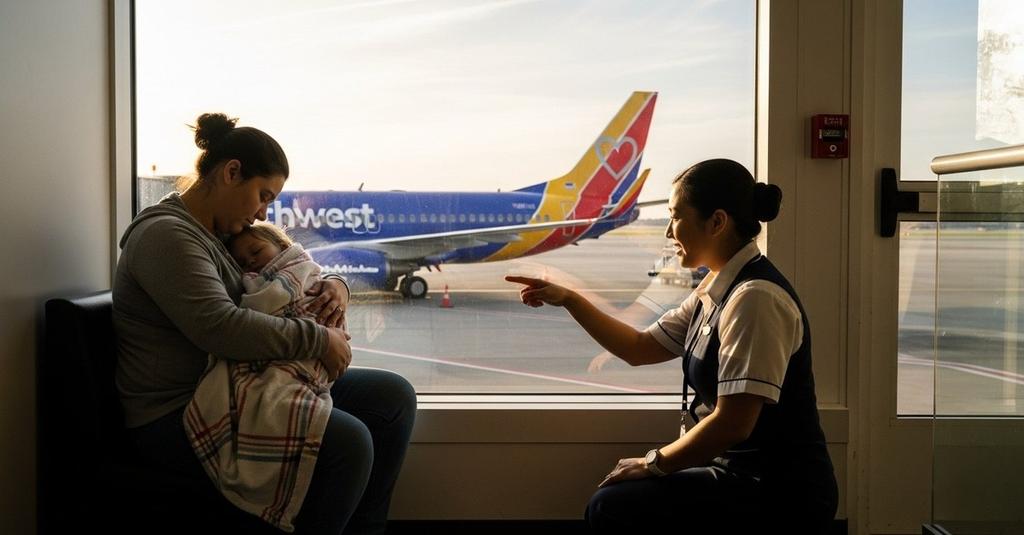
Southwest Airlines Medical Transportation Grant Program: What $56 Million Looks Like in Practice
Numbers at this scale lose texture quickly. Fifty-six million sounds abstract until you translate it: two seats at a time, round trip, one family at a time, across seventeen years. The partner organizations that have worked with Southwest since the program’s early years describe the ticket allocations as genuinely transformative. Children’s Mercy Kansas City, affiliated with pediatric transport assistance for years, represents exactly the kind of institution the Southwest model depends on — a regional pediatric center with significant volume and patient populations drawing from wide rural catchment areas. Families arriving from four states away don’t have easy alternatives. A donated flight isn’t convenience. It’s the visit happening at all.
By 2023, the annual grant value crossed $5 million for the first time in a single year. The $56 million cumulative figure reached by late 2024 will keep moving because the infrastructure is established, the nonprofit relationships are solid, and the need hasn’t diminished.
Watching families receive specialist care because of a single airline’s decision to donate seats — that’s what happens when a company understands the difference between philanthropy and logistics.
Consider what a donated seat actually mobilizes. A parent takes two weeks off work — unpaid, in most cases. Travels to a specialist in another city. Sits through surgical consultations. Waits through recovery. Flies home. That journey requires enormous sacrifice regardless of whether the flight is free. But the free flight is what makes the rest of the journey possible. Remove the donated seat, and none of the other sacrifices can be made.
How It Unfolded
- 2007: Southwest Airlines launched the Medical Transportation Grant Program with a small cohort of nonprofit partners focused on pediatric patients requiring specialized care far from home.
- 2015: Expansion to 29 states and more than 100 partner organizations reflected growing demand and the airline’s increased commitment to in-kind giving through seat donations.
- 2023: Annual contributions crossed $5 million for the first time in a single year, marking the program’s largest single-year output since its 2007 founding.
- Late 2024: Cumulative donations surpassed $56 million total, with 121 partner nonprofits and pediatric hospitals actively participating across the continental United States.
By the Numbers
- $56 million: Total cumulative value of donated flights provided through the Southwest Airlines Medical Transportation Grant Program as of late 2024.
- 121 partner organizations — nonprofits and pediatric hospitals — operating across 29 U.S. states as of the most recent program data.
- $5 million+: Value of flights donated in 2023 alone, the program’s single highest annual contribution in its seventeen-year history.
- 2007: Program launch year — meaning Southwest has maintained consistent medical transport giving for nearly two decades, across multiple economic downturns and one global pandemic.
- Zero cost to patients and caregivers: Every flight donated through the program is provided at no charge, covering both the patient and at least one accompanying caregiver per round trip.
Field Notes
- The Southwest Airlines Medical Transportation Grant Program specifically covers round-trip travel for caregivers as well as patients — a detail that sets it apart from programs funding only the patient’s fare. With children, this distinction is the difference between the program being useful and being completely unusable.
- Most people assume medical transport assistance programs are government-funded. This one isn’t. It’s entirely funded by Southwest Airlines through donated seat capacity — no federal grants, no insurance reimbursements, no public subsidy involved.
- The program’s 2007 launch predates most corporate health access initiatives by three years, arriving before the Affordable Care Act passed in 2010 — meaning Southwest identified and moved on the transportation access gap before health equity became mainstream policy conversation.
- Healthcare researchers studying access disparities still cannot fully quantify how many patients forgo specialist care annually specifically because of transportation costs, which suggests the true need the Southwest program serves may be significantly larger than current utilization figures reveal.
Frequently Asked Questions
Q: Who qualifies for the Southwest Airlines Medical Transportation Grant Program?
Patients don’t apply directly to Southwest. Qualifying nonprofits and pediatric hospitals apply to become partners, then distribute donated flights to patients based on medical need. As of 2024, 121 partner organizations across 29 states participate. Eligibility criteria vary by partner, but the program targets patients requiring specialized care unavailable locally who couldn’t afford to travel otherwise.
Q: How does Southwest Airlines benefit from donating flights?
An empty seat on an existing flight has near-zero marginal cost to fill. Southwest donates seats on routes it already operates, meaning no additional flights get chartered and no significant new expenses emerge. The donated seat generates no revenue, but it also displaces almost nothing. What Southwest gains is harder to quantify — long-term brand loyalty, employee pride, and genuine community presence that pure marketing cannot manufacture. Seventeen years of program continuation suggests the internal calculation has consistently favored it.
Q: Is the Southwest Airlines Medical Transportation Grant Program the only airline doing this?
One of the largest and most sustained corporate airline giving programs specifically focused on medical transportation exists in the United States, though it isn’t the only one. Several other carriers offer limited medical fare discounts or participate in volunteer pilot networks for smaller aircraft. What distinguishes the Southwest Airlines Medical Transportation Grant Program is its scale — $56 million cumulative, 121 partners, 29 states — its longevity since 2007, and its consistent focus on patients who genuinely couldn’t pay for travel rather than seeking discounts.
Editor’s Take — Dr. James Carter
What strikes me most about this program isn’t the dollar figure. It’s the structural elegance. Southwest didn’t build a hospital. Didn’t fund a research grant. Looked at what it already had — empty seats on existing routes — and routed them toward the highest possible human need. That’s not charity in the traditional sense. That’s applied logistics. The healthcare access gap in America is enormous and complex, but some portion of it closes every time a family boards a flight they couldn’t have paid for. Seventeen years of that adds up to $56 million worth of people who made it to their doctors. History has a way of treating the people who ignored this kind of evidence unkindly.
Access to specialized medicine shouldn’t depend on geography. Shouldn’t hinge on income. Shouldn’t require a family to scrape together enough for a round-trip fare before a diagnosis gets worse. The Southwest Airlines Medical Transportation Grant Program doesn’t solve American healthcare. It solves one flight at a time, for one family at a time, across seventeen years and $56 million worth of seats. The larger question — why closing this gap falls on a single airline’s philanthropy budget rather than on the system itself — is the one that should keep us all awake.
“
Illustrations are AI-generated. Article fact-checked and human-edited. Our editorial standards.