The Brazilian Doctor Who Accepts Eggs Instead of Fees
Imagine a healthcare system that abandons 45 million people, then watches a single doctor with no billing software rebuild trust one warm egg at a time. Dr. Douglas Ciríaco walks into homes across rural Brazil’s Minas Gerais highlands — places the Sistema Único de Saúde promised to reach but never did — and he never sends an invoice. The rural doctor Brazil barter healthcare model he’s built isn’t designed. It’s survived.
Ouro Branco sits in Brazil’s interior, far enough from São Paulo that constitutional guarantees lose their grip. But what happens there matters to public health researchers, rural medicine advocates, and anyone who’s stared at a medical bill and recognized a system failure. Dr. Ciríaco’s work raises a structural question that no policy paper has answered: when healthcare systems collapse at the margins, what actually fills the gap?
Key Facts
- Dr. Douglas Ciríaco makes free house calls around Ouro Branco in Brazil’s Minas Gerais state, accepting eggs, fruit, and bread rather than fees, with the practice going viral in 2023.
- Brazil’s Sistema Único de Saúde (SUS) was established in 1988 as a constitutional right and covers roughly 160 million people, but about 45 million Brazilians live in municipalities with critically insufficient primary care (IBGE, 2022).
- Roughly 50 percent of the global population lives in rural areas, yet only 23 percent of the world’s physicians practice there, a gap that has widened since 2000 (WHO, 2023).
- Brazil’s Programa Mais Médicos, launched in 2013, deployed over 18,000 physicians and reduced infant mortality by 6.4 percent in served municipalities (2019 IEPS study).
- Rural physicians in Brazil’s interior leave their postings within two years at three times the rate of urban placements, according to Fiocruz tracking data.
In short: The rural doctor Brazil barter healthcare model centers on Dr. Douglas Ciríaco, who makes free house calls around Ouro Branco in Minas Gerais and accepts eggs or fruit instead of fees. With 45 million Brazilians underserved by the 1988 SUS system, his trust-based, continuity-driven practice fills a gap that funded programs like Mais Médicos struggle to close.
Where Brazil’s Universal Healthcare Promise Breaks Down
The Sistema Único de Saúde (SUS) arrived in 1988 as one of the developing world’s most ambitious universal healthcare projects. Every Brazilian citizen, regardless of income or geography, deserved free comprehensive medical care. That was the promise. Thirty-five years later, urban centers honor it. Rural Brazil doesn’t. According to the Brazilian Institute of Geography and Statistics (IBGE), 45 million Brazilians live in municipalities with critically insufficient primary healthcare coverage — a gap that hasn’t narrowed despite decades of policy interventions.
Geography has a way of swallowing constitutional guarantees whole. Travel three hours from Belo Horizonte on a red-dirt road and the safety net thins. Keep traveling and it stops existing. For elderly residents, mothers with newborns, agricultural workers who can’t lose a day’s wages — that distance isn’t inconvenience. It becomes a death sentence administered slowly.
Douglas Ciríaco grew up in this landscape not as policy data but as lived fact. His neighbors were the ones waiting three hours for a doctor who never came.
The Doctor Who Walks Instead of Billing
Becoming a physician in Brazil carries particular weight. The training demands years. The debt is real. Graduates of institutions like Universidade Federal de Minas Gerais face immediate pressure to recoup costs — urban clinics, private practices, insured patients, the reliable income. Most doctors follow this logic. Dr. Ciríaco walked the opposite direction. He began making house calls to communities around Ouro Branco that the SUS had abandoned, charging nothing. When families insisted on giving something — as rural Brazilian families almost always do — he accepted what they had. No negotiation. No fee schedule.
The rural doctor Brazil barter healthcare arrangement that emerged wasn’t designed in a boardroom. It grew from a conversation between a physician and a grandmother with nothing but eggs from that morning’s collection.
This operates differently than charity. Charity maintains distance — giver elevated above receiver. Ciríaco describes reciprocity instead. The bread, mangoes, and chicken left by his door aren’t payments. They’re expressions of a social contract that rural communities understood centuries before health insurance was invented. Researchers studying community health repeatedly document the same finding: perceived dignity in healthcare interactions predicts whether patients follow through with treatment. Humiliation drives people away. Respect brings them back. The eggs are medicine in a form no pharmacist stocks.
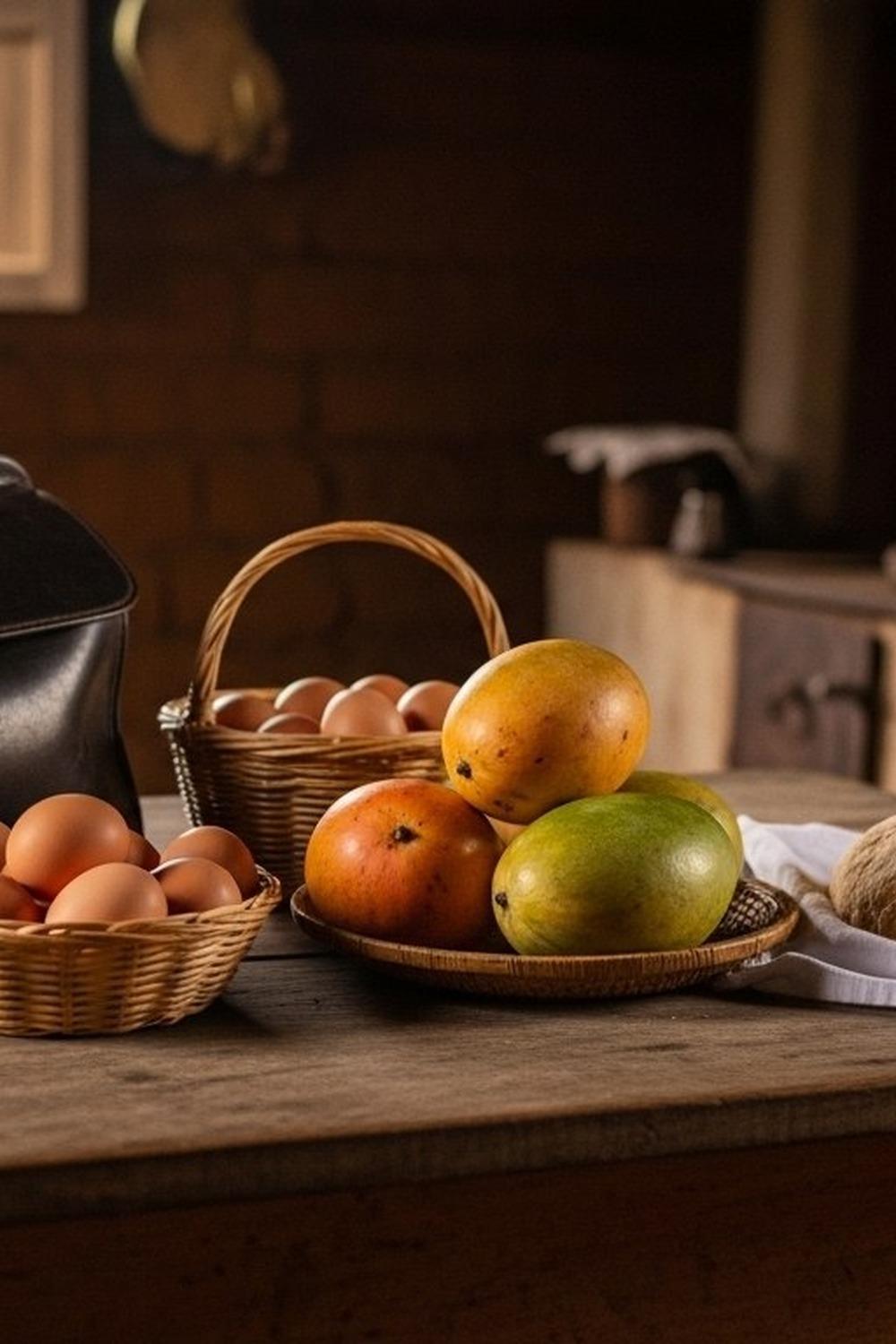
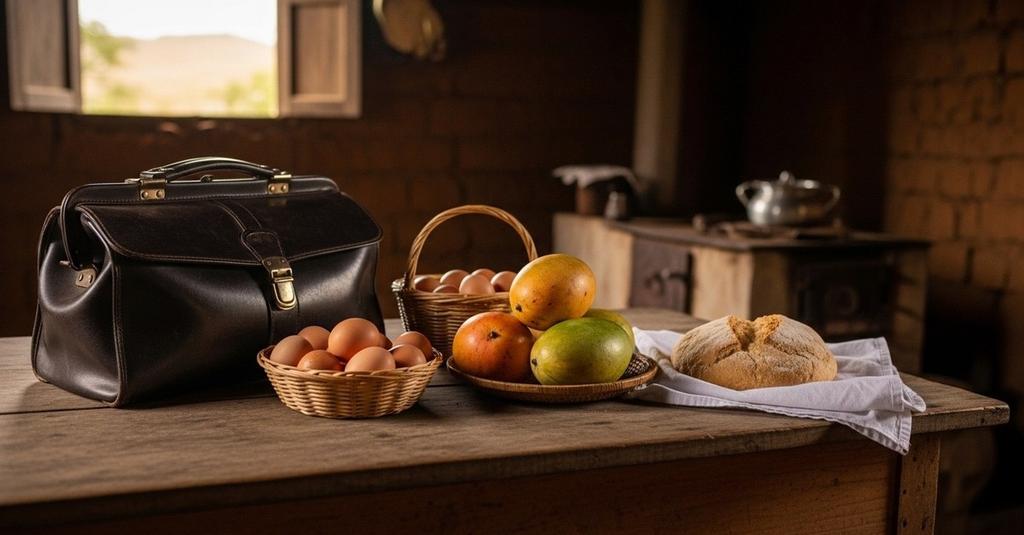
On practical rounds, Ciríaco carries a worn bag and a notebook. Hours of walking on roads that don’t appear on maps. He doesn’t rush — and that detail matters more than it sounds. The unhurried pace isn’t inefficiency.
It’s the diagnostic instrument itself.
What Barter Medicine Reveals About Modern Healthcare
Exchanging goods for medical care is older than currency. For most of human history, it was the only model that existed. But when barter healthcare reappears in the twenty-first century — not as novelty but as genuine necessity — it points to a structural fracture in how modern health systems have been constructed. A 2021 Pan American Health Organization report documented that across Latin America, rural healthcare access gaps haven’t meaningfully improved in over two decades despite significant increases in total health spending. The problem isn’t money at the national level.
It’s distribution, infrastructure, and the stubborn reality that financial incentives reliably pull physicians toward density.
According to the World Health Organization, roughly half the global population lives in rural areas. Only 23 percent of the world’s physicians practice there. That gap has widened since 2000, not narrowed.
Why does the rural doctor Brazil barter healthcare phenomenon matter clinically? Because its most powerful effect may not be what you’d expect. Ciríaco sits in people’s kitchens. He sees how they eat, whether homes are ventilated properly, if the water source is clean, whether the elderly grandmother is actually taking medication or leaving it untouched on a shelf because the label print is too small. That contextual information doesn’t exist in a five-minute clinic appointment. It changes the diagnosis before symptoms are named. Rural communities absorb this kind of medicine differently. Word travels. A family that was seen — genuinely seen — tells another family. The coverage radius of a single trusted physician walking turns out surprisingly large when trust does the work that road infrastructure can’t.
Can Rural Doctor Brazil Barter Healthcare Scale?
The harder question isn’t whether what Ciríaco does is admirable. Obviously it is. Can it survive contact with scale? Can the model hold when transformed into program, policy, replicable framework? Brazil’s Ministry of Health launched the Programa Mais Médicos in 2013, deploying thousands of physicians into underserved municipalities. A 2019 IEPS study found the program reduced infant mortality by 6.4 percent in municipalities where it operated — significant and measurable. But systematic attrition undermined long-term impact. Physicians rotated through communities without building roots. The relationship between doctor and patient — the thing that makes Ciríaco’s visits medically effective — doesn’t transfer when the person behind the stethoscope changes every few years.
Scale destroys what made something work in the first place. You can mandate geographic distribution. You can offer financial incentives for rural postings. You can’t legislate the decision to walk three kilometers checking on a patient who didn’t show up, or sit forty minutes with a family processing a diagnosis because time is what they actually needed.
The rural doctor Brazil barter healthcare model works partly because it’s personal to the point of being irreproducible. Researchers at Fiocruz, Brazil’s premier public health institution, have documented community-based rural health initiatives since the 1990s. Their data consistently shows the same variable: continuity of care — the same physician, over years, in the same community — produces better health outcomes than higher-frequency care delivered by rotating providers. Ciríaco isn’t an anomaly their models can’t explain.
He’s the proof-of-concept their models predicted.
A Currency Older Than Money, Still Buying Lives
Barter as economic exchange has complicated academic history. The traditional anthropological account — that primitive societies traded goods before inventing currency — was largely dismantled by David Graeber’s 2011 book Debt: The First 5,000 Years, which argued that credit and social obligation preceded barter in most communities. What Ciríaco has reconstructed in Minas Gerais isn’t quite either thing. It’s closer to gift economy — goods circulating not according to calculated equivalence but according to relationship and need. A 2023 Universidade de São Paulo School of Public Health study examined gift-based exchanges in rural Brazilian healthcare and found that patients engaging in non-monetary exchanges reported significantly higher treatment adherence than those in standard transactional relationships. The eggs aren’t curiosity.
They’re an intervention.
Global dimension exists here that’s easy to miss. From rural India to sub-Saharan Africa to isolated American communities, healthcare barter and gift-economy medicine have persisted quietly alongside formal systems for decades. But when a story like Ciríaco’s goes viral — as his did in 2023, when photographs of house visits and produce left on doorsteps spread across Brazilian social media — visibility creates pressure on formal institutions. It becomes harder to pretend the gap doesn’t exist when a single doctor making house calls for eggs generates more trust than entire publicly-funded programs. The data left no room for alternative interpretation: institutional systems are failing what individual commitment can temporarily shore up.
Stand in a doorway in Ouro Branco as morning light comes sideways through eucalyptus. Watch a woman in her seventies press a cloth bag of mangoes into a doctor’s hands with the formality of someone completing a contract that matters. The mangoes are warm. The exchange takes about four seconds. What it represents took decades of institutional failure to make necessary — and one person’s stubborn refusal to accept that failure as final.
How It Unfolded
- 1988 — Brazil’s Federal Constitution establishes the Sistema Único de Saúde (SUS), enshrining universal healthcare as a constitutional right for all citizens.
- 2013 — The Brazilian government launches the Programa Mais Médicos, deploying over 18,000 physicians to underserved municipalities in an attempt to close rural coverage gaps.
- 2019 — The IEPS confirms the More Doctors Program reduced infant mortality by 6.4 percent in targeted municipalities, but attrition from rural posts continues undermining long-term impact.
- 2023 — Photographs of Dr. Douglas Ciríaco’s house calls and barter exchanges in Ouro Branco go viral across Brazilian and international social media, reigniting debate about how rural healthcare access is measured and delivered.
By the Numbers
- 45 million — estimated Brazilians living in municipalities with critically insufficient primary healthcare coverage, according to IBGE data from 2022.
- 23% — the share of the world’s physicians who practice in rural areas, despite roughly 50% of the global population living there (WHO, 2023).
- 6.4% — reduction in infant mortality recorded in municipalities served by the Mais Médicos Program, per the 2019 IEPS study.
- 3× — the rate at which rural physicians in Brazil’s interior leave their postings within two years compared to urban placements, according to Fiocruz longitudinal tracking data.
- 8,510 km² — the total area of Minas Gerais state, one of Brazil’s most topographically complex, making equitable health distribution among its 853 municipalities a persistent logistical challenge.
Field Notes
- In 2023, when Ciríaco’s story spread across Brazilian Twitter and Instagram, the photographs that resonated most weren’t dramatic medical interventions — they were a produce haul on a kitchen table representing a week’s worth of house calls. The image reframed public perception of what rural medicine actually looks like on the ground.
- Brazil’s SUS is, on paper, one of the largest single-payer healthcare systems on Earth, covering roughly 160 million people with no private insurance. The gap between that mandate and actual delivery in remote municipalities is where stories like Ciríaco’s become not just inspiring but structurally revealing.
- Gift economy principles in healthcare aren’t exclusive to low-income contexts. Research from Denmark and Norway documented that patients in community-embedded primary care settings — where physicians participate in neighborhood life beyond clinical hours — show meaningfully better management of chronic conditions than patients in standard practice models.
- Researchers at Fiocruz still can’t fully quantify the health impact of physician continuity in rural Brazilian communities because there’s no standardized way to measure trust as a clinical variable. The outcomes are visible in data. The mechanism — why the same intervention works better when delivered by someone the patient has known for years — remains an open methodological question.
Frequently Asked Questions
Q: What exactly is the rural doctor Brazil barter healthcare model that Dr. Ciríaco uses?
Dr. Ciríaco doesn’t operate a formal barter system with negotiated rates or exchange schedules. He provides house calls and medical care at no charge to rural communities near Ouro Branco, Minas Gerais. Families who wish to give something in return offer whatever they have — eggs, fruit, bread, occasionally a chicken. These exchanges are voluntary and culturally embedded, not clinically structured. The model emerged organically from 2020 onward and gained international attention in 2023.
Q: Is what Dr. Ciríaco does legal within Brazil’s healthcare system?
Yes. Brazilian physicians are permitted to provide pro bono care, and accepting non-monetary gifts from patients isn’t prohibited under the Conselho Federal de Medicina’s ethical guidelines, provided there’s no exploitation or deceptive billing involved. Ciríaco doesn’t operate outside the SUS framework — he supplements areas the system doesn’t effectively reach. His activities have been publicly supported by colleagues and haven’t attracted regulatory scrutiny, in part because he’s filling a documented coverage gap rather than competing with existing services.
Q: Doesn’t barter healthcare risk romanticizing poverty rather than fixing the system?
It’s a legitimate tension. Critics argue that celebrating individual generosity lets governments off the hook for systemic failures — that the viral warmth of an egg-payment story can obscure structural neglect that made it necessary. That critique deserves serious consideration. But public health research suggests the two concerns aren’t mutually exclusive: documenting community-based workarounds can increase pressure on institutions to close gaps that created them, rather than reducing it. Both the fix and the person doing the fixing can be acknowledged simultaneously.
Editor’s Take — Dr. James Carter
What strikes me most about Dr. Ciríaco’s story isn’t the eggs. It’s the sitting. He sits down in people’s homes and doesn’t rush. In a global healthcare system that has systematically engineered the time out of doctor-patient relationships — optimizing appointments down to seven minutes, billing per procedure, measuring throughput — that unhurried presence is almost subversive. The research from Fiocruz and USP keeps pointing at the same variable: continuity and trust predict outcomes. Ciríaco isn’t rejecting modern medicine. He’s practicing the part of it we keep cutting from the budget.
Every healthcare system in the world is built on some theory of what a sick person deserves. In Brazil’s highlands, a doctor carrying no invoice book has made that theory concrete and walkable. The eggs will stop coming when the road improves, when the clinic opens, when the government finally closes the gap it promised to close in 1988. Until then, they keep arriving warm at his door — a quiet invoice sent in the other direction, from the people the system forgot, to the one person who didn’t. What does it mean that an egg is doing the work a constitution couldn’t?
Illustrations are AI-generated. Article fact-checked and human-edited. Our editorial standards.