Punchy the Macaque Is Learning to Stand on His Own
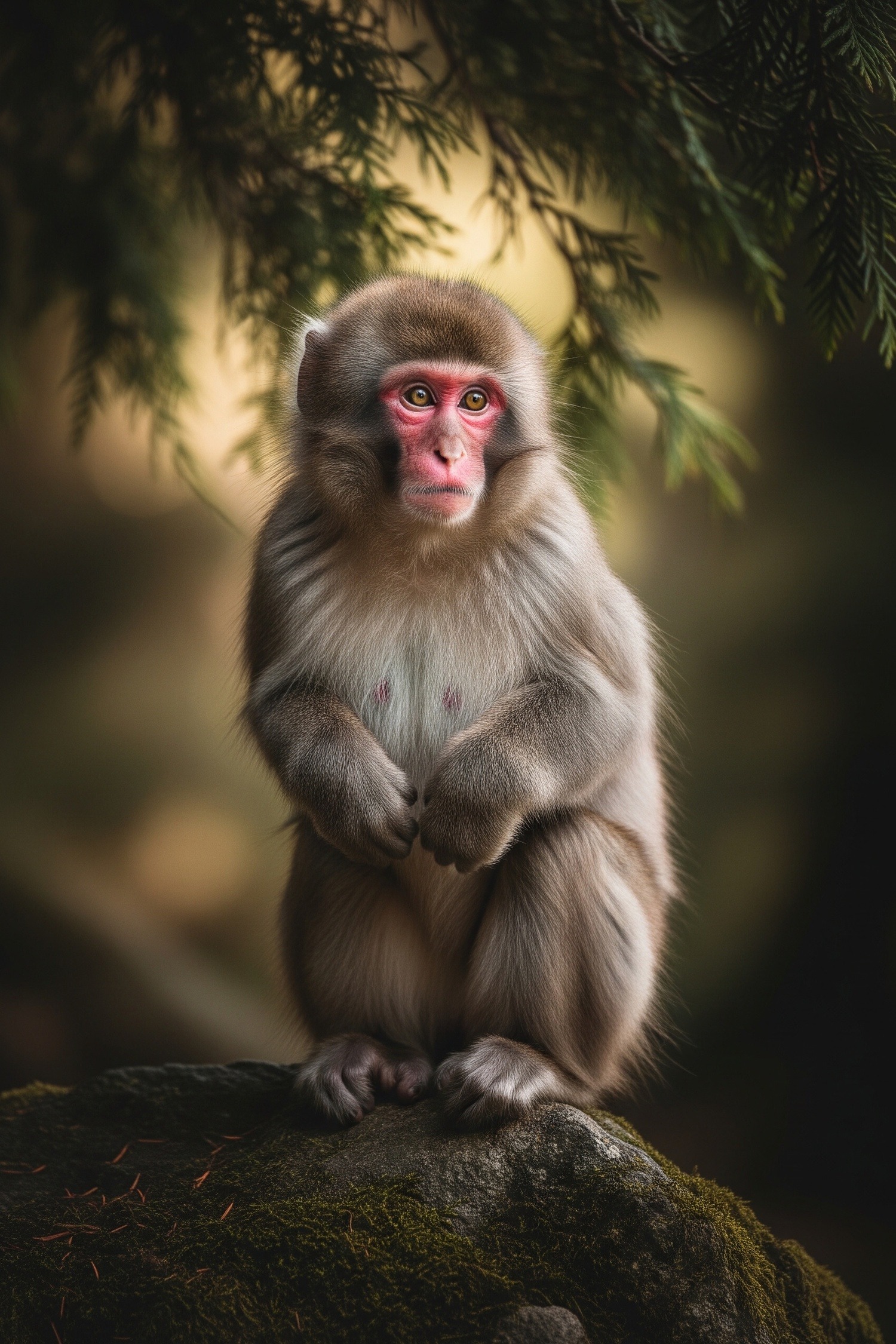
He’s eighteen inches tall, golden-furred, and standing on two legs like he figured something out all by himself. Nobody taught him. His name is Punchy, a baby Japanese macaque at Monkey Mountain, and the fact that he’s doing this — repeatedly, confidently, returning to it each day — might be the smallest signal of something larger we keep missing about how resilience actually builds.
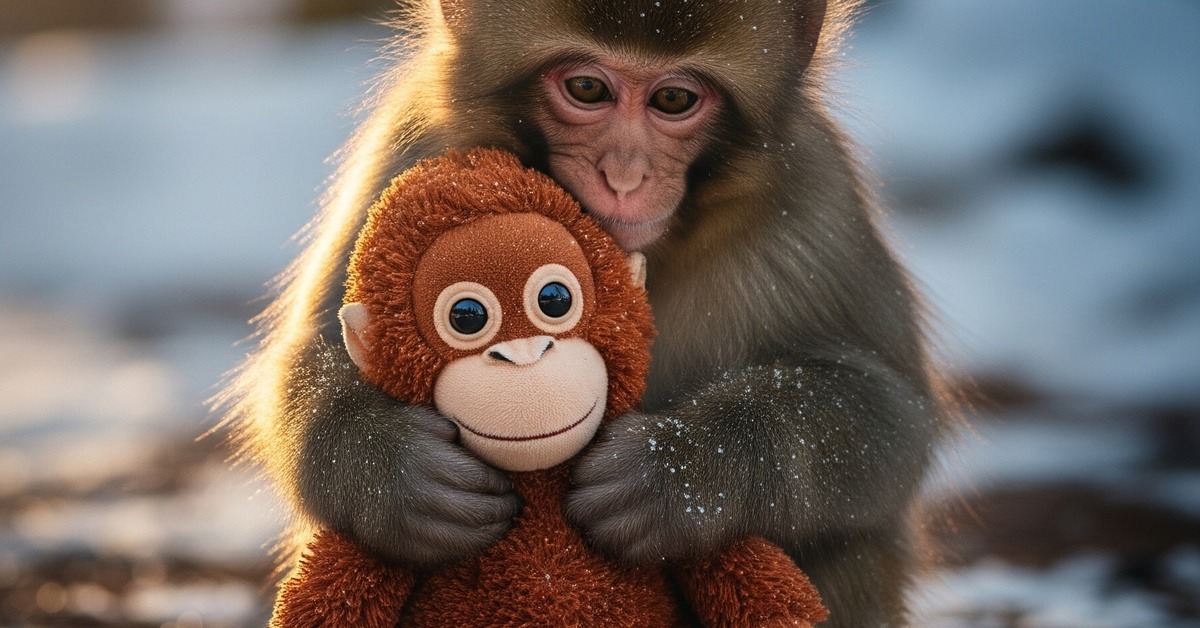
Born into a matrilineal society that determines your worth by who your mother is, Punchy had the bad fortune of being abandoned within days of birth. Caretakers gave him a stuffed orangutan doll. The logic traced back seventy years, to wire-and-cloth surrogates that changed developmental psychology forever. It worked, until it didn’t have to anymore. Something in Punchy has shifted, and here’s the thing: nobody can quite articulate what changed or why.
Key Facts
- Punchy is a baby Japanese macaque (Macaca fuscata) at Monkey Mountain who was abandoned within days of birth and given a stuffed orangutan doll as a surrogate.
- Japanese macaques are the most northerly non-human primates on Earth, ranging into Aomori Prefecture where winter temperatures drop below minus ten degrees Celsius.
- In 1958, psychologist Harry Harlow at the University of Wisconsin–Madison showed that infant rhesus macaques chose a cloth surrogate offering warmth over a wire one offering food, proving contact comfort is foundational.
- Researchers at the German Primate Center documented in 2019 that motherless juveniles had longer latency before attempting novel behaviors than mother-reared peers, a gap of roughly 40 percent across tested tasks.
- Japanese macaques have been documented bathing in hot springs in Nagano since at least the 1960s, with the Jigokudani Monkey Park opening in 1964.
In short: Punchy, an orphaned baby Japanese macaque raised with a plush surrogate doll, has begun standing upright on two legs on his own without being taught. The article uses his case to explore maternal-deprivation research, Harry Harlow’s contact-comfort experiments, and why bipedalism repeatedly appears in macaques, especially among juveniles in managed environments.
The Macaque Who Stood Without a Mother
Macaca fuscata — the Japanese macaque — holds a peculiar distinction in primatology: they’re the most northerly non-human primates on Earth. Their range extends into Aomori Prefecture, where winter temperatures plummet below minus ten degrees Celsius and snow covers the forest floor for months. The Japanese macaque has been documented bathing in hot springs in Nagano since at least the 1960s, when the Jigokudani Monkey Park opened in 1964, and the behavior has since become one of the most photographed wildlife spectacles in Asia. These are animals engineered for difficulty.
Their social structures are matrilineal. Who your mother is determines nearly everything — your rank, your alliances, your access to food. For Punchy, born into that system and immediately outside it, the odds started unfavorable.
Mother-reared macaque infants spend the first weeks of life in almost constant physical contact. They grip. They cling. The ventral surface of the mother’s body becomes the infant’s entire world — warmth, nutrition, motion, safety, all compressed into one relationship. When that relationship doesn’t exist, the consequences ripple through development in ways researchers are still cataloguing.
The Primate Research Institute of Kyoto University has published extensively on maternal deprivation in macaque populations, documenting disrupted social behavior, elevated stress hormones, and atypical locomotor development in orphaned individuals. Punchy’s early attachment to a plush toy wasn’t cute. It was survival logic — and this matters more than it sounds, because without it, his nervous system might never have stabilized enough to explore anything.
Still, here he is. Standing. The plush is nearby — it’s always nearby — but he’s not using it as a crutch anymore. He uses it the way a toddler uses a familiar corner of a room: home base, not lifeline. That distinction matters to anyone who’s watched infant primate development unfold.
Contact Comfort, Surrogates, and What They Actually Do
In 1958, a psychologist named Harry Harlow at the University of Wisconsin–Madison published results that changed developmental psychology permanently. Harlow’s experiments demonstrated that infant rhesus macaques, given a choice between a wire “mother” that provided food and a cloth “mother” that provided only warmth and texture, chose the cloth surrogate overwhelmingly — and ran to it when frightened. The conclusion was stark: contact comfort isn’t secondary to nutrition. It’s foundational.
Facilities working with orphaned primates have been using that logic ever since, and the use of plush surrogates in macaque care draws directly from that lineage. For a deeper dive into how that attachment plays out in an individual macaque’s life, the story of why a baby monkey clings to a stuffed toy for years traces the behavioral science behind exactly this kind of bond.
What surrogates can’t replicate is social instruction. A macaque mother doesn’t just provide warmth — she demonstrates. She models foraging behavior, conflict avoidance, grooming protocols, and the particular body language that says “I belong here” within a group. Infants watch and copy with a precision that researchers at the German Primate Center documented in 2019, showing that motherless juveniles had measurably longer latency periods before attempting novel behaviors than mother-reared peers. In percentage terms, that gap was roughly 40 percent across tested tasks.
The plush gives Punchy a secure base. It doesn’t give him a behavioral curriculum. Yet somehow, he’s writing parts of his own.
Nobody taught him to stand like that. He worked it out himself — short bursts, a bit of wobble, then increasingly confident. Macaques walk bipedally on occasion, but rarely with the kind of repeated, exploratory quality that Punchy’s caretakers have been observing. What they’re watching reads less like accident and more like practice.
Why Bipedalism in Macaques Keeps Turning Up
Japanese macaques aren’t built for sustained bipedalism the way humans are. Their center of gravity sits differently, their hip flexors aren’t optimized for upright posture, and their foramen magnum — the hole in the skull through which the spinal cord passes — is positioned for a quadruped’s gait. And yet bipedal walking keeps appearing in this species, often in exactly the kind of context Punchy represents: juveniles, play behavior, and moments of social performance.
What does the research actually show? Research published in National Geographic’s primate coverage has noted that macaques in managed environments show higher rates of bipedal locomotion than wild populations, possibly because reduced predation pressure and enriched enclosures give juveniles space to experiment with movement that wild contexts wouldn’t permit. A baby Japanese macaque standing upright isn’t defying its biology. It’s exploring the edges of it.
There’s a counterintuitive finding embedded in that observation. We tend to assume that captive or managed environments suppress natural behavior — and in many contexts they do. But for certain exploratory behaviors, the inverse may be true. A baby Japanese macaque standing upright in the wild risks predator attention, energy waste, and social misreading. In a managed colony with known caretakers and reduced threat load, that same behavior has room to develop. Punchy’s swagger, as his caretakers have described it, might be less about individual resilience and more about environmental permission. Watching a young animal take risks it couldn’t afford in the wild, you start to see how much of what we call “behavior” is actually permission.
It’s not just a plucky orphan beating the odds. It’s a young animal doing what young animals do when they’re safe enough to experiment — which is a more complicated, and arguably more hopeful, story.
What a Baby Japanese Macaque Standing Upright Really Signals
British psychiatrist John Bowlby formalized what primatologists now call the “secure base effect” in his 1969 attachment theory framework — the observation that infants with a stable attachment object explore more broadly than those without one. Subsequent confirmation came from researchers at the National Institutes of Health across several decades of non-human primate studies. What does this mean for Punchy? The plush orangutan isn’t holding him back. It’s what allowed him to venture forward.
The doll gave him a returnable point — a place to reset — and from that reset he built the confidence to move farther each time. Caretakers at the facility have noted that his excursions from the doll have lengthened steadily over the past several months, from a few inches to several meters. The upright walking fits that pattern precisely.
Why does bipedal locomotion matter as a signal? Because it’s cognitively and physically demanding in a quadrupedal species. It requires balance recalibration, novel muscle recruitment, and a willingness to be momentarily unstable — which is not something an anxious animal does freely. The fact that Punchy is now doing it repeatedly, in front of caretakers, without immediately retreating to the doll, suggests something has consolidated in his nervous system. A threshold crossed. The data point isn’t the walking itself. It’s that he keeps choosing to do it again.
Integration with the broader colony is the next phase, and caretakers are watching closely. Monkey Mountain’s juvenile macaques can be aggressive toward unfamiliar individuals, and Punchy’s unusual developmental history — the doll, the bipedal quirks, the human-oriented attachment — may complicate that process. But the team is cautiously optimistic. He’s already showing social curiosity. He watches the other juveniles. He doesn’t flinch as much as he used to.
Where to See This
- Jigokudani Monkey Park, Yamanouchi, Nagano Prefecture, Japan — the most accessible site for observing wild Japanese macaques year-round, with peak viewing between December and March when snow conditions bring the monkeys closest to the hot spring baths.
- The Primate Research Institute of Kyoto University (KUPRI), Inuyama, Aichi — one of the world’s leading macaque research facilities, with published open-access data on social and developmental behavior in Macaca fuscata populations.
- For readers wanting to understand the attachment science behind Punchy’s doll, Harlow’s original 1958 paper “The Nature of Love” in American Psychologist is freely available through most university library portals and remains one of the most readable foundational papers in developmental psychology.
By the Numbers
- Approximately 114,431 Japanese macaques were estimated to exist in the wild as of the most recent Japanese Ministry of the Environment survey (2019), concentrated primarily in Honshu.
- Macaca fuscata ranges as far as 41°N latitude — roughly the same latitude as Madrid or Chicago — making it the world’s most northerly non-human primate species.
- Infant macaques spend an estimated 80–90% of their first four weeks in physical contact with their mother, according to field studies conducted at Arashiyama, Kyoto, in the 1990s.
- Harlow’s 1958 cloth-surrogate experiments showed orphaned macaques spent up to 17–18 hours per day in contact with the cloth mother — roughly 3× the time spent at the wire food-source mother.
- Juvenile Japanese macaques in managed settings have been observed walking bipedally for distances of up to 600 meters in a single session, according to behavioral records from Takasakiyama Natural Zoological Garden, Oita, published in 2021.
Field Notes
- In 2004, researchers at Jigokudani observed a juvenile female macaque begin washing sweet potatoes in the thermal spring — a behavior that then spread laterally to peers rather than vertically from adults, suggesting that juvenile innovation, not adult instruction, sometimes drives cultural transmission in this species.
- Japanese macaques have blood type classifications analogous to the human ABO system, and individual macaques have been documented recognizing their own reflections in contexts that suggest at least partial mirror self-recognition — a capacity once thought exclusive to great apes.
- Punchy’s bipedal walking reframes a broader pattern: managed macaque populations in Japan show measurably higher behavioral diversity than wild groups of equivalent size, which challenges the assumption that captivity always narrows behavioral repertoire.
- Researchers still can’t fully answer why some motherless macaques form robust attachments to surrogates and recover developmental trajectory while others don’t — the individual-level predictors remain poorly understood, and no controlled study has yet isolated the key variables with confidence.
Frequently Asked Questions
Q: Is a baby Japanese macaque standing upright a sign of abnormal development?
Not necessarily. While Japanese macaques are primarily quadrupedal, bipedal locomotion is documented in the species — particularly in juveniles in managed or low-predation environments. A baby Japanese macaque standing upright repeatedly suggests exploratory behavior rather than developmental pathology. Researchers at Takasakiyama Natural Zoological Garden have recorded extended bipedal walking sessions in juveniles as recently as 2021, indicating the behavior exists within the normal range of macaque locomotor experimentation.
Q: Why do orphaned macaques attach to stuffed toys?
The mechanism is rooted in Harlow’s contact comfort research from 1958 at the University of Wisconsin–Madison, which demonstrated that tactile warmth and texture satisfy an independent neurological need in infant primates — separate from hunger. When a live mother isn’t available, a plush object can partially fulfill that need, reducing cortisol levels and allowing the nervous system to settle into something closer to a secure baseline. It’s not a perfect substitute, but it’s measurably better than nothing — which is why wildlife facilities continue using the technique today.
Q: Can orphaned macaques integrate successfully into social groups?
This is where the common assumption — that motherless primates can’t recover full social function — often overstates the case. Research from the National Institutes of Health spanning several decades has shown that orphaned macaques given adequate early surrogate support, gradual peer exposure, and stable caretaker relationships can integrate into social groups with success rates comparable to mother-reared juveniles in some contexts. The timeline is longer, and some behavioral differences persist, but full social exclusion is not the inevitable outcome that early dramatic readings of Harlow’s work might suggest.
Editor’s Take — Alex Morgan
What I keep coming back to isn’t the bipedal walking — it’s the returning. Punchy ventures out and comes back to the doll, then ventures farther and comes back again. That rhythm is the actual story. It’s what secure attachment looks like in practice: not independence from comfort, but the confidence to move away from it. We spend a lot of time in wildlife coverage celebrating dramatic recovery arcs. Punchy’s arc is quieter than that, and I think more honest about how resilience actually builds — in small loops, not leaps.
Somewhere in a macaque colony in Japan, a small animal who had no mother is teaching himself to stand upright. He didn’t get a manual. He didn’t get the usual scaffolding. He got a stuffed toy, some patient humans, and whatever it is in a young nervous system that keeps trying. That might not sound like much. But watch the footage long enough and you start to wonder what that instinct is called — the one that keeps reaching for balance even when there’s no one there to model it. Whatever its name, Punchy seems to have it in abundance.
Illustrations are AI-generated. Article fact-checked and human-edited.