3 Billion Birds Lost: Why the Dawn Chorus Is Fading
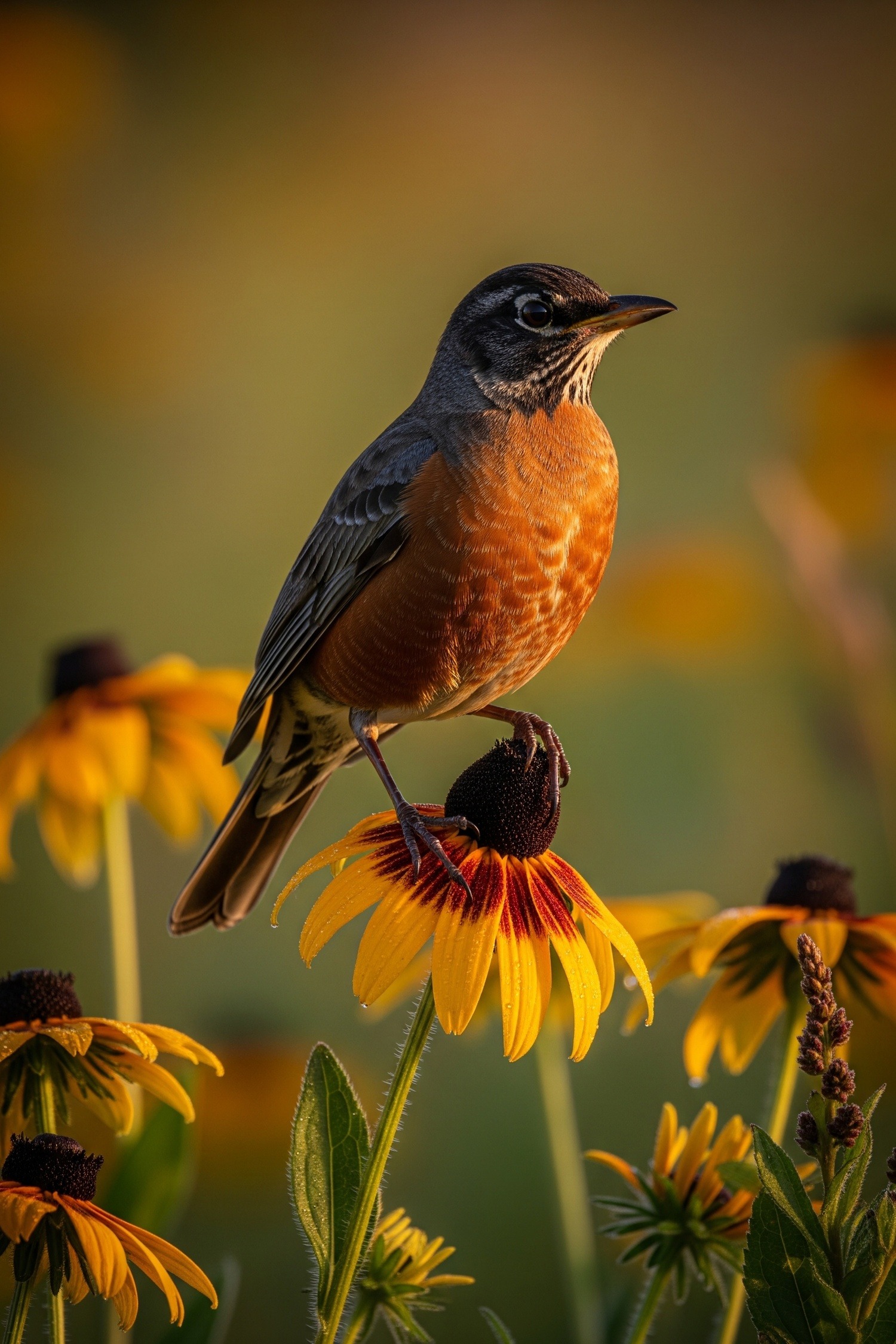
Three billion birds vanished from North America since 1970. But here’s what makes that number feel like it belongs in a different conversation: nobody noticed it happening in real time. The robins, the sparrows, the swallows you grew up hearing — they’re disappearing from a continent that doesn’t yet fully feel their absence. A spring morning without birdsong. That’s where the North America bird population decline is taking us, and the data has known it for fifty years.
A 2019 study published in Science by researchers at the Cornell Lab of Ornithology quantified what volunteers had been documenting since 1966. This wasn’t a projection. It was a count — radar data, weather stations, fifty years of citizen science — landing like a verdict. North America had lost 29% of its bird population in under half a century. The researchers did the math. The question nobody could immediately answer was: what exactly had we broken to make this happen?
Key Facts
- North America has lost about 3 billion birds — 29% of its bird population — since 1970, per a 2019 study in Science by the Cornell Lab of Ornithology.
- The North American Breeding Bird Survey has tracked over 700 species annually since 1966.
- The Eastern Meadowlark lost more than 70% of its population between 1970 and 2019, and the Eastern Wood-Pewee nearly 80% since the 1970s.
- A 2017 Krefeld study found flying insect biomass in German nature reserves declined more than 75% over 27 years.
- Window glass kills an estimated 600 million birds yearly in the U.S., and outdoor cats kill between 1.3 and 4 billion.
In short: A 2019 study in Science found North America has lost about 3 billion birds — 29% — since 1970, including common backyard species. The decline has no single cause: habitat loss, a 75%-plus collapse in flying insects, neonicotinoid pesticides, window collisions and outdoor cats all compound. Even forest birds decline as woodlands fragment.
How North America’s Bird Population Decline Began
Warning signs existed long before the 2019 reckoning. The North American Breeding Bird Survey — a joint program run by the U.S. Geological Survey and Environment and Climate Change Canada — began tracking over 700 species annually across thousands of roadside routes in 1966. By the 1980s, ornithologists were logging steady, unremarkable-looking dips in species counts that, taken together, told a far more alarming story. By the mid-1990s, its data was showing something no individual dataset could fully capture: the entire bird community was contracting.
Not just endangered species. Not just migratory specialists. Common birds — backyard birds — were entering a prolonged, structural decline that had no single, clean cause. Grasslands converted to industrial agriculture. Wetlands drained. Forest edges eroded by suburban sprawl. The Eastern Meadowlark, a grassland specialist that once filled open fields with a fluting whistle, lost more than 70% of its population between 1970 and 2019. The Wood Thrush — whose spiraling, cathedral-like song once defined the deciduous forests of the eastern U.S. — dropped by 62%.
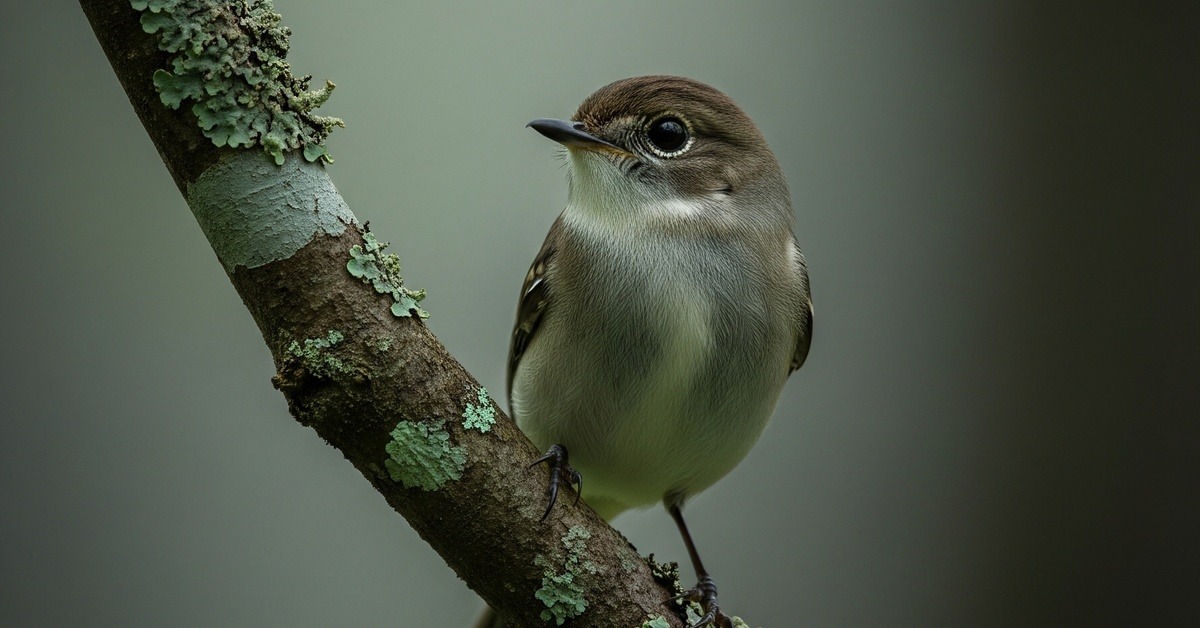
These weren’t marginal species. They were the soundtrack of the continent.
Walk a rural road in Pennsylvania in early May today, and then listen to a 1975 recording from the same region. The difference isn’t subtle. The density of song — the layering of species over species — is simply gone. Its disappearance was gradual enough that most people didn’t notice until the silence had weight.
The Insect Collapse Driving Songbirds to Starvation
Why does the food chain matter to songbirds? Because insectivorous songbirds — the flycatchers, warblers, swallows, and swifts that depend entirely on flying insects for food and for feeding their chicks — can’t exist without it. For them, the collapse of insect populations across the Northern Hemisphere has been catastrophic. A landmark 2017 study by the Entomological Society Krefeld in Germany found that flying insect biomass in protected nature reserves had declined by more than 75% over 27 years. That figure was startling enough, but what it meant for birds was concrete: less food at precisely the moment of year — spring migration and breeding season — when birds need the most calories.
The Eastern Wood-Pewee, a small, understated flycatcher that spends its summers in the eastern U.S., has lost nearly 80% of its population since the 1970s. It’s not a story about one bird. It’s a story about what happens when the base of the food chain quietly collapses. Here’s the thing: birds and insects are far more deeply entangled than population numbers alone suggest. The intricate behavioral relationship birds have with insects — even something as unexpected as crows deliberately using ants to clean their feathers — hints at that complexity.
A dose-response relationship emerged from a 2019 study by researchers at Radboud University in the Netherlands: areas with higher neonicotinoid concentrations in surface water showed significantly steeper declines in insectivorous bird populations, particularly swallows and martins. Neonicotinoid pesticides — the world’s most widely used class of insecticide — are now understood to suppress insect reproduction across entire agricultural landscapes, not just at the point of application. The effect wasn’t correlational noise. It was a direct link between chemical exposure and bird population collapse.
The pressures don’t take turns. Window glass kills an estimated 600 million birds in the U.S. every year. Outdoor cats kill between 1.3 and 4 billion annually. Neonicotinoids remove the insects those birds need to eat. They compound.
In the boreal forests of northern Canada — which function as the breeding ground for more than 300 species of North American birds — researchers from the Boreal Songbird Initiative documented that aerial insect availability during peak breeding season has dropped measurably in regions adjacent to intensive agriculture. Fewer insects in June means fewer chicks that survive to August. The math is brutal and simple.
When Forests Eat Their Own Birds
Forest cover in the eastern United States has actually increased since the mid-20th century, as farmland was abandoned and trees reclaimed open land. By conventional ecological logic, more trees should mean more birds. Instead, many forest-dependent species continued to decline — and the reason reveals something uncomfortable about what we mean by “habitat.” According to research published in the journal Frontiers in Ecology and the Environment by scientists at the Smithsonian Migratory Bird Center, forest fragmentation — the breaking of large, continuous woodlands into smaller, isolated patches — is as damaging as outright deforestation for species like the Cerulean Warbler and the Ovenbird, which require deep forest interiors to breed successfully.
What most people miss: edge effects, nest predation by raccoons and cowbirds, and the absence of old-growth structure in second-growth forest all suppress reproductive success even in apparently “green” landscapes. National Geographic’s coverage of the 2019 Cornell study captured the shock of scientists who expected habitat recovery to offset losses — and found it hadn’t. The North America bird population decline is, in this sense, a story about quality, not just quantity. A landscape can look green and still be biologically hollow.
Brown-headed Cowbirds — which lay their eggs in the nests of other species — thrive at forest edges. As fragmentation increases edge habitat, cowbird parasitism rates climb. Some warbler species in fragmented forests show nest parasitism rates above 50%, meaning more than half of their breeding attempts in a given season are raising someone else’s chick. Reproductive failure at that scale doesn’t register as a sudden crash. It registers as a slow, grinding attrition over decades.
That’s the cruelest part of this story. The decline is legible only in retrospect. By the time the silence is obvious, decades of compounded loss have already occurred.
The North America Bird Population Decline: What Recovery Looks Like
The data isn’t entirely a eulogy. The same half-century that erased three billion birds from the continent also produced some of the most dramatic wildlife recoveries in recorded history — and understanding what worked matters enormously right now. The Bald Eagle is the most cited example, and for good reason. By 1963, the contiguous United States had just 417 known nesting pairs, driven to the edge by DDT poisoning, habitat loss, and direct persecution. The banning of DDT under the U.S. Environmental Protection Agency in 1972, combined with protections under the Endangered Species Act of 1973 and active nest monitoring programs by the U.S. Fish and Wildlife Service, produced a recovery that biologists still describe as remarkable: more than 300,000 Bald Eagles across North America today.
The mechanism wasn’t complicated. Remove the primary stressor. Protect the nesting habitat. Give the population time. It worked because the underlying biology was intact — eagles still knew how to be eagles. They just needed the threats removed. Waterfowl tell a similar story. Duck populations across North America crashed by the 1980s due to drought and wetland drainage, but rebounded significantly after the North American Waterfowl Management Plan of 1986 — a binational agreement between the U.S. and Canada that funded wetland restoration across the prairie pothole region.
Between 1990 and 2019, many duck species returned to levels not seen since the mid-20th century. The investment wasn’t trivial — billions of dollars of public and private money over three decades — but the return was measurable and real. And yet conservation, when it’s resourced and sustained, works.
The problem is that most of the birds currently in decline don’t have the cultural visibility of eagles or mallards. Nobody is launching a national campaign to save the Purple Martin or the Chimney Swift. Researchers at the American Bird Conservancy have identified specific, tractable interventions that can reverse decline at the local and regional scale. Replanting native wildflowers — black-eyed Susans, prairie coneflowers, native milkweeds — restores the insect communities that songbirds depend on. Reducing pesticide use on agricultural land adjacent to breeding habitat can increase insectivorous bird productivity by measurable percentages within a single season. Window collision mitigation — frosted or patterned glass, external screens — is estimated to prevent tens of millions of bird deaths annually in the U.S. alone if widely adopted. These aren’t impossible asks. They’re within reach of individual households, municipalities, and corporations right now.
The Silence That Hasn’t Fallen Yet — But Might
Rachel Carson wrote Silent Spring in 1962 as a warning about a future that hadn’t quite arrived. That future has now partially arrived — and the alarm is being raised again, this time with fifty years of population data behind it. Watching a species disappear at this speed, you stop calling it a trend. It becomes a verdict on what we’ve decided to tolerate. The current trajectory of North America bird population decline, if it continues at its 2019 rate, would remove another quarter of the continent’s remaining bird life within the next thirty to forty years.
That’s not a fringe projection. It’s a linear extrapolation of documented trends published in one of science’s most respected peer-reviewed journals. The World Wildlife Fund’s 2022 Living Planet Report documented a 69% average decline in monitored vertebrate populations globally since 1970 — birds sit at the sharper end of that curve, alongside amphibians and freshwater fish. What changes if this continues? The answer isn’t merely aesthetic — a quieter morning, a less colorful garden. Insectivorous birds perform pest suppression worth an estimated $4.5 billion annually to U.S. agriculture, according to research published by the journal Science Advances in 2020.
Seed-dispersing birds — thrushes, waxwings, grosbeaks — regenerate forests at scales and distances that no human reforestation program can match. Lose the birds, and you don’t just lose the song. You lose the infrastructure. In regions where bird populations have already collapsed most severely, insect pest outbreaks have increased and natural regeneration of native tree species has slowed measurably. The cascade isn’t hypothetical.
Stand in a meadow in rural Ohio in June. A Bobolink — the male with its cream-and-black tuxedo reversed, white on back and black below — rises from the grass in a chattering, bubbling flight display above you. Its population is down 65% since 1970. It breeds on grasslands that are converted to row crops at a rate of hundreds of thousands of acres per year. It winters in Argentina. Its entire life is a thread stretched thin across two continents and every land-use decision made between them. It’s still there. For now.
How It Unfolded
- 1962 — Rachel Carson’s Silent Spring documents widespread bird deaths linked to DDT pesticide use, prompting the first national conversation about chemical impacts on bird populations.
- 1966 — The North American Breeding Bird Survey launches, establishing the long-term monitoring baseline that would eventually document the full scale of decline.
- 1972 — The U.S. bans DDT, triggering the Bald Eagle and Peregrine Falcon recoveries that demonstrate conservation’s potential when political will is present.
- 2019 — A landmark study in Science by Cornell Lab of Ornithology researchers quantifies the three-billion-bird loss since 1970, reshaping public and policy understanding of the crisis.
By the Numbers
- 3 billion — birds lost from North America since 1970, representing a 29% decline in total bird abundance (Cornell Lab of Ornithology, 2019)
- 75% — decline in flying insect biomass in German nature reserves over 27 years (Entomological Society Krefeld, 2017)
- 417 — Bald Eagle nesting pairs remaining in the contiguous U.S. at the species’ 1963 low point, before EPA protections
- 1.3–4 billion — birds killed by outdoor cats in the U.S. annually, making domestic cats the leading human-linked cause of bird mortality
- $4.5 billion — estimated annual value of pest suppression performed by insectivorous birds in U.S. agriculture (Science Advances, 2020)
Field Notes
- In 2021, researchers at Colorado State University used weather surveillance radar to track nocturnally migrating songbirds and found that light pollution from cities causes birds to circle illuminated areas for hours, burning critical fat reserves during the most energetically expensive journey of their year. The effect was measurable within a single night’s observation.
- The Common Nighthawk — named for its nocturnal, insect-hawking flights — doesn’t actually belong to the hawk family at all. It’s a nightjar, more closely related to swifts than to any bird of prey, and its population has dropped by 61% since 1970 largely due to the collapse of the large aerial insects it depends on.
- Native oak trees support over 500 species of caterpillar in North America. A single native ornamental such as a butterfly bush supports fewer than five. The difference in caterpillar diversity between a native-planted yard and a non-native-planted yard directly determines how many breeding songbirds that yard can support each spring.
- Researchers still can’t fully explain why certain species — like the Cedar Waxwing — have remained relatively stable while ecologically similar species have crashed. What combination of dietary flexibility, habitat tolerance, and migratory strategy confers resilience in some birds and not others remains one of the genuinely open questions in conservation biology (and researchers actually call this the “resilience paradox”).
Frequently Asked Questions
Q: What is causing the North America bird population decline?
The North America bird population decline has no single cause — it’s the result of multiple compounding pressures acting simultaneously. Habitat loss through agricultural expansion and urban development is the primary driver. Insect collapse linked to pesticide use removes food sources for hundreds of species. Window collisions, outdoor cats, and light pollution during migration add further mortality pressure. No single intervention will reverse the trend; recovery requires reducing all of these stressors in parallel.
Q: Which bird species have been hit hardest?
Grassland birds have suffered the steepest declines — species like the Eastern Meadowlark, Bobolink, and Henslow’s Sparrow have lost between 65% and 90% of their populations since 1970 as native grasslands have been converted to agriculture. Aerial insectivores — swallows, swifts, nighthawks, and flycatchers — are the second most severely impacted group, reflecting the collapse of flying insect populations across the continent. Shorebirds have declined by roughly 37% since 1970, driven primarily by wetland drainage and changes in wintering habitat in South America.
Q: Can bird populations actually recover from this scale of loss?
The common misconception is that once a population crashes this severely, recovery is essentially impossible. The evidence says otherwise. Bald Eagles, Peregrine Falcons, and many waterfowl species have returned from far more extreme lows when the right protections were put in place. The critical factor isn’t whether recovery is biologically possible — in most cases, it is — but whether the primary stressors are removed quickly enough and whether habitat quality is restored before populations fall below the threshold where genetic diversity becomes a limiting factor.
Editor’s Take — Alex Morgan
What strikes me most about this story isn’t the three-billion number — it’s that the monitoring infrastructure to see this coming has existed since 1966. Fifty-three years of data. Thousands of volunteer observers. The decline was documented in real time, every breeding season, on thousands of roadside routes across a continent. The information was never missing. What was missing was the political decision to treat a 29% collapse in total bird abundance as the emergency it clearly is. That gap — between knowing and acting — is what this story is really about.
Three billion birds is an abstraction until you stand outside at 5 a.m. on a May morning and try to count the species you can hear. Every ecologist who’s done that exercise in 2024 will tell you the same thing: the list is shorter than it used to be. The intervals between songs are longer. The silence between species isn’t peaceful — it’s a measurement. The dawn chorus isn’t gone. But it’s thinning, one voice at a time, in a way that the data has been trying to tell us about for decades. The question isn’t whether we have the tools to reverse it. We do. The question is whether we’ll decide, while there’s still enough song left to be worth saving, that we actually want to.
Illustrations are AI-generated. Article fact-checked and human-edited.