Why Sea Turtles Eat Plastic Bags — and How Portugal Cut It
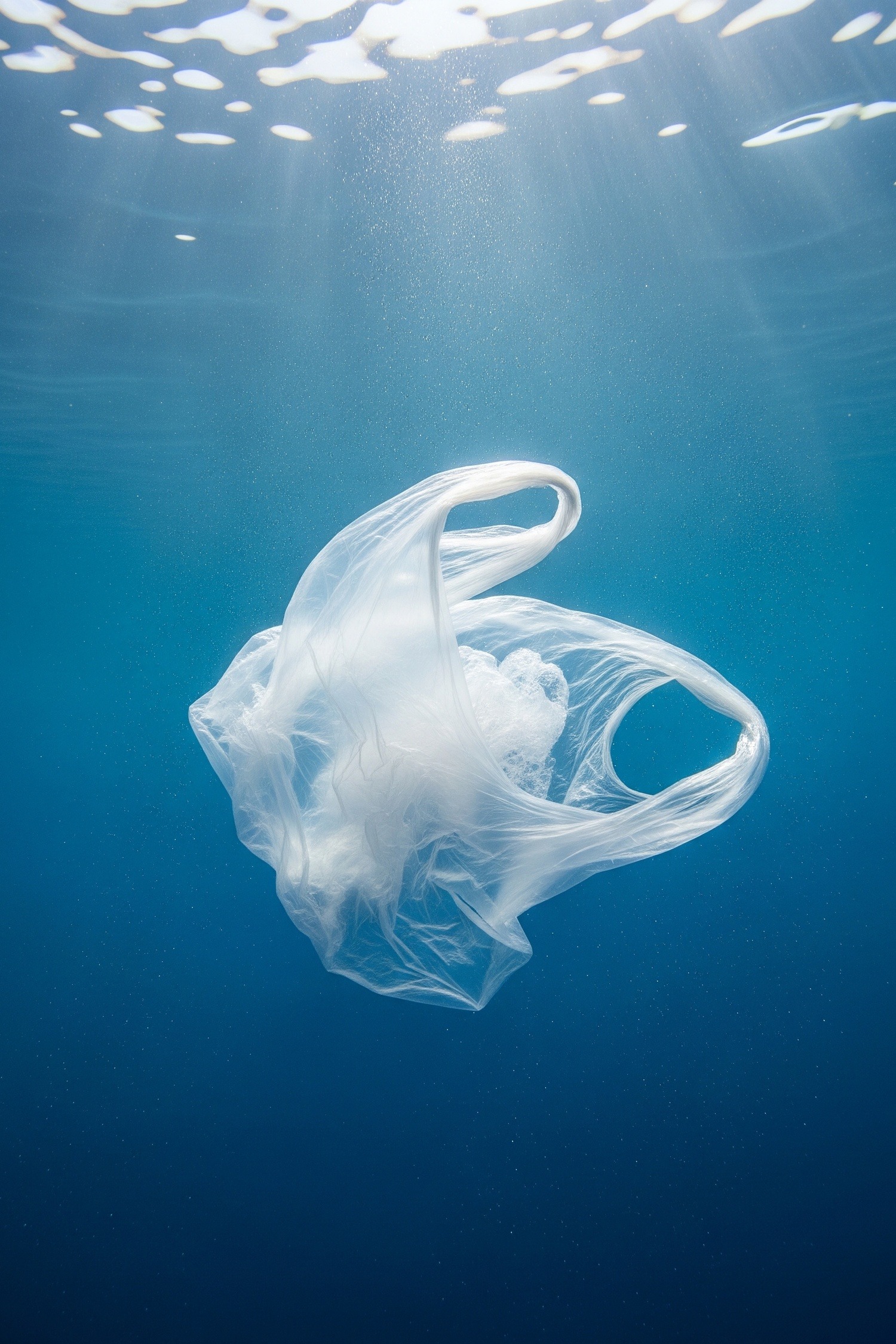
The reason why sea turtles eat plastic bags is heartbreakingly simple: they can’t tell them from food. A bag drifting through open water looks like a jellyfish. It moves like one. To a hungry loggerhead, it reads as a meal. That split-second mistake is often the last one the animal ever makes.
The problem is older than the awareness of it. Lightweight plastic bags weigh almost nothing but can persist in the ocean for up to 500 years, breaking into ever-smaller fragments without ever truly vanishing. They drift at the same depths jellyfish do, in the same blue gloom. So why don’t turtles learn to avoid them? The answer sits deeper than behavior — it’s wired into how a turtle’s body works.
Key Facts
- Portugal began phasing out lightweight plastic bags in 2015, introducing a per-bag charge.
- By 2017, lightweight plastic bag usage in Portugal had fallen by over 70%.
- A single plastic bag can persist in the ocean for up to 500 years before fully degrading.
- A sea turtle’s throat is lined with backward-pointing spines (papillae) that make regurgitating swallowed plastic nearly impossible.
- Research published in Scientific Reports (2018) found that ingesting just one piece of plastic raised a sea turtle’s mortality risk measurably.
In short: Sea turtles eat plastic bags because the bags look and move like jellyfish, a core prey item, and the turtle’s throat spines prevent it from spitting plastic back out once swallowed. Portugal’s 2015 plastic bag charge cut usage over 70% by 2017, keeping millions of bags out of the Atlantic.
Why sea turtles eat plastic bags instead of avoiding them?
Vision and motion do the damage. Many sea turtle species, including the loggerhead (Caretta caretta) and the jellyfish-specialist leatherback, evolved to hunt soft, translucent, slow-drifting prey. A 2020 study from the University of Florida proposed an “olfactory trap” effect: marine plastic accumulates a biofilm of algae and microbes that gives off dimethyl sulfide, the same ocean smell that signals food to foraging animals. So a turtle doesn’t just see a jellyfish — it smells one too. The leatherback sea turtle, whose diet is almost entirely gelatinous prey, is especially vulnerable to this double deception.
Evolution never built a defense against an object that didn’t exist until the 20th century. There’s no instinct, no learned aversion, no warning taste. The turtle’s sensory toolkit is finely tuned for a world without polyethylene, and that world is gone. A bag pressing the right visual and chemical buttons gets eaten, and the animal has no reason to suspect otherwise.
Turns out the cruelest part isn’t the mistake. It’s that the mistake feels, to the turtle, like success.
The throat that can’t let go
Once a turtle swallows, the anatomy turns lethal. The esophagus of a sea turtle is lined with rows of sharp, backward-pointing spines called papillae — keratin projections angled toward the stomach. In a healthy animal they serve an elegant purpose: pinning slippery jellyfish in place and forcing seawater back out before the turtle digests. You can find more of these strange evolutionary trade-offs in our archive of ocean biology stories, where the same adaptation that helps an animal thrive can become its undoing.
With plastic, the papillae become a one-way valve. A bag that goes down can’t come back up. It lodges, blocks the gut, and creates a false sense of fullness — the turtle keeps surfacing to feed while slowly starving, its digestive tract jammed with material it can’t pass or vomit. Some bags cause perforations. Others trigger gas buildup that prevents diving. One bag, in the wrong place, is sometimes all it takes.
The spines that made the turtle a perfect jellyfish hunter are the same spines that trap the thing pretending to be one.
What did Portugal actually change?
Policy can move faster than biology. In 2015 Portugal introduced a charge on lightweight plastic bags as part of a broader European push under the EU Single-Use Plastics framework. The effect was immediate and steep. According to figures cited by the BBC and Portuguese environmental agencies, lightweight bag use fell by more than 70% within two years. That’s not a rounding error — it’s millions of bags per year that never reached the Atlantic, never tangled a dolphin, never filled a loggerhead’s stomach.
The mechanism is almost boringly simple: a small price on a free convenience changes behavior at scale. Ireland saw a 90% drop after its 2002 levy; Portugal followed a parallel curve. The counterintuitive finding from this wave of policies is that the cheapest interventions — a few cents per bag — often outperform expensive cleanup programs, because they stop the plastic before it ever enters the water where sea turtles eat plastic bags by mistake.
Prevention beats recovery. Once a bag is in the ocean, the only honest options are slow and partial.
Why stopping the bag matters more than cleaning the sea
The scale of the problem makes upstream action the only realistic lever. A 2015 study led by Jenna Jambeck at the University of Georgia estimated that 8 million metric tons of plastic enter the ocean every year. No fleet of cleanup vessels can outrun that input. The math only works if the flow slows at the source — bans, charges, redesigned packaging — rather than relying on netting fragments out of a moving sea.
For sea turtles specifically, the payoff is direct. Research in Scientific Reports (2018) found that a turtle ingesting just 14 pieces of plastic crossed into a measurably elevated mortality risk, and a single piece already nudged the odds. Cut the number of bags entering the water and you cut the encounters, the swallows, the blocked guts. Cause and effect here is unusually clean: fewer bags out there means fewer turtles starving with full stomachs.
Conservation groups now press for the boring wins — levies, deposit schemes, single-use bans. They aren’t glamorous. They just keep the bag off the menu.
How the bag ban spread beyond one coastline
Portugal wasn’t acting alone, and that’s the part that gives the story weight. Its 2015 charge slotted into a wider European push that hardened into the EU Single-Use Plastics Directive of 2019, which set binding reduction targets across the bloc and banned several throwaway items outright by 2021. By the early 2020s more than 90 countries had introduced some form of plastic-bag restriction, from Kenya’s strict 2017 ban to Bangladesh’s pioneering 2002 prohibition. Each follows the same logic Portugal demonstrated: it’s cheaper and far more effective to stop the bag at the checkout than to chase it across an ocean.
For marine life the cumulative effect matters more than any single law. A loggerhead doesn’t care which country’s coastline it’s near — ocean currents carry plastic for thousands of kilometers, so a bag refused in Lisbon is one fewer drifting off Cabo Verde or washing toward the Mediterranean nesting beaches. The math compounds. Cut input in dozens of countries at once and the background density of jellyfish-mimicking bags in the open Atlantic starts, slowly, to fall.
That’s the long game conservationists are playing: not cleaning the sea, but quietly draining the supply of the thing that fools the turtle.
Where to See This
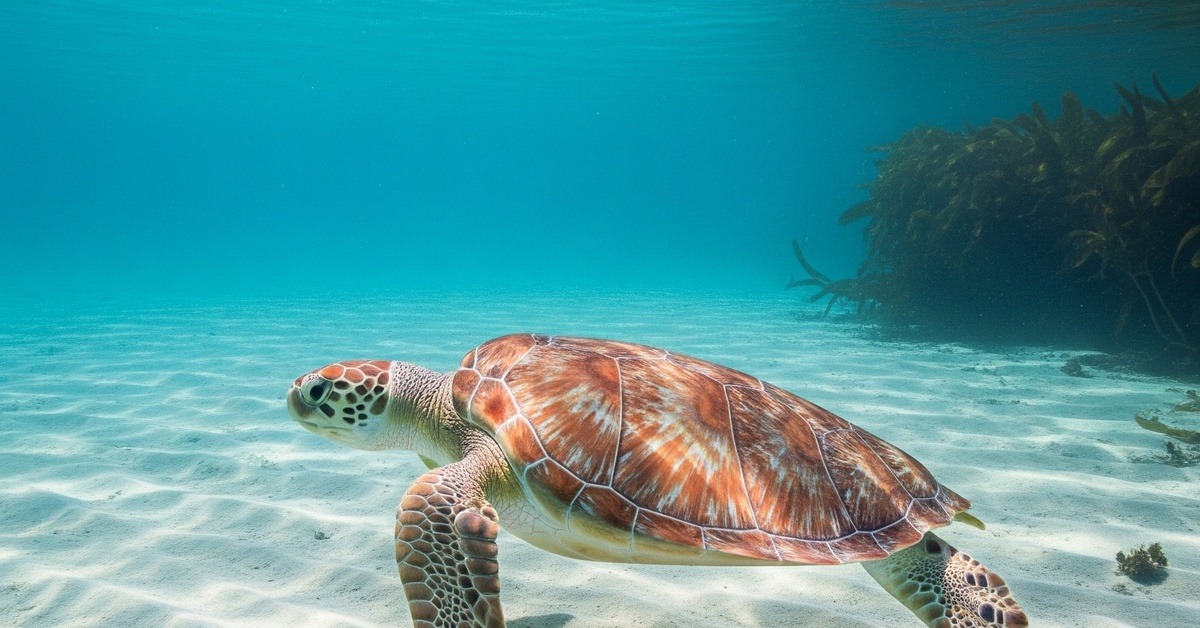
- Cabo Verde and the Algarve coast, Portugal — important Atlantic loggerhead waters; nesting season runs roughly June to October.
- Sea turtle rescue and research centers — Portugal’s coastal marine institutes and groups like the Sea Turtle Conservancy track ingestion cases and rehabilitate strandings.
- Practical tip: skip lightweight produce bags entirely and carry a reusable tote — the single most effective personal action is keeping a bag out of the waste stream in the first place.
By the Numbers
- Portugal’s plastic bag use: down over 70% between 2015 and 2017.
- Ocean persistence: a single bag can last up to 500 years before full degradation.
- Global input: about 8 million metric tons of plastic enter the ocean annually (Jambeck, 2015).
- Mortality threshold: just 14 pieces of ingested plastic measurably raised turtle death risk (Scientific Reports, 2018).
- Ireland’s comparable levy drove a roughly 90% drop in bag use after 2002.
Field Notes
- The “olfactory trap” hypothesis from the University of Florida (2020) showed turtles respond to the smell of biofouled plastic as if it were food — the deception is chemical, not just visual.
- Leatherbacks can eat their own body weight in jellyfish daily, which is exactly why a drifting bag fools them so reliably.
- Plastic bags don’t only get swallowed — they wrap around flippers and necks, causing slow constriction injuries in juveniles.
- Researchers still can’t fully predict which individual turtles will encounter and ingest plastic, since drift patterns and feeding zones vary wildly year to year.
Frequently Asked Questions
Q: Why do sea turtles eat plastic bags if they’re not food?
A drifting plastic bag closely mimics a jellyfish — translucent, soft, and slow-moving — which is core prey for species like the loggerhead and leatherback. A 2020 University of Florida study also found that biofouled plastic gives off the same ocean smell that signals food, so turtles are fooled by sight and scent. Evolution never prepared them to recognize a synthetic object, so there’s no instinct to avoid it.
Q: Why can’t a sea turtle just spit the plastic bag back out?
A sea turtle’s throat is lined with backward-pointing spines called papillae that normally pin slippery jellyfish in place and push seawater out. With plastic, those same spines act as a one-way trap. A swallowed bag can’t be regurgitated, so it lodges in the digestive tract, causing blockages, a false sense of fullness, and slow starvation. Sometimes a single bag is enough to kill.
Q: Did Portugal’s plastic bag ban actually help sea turtles?
Portugal’s 2015 charge on lightweight plastic bags cut usage by more than 70% by 2017, keeping millions of bags out of the Atlantic each year. While it’s hard to count exactly how many turtles were spared, fewer bags in the water directly reduces ingestion encounters. Research in Scientific Reports (2018) showed even a single swallowed piece raises mortality risk, so cutting the supply at the source measurably lowers the danger.
Q: What’s the most effective way to protect sea turtles from plastic?
Stopping plastic before it reaches the ocean works far better than cleanup. With about 8 million metric tons entering the sea yearly, no cleanup fleet can keep pace, so source-level action matters most. Bag charges, single-use bans, and reusable totes cut the flow cheaply and at scale. On a personal level, refusing lightweight bags and properly disposing of plastic keeps the most dangerous items off a turtle’s menu entirely.
Editor’s Take — Alex Morgan
What gets me about this isn’t the tragedy — it’s the efficiency of the trap. A turtle’s anatomy is a masterpiece of jellyfish-hunting, and we’ve handed it an object that exploits every part of that design at once: the look, the drift, even the smell. The fix isn’t heroic. It’s a few cents per bag at a checkout counter. Portugal proved the cheapest intervention can be the one that actually empties the water of the thing killing them.
Picture it from the turtle’s side: a soft, glowing shape pulsing in the blue, smelling like dinner, behaving like prey. There’s no reason to doubt it. The bag isn’t a trick the animal can see through — it’s a perfect forgery of a meal. And somewhere in the Atlantic right now, one is drifting at jellyfish depth, waiting. The question isn’t whether a turtle will mistake it. It’s whether we’ll keep making the forgery in the first place.
Illustrations are AI-generated. Article fact-checked and human-edited.