Devil’s Tower: The Rock That Shouldn’t Exist
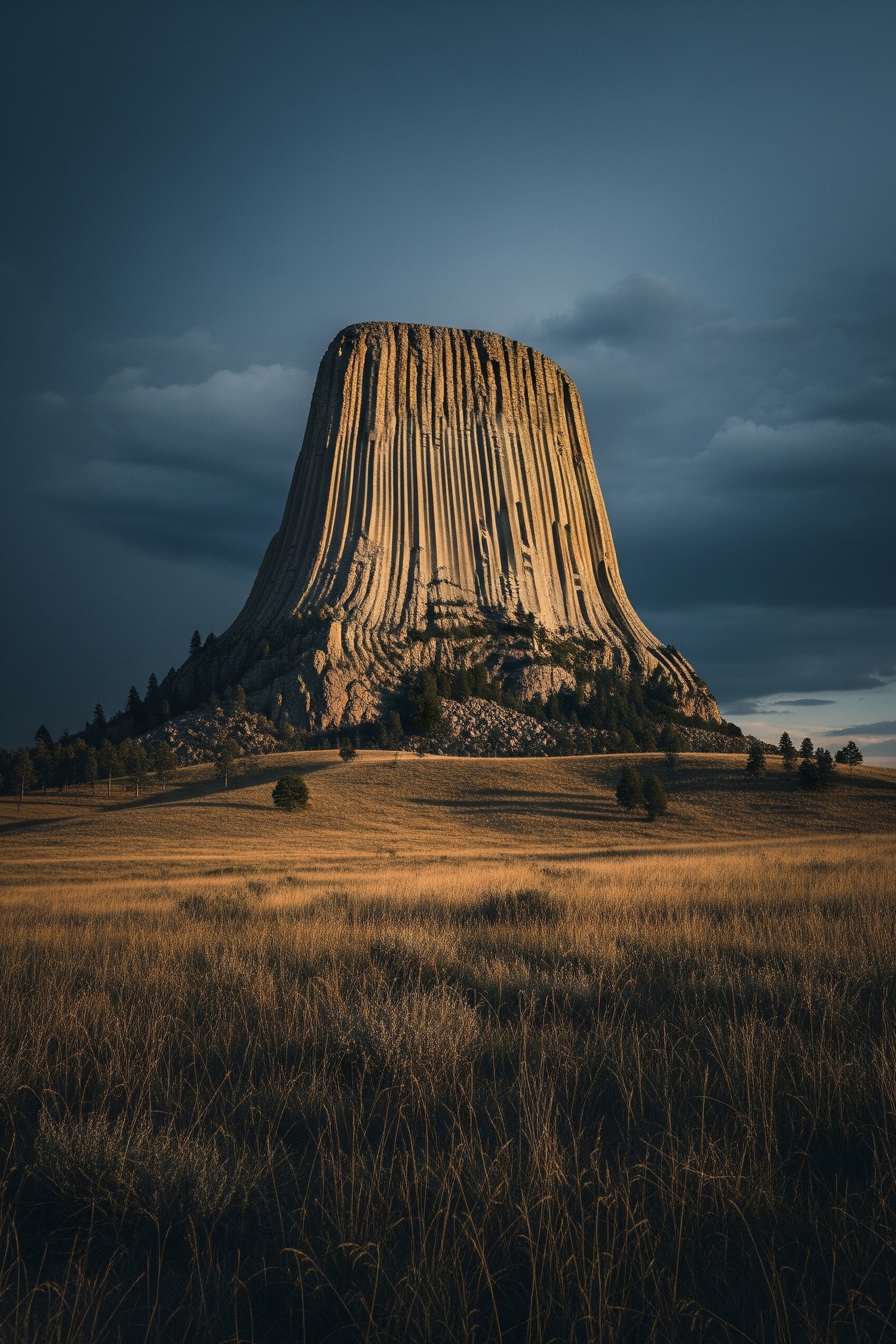
Drive through northeastern Wyoming long enough and you’ll hit a moment where the earth just… stops being boring. A tower of rock explodes from the plains — 867 feet of columnar stone so geometrically perfect it shouldn’t exist. Geologists have been arguing about how it got there for over a hundred years. They’re still not done.
The thing about Devil’s Tower geology is that it refuses to make sense in only one way. You’ve got the volcanic neck theory, the laccolith theory, and then you’ve got the Lakota name — *Matȟó Thípila*, Bear Lodge — which tells you exactly what happened (a bear clawed the stone). All three explanations are backed by something real. None of them fully work.
Key Facts
- Devil’s Tower rises 867 feet above the Belle Fourche River valley in northeastern Wyoming, with a base roughly 1,000 feet across and a summit of about 1.5 acres.
- The Tower is made of igneous phonolite porphyry that intruded about 50 million years ago during the Eocene, while the surrounding rock is sedimentary sandstone, siltstone and shale.
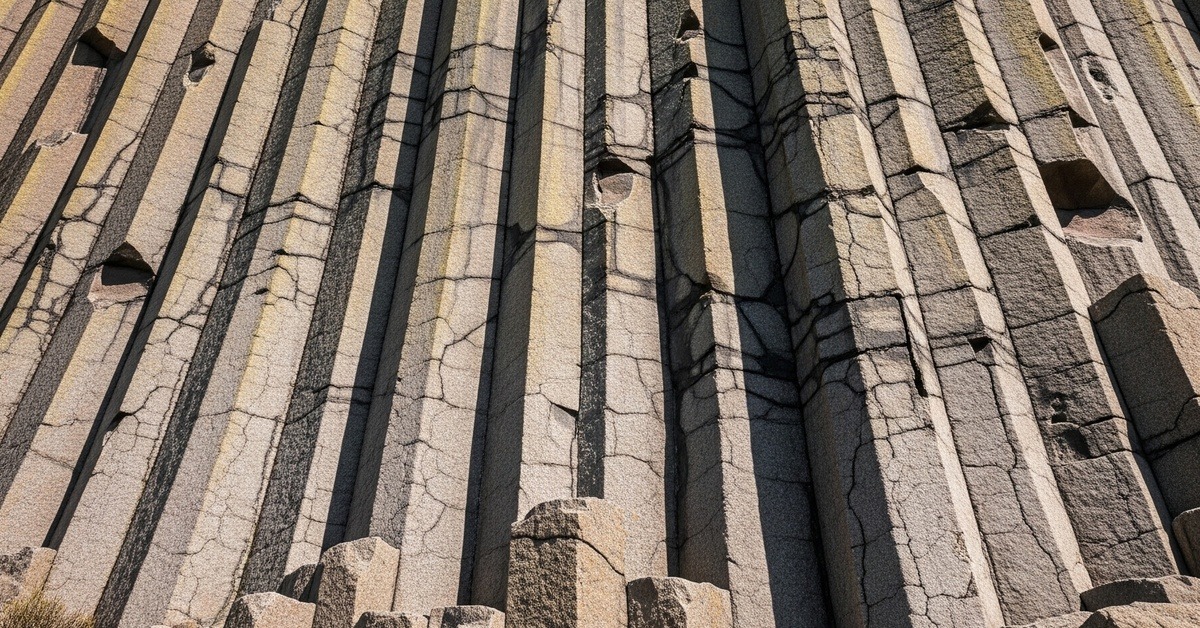
- More than 200 parallel columns form the exterior; some run over 600 feet continuously and range from 6 to 12 feet across, among the tallest columnar jointing on Earth.
- In 1906, President Theodore Roosevelt designated Devil’s Tower as America’s first National Monument under the one-year-old Antiquities Act.
- The Lakota name is Matho Thipila (Bear Lodge); U.S. government surveyors renamed the site ‘Devil’s Tower’ in 1875. It draws about 450,000 visitors and roughly 5,000 climbing permits a year.
In short: Devil’s Tower is an 867-foot column of igneous rock rising from the Wyoming plains, formed when magma intruded about 50 million years ago and the surrounding sedimentary rock eroded away. Its 200-plus columns formed through columnar jointing. Named Bear Lodge by the Lakota, it became America’s first National Monument in 1906.
What You’re Actually Looking At
The Tower itself is 867 feet above the Belle Fourche River valley. Base diameter: roughly 1,000 feet. Summit: about 1.5 acres, flat enough that climbers have actually camped up there. Early geologist N.H. Darton, working in the 1900s, decided it was a volcanic neck — the cooled core of an ancient volcano whose outer layers had weathered away over millions of years. Clean theory. Appealing. Except.
The competing explanation: it’s a laccolith. Magma pushed upward into sedimentary rock like a blister under skin, never quite breaking through. Then the surrounding rock eroded. The magma body didn’t. What remained is what was always hardest.
The scientific disagreement still simmers. You’ll find serious geologists in both camps.
How Those Columns Actually Happen
Whatever forced Devil’s Tower upward, the columns are what stop you dead. They form through columnar jointing — when molten rock cools slowly, it contracts. Contracts unevenly. The stress releases as fractures, usually creating hexagons, sometimes pentagons or four-sided shapes. It’s the same principle as mud cracking when a pond dries, except scaled up by millions of years and hundreds of degrees of temperature difference.
The Giant’s Causeway in Northern Ireland has columnar jointing. So does Fingal’s Cave in Scotland. But Devil’s Tower’s columns are among the tallest and most relentless on the planet. Some reach over 600 feet continuously. They range from 6 to 12 feet across — not perfectly uniform, but so regular it feels designed. Stand at the base and look up. Something in your brain rebels against the regularity. That last fact kept me reading for another hour.
More than 200 parallel columns.
The Bear Claw Theory That Came First
Before N.H. Darton surveyed anything, before the word “columnar jointing” existed, the Lakota, Kiowa, and Arapaho peoples already had Devil’s Tower geology figured out. The story varies by nation, but in many versions: children are playing. An enormous bear appears. They climb onto a rock and pray. The rock rises into the sky, carrying them to safety. The bear claws at the sides — those vertical grooves are the marks it left behind.
The Lakota name, *Matȟó Thípila* (Bear Lodge), carried this explanation for centuries before U.S. government surveyors arrived in 1875 and either mistranslated or deliberately renamed the place “Devil’s Tower.” Indigenous nations have been working to restore the original name officially ever since.
Think about that for a moment.
You have two complete explanations for the same formation. One describes a cooling process. One describes a sacred event. Neither negates the other.
The Part That Actually Stumped Geologists
Here’s what makes Devil’s Tower geology genuinely strange: the surrounding rock is sedimentary. Sandstone. Siltstone. Shale. It eroded away steadily, exposing the Tower. But the Tower itself is igneous — phonolite porphyry, a fine-grained volcanic rock studded with larger mineral crystals. Two completely different rock types, sitting together, in the middle of the plains. That doesn’t happen accidentally.
About 50 million years ago, magma intruded from below. It cooled into the rock that now forms the Tower. The surrounding sedimentary layers wore away. But the exact depth of the intrusion, whether it ever breached the surface, what a volcano above it might have looked like — if one existed at all — those details remain unsettled.
The Tower is the answer to a question geologists are still formulating.
Theodore Roosevelt Decided This Mattered
In 1906, President Theodore Roosevelt designated Devil’s Tower as America’s very first National Monument under the newly passed Antiquities Act. One year. That’s how long the Act existed before Roosevelt used it. He didn’t hesitate because he’d seen enough of the West to understand that without legal protection, some things simply wouldn’t survive.
The local ranchers, who grazed cattle in the area, immediately objected. Indigenous communities — the ones who’d been calling it Bear Lodge the whole time — had a more complicated problem: their sacred site was now being managed by a federal government that had spent decades trying to erase their presence in the region. The tension never fully resolved. Every June, a voluntary climbing closure returns the Tower, at least symbolically, to the nations who named it first.
By the Numbers
- 867 feet above the Belle Fourche River valley — taller than the Washington Monument by more than 300 feet
- Approximately 450,000 visitors annually; about 5,000 climbing permits issued per year
- Formed roughly 50 million years ago during the Eocene epoch, which predates today’s Rocky Mountains entirely
- More than 200 parallel columns make up the exterior. Some reach over 600 feet in continuous length. They’re among the longest columnar jointing formations on Earth.
Field Notes
- A prairie dog colony established at the Tower’s base has been monitored for decades as part of the monument’s wildlife program. Visitors often spend more time photographing the prairie dogs than the Tower itself.
- The summit supports a small ecosystem that shouldn’t exist up there. Soil has accumulated over centuries. Grasses and cacti take root on what looks, from below, like bare rock.
- Steven Spielberg filmed *Close Encounters of the Third Kind* at Devil’s Tower in 1977 because it looked genuinely alien — like nothing that should naturally occur on Earth. It brought a completely different kind of visitor, with completely different questions.
Why the Argument Still Matters
Devil’s Tower geology is a living disagreement. The volcanic neck versus laccolith debate isn’t just academic quibbling — it changes how we understand what happens miles beneath the surface across the entire region. And the parallel conversation about Indigenous place names and sacred site access is equally unresolved, equally important.
Both stories are incomplete. Neither camp has the full answer.
What the Tower forces you to confront is that a single object can hold multiple valid interpretations. Geology doesn’t erase oral tradition. Oral tradition doesn’t need scientific validation. They’re describing the same thing truthfully, just in different languages. That’s not a contradiction. That’s how most interesting problems in the world actually work.
The columns stand there regardless of what we decide about them. The prairie dogs continue their business. The Belle Fourche River curves past the base on its way downstream. And on that summit, grasses are growing in rock that’s been waiting 50 million years for us to catch up. If stories like this keep you reading at 2 a.m., head to this-amazing-world.com for more — and the next one might be even stranger.
Frequently Asked Questions
Q: How was Devil’s Tower formed?
Geologists still debate the details. About 50 million years ago, magma intruded into sedimentary rock; as the softer sandstone, siltstone and shale eroded away, the harder igneous core remained, forming the Tower. Early geologist N.H. Darton called it a volcanic neck, while others argue it is a laccolith. The exact depth of the intrusion and whether it ever breached the surface remain unsettled.
Q: Why does Devil’s Tower have those vertical columns?
The columns formed through columnar jointing. As molten rock cools slowly it contracts and fractures, usually creating hexagonal shapes, the same principle as mud cracking when a pond dries. Devil’s Tower has more than 200 parallel columns, some over 600 feet long and 6 to 12 feet across. Similar formations include the Giant’s Causeway in Northern Ireland and Fingal’s Cave in Scotland.
Q: What is the Native American name and story for Devil’s Tower?
The Lakota call it Matho Thipila, or Bear Lodge. In stories shared by the Lakota, Kiowa and Arapaho, children playing are chased by an enormous bear and pray on a rock that rises into the sky; the bear’s claws carve the vertical grooves. U.S. surveyors renamed it ‘Devil’s Tower’ in 1875, and Indigenous nations have worked to restore the original name ever since.
Q: When did Devil’s Tower become a National Monument?
In 1906, President Theodore Roosevelt designated Devil’s Tower as the first U.S. National Monument, using the Antiquities Act just one year after it passed. Local ranchers objected, and Indigenous communities faced their sacred Bear Lodge being managed by the federal government. Today a voluntary climbing closure each June symbolically returns the Tower to the nations who named it first.
Illustrations are AI-generated. Article fact-checked and human-edited.