Venomous vs Poisonous Animals: What’s the Real Difference?
The difference between venomous and poisonous animals is small, sharp, and almost universally muddled — and it comes down to a single biological detail: how the toxin gets into you. A rattlesnake injects. A dart frog waits. Both can kill, but only one of them is venomous; only the other is poisonous.
Key Facts
- Venom is delivered actively, through a wound the animal makes — fangs, stingers, spines. Poison is delivered passively: you have to touch, eat, or absorb it.
- A snake is venomous. A pufferfish is poisonous. Saying “poisonous snake” is, by the formal definition biologists use, almost always wrong.
- In 2014, biologist David R. Nelsen and colleagues added a third category — toxungens — for animals that spray or smear their toxin without breaking the skin (spitting cobras, bombardier beetles).
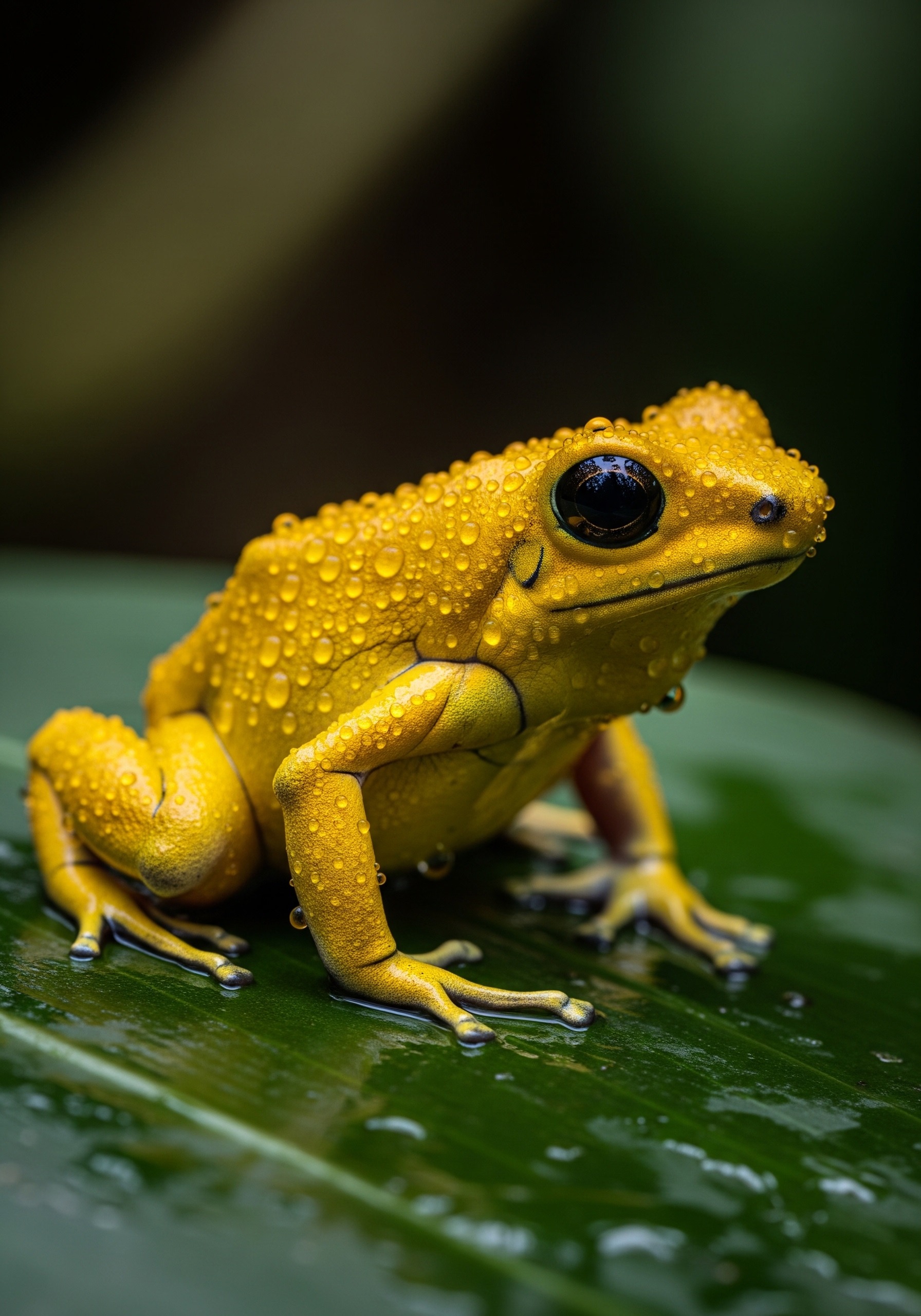
- The golden poison frog (Phyllobates terribilis) carries roughly 700–1,900 micrograms of batrachotoxin in its skin; as little as 2 micrograms can kill a human adult.
- A handful of species — most famously the Japanese keelback snake — are genuinely both, injecting venom from one end of the body and storing stolen poison in glands at the other.
In short: Venomous animals do something to you. Poisonous animals make you do something to them. A small third category — toxungens — splits the difference by spraying their chemistry onto a target without ever breaking the skin. Everything else, including the strange exceptions, falls out from there.
Key Facts
- Venom is delivered actively through a wound the animal makes (fangs, stingers, spines); poison is delivered passively, by touch, eating, or absorption.
- A snake is venomous and a pufferfish is poisonous; saying poisonous snake is, by the formal definition, almost always wrong.
- In 2014, biologist David R. Nelsen and colleagues at Loma Linda University added a third category, toxungens, for animals that spray or smear toxin without breaking the skin.
- The golden poison frog (Phyllobates terribilis) carries roughly 700-1,900 micrograms of batrachotoxin in its skin; as little as 2 micrograms can kill a human adult.
- A few species, like the Japanese keelback snake, are genuinely both venomous and poisonous.
In short: The difference between venomous and poisonous animals is the delivery route. Venom is injected actively through a wound fangs, stingers, spines so a snake is venomous. Poison is delivered passively, by touch, eating or absorption, so a pufferfish is poisonous. A 2014 paper added a third category, toxungens, for sprayed toxins like a spitting cobra’s.
So what is the actual difference between venomous and poisonous animals?
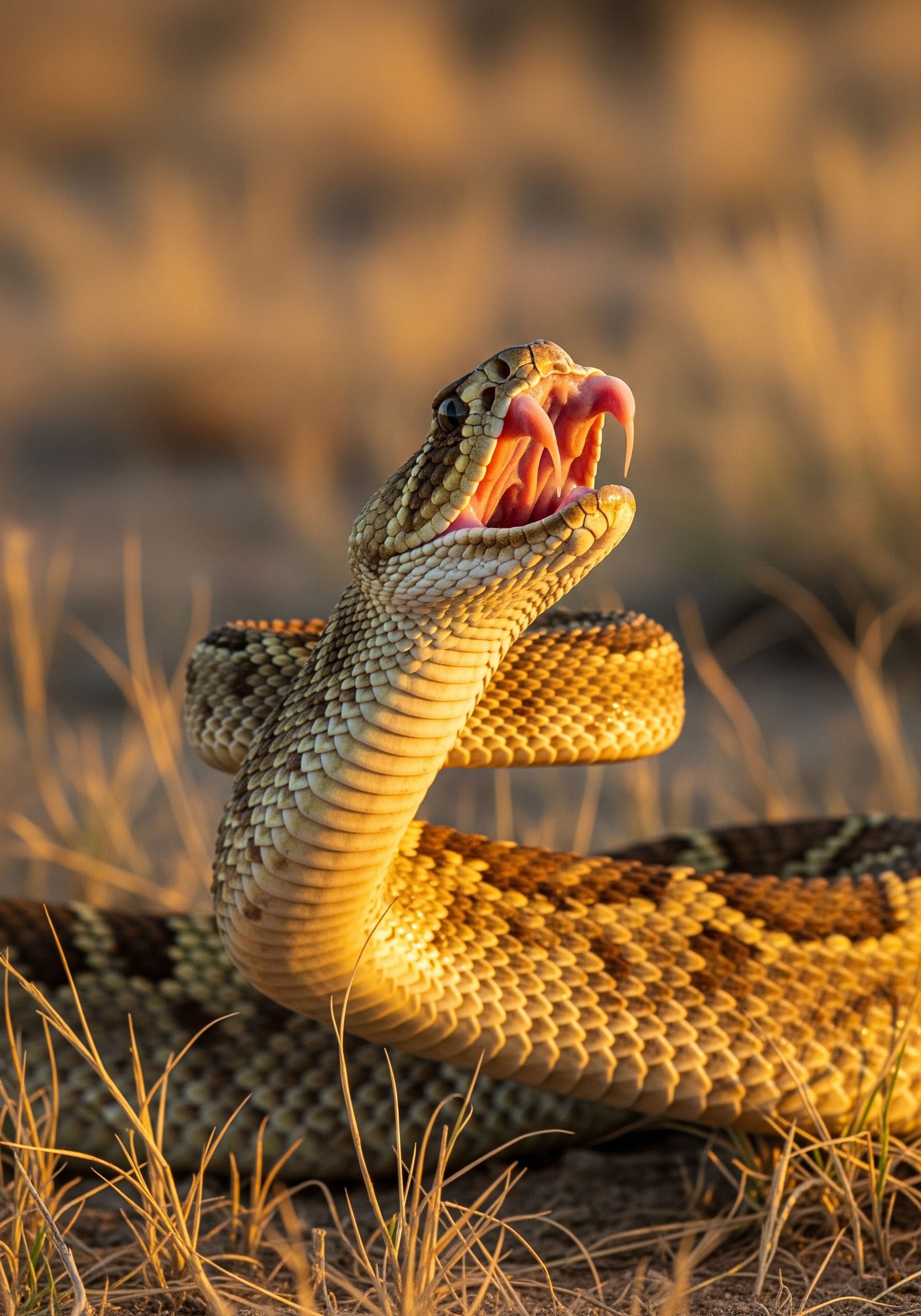
It’s the delivery system. Not the toxin itself. Not the species. Not even, in many cases, the chemistry — some poisons and venoms are molecularly almost identical. What separates them is the route the molecule takes into the victim.
Venom is injected through a wound the animal makes: fangs, stinger, spine, modified tooth, even a chemically-loaded bite. Poison is everything the animal doesn’t have to do anything to deliver — skin secretions, toxic flesh, an unpleasant chemistry in the wings of a butterfly. The pufferfish doesn’t lunge at you with its tetrodotoxin. You have to put it in your mouth.
This sounds like word-policing. It isn’t. The two systems are evolutionarily different — they solve different problems for the animal — and they almost always tell you, in a single glance, whether you’re looking at a predator or at prey.
Venom: a tool of offence
Venoms evolve mostly in predators (and a few specialised defenders). The snake needs to subdue a rabbit before the rabbit can bolt; the cone snail needs to paralyse a fish before the fish can swim away. So venoms tend to be biochemically intricate — fast-acting cocktails that disable the nervous system, the blood, or the muscles of whatever they’re injected into. And they require apparatus to deliver them. Hollow fangs. A barbed stinger. A harpoon. Nematocysts on a jellyfish tentacle, firing at almost cellular speeds.
Which is why the small print matters: a snake without fangs and venom glands is, however unpleasant, not venomous. A wasp without its stinger is not. The animal has to put the toxin into you.
The three routes in, side by side
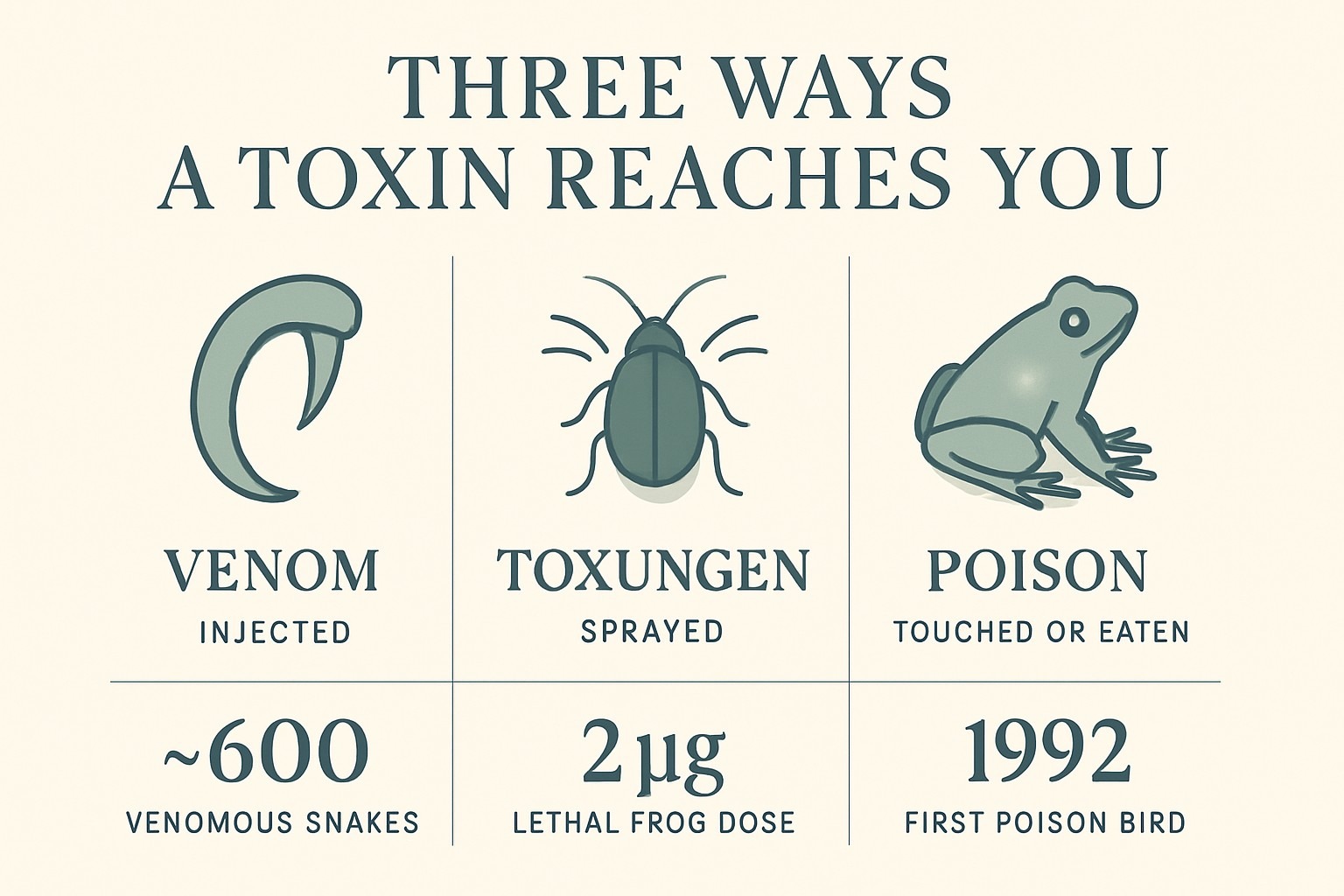
Here is what those three categories look like next to each other. This is the framework toxinologists have used since David R. Nelsen and colleagues at Loma Linda University reorganised the field in their 2014 Biological Reviews paper.
| Category | Delivery | Typical apparatus | Example | Mostly used for |
|---|---|---|---|---|
| Venom | Injected (active, through a wound) | Fangs, stinger, spine, nematocysts | Cobra, scorpion, cone snail | Hunting prey |
| Toxungen | Sprayed or smeared onto a surface (no wound) | Modified spray glands | Spitting cobra, bombardier beetle, fire salamander | Driving off attackers |
| Poison | Touched, eaten, absorbed (passive) | Skin, flesh, eggs, feathers | Golden poison frog, pufferfish, monarch butterfly | Not being eaten |
{IMAGE_2}
The third category your biology teacher probably skipped
For decades, the binary was venom or poison, full stop. Then in 2013–14 a group of toxinologists led by Nelsen argued — in what has since become a standard reference — that the binary missed a whole mode of toxin delivery. They called it the toxungen.
A toxungen is delivered to the body surface of a target without making a wound. Think of a spitting cobra hitting an attacker’s eyes from a metre and a half away; a bombardier beetle firing a hot, irritant spray from its abdomen; a fire salamander squirting toxin from skin glands when it’s grabbed. The animal doesn’t have to bite. The target doesn’t have to eat. The chemistry is simply applied — coated on — and that is its own evolutionary story, separate from both venom and poison.
Most popular guides skip toxungens entirely, which is a shame, because they quietly settle a lot of the “is it venomous or poisonous?” arguments people get into about cobras, certain caterpillars, and the spray-defended beetles.
Poison: a defence, worn on the body
Where venoms tend to live in predators, poisons tend to live in things that get eaten. They’re a way of telling a passing bird, mammal, or fish: try me and you’ll regret it — usually too late for the first victim, but at least its relatives will learn. That’s why so many poisonous animals are flamboyantly coloured. The crimson and cobalt of a dart frog is the original warning label.
And that defence often isn’t even the animal’s own chemistry. Hundreds of species — monarch butterflies (milkweed), some garter snakes (newt skin), the hooded pitohui (a bird) — are what biologists call sequesterers: they eat something toxic, store the molecule unchanged in their own tissues, and become poisonous on the strength of someone else’s biochemistry.
The most famous accidental discovery of this came in Papua New Guinea. In 1992 a young ornithologist named Jack Dumbacher was studying birds in the highlands when he scratched himself on a hooded pitohui’s feather, instinctively put the finger in his mouth, and felt his tongue go numb. The toxin turned out to be batrachotoxin — the same compound that makes the golden poison frog so dangerous, halfway round the world. The pitohui became the first scientifically confirmed poisonous bird, and almost certainly gets its toxin from beetles it eats.
Venom & Poison: By the Numbers
- ~600 venomous snake species recognised worldwide — roughly one in five snakes (World Health Organization figures).
- 700–1,900 µg — the batrachotoxin a single wild Phyllobates terribilis can carry in its skin.
- ~2 µg — the estimated lethal human dose of that same toxin.
- More venomous fish species exist than venomous snakes, lizards and mammals combined (Smith & Wheeler, 2006).
- 1992 — the year the hooded pitohui became the first scientifically confirmed poisonous bird.
The animals that break the rule
Plenty of species sit awkwardly across these categories, but one little snake makes the cleanest case for “both at once.”
The Japanese keelback (Rhabdophis tigrinus) is mildly venomous from rear-positioned fangs — ordinary snake equipment. It also has two glands on the back of its neck, and those glands are full of bufadienolides: a class of cardiac toxins that can stop a predator’s heart. The snake doesn’t make them. It steals them, by eating toads.
Here is the lovely part: the proof is geographic. In a 2007 study in PNAS, Deborah A. Hutchinson of Old Dominion University and her colleagues compared keelbacks living on Ishima Island, where toads are abundant, with those on Kinkazan Island, where toads are absent. The Ishima snakes’ nuchal glands were loaded with bufadienolides. The Kinkazan snakes’ glands had essentially none. Same species, different menus, two completely different defensive arsenals.
Even in the ocean the rule bends strangely. A blue-ringed octopus the size of a golf ball carries tetrodotoxin in its saliva — biting victims rather than poisoning their food — and the same molecule turns up in the flesh of the unrelated pufferfish, where it works the other way around: passive, ingested, no bite required.
Where do these chemicals come from in the first place?
This is the question that turns the venom-vs-poison distinction into something genuinely interesting. Venoms tend to be evolved in-house: snake venom proteins descend from ordinary digestive enzymes, repurposed and weaponised over millions of years; spider venoms are built from gene families specific to spiders. The animal is the factory.
Poisons, by contrast, are very often borrowed. Sequestration is everywhere. Turns out, dart frogs raised in captivity, on a clean cricket diet, are harmless — the batrachotoxin in wild Phyllobates comes from the tiny rainforest beetles they hunt. Strip a monarch caterpillar of milkweed and you strip the adult of its cardiac glycosides. This is one of the cleanest arguments for the venom-vs-poison split being a real, deep biological distinction rather than just a semantic one: the two systems get their molecules from different places, and through different routes.
Myth vs evidence: what people usually get wrong
Three corrections worth keeping in your pocket.
“Poisonous snakes.” Almost always the wrong word — the snake injects, so it’s venomous. The famous exception is the keelback, which is technically both.
“Venom is always worse than poison.” Not even close. Drop for drop, batrachotoxin (a poison) is among the most lethal molecules known to biology, and pufferfish tetrodotoxin (also a poison) is gram-for-gram vastly more lethal than cyanide. Many snake venoms cause horrendous tissue damage but, with antivenom on hand, are survivable; eat the wrong fugu and there is no antidote.
“If you can touch it safely, it isn’t dangerous.” Toxungens exist — a spitting cobra never has to touch you to blind you. Some sea snakes can deliver venom through skin scarcely thicker than a balloon.
And the slow loris stores a toxin in a gland in its elbow that becomes venomous only when it licks the gland and bites.
None of which means you should panic; almost none of these animals want anything to do with us. It does mean that the textbook line — “is it venomous or poisonous?” — is, biologically, the start of a far more interesting conversation than people usually expect.
Frequently Asked Questions
Q: Are snakes poisonous or venomous?
A: Venomous. Snakes inject their toxin through fangs into the animals they bite — that’s the active, wound-based delivery that defines venom. The one famous exception is the Asian keelback group (Rhabdophis), which is venomous from the front and poisonous from glands in the neck at the same time.
Q: Can an animal be both venomous and poisonous?
A: Yes, but it’s rare. The clearest case is the Asian keelback snakes, which inject mild venom and also store stolen toad toxins in nuchal glands. A few sea snakes and certain frogs sit on the borderline. Most “dual” claims you see in popular writing, though, are loose use of the words rather than the real biology.
Q: What does it mean for an animal to be poisonous to the touch?
A: It means the animal carries a toxin in or on its skin that can cross your skin or mucous membranes on contact. Dart frogs are the classic example — handling one with a small cut on your hand can be enough to cause serious symptoms. In most species, casual contact with intact skin is far less dangerous than the toxin reaching a wound, the eyes, or the mouth.
Q: Why does the difference between venom and poison actually matter?
A: For doctors and biologists, it determines treatment and study. Venom calls for antivenom and wound care; poisoning calls for decontamination and supportive care, because the chemistry and the route of exposure are different. For the rest of us, the distinction is mostly a window into how astonishingly varied animal defence and predation can be.
Sources
- Nelsen, D. R., et al. “Poisons, toxungens, and venoms: redefining and classifying toxic biological secretions and the organisms that employ them.” Biological Reviews, 2014.
- Hutchinson, D. A., et al. “Dietary sequestration of defensive steroids in nuchal glands of the Asian snake Rhabdophis tigrinus.” PNAS, 2007.
- Dumbacher, J. P., et al. “Homobatrachotoxin in the genus Pitohui: chemical defense in birds?” Science, 1992.
- World Health Organization — Snakebite Envenoming species data.
- National Geographic — feature reporting on poisonous and venomous animals.
- Smithsonian National Museum of Natural History — Department of Vertebrate Zoology reference material.
The line between venom and poison is narrower than the words make it sound — and much stranger. Spend a few minutes paying attention to how a creature’s chemistry reaches you, and the whole noisy zoo of animal weapons starts to make a kind of quiet, evolutionary sense.
Illustrations are AI-generated. Article fact-checked and human-edited. Our editorial standards.