Why Are Flamingos Pink? The Real Science of a Borrowed Colour
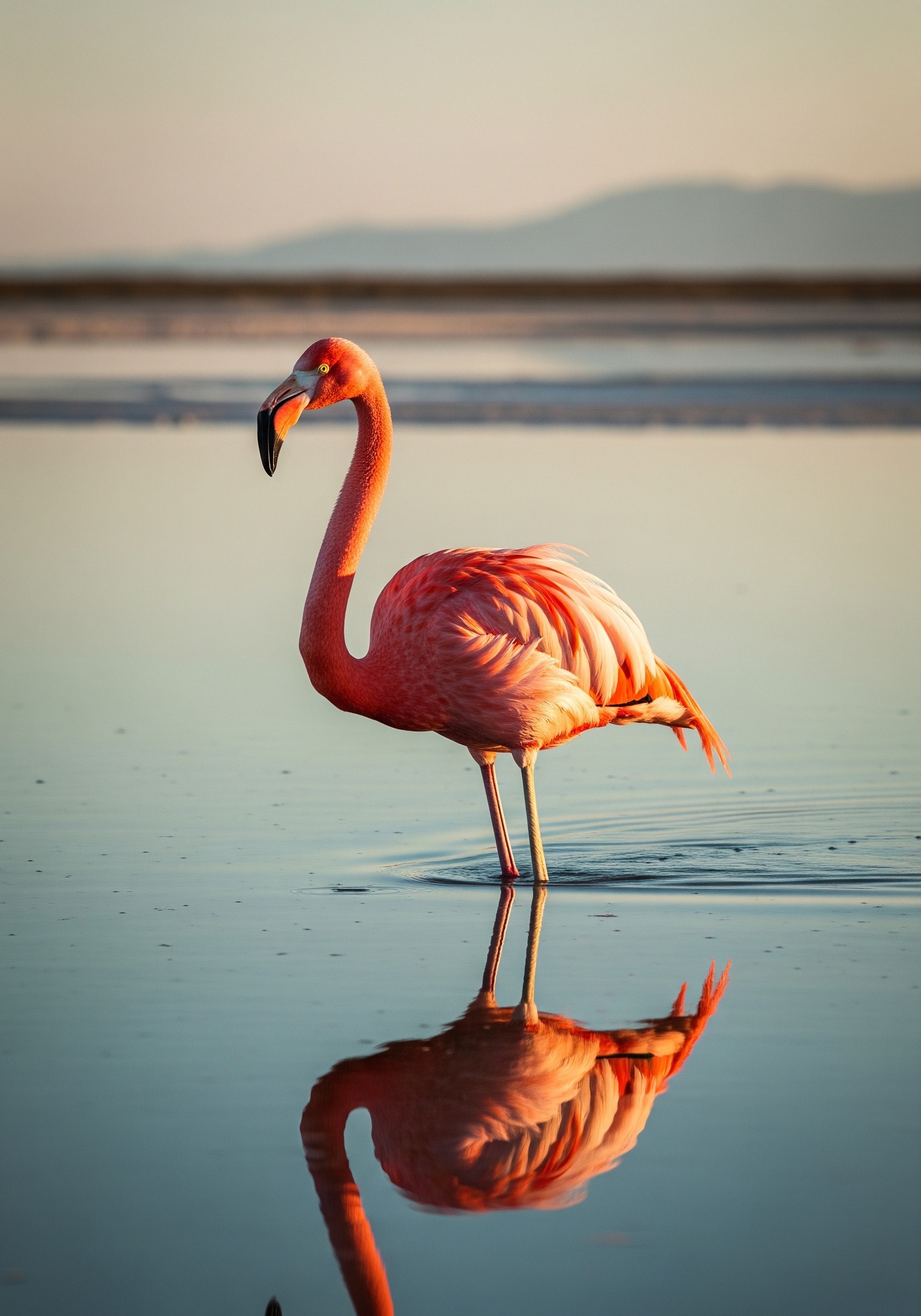
Why are flamingos pink? The honest one-line answer is: they eat their colour. A flamingo hatched in a Bolivian salt lake or a Kenyan soda flat starts life a sooty grey-white, and every shade of pink it ever wears is borrowed — molecule by molecule — from the algae and brine shrimp it filters out of the water for the rest of its life.
Key Facts
- Flamingo chicks hatch grey-white. It can take two to three years of feeding before an adult reaches its full pink plumage.
- The pigments responsible are carotenoids — chiefly beta-carotene from algae and canthaxanthin and astaxanthin from tiny crustaceans like brine shrimp.
- Enzymes in the liver actually re-build the yellow-orange pigments the bird eats into the pink and red molecules deposited in feathers, skin and beak.
- The brightest of the six species is the American (Caribbean) flamingo; the palest is usually the lesser flamingo, whose spirulina-heavy diet around East Africa’s soda lakes yields more salmon than scarlet.
- Breeding flamingos secrete pigment from a gland near the tail and rub it over their feathers like rouge — the only bird known to apply cosmetics in this way.
In short: Flamingos are pink because their food is. Carotenoid pigments from algae and shrimp are absorbed, metabolised in the liver into deeper pinks and reds, and laid down in growing feathers. The colour is “honest advertising” — a living signal of how well a flamingo is eating.
Key Facts
- Flamingo chicks hatch a sooty grey-white, and it can take two to three years of feeding before an adult reaches its full pink plumage.
- The pink comes from carotenoids: beta-carotene from algae plus canthaxanthin and astaxanthin from crustaceans such as brine shrimp.
- Enzymes in the flamingo’s liver rebuild the yellow-orange pigments it eats into the pink and red molecules deposited in feathers, skin and beak.
- Of the six flamingo species, the American (Caribbean) flamingo is the brightest, while the lesser flamingo is usually the palest.
- Breeding flamingos secrete pigment from a uropygial gland near the tail and rub it over their feathers like makeup, the only bird known to do this.
In short: Flamingos are pink because their food is. Carotenoid pigments from algae and brine shrimp are absorbed with dietary fat, routed to the liver, and metabolised by enzymes into deeper pinks and reds before being laid down in growing feathers, skin and beak. The exact shade depends on diet, which is why species range from scarlet American flamingos to pale salmon lesser flamingos.
Why are flamingos pink? The short, accurate answer
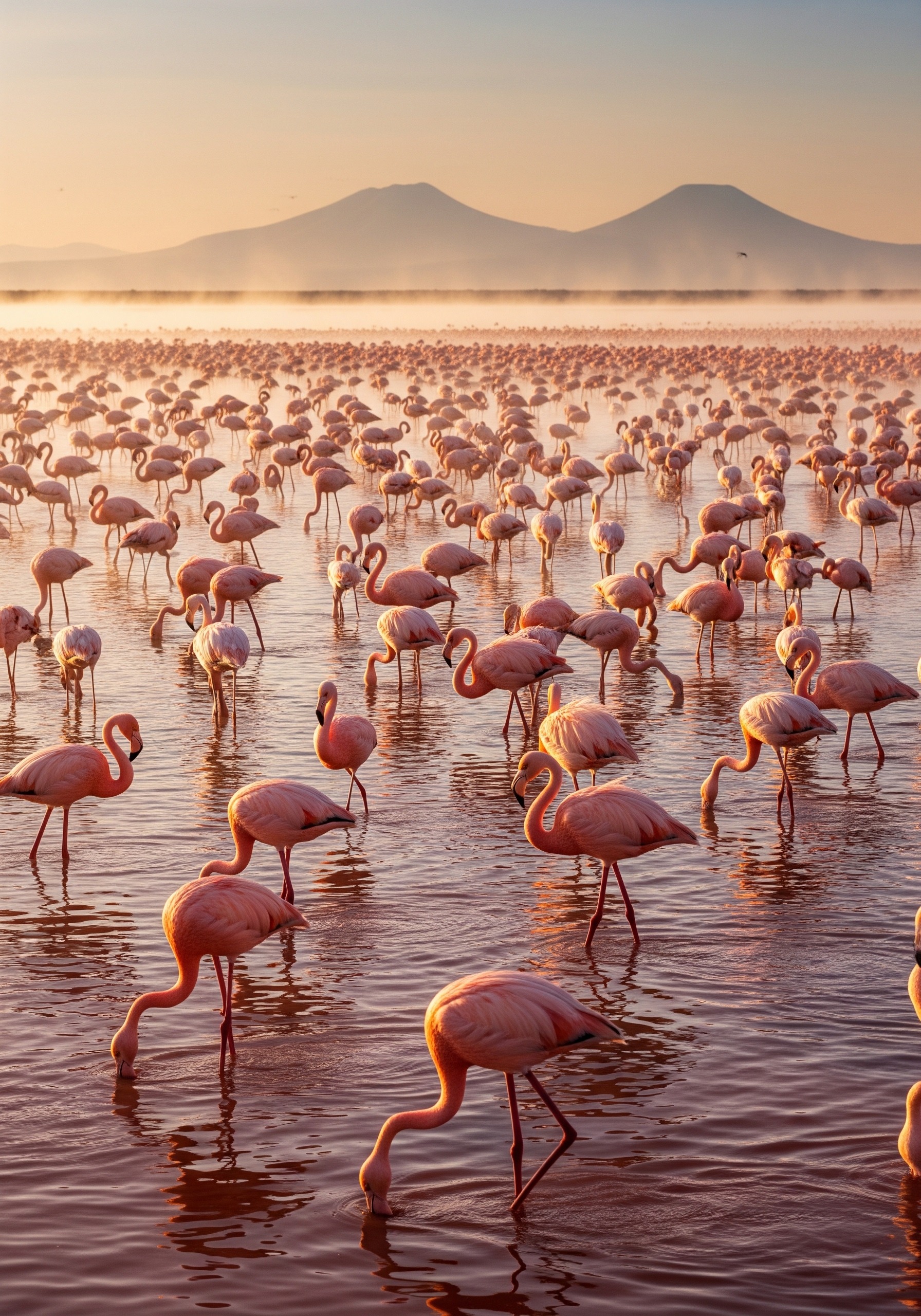
You are what you eat. For flamingos that cliché is literal: the pink isn’t pigment the bird produces but pigment the bird borrows. Their diet of cyanobacteria, microalgae, brine shrimp and brine fly larvae is unusually rich in carotenoids, the same family of plant pigments that makes carrots orange and autumn leaves blaze. Filter those molecules through a flamingo’s body and you end up with one of the most photographed colours in the animal kingdom.
That much most explainers get right. What they tend to skip is the more interesting half of the story: a flamingo doesn’t just absorb pink, it manufactures it. The carotenoids that enter its gut are mostly yellow-orange. The shades we actually see — coral, salmon, scarlet — are made inside the bird.
{IMAGE_2}
The chemistry: from algae to liver to feather
Here’s where the question gets good. Carotenoids cling to fat, so when a flamingo eats algae or shrimp, the pigments travel with dietary lipids through the gut wall and into the bloodstream. From there they’re routed to the liver, which behaves like a small dye works.
Inside liver cells, enzymes cleave and rearrange the carotenoid backbones. Beta-carotene — the yellow-orange compound also found in carrots — is converted into deeper, redder pigments, principally canthaxanthin and astaxanthin. Astaxanthin is the same molecule that turns cooked lobsters and wild salmon flesh that vivid pink-red. Once reshaped, the pigments are re-packaged into fat-carrying particles, sent into the bloodstream, and deposited in the tissues that are actively growing: developing feather follicles, skin, the bill, and the legs.
Because feathers are essentially dead structures once finished, the colour is locked in until the next moult. A flamingo’s plumage, in other words, is a kind of dietary time capsule — a record of what it was eating during the weeks those feathers grew.
Why some flamingos are scarlet and others almost white
There are six flamingo species, and they are not equally pink. The American flamingo, which works the brine-shrimp-rich lagoons of the Caribbean, Yucatán and Galápagos, is the brightest — sometimes so saturated it photographs as orange. The lesser flamingo, which crowds into the alkaline soda lakes of East Africa to harvest the cyanobacterium Arthrospira (better known as spirulina), tends to be a softer salmon. The Andean and James’s flamingos of the high Andes, the Chilean of southern South America, and the greater flamingo of Africa and Eurasia fall in between.
The driver is concentration. American flamingos feed on prey already loaded with pre-formed astaxanthin and canthaxanthin from the brine shrimp they hunt; lesser flamingos start largely from beta-carotene in algae and have to do more chemical work to reach the same red. Geography sets the menu; the menu sets the colour.
Here is the shape of those differences at a glance:
| Species | Typical range | Main diet item | Colour |
|---|---|---|---|
| American | Caribbean, Yucatán, Galápagos | Brine shrimp, brine fly larvae | Deep scarlet-pink |
| Greater | Africa, S. Europe, S. Asia | Crustaceans, molluscs, algae | Soft pink to white |
| Lesser | East & southern Africa, India | Spirulina (cyanobacteria) | Pale salmon-pink |
| Chilean | Southern South America | Diatoms, invertebrates | Pink with grey legs |
| Andean | High Andes salt lakes | Diatoms | Pale pink, yellow legs |
| James’s (Puna) | High Andes salt lakes | Microalgae, diatoms | Pale pink, bright red bill base |
The bird that wears makeup
Now to a detail almost every “why are flamingos pink” page leaves out. In the run-up to breeding, greater and lesser flamingos do something genuinely unusual in the bird world: they put on cosmetics.
They have a uropygial gland — the preen gland — at the base of the tail, and during the months before courtship that gland secretes an oily, pigment-rich fluid. The birds spread it deliberately, rubbing their cheeks against the gland and then dragging the colour through their neck and chest feathers like a child smearing paint. Within days they look noticeably more saturated. After the breeding window closes, the cosmetic behaviour fades, the secretions thin, and the birds dull again.
It is, as far as ornithologists have documented, the only known case of a bird intentionally and repeatedly using a pigmented secretion as makeup. Honest signalling has rarely been this on-the-nose.
Pinker = healthier — and apparently meaner
If colour is just a side-effect of dinner, why does it matter to flamingos at all? Because it doesn’t lie. A pale bird is, on average, a hungrier bird, or a stressed bird, or a bird whose foraging grounds are thin. A blazing pink bird has been eating well for months.
That makes pink a useful cheat sheet for choosing a mate. It also, it turns out, makes pink an instrument of intimidation. A 2020 study led by Dr. Paul Rose of the University of Exeter — co-chair of the IUCN’s Flamingo Specialist Group — tracked individually-identifiable lesser flamingos at the WWT Slimbridge Wetland Centre in Gloucestershire and found that the pinkest birds were also the most aggressive at the feeding station. Brighter individuals pushed and displayed at rivals more often than paler ones. Rose’s interpretation, reported in the journal Ethology, was straightforward: the colour is an honest signal of fighting condition, so the brightest birds can afford to act on it.
The same study found something useful for zoos: birds that fed from a wide outdoor pool spent less than half as much time fighting, and roughly twice as much time actually foraging, as birds fed from a single indoor bowl. Geometry shapes behaviour even in the world’s most flamboyant bird.
Why flamingo parents fade to white
Here’s another piece of the puzzle that gets skipped. Flamingos are one of the very few bird groups — alongside pigeons and emperor penguins — to feed their chicks on a body-made “milk”. In flamingos, it isn’t true milk and it isn’t really produced in the crop; it’s a thick, protein- and fat-rich secretion that drips from glands lining the upper digestive tract. Both parents make it. Both parents pour it down the chick’s throat.
And it is bright red.
The pigments parents have spent months banking in their own tissues — the canthaxanthin and astaxanthin that make them pink — are diverted en masse into the secretion. For the roughly two months a chick depends on this milk, the parents visibly bleach: feathers fade toward white, sometimes alarmingly so. Once the chick can filter-feed for itself and the parents can resume eating normally, the colour returns over weeks and months. The pale, exhausted parent stalking around a colony in midsummer is not sick. It is, simply, spent.
What the zoos taught us
If diet is everything, what happens to a flamingo that lives somewhere with no cyanobacteria and no brine shrimp? You can see the answer in old photos. Mid-20th-century zoo flamingos were famously, embarrassingly white. Without their wild diet they had no pigment to deposit, and within a moult or two the spectacle of an entire flock had washed out to dishwater.
The fix, worked out by zoo nutritionists from the 1960s onward, is to add carotenoids directly to the feed — synthetic canthaxanthin and beta-carotene, plus natural sources like dried shrimp, paprika, and spirulina. Done properly, captive flamingos are now almost indistinguishable in colour from their wild counterparts; done badly, they still look bleached. The Smithsonian’s National Zoo, like most accredited institutions, publishes its flamingo-feed formula partly to make the point that colour in captivity is a husbandry achievement, not a guarantee.
There’s a small philosophical kick in that, if you want one. A wild flamingo’s colour is an accidental gift of its ecosystem. A captive flamingo’s colour is a decision somebody made.
Frequently asked questions
Q: Are flamingos born pink?
A: No. Flamingo chicks hatch with grey or off-white down and a straight, stubby grey bill. The pink builds slowly as they eat carotenoid-rich food and grow new feathers; it typically takes two to three years to reach adult colour.
Q: Would a human turn pink if they ate enough shrimp?
A: Not pink — but yes, carotenoid pigments do tint human skin. People who eat very large quantities of carrots, sweet potatoes or carotenoid supplements can develop carotenoderma, an orange-yellow tinge most visible on the palms and soles. It is harmless and reverses when intake drops. The shade is governed by which carotenoids you absorb; flamingos can build canthaxanthin and astaxanthin from beta-carotene, and humans largely cannot.
Q: What gives flamingos pink colour — the algae or the shrimp?
A: Both, depending on species. Lesser flamingos draw most of their pigment from cyanobacteria (spirulina) and microalgae. American flamingos depend more heavily on brine shrimp and brine fly larvae, which already contain the strong red pigments astaxanthin and canthaxanthin. That’s why “shrimp” is a half-right answer — accurate for the Caribbean, wrong for the Rift Valley.
Q: Why does a flamingo lose its pink colour?
A: There are three normal reasons: a poor or pigment-light diet, the moult cycle (new colourless feathers come in before they pigment fully), and breeding — both parents transfer huge amounts of pigment into the red “crop milk” they feed their chick, and visibly pale during that period.
Sources
- BBC Science Focus — interview with Dr. Paul Rose, University of Exeter, on flamingo biology and behaviour
- Rose, P. et al., “What influences aggression and foraging activity in social birds?”, Ethology (2020) — Slimbridge lesser flamingo study
- Smithsonian’s National Zoo and Conservation Biology Institute — flamingo diet and husbandry notes
- Encyclopedia Britannica — flamingo colour explainer
- WWT Slimbridge Wetland Centre — public natural-history materials on captive flamingo behaviour
So the next time someone asks why flamingos are pink, you can do better than “shrimp”. They are pink because a body, a liver, a diet and an ecosystem all conspire — and because, uniquely among birds, a flamingo will sometimes reach back to a gland near its tail and decide to be a little pinker still.
Illustrations are AI-generated. Article fact-checked and human-edited. Our editorial standards.