Amelia Earhart’s Plane, Found at Nikumaroro? The Truth
Type “Amelia Earhart plane found Nikumaroro” into a search bar and you hit a wall of headlines insisting the 89-year-old mystery is finally solved. It isn’t — not yet — and being honest about that gap is the whole story. What actually sits in a shallow Pacific lagoon is a single Electra-sized shape known as the Taraia Object: a genuine candidate for the wreck of the world’s most famous missing aircraft, unconfirmed, and about to be visited by a team that hopes to settle the question for good.

Key Facts
- The Taraia Object is an Electra-sized shape roughly 12-14 metres long in a shallow lagoon at Nikumaroro (Gardner Island), Kiribati.
- Amelia Earhart and navigator Fred Noonan vanished on 2 July 1937 on the Lae-to-Howland leg in a Lockheed Electra 10E.
- The Electra 10E was 11.76 metres long (38 ft 7 in) with a 55-foot wingspan — close to the object’s size.
- A 2024 Deep Sea Vision sonar image near Howland, initially hyped as the plane, was confirmed in November 2024 to be a rock.
- An expedition is set to sail in October 2026 to investigate the Taraia Object directly.
In short: Despite viral headlines, Amelia Earhart’s plane has not been confirmed found. Researchers flagged the Taraia Object, an Electra-sized shape in a Nikumaroro lagoon, but even its champion admits it could be debris. Earhart vanished in 1937; a separate 2024 sonar aircraft near Howland proved to be a rock. An expedition sails in October 2026.
What actually happened on July 2, 1937
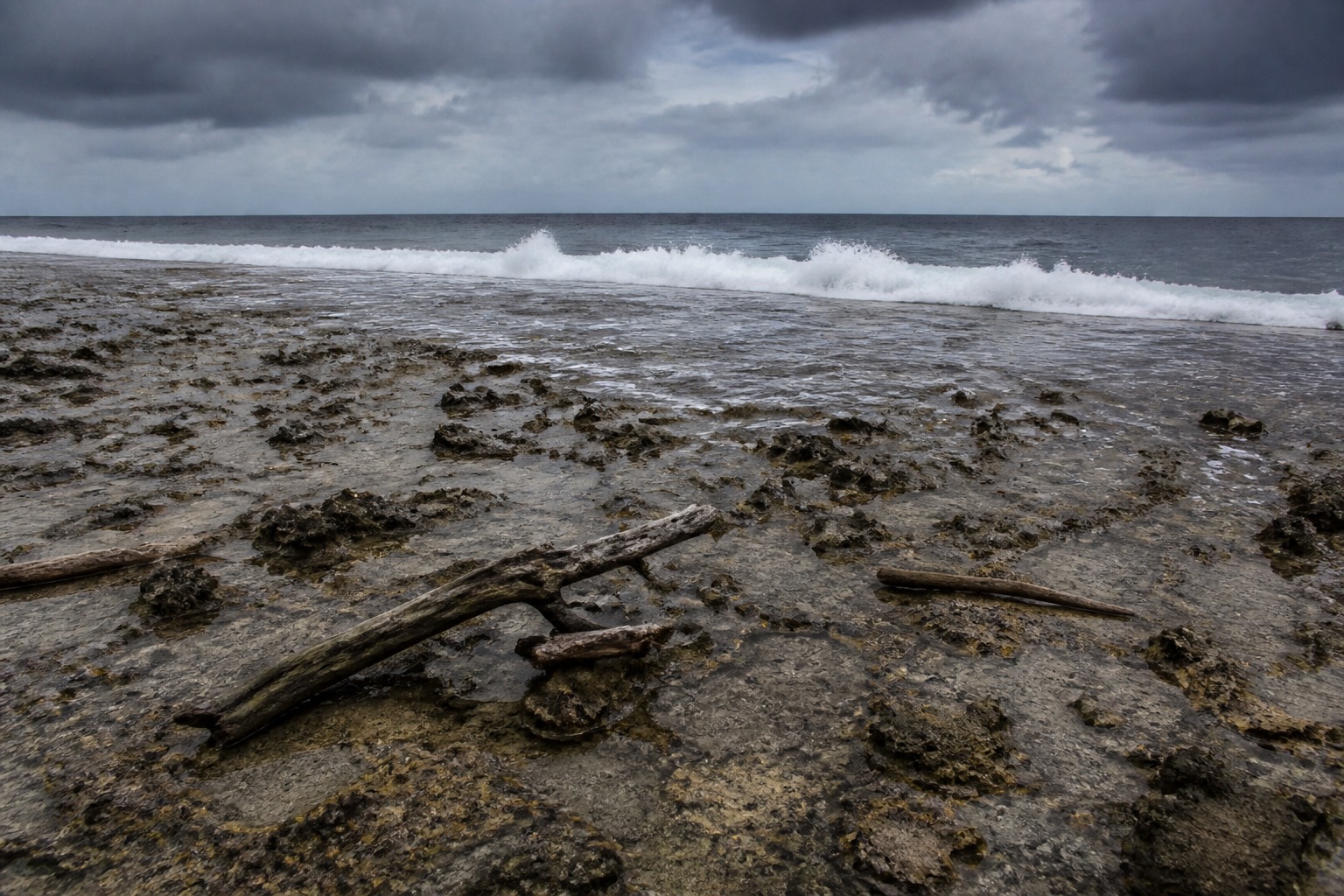
It is a hazy morning over the equatorial Pacific. Amelia Earhart and her navigator, Fred Noonan, lift off from Lae, New Guinea, in a twin-engine Lockheed Electra 10E, aiming for a speck of coral called Howland Island — some 2,500 miles of open ocean away. It is the hardest leg of her attempt to fly around the world.
They never arrive. The US Coast Guard cutter Itasca, stationed off Howland to talk them in by radio, hears Earhart’s voice grow tense as the hours drain away. “We must be on you, but cannot see you,” she transmits. Her final confident message, logged mid-morning, gives a line of position — 157/337 — and then the radio falls silent.
Neither the Electra nor its two crew are ever seen again. A US Navy search sweeps an area the size of Texas and finds nothing. For nearly nine decades, that silence is the mystery: no wreck, no bodies, no proof.
So was Amelia Earhart’s plane found at Nikumaroro?
Short answer: no — not in any confirmed sense. The accurate version is narrower and, honestly, more interesting. Researchers have flagged a promising object at Nikumaroro (in Earhart’s day it was called Gardner Island), a remote uninhabited atoll in the Republic of Kiribati, roughly 350 nautical miles southeast of Howland.
That object has a name — the Taraia Object — and a champion: Richard Pettigrew, executive director of the Archaeological Legacy Institute, who is convinced it deserves a proper look. Even he stops short of calling it Earhart’s plane. In interviews he has admitted it could turn out to be something as ordinary as a fallen coconut tree. He is being careful; the “found!” headlines are not.
Eighty-nine years on, it is still just a shape in the water.
{IMAGE_2}
The Taraia Object: an Electra-sized shape in the lagoon
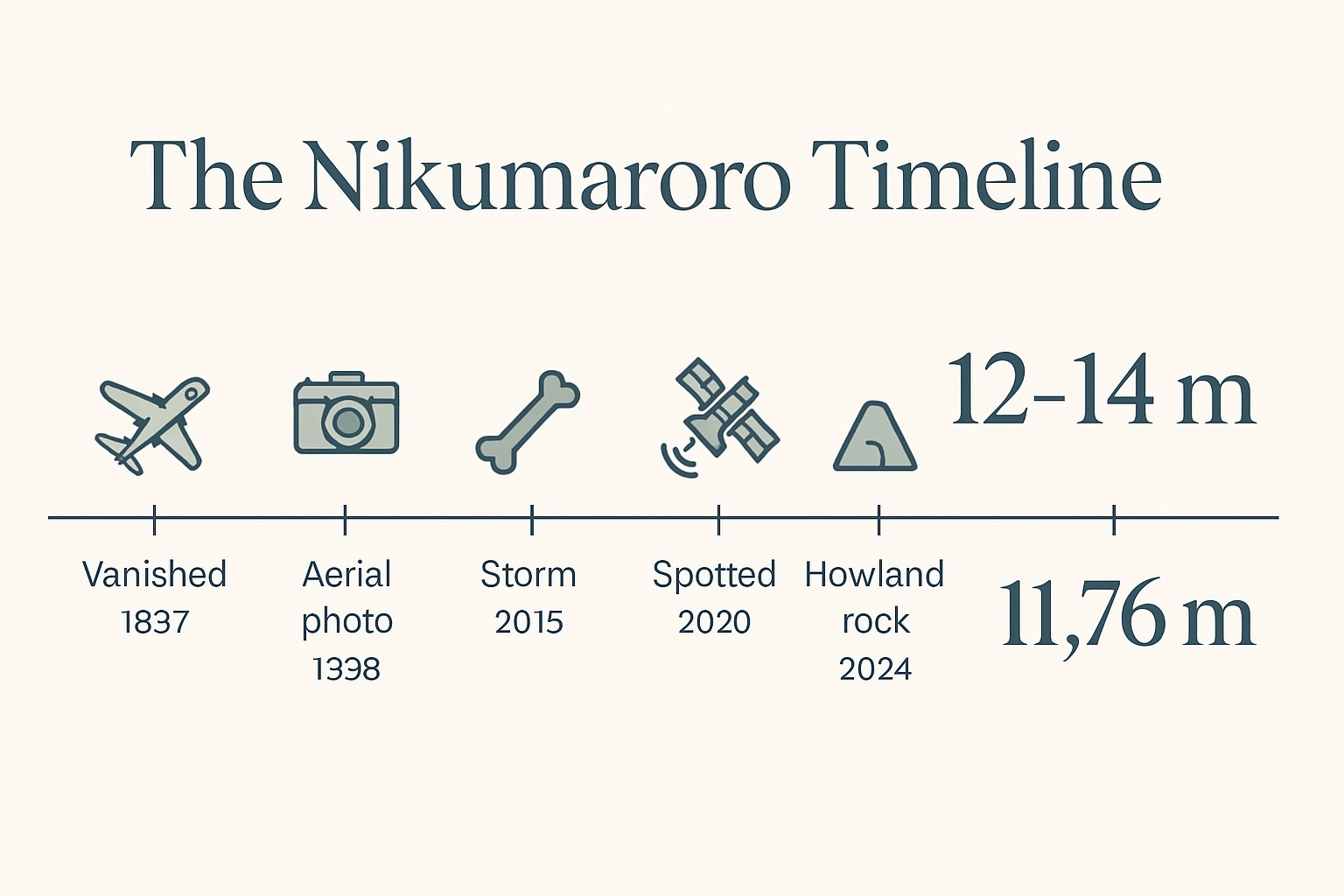
Here’s the thing that makes the Taraia Object hard to wave away: its size. The shape in the lagoon measures roughly 12 to 14 metres, estimated from satellite and aerial imagery. Earhart’s Lockheed Electra 10E was 38 feet 7 inches long — 11.76 metres. That is a strikingly close match, and it is the single biggest reason anyone is spending money to sail there.
- Taraia Object length: ~12–14 m (visual estimate from imagery)
- Lockheed Electra 10E length: 38 ft 7 in / 11.76 m
- Electra 10E wingspan: 55 ft / 16.76 m
- Location: central lagoon, Nikumaroro (Gardner Island), Kiribati — shallow water near the reef
A correction worth making, because it matters: plenty of coverage cites the aircraft as “12.2 metres” so the numbers line up perfectly. The Electra’s real length is 11.76 metres, with a 55-foot wingspan. The match is genuine and remarkable — but it is an approximate one, not the millimetre-perfect coincidence some pieces imply. Overstating the evidence does the evidence no favours.
Provenance is where this gets stranger. The object is not a brand-new discovery — it appears to have been sitting in that lagoon for a very long time:
- 2 July 1937 — Earhart and Noonan vanish on the Lae-to-Howland leg.
- 1938 — a British aerial survey photograph appears to show a shape in the same spot.
- 1940 — a partial skeleton, a sextant box and a woman’s shoe are found on the atoll.
- ~2015 — storms reshape the lagoon and may have re-exposed the object.
- 2020 — Michael Ashmore spots the anomaly in publicly available satellite imagery.
- Nov 2024 — a separate “aircraft” found by sonar near Howland is confirmed to be a rock.
- Oct 2026 — an expedition sails to investigate the Taraia Object directly.
If the object ever proves to be wreckage, that 1938 photograph will matter more than any sonar ping — a shape that turns up decades before anyone went looking is far harder to explain away than one found by people who badly want to find it.
Two sonar stories, and why people keep confusing them
Now the correction that untangles the whole mess. If you have seen a viral clip about a sonar image of Earhart’s plane resting 16,000 feet down, set it aside — it has nothing to do with Nikumaroro.
In early 2024, a company called Deep Sea Vision released a deep-ocean sonar image, captured near Howland Island, showing an aircraft-shaped blur on the seabed. It circled the planet. Then the crew went back to check. After surveying roughly 7,700 square miles, they confirmed in November 2024 that the “aircraft” was a natural rock formation. A dead end.
The Taraia Object is a completely different animal. It is not a deep-ocean sonar contact at all — it is a visible shape in a shallow lagoon, spotted in ordinary satellite photos. So why do the two keep bleeding into each other? Because both involve sonar, a Pacific island and Earhart, and a headline rarely has room for the distinction. Keep them separate and the picture snaps into focus.
The bones that pointed to Nikumaroro first
Nikumaroro’s case did not begin with a satellite image. It began with bones.
In 1940, a British colonial officer recovered a partial skeleton on the atoll, alongside a sextant box and part of a shoe. A physician named D. W. Hoodless measured the bones that same year and judged them to belong to a man. The bones were later lost — which is why no DNA test has ever been possible.
In 2018, Richard Jantz — professor emeritus of anthropology at the University of Tennessee and a co-creator of the Fordisc forensic identification program used by board-certified anthropologists worldwide — re-analysed Hoodless’s original 1940 measurements with modern quantitative methods. His conclusion, published in the journal Forensic Anthropology, was blunt: Earhart was more similar to the Nikumaroro bones than 99 percent of individuals in a large reference sample. Jantz argued the old “male” verdict reflected the limits of 1940s technique, not the data.
It is not proof, and Jantz has never claimed it was. But as independent corroboration goes, a 99-percent skeletal match is the strongest single thread the Nikumaroro hypothesis has — and it rarely gets mentioned in the breathless coverage of the lagoon object.
Why the people who know the island best are skeptical
Here’s where it gets genuinely interesting: the researchers who have spent the most time on Nikumaroro are among the Taraia Object’s biggest doubters.
TIGHAR — The International Group for Historic Aircraft Recovery — has mounted more than a dozen expeditions to the atoll since 1989. Its executive director, Ric Gillespie, is arguably the person most responsible for putting Nikumaroro forward as the site of Earhart’s final days. Yet TIGHAR is unconvinced by this particular object.
Their reasoning is specific. TIGHAR’s model has Earhart landing on the reef flat and surviving for a time as a castaway at a place they call the Seven Site — on the far side of the island from the lagoon anomaly. They have examined the lagoon on earlier trips and come away doubtful there is an aircraft in it. When the people who know that coral best say “we have already looked there,” it is worth taking seriously, even if they are not the last word.
What the October 2026 expedition will actually do
So what happens next, and when? After more than one delay, the expedition now sails in October 2026 — and this is the freshest, most important correction to the record. A November 2025 departure slipped into 2026 while organisers cleared permissions with the government of Kiribati and steered clear of the South Pacific cyclone season.
Purdue University, the Purdue Research Foundation and the Archaeological Legacy Institute confirmed in late July 2026 that a 16-person team departs in the first week of October: some fly out of Purdue’s own Amelia Earhart Terminal on October 3, with the group leaving Tarawa, Kiribati by sea around October 7 to spend several days on site. Pettigrew leads the science; Purdue’s Steve Schultz serves as team lead. Any mid-2026 headline claiming the plane is already found is running well ahead of the ship.
The method matters as much as the timing. The plan is to work in strict order: high-resolution video and stills of the object first, then a sonar and magnetometer survey to map its shape and test whether it reads as metal, and only then — if the signs hold — a hydraulic dredge to clear sediment and expose whatever lies beneath. That sequence is deliberate. You look before you touch and touch before you dig, so you don’t destroy the evidence you came all that way to read. Even in the best case, October 2026 is likely to deliver a firmer yes-or-no, not a finished story.
Common misconceptions, sorted out
Because this story travels faster than the facts, here are the beliefs worth correcting before the expedition sails.
| Common belief | What the evidence says |
|---|---|
| “Earhart’s plane has been found.” | The Taraia Object is an unconfirmed candidate; no aircraft has been positively identified as of 2026. |
| “A sonar image found it 16,000 feet deep.” | That was a different object near Howland — confirmed to be a rock formation in November 2024. |
| “She simply crashed and sank in open ocean.” | Possible, and long the official view — but bones, artifacts and the lagoon shape keep the Nikumaroro landing hypothesis alive. |
| “The 1940 bones were proven to be a man’s.” | A 2018 re-analysis found them a ~99% match to Earhart’s proportions; the 1940 verdict reflected older methods. |
Bottom line: As of 2026, Amelia Earhart’s plane has not been found at Nikumaroro — the Taraia Object is a genuinely promising, Electra-sized candidate that the October 2026 expedition will finally test on the ground. Trust the size match and the bones, stay skeptical of any headline using the word “found,” and wait for the crew to actually look.
Sources and notes
- Richard L. Jantz, “Amelia Earhart and the Nikumaroro Bones: A 1941 Analysis versus Modern Quantitative Techniques,” Forensic Anthropology (2018), University of Tennessee.
- Purdue University and the Purdue Research Foundation — Taraia Object Expedition announcements and newsroom releases (2025–2026).
- Archaeological Legacy Institute — expedition led by Dr. Richard Pettigrew.
- TIGHAR (The International Group for Historic Aircraft Recovery) — Nikumaroro expeditions and the Seven Site castaway hypothesis.
- Deep Sea Vision — 2024 sonar survey near Howland Island (rock formation confirmed, November 2024).
- Lockheed Model 10 Electra specifications — published aviation reference records.
For 89 years the Pacific has guarded its most famous secret by offering nothing to hold — no wreck, no proof, only a woman’s voice thinning out over the radio. A shape in a lagoon is not yet an answer. But this October, for the first time in a long time, someone is going to sail out and actually look.
Frequently Asked Questions
Q: Has Amelia Earhart’s plane actually been found at Nikumaroro?
No — not in any confirmed sense. Researchers have flagged a promising Taraia Object at Nikumaroro, and Richard Pettigrew of the Archaeological Legacy Institute believes it deserves investigation. But even he stops short of calling it Earhart’s plane, admitting it could be something as ordinary as a fallen coconut tree. Eighty-nine years after her disappearance, it remains just a shape in the water awaiting a direct expedition.
Q: What is the Taraia Object?
The Taraia Object is a shape roughly 12 to 14 metres long, estimated from satellite and aerial imagery, sitting in the shallow central lagoon of Nikumaroro in Kiribati. Its size is strikingly close to Earhart’s Lockheed Electra 10E, which was 11.76 metres long — the single biggest reason it draws attention. A 1938 British aerial survey photograph appears to show a shape in the same spot.
Q: Was the 2024 sonar image Earhart’s plane?
No. In early 2024, Deep Sea Vision released a deep-ocean sonar image captured near Howland Island showing an aircraft-shaped blur, which circled the world. After surveying about 7,700 square miles, the team confirmed in November 2024 that it was a natural rock formation. This is a completely separate case from the Taraia Object, a visible shape in a shallow lagoon — the two are frequently confused.
Q: What evidence links Nikumaroro to Earhart?
The case began with bones, not imagery. In 1940 a British officer recovered a partial skeleton on the atoll alongside a sextant box and part of a shoe. A 1940 analysis judged them male, but the bones were later lost, preventing any DNA test. In 2018 anthropologist Richard Jantz re-analysed the original 1940 measurements with modern methods and reached a different conclusion, keeping the Nikumaroro theory alive.
Illustrations are AI-generated. Article fact-checked and human-edited. Our editorial standards.