Is Monte Verde Older Than Clovis? The 2026 Fight
Is Monte Verde older than Clovis? For nearly thirty years the answer was a confident yes — a muddy campsite in southern Chile, dated to about 14,500 years ago, that pushed the first Americans back well beyond the famous Clovis hunters. In 2026 a new team said the confidence was misplaced. This is the whole story: how one bog rewrote American prehistory, and why some scientists now think it never should have.
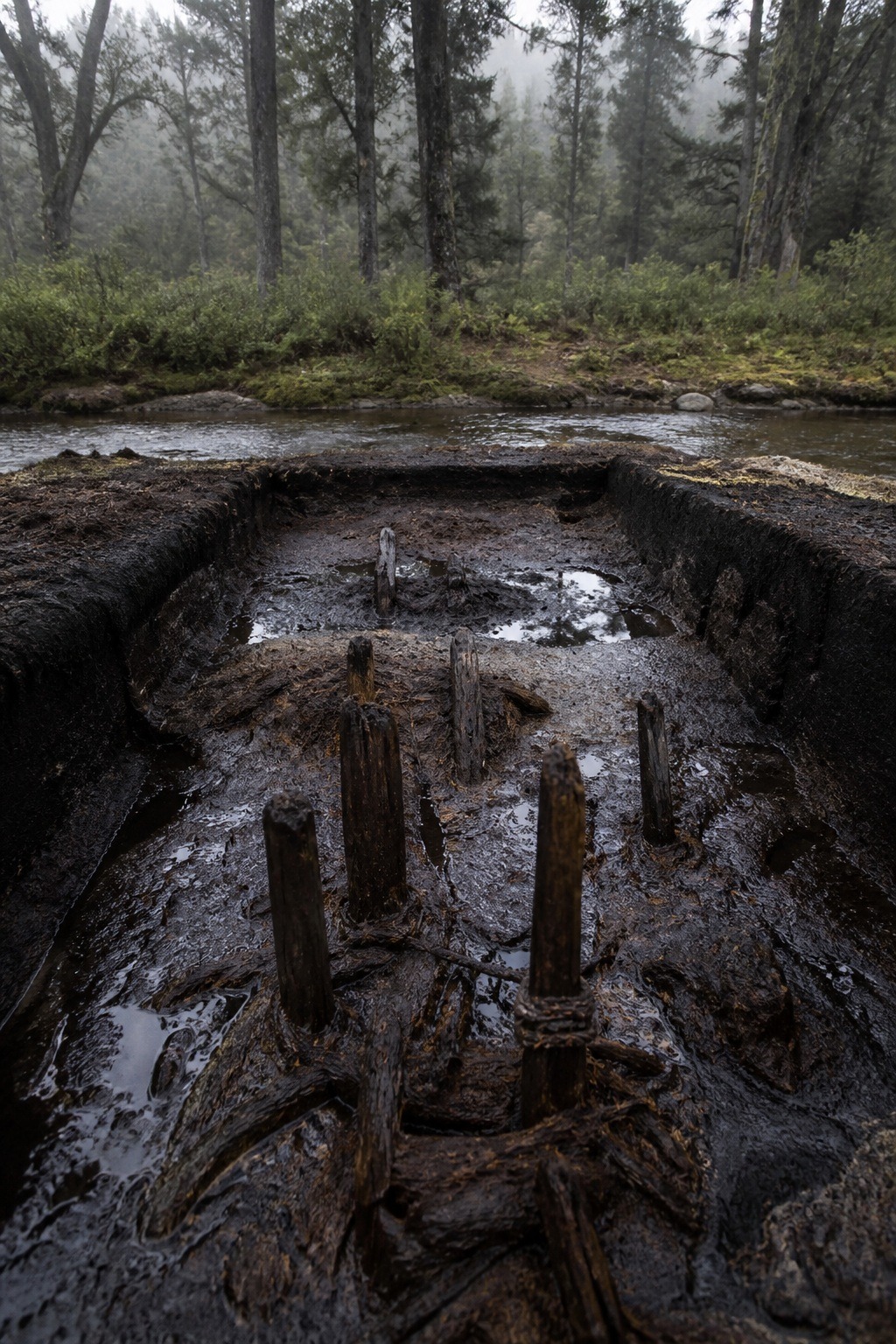
- The site: Monte Verde, a waterlogged peat bog beside Chinchihuapi Creek near Puerto Montt, southern Chile.
- The excavator: archaeologist Tom Dillehay, who began digging there in 1977.
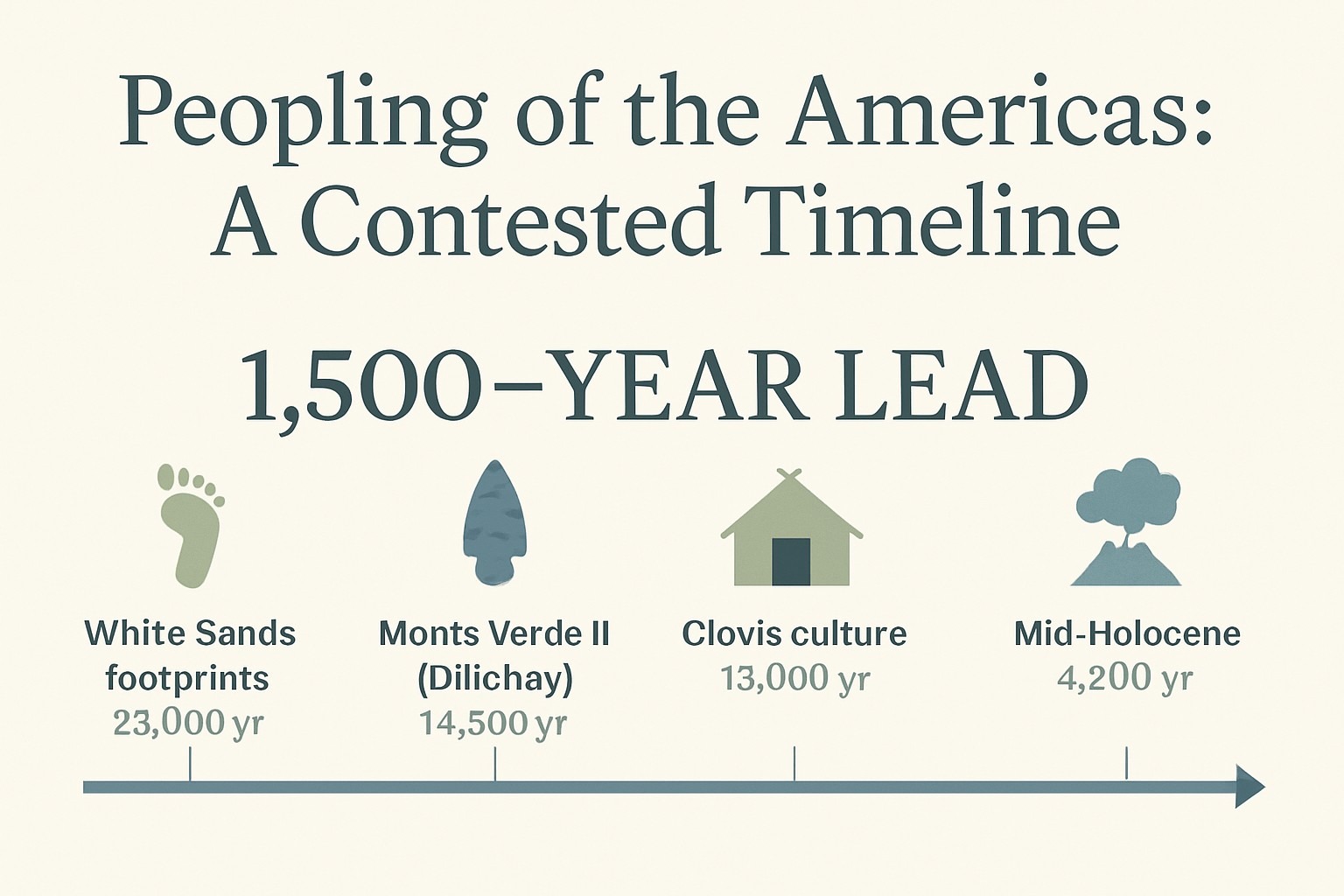
- The long-accepted age: the main layer, Monte Verde II, dated to roughly 14,500 years — about 1,500 years before Clovis (~13,000 years).
- The 2026 challenge: a team led by Todd Surovell re-dated the site to just 4,200–8,200 years ago in the journal Science.
- What survives either way: human footprints at White Sands, New Mexico, dated to roughly 21,000–23,000 years.
Key Facts
- Monte Verde is a waterlogged peat bog site near Puerto Montt, southern Chile, excavated by archaeologist Tom Dillehay from 1977.
- Its main layer, Monte Verde II, was long dated to about 14,500 years ago — roughly 1,500 years before Clovis (~13,000 years).
- In 1997 a panel of a dozen archaeologists inspected the site and endorsed the ~14,500-year age, cracking the Clovis-first consensus.
- A March 2026 study led by Todd Surovell (University of Wyoming), in Science, re-dated the site to just 4,200-8,200 years old.
- Human footprints at White Sands, New Mexico, dated to roughly 21,000-23,000 years, survive as evidence of early arrival regardless.
In short: Monte Verde, a Chilean bog site, was dated to about 14,500 years, placing people in the Americas before the Clovis culture and toppling the Clovis-first rule. A 2026 study led by Todd Surovell argues it is only 4,200-8,200 years old, claiming a creek washed ancient wood into younger layers. The debate is now fiercely contested.
Is Monte Verde older than Clovis? The short answer
For most of the last three decades, the mainstream answer was yes. Monte Verde’s Monte Verde II layer was dated to around 14,500 years ago, which put people in the Americas well before the Clovis culture, whose stone tools appear across North America starting about 13,000 years ago. That gap — a millennium and a half — was enough to topple a rule that had governed the field since the 1930s.
But “settled” is a fragile word in archaeology. In March 2026, geoarchaeologist Todd Surovell of the University of Wyoming and colleagues published a study arguing the campsite is thousands of years younger than anyone thought. So the honest answer today is: probably yes, but the case is being fought harder than it has been in a generation. Both halves of that sentence matter, and most explainers online tell you only one of them.
A campsite in a Chilean bog that rewrote the map
Monte Verde isn’t a cave or a cliff shelter. It’s a soggy patch of ground where a small creek and a peat bog did something rare: they sealed off the air. Without oxygen, the bacteria that normally devour wood, hide, and plant matter simply couldn’t work. What would have rotted away in a season somewhere else stayed put for thousands of years.
That preservation is the whole reason Monte Verde matters. Most ancient sites give archaeologists stone and bone and little else. Here, Dillehay’s team pulled organic material out of the mud — the soft, perishable evidence of daily life that almost never survives. It turned a routine dig into one of the most argued-over addresses in the Americas.
What Dillehay found: a footprint, huts, and a 14,500-year-old meal
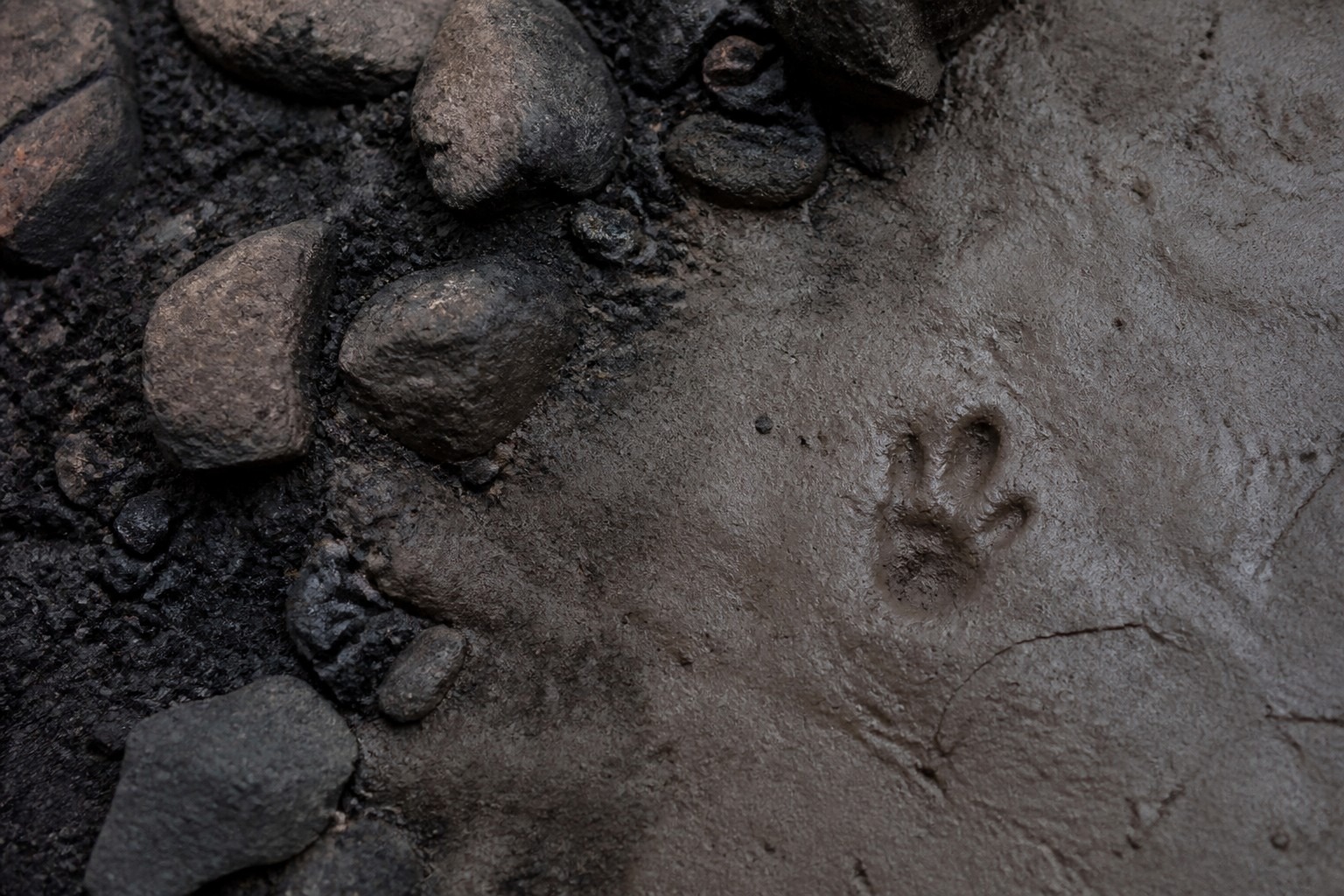
The finds read less like a tool inventory and more like a snapshot of a bad-weather afternoon. Dillehay’s crews documented the remains of wooden hut posts and a long, hide-covered shelter, tent-like, perhaps 20 feet across. There were hearths. There was knotted cordage. And there was a single small footprint pressed into the clay beside a fire pit — likely a child’s.
Then there was the food. Researchers catalogued dozens of edible plant species carried in from distant environments — coastal, forest, and highland — along with seaweeds and marine algae, some with medicinal uses. Scattered among it all were the butchered bones of a gomphothere, an elephant-like animal (Notiomastodon) now long extinct. Put together, it describes people who knew their landscape intimately and ranged far across it.
{IMAGE_2}
How one bog broke “Clovis-first” (the 1997 verdict)
To understand the fight, you need the rule it broke. “Clovis-first” held that the distinctive Clovis toolmakers, around 13,000 years ago, were the first humans in the Americas — full stop. Claims of anything older were dismissed for decades, often for good reason: many collapsed under scrutiny.
Monte Verde was different because Dillehay invited the skeptics in. In 1997 a blue-ribbon panel of a dozen archaeologists — several of them longtime doubters — traveled to Chile to inspect the site and the collections in person. They agreed the ~14,500-year age held up. That verdict cracked the Clovis-first consensus and, over the following years, helped shift the whole model toward an earlier arrival and a coastal “kelp highway” route down the Pacific edge of the continent.
Sites forcing scientists to redraw the timeline of the deep past is a recurring story in archaeology — the same jolt that came when Göbekli Tepe pushed monumental building back before farming. Consensus, it turns out, is only ever the best current guess.
The 2026 bombshell: only 4,000–8,000 years old?
Nearly 50 years after the first spade went in, an independent team returned to Chinchihuapi Creek — and came away with a radically different number. In Science, Surovell and colleagues argued that Monte Verde II is not 14,500 years old at all, but somewhere between 4,200 and 8,200 years old. That’s not a tweak. That’s the difference between a pre-Clovis landmark and an ordinary mid-Holocene camp.
“I anticipate our work to be not only impactful but controversial,” Surovell said. He was right on both counts.
Old wood, a creek, and a volcano: the dating fight, plainly
Strip out the jargon and the disagreement comes down to one deceptively simple question: did the ancient wood at Monte Verde actually belong to the people who camped there?
Radiocarbon dating measures the age of the organic thing you test — a stick, a seed, a bone. But a stick can be far older than the campfire it ends up next to. Surovell’s team proposed that Chinchihuapi Creek eroded genuinely ancient Ice Age wood from upstream and washed it down into younger sediment layers, mixing old material with a much later occupation. Test the old wood, get an old date — for the wrong event.
Their clock for that argument is a layer of volcanic ash. The team says a tephra known as the Lepué Tephra — traced to the Michinmahuida volcano and dated to about 11,000 years ago — sits beneath the Monte Verde II material. If ash from 11,000 years ago lies under the artifacts, the reasoning goes, the artifacts can’t be 14,500 years old. They also report an erosional gap in the sediments, a sign that time (and stuff) went missing from the record.
| Dillehay (1977–present) | Surovell et al. (2026) | |
|---|---|---|
| Proposed age | ~14,500 years (pre-Clovis) | 4,200–8,200 years (post-Clovis) |
| Core evidence | Sealed organics, hearths, footprint; radiocarbon on associated wood and plants; 1997 panel review | ~11,000-year ash layer said to lie below artifacts; creek-redeposited old wood; erosional gap |
| If correct | People were in South America before Clovis | Monte Verde is not pre-Clovis evidence at all |
The scientists are fighting — and it’s on the record
Dillehay, now at Vanderbilt University, did not take it quietly. He and his co-authors published a formal rebuttal calling the 2026 paper “a mixture of inventions and misunderstandings” riddled with “methodological and empirical errors,” and pointed out that the new team spent only hours at the site without excavating.
Independent voices piled in from both directions. Michael Waters, a geoarchaeologist at Texas A&M University, questioned how Surovell’s team read the sediment layering: “I don’t know how they overlooked that. I’m kind of shocked.” Jon Erlandson, an emeritus archaeologist at the University of Oregon, was blunt about the linchpin claim — “I’m not convinced” the ash can be shown to lie directly beneath Dillehay’s artifacts.
Here’s my read: a few hours of surface fieldwork, however sharp the eye, is a thin foundation on which to unseat thirty years of careful excavation — but that’s exactly why this won’t be settled by the loudest quote. It’ll be settled by whether anyone can prove, by digging, that the ash truly sits under the tools.
If Monte Verde falls, when did people reach the Americas?
This is the question the newsy 2026 coverage mostly skips, and it’s the one that actually matters to the rest of us. Monte Verde has carried a lot of weight as the flagship pre-Clovis site. So what happens to the bigger picture if that flag comes down?
Less than you might expect. The strongest single piece of pre-Clovis evidence isn’t in Chile at all — it’s a set of fossilized human footprints at White Sands, New Mexico, dated by multiple methods to roughly 21,000 to 23,000 years ago, deep into the last Ice Age. Genetic studies of Indigenous American populations also point to an arrival well before Clovis, with founding groups separating from their Asian relatives many thousands of years earlier. Monte Verde was never the only leg the case stood on.
That’s the quiet reason this dispute is worth following even if you never visit a dig. The re-dating tests one important site; it doesn’t erase the accumulating signal that humans were here far earlier than the old textbooks said.
Why this argument is science working, not failing
It’s tempting to read “scientists reverse 30-year-old finding” as a scandal. It’s closer to the opposite. A claim that changed a field got re-examined by an independent team using methods that didn’t exist in the 1970s, the original researchers answered in detail, and outside experts weighed both. That’s the machine running exactly as designed.
The useful takeaway isn’t a verdict — because there isn’t one yet. As of mid-2026 there is no accepted resolution; the burden now sits on new excavation that can confirm or kill the ash-below-artifacts claim. The better takeaway is a habit of mind: when you read that something in deep prehistory is “proven,” hold it a little loosely. The date on a campsite in a Chilean bog is still being decided in real time, and watching honest people disagree well is its own kind of wonder.
Questions Readers Ask
How old is Monte Verde, really? It depends who you ask. The long-standing figure, backed by decades of excavation and a 1997 expert panel, is about 14,500 years. A 2026 study argues for 4,200–8,200 years. There is currently no agreed answer.
What is the Clovis-first hypothesis? The idea, dominant for most of the 20th century, that the Clovis toolmakers (~13,000 years ago) were the first humans in the Americas and that nothing older existed.
Why was Monte Verde so important? Its waterlogged bog preserved wood, cordage, plants, and a footprint — perishable evidence that almost never survives — and a 1997 panel accepted its pre-Clovis age, cracking the Clovis-first consensus.
If Monte Verde is wrong, are the Americas still pre-Clovis? The evidence still leans that way. White Sands footprints (~21,000–23,000 years) and genetic models independently indicate people arrived well before Clovis.
Sources and Notes
- Surovell, T. et al. “A mid-Holocene age for Monte Verde challenges the timeline of human colonization of South America,” Science (March 2026).
- Dillehay, T. et al. — formal rebuttal to Surovell et al. (2026), Vanderbilt University.
- Science News — reporting on the 2026 study and expert reactions (Waters, Erlandson, Surovell).
- Published research on the White Sands, New Mexico, fossil human footprints (~21,000–23,000 years).
- Records of the 1977 onward Monte Verde excavations and the 1997 site-authentication panel.
Monte Verde may end up 14,500 years old or a fraction of that — but the bog has already given us something durable: a front-row seat to how science actually decides what’s true. Keep an eye on the next round of digging. The creek, the ash, and the wood still have the last word.
Frequently Asked Questions
Q: Is Monte Verde older than Clovis?
For nearly three decades the mainstream answer was yes: Monte Verde II was dated to about 14,500 years ago, roughly 1,500 years before Clovis toolmakers appeared around 13,000 years ago. That gap toppled the long-standing Clovis-first rule. However, a March 2026 study argues the site is thousands of years younger, so the honest answer today is probably yes, but the case is being fought harder than in a generation.
Q: Why is Monte Verde so important?
Monte Verde is a waterlogged peat bog that sealed off oxygen, preserving soft organic material that almost never survives at ancient sites — wooden hut posts, a hide-covered shelter, knotted cordage, and even a child-sized footprint. Excavator Tom Dillehay’s team also found dozens of edible plants and butchered gomphothere bones. This rare preservation, plus its pre-Clovis date, made it one of the most argued-over sites in the Americas.
Q: What does the 2026 study claim?
A team led by geoarchaeologist Todd Surovell of the University of Wyoming, publishing in Science, argues Monte Verde II is only 4,200 to 8,200 years old, not 14,500. They propose that Chinchihuapi Creek eroded genuinely ancient Ice Age wood from upstream and washed it into younger sediment, mixing old material with a much later camp. Their clock is a volcanic ash layer, the Lepue Tephra, dated to about 11,000 years.
Q: Does the debate change when humans reached the Americas?
Not entirely. Even if Monte Verde’s age is overturned, human footprints at White Sands, New Mexico, dated to roughly 21,000-23,000 years, remain evidence of a very early human presence in the Americas. The Monte Verde fight is about one key South American site and the strength of the pre-Clovis case there, not the only line of evidence for an early arrival on the continent.
Illustrations are AI-generated. Article fact-checked and human-edited. Our editorial standards.