Animals That Can Clone Themselves Without a Mate
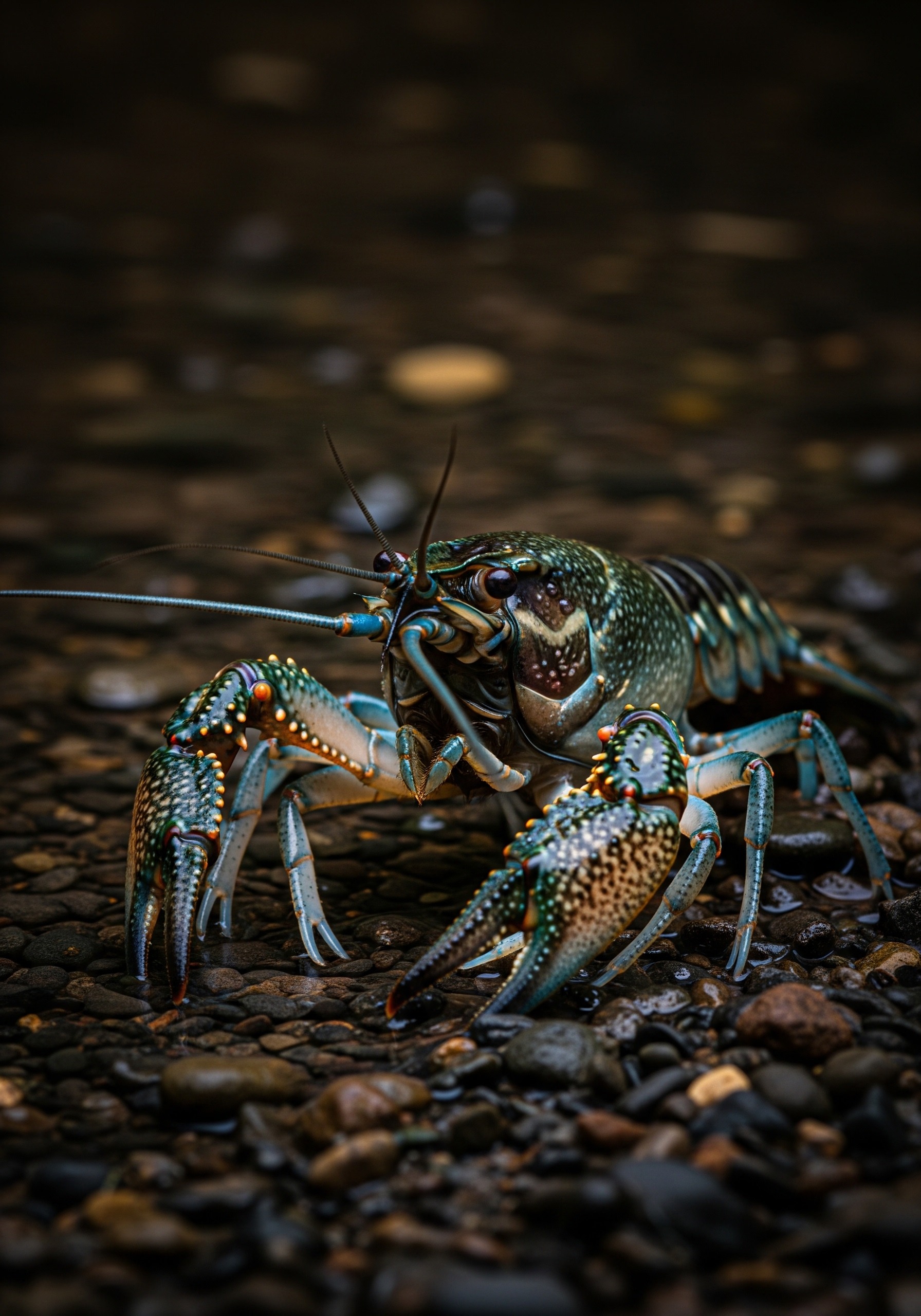
Somewhere in a German aquarium around 1995, a single crayfish did something biology said was almost impossible — and every animal that can clone itself is, in some way, a variation on her trick. She laid eggs. The eggs hatched. The babies were all female, and all genetically identical to her, with no male anywhere in the tank. Today her descendants are crawling through lakes from Madagascar to Sweden, and they are still, every one of them, perfect copies.
Key Facts
- Parthenogenesis — reproduction without fertilisation — has been documented in more than 80 vertebrate species, plus thousands of invertebrates.
- The marbled crayfish (Procambarus virginalis), the only known decapod crustacean to reproduce solely by cloning, traces back to one female that appeared in the German pet trade around 1995.
- The Amazon molly fish (Poecilia formosa) has been cloning itself for roughly 100,000 years — about ten times longer than evolutionary theory said it should survive.
- In March 2026, geneticists at the University of Missouri showed in Nature that Amazon mollies dodge extinction using “gene conversion,” a DNA-repair trick that erases lethal mutations.
- Komodo dragon “virgin births” produce only male hatchlings — a quirk of reptile sex chromosomes that almost no other clone-capable animal shares.
In short: No, there isn’t just one animal that can clone itself. There’s a whole quiet kingdom of them — fish, lizards, crayfish, sharks, sponges, aphids, microscopic rotifers — each using a different biological shortcut to make daughters from a single body. Some have been doing it for millions of years. One started inside a hobbyist’s tank.
Key Facts
- Parthenogenesis has been documented in more than 80 vertebrate species, plus thousands of invertebrates.
- The marbled crayfish (Procambarus virginalis) is the only known decapod crustacean to reproduce solely by cloning, tracing to one female in the German pet trade around 1995.
- The Amazon molly fish (Poecilia formosa) has been cloning itself for roughly 100,000 years.
- In March 2026, geneticists at the University of Missouri reported in Nature that Amazon mollies avoid extinction using gene conversion, a DNA-repair trick.
- Frank Lyko sequenced marbled crayfish genomes across three continents in 2018 and confirmed they are all essentially identical, all female, descended from one founder.
In short: Many animals reproduce without a mate, not just one. Fish, lizards, crayfish, sharks and rotifers each use different cloning mechanisms. The marbled crayfish, the only decapod that reproduces solely by cloning, descends from a single female that appeared in the German pet trade around 1995; the Amazon molly has cloned itself for roughly 100,000 years.
The “animal that can clone itself” isn’t one animal — it’s a whole strategy
Ask the internet which animal can clone itself, and you’ll get a different name every time: marbled crayfish, Amazon molly, whiptail lizard, Komodo dragon, hammerhead shark. They’re all correct. They’re also all using different toolkits. Calling them “clones” lumps together creatures that work as differently from each other as a photocopier and a 3D printer.
Here’s the thing. “Cloning” in nature isn’t a single mechanism — it’s at least four. Once you can tell them apart, the menagerie of self-copying animals stops looking miraculous and starts looking like a careful evolutionary toolkit, each species reaching for a different drawer.
How a body can copy itself: the four main mechanisms
Parthenogenesis — Greek for “virgin birth” — is the headline act. An unfertilised egg starts dividing on its own and grows into a full animal. In its strictest form (apomictic parthenogenesis, used by the marbled crayfish and bdelloid rotifers), the egg never halves its chromosomes, so the daughter is a literal genetic copy of her mother. In looser forms (automictic parthenogenesis, used by sharks and pythons), the egg does halve, then fuses with a leftover polar body — the daughter is “self-bred” rather than truly cloned, and often less genetically diverse than her mother.
Gynogenesis is the weirdest one. The Amazon molly still needs to mate — she steals sperm from a male of a related species — but the sperm only switches the egg on. None of its DNA makes it into the embryo. The daughter is a clone, but the mating still has to happen. Biologists call her a “sexual parasite.”
Budding and fragmentation skip eggs entirely. Hydras grow tiny copies of themselves out of their flanks, like a tree throwing off branches. Sea sponges bud off “gemmules.” Many flatworms and starfish can be cut into pieces, with each piece regrowing the rest. That’s still cloning — just done with body cells instead of reproductive ones.
Cyclical parthenogenesis is the part-time version. Aphids clone themselves frantically through the warm months, building up enormous all-female populations from a single founder, then switch to normal sexual reproduction in autumn to mix the deck for winter. Water fleas, gall wasps and some rotifers play the same on/off game.
The marbled crayfish: the animal that can clone itself — perfectly, and accidentally
Of all the self-cloning animals on Earth, the marbled crayfish is the strangest, because it is essentially brand-new. Until the mid-1990s, this species did not exist. Then, somewhere in the German aquarium trade, a single female slough crayfish (Procambarus fallax) — imported from the Florida Everglades — produced a daughter whose chromosomes had tripled. That mutation locked her into apomictic parthenogenesis. Every egg she laid was a copy of herself.
That one animal is the matriarch of every marbled crayfish alive today.
Frank Lyko, a molecular biologist at the German Cancer Research Center in Heidelberg, sequenced the genomes of marbled crayfish from across three continents in 2018 and confirmed it: they are all essentially identical, all female, all descendants of one founder who lived in someone’s tank about 30 years ago. Released into the wild — sometimes by aquarists who couldn’t keep up with the population explosion — the species now lives in waterways in Germany, Sweden, Slovakia, Japan, Ukraine and Madagascar, where in some lakes it has become the dominant freshwater crustacean. Lyko’s lab now studies them as a model for how cancer cells, which are also clonal, develop and adapt. If natural selection has a punchline, the marbled crayfish is it: an entire invasive species traceable to one mutant mother and a pet shop.
{IMAGE_2}
Amazon molly: the fish that broke the rules of evolution
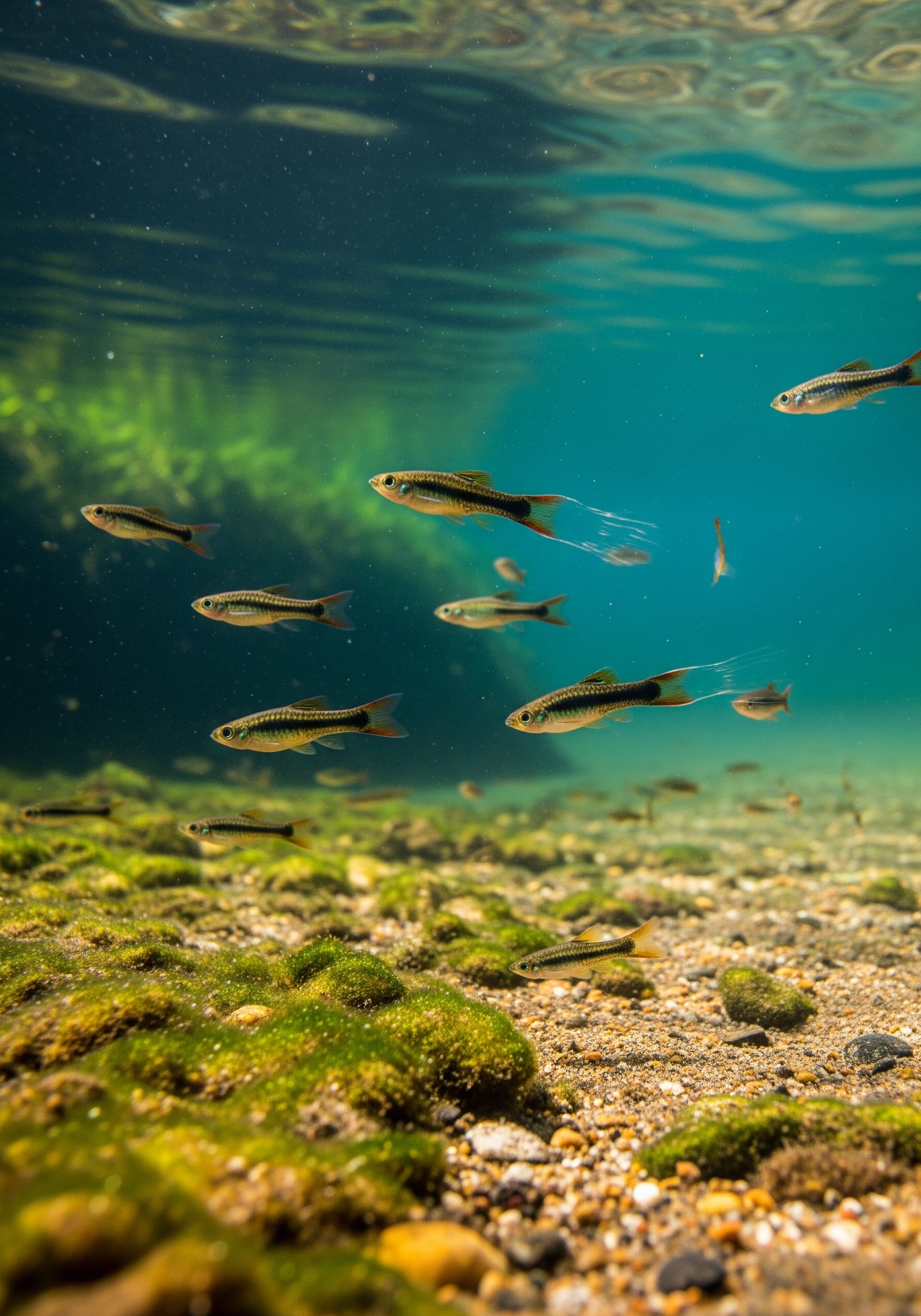
The Amazon molly is the celebrity of the asexual reproduction animals club. She’s a small, thumb-sized freshwater fish from northeastern Mexico and southern Texas, and every one is female. Discovered in 1932 — the first vertebrate ever confirmed to skip sex — she should not, by all rights, still exist.
Evolutionary biology has long held that purely clonal lineages collect harmful mutations the way an attic collects dust. With no genetic mixing to scrub the damage, “Muller’s ratchet” should grind any clonal vertebrate into extinction within roughly 10,000 generations. The Amazon molly has been at it for around 100,000 years. So why is she still here?
In March 2026, geneticists Wes Warren and Edward Ricemeyer at the University of Missouri reported the answer in Nature. Using long-read DNA sequencing, they showed that Amazon molly chromosomes are quietly editing themselves through a process called gene conversion — one copy of a gene overwrites the damaged version of its partner, effectively spell-checking the genome each generation. It mimics, at the molecular level, what sexual recombination does. Cloning has not, in her case, been a one-way road to ruin.
What it doesn’t change is the strangeness of her life. To trigger her eggs, she still has to mate with a male of a related molly species. He gives her nothing — not a single chromosome ends up in her daughter — but without him there is no daughter. She is a clone who cannot clone alone. (For a different, dramatic example of vertebrate self-cloning that fooled an entire aquarium staff, see the story of the stingray everyone thought was pregnant without a mate.)
Whiptails, geckos, and the all-female lizard republics
In the deserts of the American Southwest, there are at least 15 lizard species in the genus Aspidoscelis — the whiptails — in which every individual is female. The New Mexico whiptail (Aspidoscelis neomexicanus) is the state reptile, the official mascot of clonal reproduction, and a perfect example of what biologists call a hybridogenetic origin: the species arose from a one-off mating between two related whiptail species, and the resulting hybrid daughters could only continue the line by parthenogenesis.
Curiously, these all-female lizards still court each other. Field biologist David Crews of the University of Texas at Austin documented, in repeated studies through the 1980s and 1990s, that whiptail females take turns playing male and female roles in a courtship dance. The “male” role, his team showed, actually boosts the partner’s egg production — a leftover of the behaviour they inherited from their sexual ancestors.
The Indo-Pacific mourning gecko (Lepidodactylus lugubris), a tiny lizard now found on tropical islands worldwide, is another all-female parthenogen. So is the Bynoe’s gecko of the Australian outback. Between them, these species have colonised an enormous fraction of the warm world without a single male.
When mothers without mates surprise everyone: dragons, sharks and pythons
Some of the most jaw-dropping cases of animal self-cloning have happened by accident, in zoos and aquariums where staff were sure a female could not possibly have laid fertile eggs.
In 2006, Flora, a Komodo dragon at Chester Zoo in England, produced a clutch of viable eggs despite never having met a male. DNA analysis confirmed her hatchlings were the product of facultative parthenogenesis — and, oddly, all male. That’s a quirk of reptile genetics: Komodos use a ZW sex-determination system, the opposite of mammals, so a mother’s self-fertilised offspring inherit two Z chromosomes and develop as males.
Leonie, a zebra shark at Reef HQ Aquarium in Townsville, Australia, did it in 2016. So did a bonnethead shark in Nebraska in 2001, a blacktip shark in Virginia in 2007, and a smalltooth sawfish in Florida documented in 2015 — the first wild marine vertebrate proven to do so. Boa constrictors and reticulated pythons have managed it in captivity too. The phenomenon is now considered routine enough that the Smithsonian’s Ocean Portal lists facultative parthenogenesis as a real reproductive option for elasmobranchs under stress or isolation.
It is worth pausing on a quiet truth here: every confirmed case of vertebrate parthenogenesis we know about, we know because someone was paying close attention. The phenomenon is almost certainly more common in the wild than in our records — we just don’t usually swab the eggs.
A field guide to the clone-makers
| Animal | Mechanism | Are daughters true clones? | Where it lives |
|---|---|---|---|
| Marbled crayfish | Apomictic parthenogenesis | Yes — identical | Freshwater, multi-continent (invasive) |
| Amazon molly | Gynogenesis (sperm-triggered) | Yes — but mating required | Mexico, southern Texas |
| New Mexico whiptail | Parthenogenesis (hybrid origin) | Yes | Southwestern US deserts |
| Komodo dragon | Facultative parthenogenesis | No — self-bred, all male | Indonesia (rare in wild) |
| Zebra shark | Facultative parthenogenesis | No — partial copy | Indo-Pacific reefs |
| Bdelloid rotifer | Obligate parthenogenesis | Yes | Freshwater, moss, soil, worldwide |
| Aphids | Cyclical parthenogenesis | Yes, in summer | Worldwide on plants |
| Hydra | Budding | Yes | Freshwater, worldwide |
Why clone yourself? The evolutionary trade-off
If cloning is so efficient — no males to find, no genes to dilute, every daughter ready to reproduce — why doesn’t every animal do it? Because evolution, as biologists like to say, hates a one-trick pony. A clonal lineage is enormously good at exploiting a stable, familiar environment, because every individual is a copy of a proven success. But when conditions change — a new parasite, a hotter summer, a drying lake — every individual fails in exactly the same way. There is no genetic variation for natural selection to grip.
That’s the deal self-cloning animals strike. They trade adaptability for raw numbers. Aphids can flood a rose bush in a week; if a frost or a fungus comes, they are wiped out together. The marbled crayfish doubles its population every few months in still water; the moment a new pathogen finds it, the entire global lineage is exposed at once.
The exceptions — bdelloid rotifers, who have apparently cloned themselves for tens of millions of years — get around this by stealing genes from fungi and bacteria around them, smuggling diversity in through horizontal transfer. The Amazon molly, as we now know from the 2026 Missouri study, uses gene conversion as an internal patch. Cloning is not a dead end; it’s just a very different game played by very different rules.
Frequently Asked Questions
Q: Is there one animal that can clone itself the most successfully?
A: If “successful” means longest-running, the bdelloid rotifers — microscopic freshwater animals — have cloned themselves for tens of millions of years. If it means fastest, aphids can produce 12 clonal daughters a day. If it means most recently and most completely, the marbled crayfish is the only animal known to have switched to obligate cloning during recorded human history.
Q: Can mammals clone themselves like this?
A: No naturally. No wild mammal has ever been confirmed to reproduce by parthenogenesis or any other natural self-cloning. Mammalian genes are subject to a process called genomic imprinting that requires DNA from both a mother and a father to switch on correctly, which appears to block parthenogenesis. Dolly the sheep was cloned by laboratory nuclear transfer, not by anything she did herself.
Q: Do animals that clone themselves still need to mate?
A: Sometimes. The Amazon molly mates with males of related species, but uses only the sperm as a trigger — no paternal DNA ends up in the offspring. New Mexico whiptails court each other but lay unfertilised eggs. Marbled crayfish, bdelloid rotifers and hydras don’t need mating at all.
Q: How many animals can reproduce by themselves?
A: Parthenogenesis has been documented in more than 80 vertebrate species and thousands of invertebrates. The true number is almost certainly higher, because researchers usually only confirm it when a single female in captivity produces unexpected offspring.
Sources
- National Geographic — “Parthenogenesis, explained: How some animals have ‘virgin births'”
- National Geographic / Nature, March 2026 — “This fish has cloned itself for 100,000 years. Scientists just figured out how.” (Warren & Ricemeyer, University of Missouri)
- Smithsonian Ocean Portal — “Parthenogenesis: When Female Sharks Reproduce Without a Mate”
- German Cancer Research Center (DKFZ) — Frank Lyko lab releases on marbled crayfish genomics
- Wikipedia — entries on Amazon molly, marbled crayfish, and parthenogenesis (cross-checked against primary sources)
The next time you read that some animal “can clone itself,” remember: she’s part of a much larger, much stranger family. From a thumb-sized fish in a Mexican stream to a microscopic rotifer in a puddle on your roof, the quiet revolution of self-copying life has been running for hundreds of millions of years — and, in at least one tank in 1990s Germany, it is still inventing new chapters.
Illustrations are AI-generated. Article fact-checked and human-edited. Our editorial standards.