The Stingray Everyone Thought Was Pregnant Without a Mate
Everyone was convinced Charlotte the stingray was making a baby without a male. No father needed. Parthenogenesis in real time. Except — she wasn’t pregnant at all.
It was early 2024 when Aquarium & Shark Lab by Team ECCO in Hendersonville, North Carolina started noticing something odd. Charlotte, a round stingray who’d been solo for nearly nine years, was swelling. Getting visibly bigger. The staff watched. They waited. And then they told the world, which immediately lost its collective mind on social media.
Key Facts
- In early 2024, staff at Aquarium & Shark Lab by Team ECCO in Hendersonville, North Carolina noticed Charlotte the round stingray swelling.
- Charlotte had been separated from male stingrays for nearly nine years before the apparent pregnancy.
- Veterinary diagnostics revealed Charlotte was not pregnant but had a rare reproductive disease mimicking pregnancy.
- Round stingrays (Urobatis halleri) have a three-month gestation period, far shorter than the time staff watched Charlotte.
- In 2016, a wild smalltooth sawfish in Florida’s Peace River was confirmed reproducing by parthenogenesis, in a population that had declined 95%.
In short: The Charlotte stingray parthenogenesis story captivated the internet in 2024 when a North Carolina round stingray, isolated from males for nine years, appeared pregnant without a mate. Veterinarians later found she was not pregnant but had a rare reproductive disease that perfectly mimicked pregnancy, exposing major gaps in elasmobranch health knowledge.
Why people thought this was actually happening
Parthenogenesis — when a female makes babies without needing a male to fertilize anything — isn’t some fantasy thing. It’s real. It’s happening right now in dozens of vertebrate species. Sharks. Komodo dragons. Pit vipers. Certain birds. Researcher Demian Chapman has spent years studying whether it’s more common in elasmobranchs (sharks and rays) than we realize, and the honest answer is: we don’t know.
Charlotte checked every single box.
Nine years without a male stingray. Physical swelling that looked exactly like pregnancy. A species where parthenogenesis, while uncommon, wasn’t impossible. The team at Team ECCO wasn’t making wild claims. They were documenting what they saw and letting the evidence speak.
At least, that’s what they thought they were documenting.
The internet reaction was immediate and loud
When the story broke, it didn’t just go viral in the normal sense. Something about it hooked people deeper than that. A female animal defying biological odds in a tank in North Carolina. Life finding a way when there was supposedly no way to find. People started naming the hypothetical baby stingrays before they even existed. News outlets from multiple countries called asking for updates. Charlotte became famous. Really famous.
You can read more about strange animal reproduction like this at this-amazing-world.com.
There’s something about that story — the underdog animal, the impossible birth — that makes it impossible not to root for.
Stingray parthenogenesis is real but we barely understand it
Here’s what made Charlotte’s situation so scientifically interesting: we genuinely don’t know how common this is. In 2016, researchers confirmed a wild smalltooth sawfish in Florida’s Peace River reproducing this way — one of the first times it was ever documented in a wild vertebrate in its natural habitat. Landmark moment. Except it also meant that in a population that had crashed by 95% from its historical numbers, females were potentially making babies alone. Which raised some uncomfortable questions about genetic diversity. About whether isolated populations were becoming even more isolated.
With rays, the picture gets murkier fast.
Most facilities don’t track reproductive health closely enough to catch anomalies. Charlotte’s case was already pushing researchers to ask harder questions about what they were actually monitoring and what they were missing.
Then came the test results.
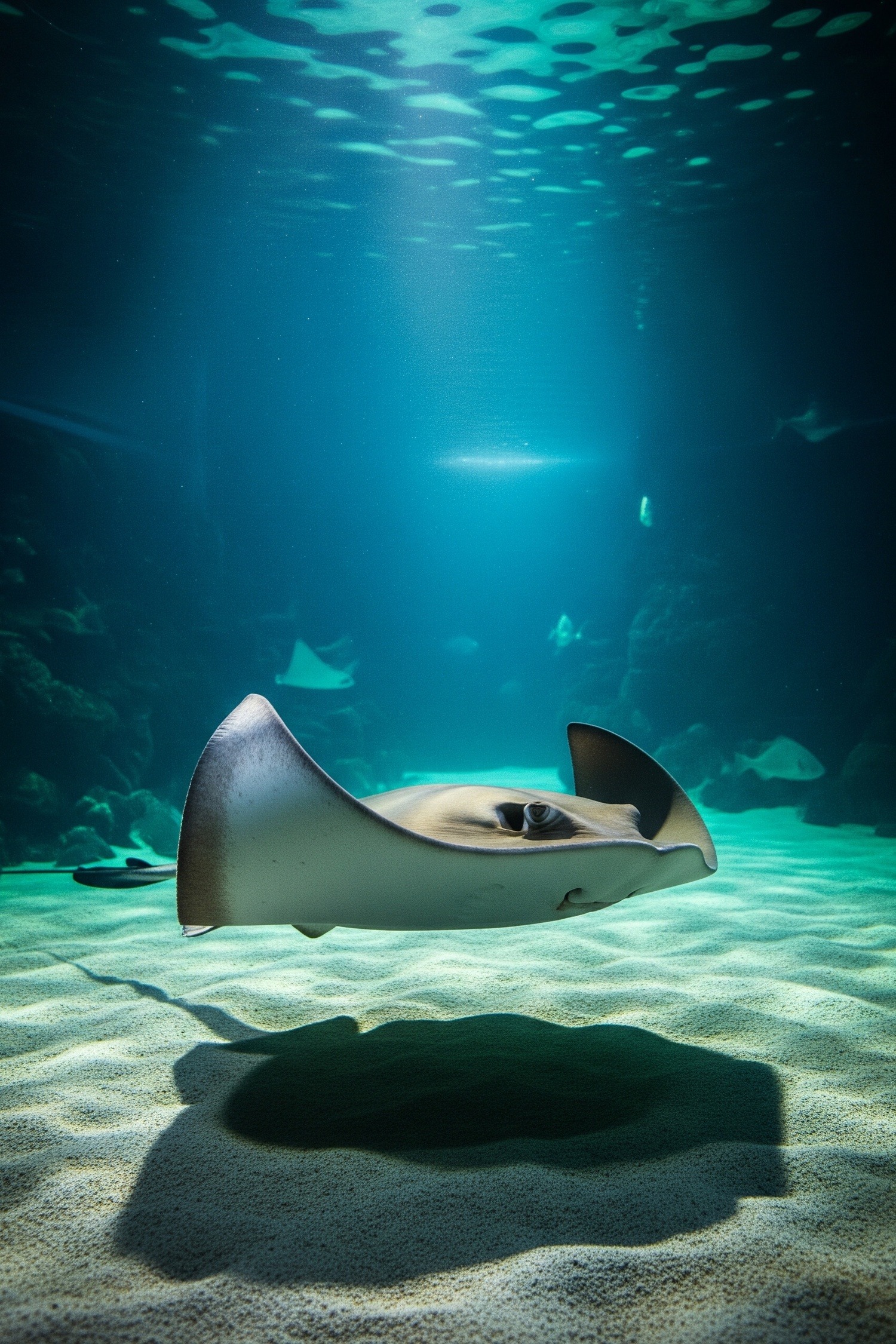
She wasn’t pregnant. She was sick.
Veterinarians eventually ran the diagnostics and the answer wasn’t what anyone wanted. Charlotte had a rare reproductive disease. Something that mimics pregnancy so perfectly that experienced staff couldn’t tell the difference. Swelling. Physical changes. The works. All of it pointing toward pups that were never coming.
That last fact kept me reading for another hour. The narrative people had invested in — the impossible birth, the miracle of life without a male — just collapsed. The internet’s joy curdled a little.
But something else took its place.
Charlotte’s illness became a real, documented case of a reproductive condition in rays that almost no veterinary literature had catalogued before. She contributed to science anyway. Just not in the way anyone expected.
By the numbers
- 2016: first wild vertebrate confirmed reproducing via parthenogenesis (sawfish, Florida). Population had declined 95% from historical levels.
- Roughly 80 vertebrate species documented with parthenogenesis — but the real number is almost certainly much higher because most cases go completely undetected without genetic testing.
- Charlotte had been separated from males for nine years. Most elasmobranch species can store viable sperm for only months to a few years maximum.
- Round stingrays (Urobatis halleri) have a three-month gestation period. Staff had been watching Charlotte far longer than that, which should have been a red flag.
- Some female sharks store viable sperm for four years or more, which means you can’t diagnose parthenogenesis just by looking — you need genetic confirmation, and most facilities aren’t equipped for that.
What we’re still getting wrong
Here’s the thing about reproductive diseases in elasmobranchs: they’re barely documented at all. Komodo dragons at Chester Zoo and the Smithsonian’s National Zoo produced parthenogenetic offspring in 2006, and that was major because it was so rare for mammals. But rays? Sharks? We’re missing entire categories of conditions just because nobody’s looking close enough.
Most facilities don’t do the kind of continuous, rigorous monitoring that Team ECCO was doing with Charlotte.
That gap is real.
And it matters because of what it reveals about everything else we’re probably missing.
Why this story doesn’t end with the diagnosis
Charlotte didn’t give the internet the birth story it wanted. The pregnancy that defied biology. The miracle in a tank in North Carolina. But she gave researchers something more useful: a documented case of a reproductive condition that was basically invisible in the literature before this. She exposed a gap in our knowledge about elasmobranch health that needed exposing.
And she raised a question that won’t go away: How many animals right now — in aquariums, in research facilities, in tanks across the world — are carrying reproductive anomalies or illnesses that nobody has the tools to recognize yet?
Charlotte got noticed because her caregivers were paying attention. How much are we missing when we aren’t?
Stingray parthenogenesis may or may not have been happening in her tank. But the scientific rigor required to answer that question with confidence? That’s still being built. Charlotte forced that conversation. That’s the story that actually matters.
She didn’t produce a miracle birth. She produced proof that the gaps in our knowledge are bigger than we thought, and that careful observation of one animal in one small aquarium can genuinely move the needle on what we understand about life. That’s how science actually works. If you want to fall down more of these rabbit holes, there’s plenty more at this-amazing-world.com.
Frequently Asked Questions
Q: What is the Charlotte stingray parthenogenesis story?
In early 2024, staff at Aquarium & Shark Lab by Team ECCO in Hendersonville, North Carolina noticed that Charlotte, a round stingray isolated from males for nearly nine years, was visibly swelling. They suspected parthenogenesis, reproduction without a male, and announced it publicly, sparking a viral sensation. Veterinarians later ran diagnostics and found Charlotte was not pregnant at all but suffering from a rare reproductive disease that mimicked pregnancy almost perfectly.
Q: Is parthenogenesis in stingrays and sharks actually real?
Yes. Parthenogenesis, in which a female produces offspring without a male, is documented in roughly 80 vertebrate species, including sharks, Komodo dragons, pit vipers, and certain birds. In 2016, researchers confirmed a wild smalltooth sawfish in Florida’s Peace River reproducing this way, one of the first documented cases in a wild vertebrate. However, the true frequency is likely much higher because most cases go undetected without genetic testing, which most facilities cannot perform.
Q: Why couldn’t experienced staff tell Charlotte wasn’t pregnant?
Charlotte had a rare reproductive disease that mimics pregnancy so precisely, with swelling and physical changes, that even experienced staff could not distinguish it from the real thing. Several warning signs existed in hindsight: round stingrays have only a three-month gestation period, yet staff watched Charlotte for far longer. Her condition had barely been catalogued in veterinary literature before this case, making it nearly invisible to the people monitoring her.
Q: What did Charlotte’s case contribute to science?
Although Charlotte never produced the miracle birth the internet hoped for, her illness became a documented case of a reproductive condition in rays that almost no veterinary literature had recorded before. The case exposed a real gap in knowledge about elasmobranch health, since most facilities don’t perform the continuous, rigorous monitoring Team ECCO did. It raised the question of how many animals in tanks worldwide carry reproductive anomalies that nobody currently has the tools to recognize.
Illustrations are AI-generated. Article fact-checked and human-edited. Our editorial standards.