How Brown Rats Swim Through Sewers So Effortlessly
How brown rats swim through sewers is one of the quiet marvels of urban biology. While you slept, a brown rat moved through your city’s infrastructure. Not across it. Through it. Beneath the streets, inside the pipes, using the sewer network the way a commuter uses a highway, except more efficiently.
The brown rat, Rattus norvegicus, is built for water in ways that feel almost engineered. Most people picture a rat scurrying along a gutter. Few picture it as an athlete, twisting through flooded bends, holding its breath, steering with its tail. Yet the tunnels beneath every major city are full of them, doing exactly that, every single night. So what makes a land animal this good in the water?
Key Facts
- Brown rats can hold their breath for up to three minutes underwater.
- New York City alone is estimated to host around 2 million rats across roughly 6,300 miles of sewer line.
- A rat’s tail acts as a rudder, actively steering it through tight bends and current.
- London’s main sewer network was built in the 1860s by engineer Joseph Bazalgette.
- Rats can survive being flushed through pipes with enough force to disorient an adult human.
In short: Brown rats swim sewers using a rudder-like tail for steering, powerful hind legs for propulsion, and water-repellent fur that keeps them warm and mobile. Combined with a three-minute breath-hold, these traits turn city pipe networks into ideal rat highways that they have occupied for well over a century.
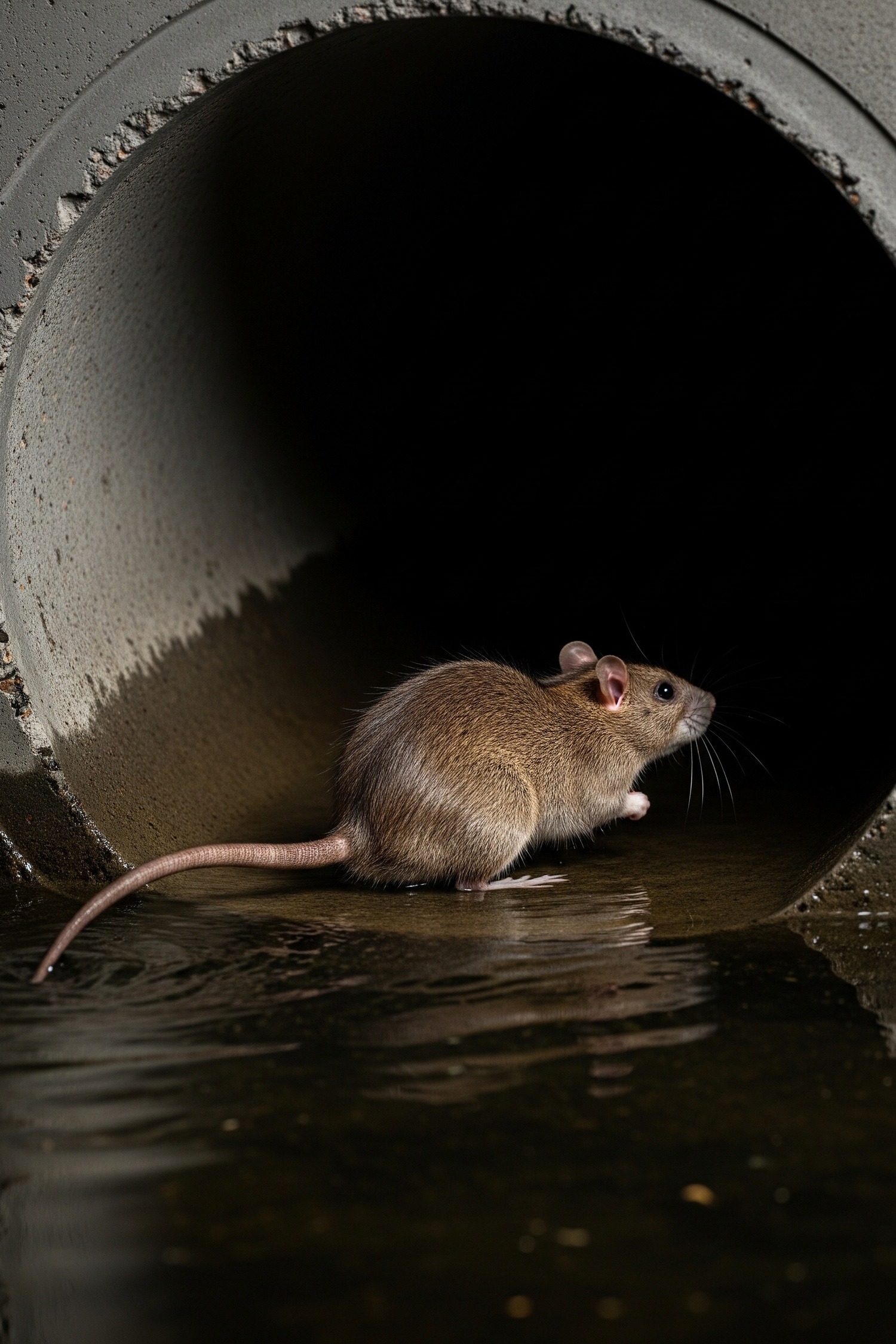
How brown rats swim through sewers: built for water
Start with the tail. In a brown rat it isn’t just a balance organ. Underwater, it works as an active rudder, sweeping side to side to steer the body through tight turns and shifting current. Zoologists studying Rattus norvegicus have documented this since the mid-twentieth century, and the principle is detailed in the species’ broader natural history. The hind legs, meanwhile, generate explosive propulsive force, punching the animal forward through water that would stop most mammals its size cold.
Then there’s the fur. A brown rat’s coat traps a thin layer of air and repels water so effectively that the animal stays warm, buoyant, and functional deep inside conditions that would waterlog a less-adapted creature within minutes. It can stay in the water far longer than its size suggests. Small mammals lose body heat fast in cold water because of their high surface-area-to-volume ratio, so for a rat-sized animal that trapped air layer isn’t a luxury, it’s the difference between a swim and a fatal chill.
The breath-hold rounds out the toolkit. Three minutes is an extraordinary span for a land mammal, and it lets a rat submerge fully to pass under a partial blockage or ride out a surge of fast water. Physiologists attribute it to a slowed heart rate and efficient oxygen use, the same dive reflex seen, in stronger form, in seals and otters. The rat simply carries a modest version of it everywhere.
Add that breath-hold to the rudder tail and the buoyant coat and you have an animal that treats a flooded pipe as a corridor, not a trap.
Why do rats thrive in the pipes we built?
A city’s sewer system is, from a rat’s perspective, close to perfect habitat. It’s warm, dark, predator-free, and threaded with a near-endless food supply washed down from above. The network connects everything: restaurants, homes, drains, basements. A rat can travel block to block without surfacing once. If you want a sense of how much hidden ecology runs beneath your feet, our piece on life thriving in unexpected places follows the same theme of animals colonising the spaces we overlook.
New York offers the starkest numbers. Estimates put the city’s rat population near 2 million, moving through roughly 6,300 miles of sewer line. That’s a transit system no human ever rides, mapped in the rats’ collective memory rather than on any chart. Each animal learns its routes, its food sources, its safe bolt-holes, and passes that knowledge through a dense social structure.
Those 6,300 miles dwarf the city’s subway, which runs to a few hundred. A brown rat’s home range is modest, often just a block or two, but the network’s connectivity means a colony can shift territory, follow a new food source, or flee a flooded section without ever breaking the surface. The pipes function as both shelter and road, a combination almost no natural habitat offers, which is partly why urban rat densities run far higher than anything seen in the wild grasslands the species came from.
We laid the pipes. They drew the map.
A 160-year occupation beneath London
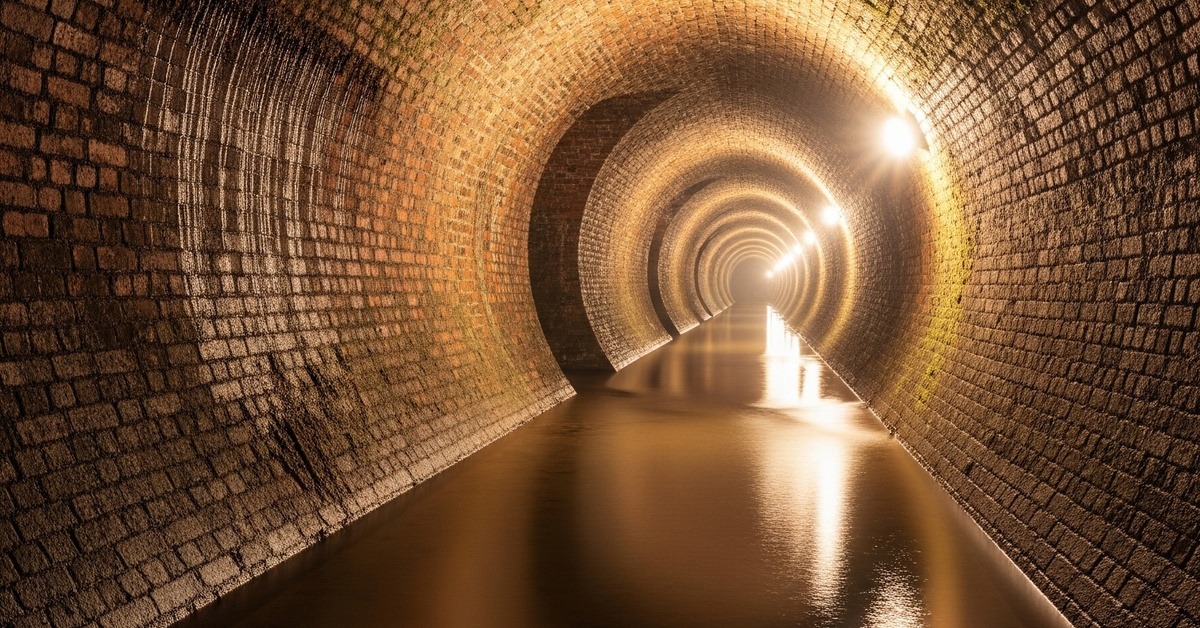
London’s sewers tell the longest version of this story. After the Great Stink of 1858, engineer Joseph Bazalgette designed a vast network of brick interceptor sewers, completed through the 1860s and 1870s. According to the BBC’s history of the system, those Victorian tunnels still carry much of the city’s waste today, more than 150 years on. They’ve also become one of the most thoroughly colonised rat habitats on Earth.
The same tunnels. Roughly 160 years of continuous occupation. Generation after generation of brown rats has been born, fed, and died inside Bazalgette’s brickwork without ever needing the surface for more than scraps. The infrastructure outlasted the empire that built it, and the rats simply moved in and stayed. A brown rat lives only two to three years in the wild, which means the colonies threading those Victorian sewers today are perhaps sixty or seventy generations removed from the first rats to discover them, an unbroken lineage that predates electric light in most London homes.
That continuity matters because rats learn their environment and pass habits down socially. Routes to food, safe resting chambers, the timing of flushes and surges, all of it accumulates as a kind of inherited local knowledge held by the colony rather than any individual. Bazalgette built for cholera; he inadvertently built one of the most durable wild-animal habitats in any city on Earth.
It’s a strange kind of partnership. We maintain the pipes. They maintain the population.
What does this swimming behaviour reveal about adaptation?
The deeper lesson is about plasticity. Rattus norvegicus originated in the grasslands and riverbanks of northern Asia, where swimming through seasonal floods was simply survival. Research from institutions including the University of California has long noted how the species’ ancestral, semi-aquatic toolkit, the tail, the fur, the breath-hold, transferred almost perfectly to the artificial rivers of human plumbing.
Cause and effect line up neatly. A pipe is, functionally, a flooded burrow with current. The rat didn’t evolve for sewers; it evolved for water, and the sewer happened to match. The reason brown rats swim through sewers so well is simply that the pipes recreate the conditions their bodies were already built for. That’s why no city has ever fully cleared its rat population: you’d have to redesign the very infrastructure that makes urban life possible.
The same plasticity shows up above ground, which is what makes the species so formidable. Brown rats breed almost year-round in the stable warmth of a sewer, a single female producing several litters of half a dozen or more pups a year. Pair that reproductive rate with the swimming toolkit and the social learning, and you get a population that bounces back from culls within a season. Remove ninety percent of a colony and the survivors, with more food and space per animal, simply breed faster to fill the gap.
Pest controllers know this. You can suppress numbers. You can’t evict a species from habitat that fits it this well.
Where to See This
- London’s Victorian sewers (UK) — occasionally opened on specialist heritage tours; the Crossness and Abbey Mills pumping stations show Bazalgette’s engineering above ground.
- Organisations like the RSPCA and urban-ecology departments at universities study how rodents adapt to city infrastructure.
- Practical tip for the curious: a sealed drain cover and well-maintained pipes do more to deter rats than any trap; they’re following the water, not your kitchen.
By the Numbers
- 3 minutes — how long a brown rat can hold its breath underwater.
- ~2 million — estimated rat population of New York City.
- 6,300 miles — approximate length of New York’s sewer network.
- 1860s — decade London’s main Bazalgette sewers were completed.
- ~160 years — span of continuous rat occupation in those tunnels.
Field Notes
- Brown rats can tread water and rest at the surface, which means a flooded pipe rarely drowns them; they simply wait out the current and move on.
- The fur’s water resistance comes from its structure and natural oils, not from any thick blubber layer, so a soaked rat dries and warms remarkably fast once out of the water.
- Rats reach sinks and toilets less by climbing pipes upward and more by following the network’s branching paths, which often lead almost anywhere.
- Researchers still debate exactly how rats navigate flooded tunnels in total darkness; whisker sensing, smell, and learned spatial memory all seem to play a part, but the precise mix remains unresolved.
Frequently Asked Questions
Q: Can brown rats really swim up through sewers into toilets?
Yes, though it’s less common than urban legend suggests. Brown rats navigate the branching sewer network and can travel through pipe sections that connect to household plumbing. Because they hold their breath for up to three minutes and steer with their tails, a determined rat can occasionally surface inside a toilet bowl. Sealed pipework and modern non-return valves make this far rarer than it once was.
Q: How do brown rats swim through sewers without getting cold?
Their fur is the key. A brown rat’s coat traps a thin layer of air and repels water, keeping the animal warm and buoyant even in cold sewer flows. This insulation lets it stay functional far longer than its small body size would normally allow. The same adaptation evolved in its wild ancestors, who routinely crossed seasonal floods in northern Asia.
Q: Why are there so many rats in city sewers?
Sewers offer warmth, darkness, near-zero predators, and a constant stream of food washed down from above. New York’s roughly 6,300 miles of sewer line, for example, form an enormous sheltered habitat. Brown rats breed quickly and learn routes socially, so once a colony establishes itself in a tunnel network, eradication becomes almost impossible without rebuilding the infrastructure.
Q: Are sewer rats dangerous to people?
They carry the risk every wild rodent does. Brown rats can transmit pathogens like Leptospira through urine-contaminated water, and they damage infrastructure by gnawing. Direct encounters are uncommon because the animals avoid humans, but contaminated water and droppings are a genuine public-health concern, which is why cities invest heavily in pipe maintenance and rodent monitoring.
Editor’s Take — Alex Morgan
We talk about pest control as if it’s a war we can win. Spend an hour reading how brown rats swim sewers and that framing collapses. These animals didn’t invade our pipes; they recognised them. A sewer is a flooded burrow with a current, the exact environment their bodies were already tuned for. The verdict isn’t grim, it’s humbling: we built the perfect rat habitat and called it sanitation.
The next time water gurgles down a drain, picture the network it feeds, miles of warm, dark, current-fed corridors threading the ground beneath you. Somewhere down there, a brown rat is steering with its tail through a bend it has swum a hundred times. We mapped the city above. They mapped the one below. How many other systems we built have quietly become someone else’s territory?
Illustrations are AI-generated. Article fact-checked and human-edited.