She Paid One Franc for a Book. It Was Her Own.
It was just one franc. A tattered children’s book from a weathered green stall beside the Seine, the kind of purchase that feels like a small gift to yourself while wandering a foreign city. Then Anne Parrish’s husband opened the cover and everything stopped making sense.
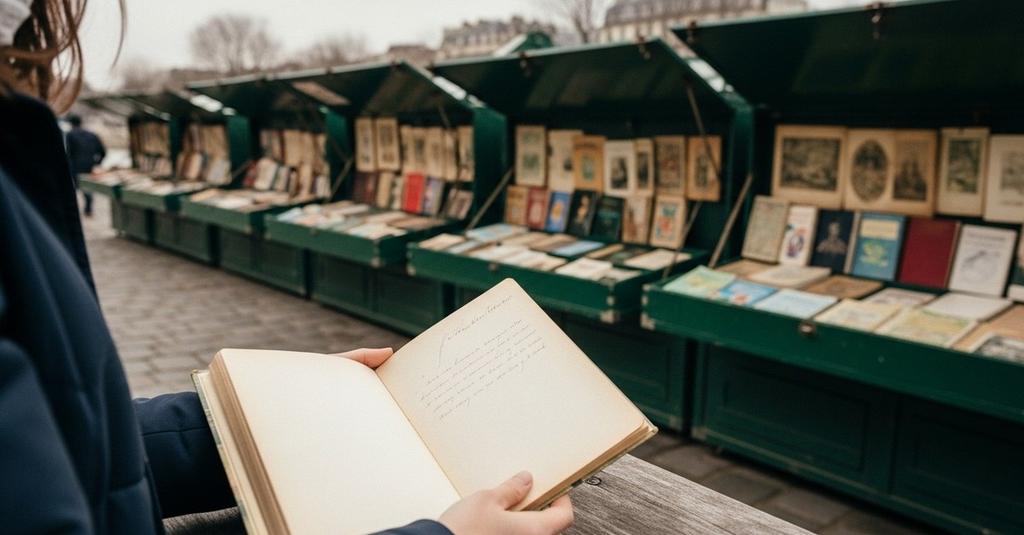
It’s 1920-something. Paris. Anne Parrish — American novelist, successful, traveled — is drifting through the bouquiniste stalls with her husband. These aren’t market stalls. They’re permanent fixtures, green wooden boxes bolted to the riverbank, some of them operating continuously since the 1500s. She picks up Jack Frost and Other Stories. A children’s book. She pays one coin. Nothing about this moment seems significant.
Her husband flips to the flyleaf.
Written there in careful pencil: Anne Parrish, 209 N. Weber Street, Colorado Springs. Her name. Her childhood address. Her handwriting from decades before she ever left Colorado. That last fact kept me reading for another hour — the sheer specificity of it, the way the story refuses to feel like fiction even though it reads like one.
Key Facts
- In the 1920s, novelist Anne Parrish bought a copy of Jack Frost and Other Stories from a Seine bouquiniste for one franc
- Inside was her own childhood inscription: Anne Parrish, 209 N. Weber Street, Colorado Springs
- Around 240 licensed bouquiniste vendors operate along roughly 3.8 kilometers of the Seine riverbank
- The stalls collectively hold an estimated 300,000 books at any given moment and were UNESCO-recognized in 1991
- Anne Parrish’s novel The Perennial Bachelor won the Harper Prize in 1925
In short: This article recounts the impossible coincidence Paris book story: in the 1920s, novelist Anne Parrish bought a one-franc children’s book from a Seine bouquiniste and found her own childhood inscription inside. Among 300,000 rotating books, the volume she lost decades earlier in Colorado found its way back to her hands.
The Impossible Coincidence Paris Book Lovers Still Talk About
The bouquinistes of Paris aren’t some quaint weekend market that came and went. They’ve been working the Seine continuously since at least the 16th century — some historians push the date back to the 1570s, though honestly the exact origin gets fuzzy. What matters is this: they’re real institutions. Licensed. Regulated since 1992. Currently around 240 vendors operate along approximately four kilometers of riverbank, collectively holding an estimated 300,000 books at any given moment. UNESCO recognized them as World Heritage sites in 1991. They survived two world wars. They’re still there.
So what are the actual odds? One specific woman. One specific afternoon she didn’t plan. Three hundred thousand books rotating through wooden boxes. And the one her hand reaches for is the one she wrote her name in as a child, then lost decades ago in Colorado, then somehow crossed an ocean and passed through how many hands and ended up in a particular stall on a particular day.
Nobody knows how it traveled. That’s the part that gets to people.
How Does a Book Even Move Like That?
Books don’t stay still. Estate sales, donation bins, library culls, soldiers packing light, immigrants stuffing trunks, people moving houses and leaving things behind — a single volume can cross borders multiple times in a generation without anyone tracking it. There’s actually an entire field of study called bibliographic provenance research dedicated to tracing ownership histories of old books, and most journeys still can’t be reconstructed.
They’re just gaps.
Here’s what haunts me about this story: Anne Parrish wasn’t a nobody. She was nominated for a Pulitzer Prize. She was a recognized American novelist. Her name meant something. Which is exactly why we know about the impossible coincidence Paris book moment — because she had the status to have her story written down and remembered. How many times has something like this happened to someone we’ll never hear about? Someone who didn’t keep diaries, didn’t publish novels, didn’t have a husband who thought to check the flyleaf?
The Probability People Don’t Want to Hear
Dr. David Hand wrote a book called The Improbability Principle arguing that extraordinarily rare events are actually inevitable — because the universe runs billions of small trials every day, most invisible. We only notice the ones that land. Mathematically? Sound. Comforting? Not especially.
The numbers here are staggering.
- Approximately 240 licensed bouquiniste vendors operating today
- An estimated 300,000 books rotating through those stalls at any given moment — prints, documents, old maps included
- The stretch of Seine occupied by bouquinistes runs roughly 3.8 kilometers, longest continuous open-air book market in the world
- Anne Parrish paid one franc for a book that would sell today, if found in similar condition, for anywhere between $40 and several thousand dollars depending on rarity — she paid about five cents in modern money
Even accepting that coincidences must happen somewhere to someone, the specificity of this one resists easy comfort. It’s not just that she found an old book. It’s that the book found her back.

Field Notes
- The word “bouquiniste” comes from Dutch boek — a linguistic fossil from when Dutch traders dominated European publishing
- Anne Parrish’s novel The Perennial Bachelor won the Harper Prize in 1925, making her one of the most recognized American women writers of her generation. Which makes the whimsy of her franc-coin book purchase even stranger — this was not a desperate or poor person buying cheap books.
- During COVID-19 lockdowns in 2020, the bouquiniste stalls sat shuttered for months — the longest closure many vendors had ever experienced in their lifetimes
- The stalls have survived two World Wars, multiple political upheavals, e-commerce, everything. They’re still there.
What This Story Actually Tells Us
The impossible coincidence Paris book moment isn’t about luck or fate or probability working backward. It’s about the secret lives of objects — the way things we touch accumulate invisible history. Every book in every secondhand stall has fragments embedded in it. Margin notes. Penciled names. Coffee rings. Inscriptions. Most of those fragments disappear. They’re thrown out, pulped, lost forever.
But occasionally something persists.
Anne Parrish’s childhood handwriting had been traveling for years. Decades. Sitting on a flyleaf in box after box, hand after hand, moving through the world without anyone knowing what it carried. Not waiting — objects don’t wait. But persisting. And that persistence meant that when her husband opened that cover, the past was still there. Intact. A child’s careful letters in pencil. A name. An address. A life looking back at itself across time and distance and loss and chance.
We want the world to make sense. Cause and effect, reasons, logic — we want those things. And most of the time, we get them. But then a woman pays one franc for a book beside the Seine, and her husband opens the cover, and there she is. Age eight. In Colorado. In pencil. Some things don’t explain. They just happen.
And they’re strange enough to be worth thinking about.
Frequently Asked Questions
Q: What is the Anne Parrish book coincidence?
In the 1920s, American novelist Anne Parrish was browsing the bouquiniste stalls along the Seine in Paris with her husband. She paid one franc for a children’s book, Jack Frost and Other Stories. When her husband opened the cover, he found a penciled inscription reading Anne Parrish, 209 N. Weber Street, Colorado Springs, her own name, childhood address, and handwriting from decades earlier. The book she had owned as a child in Colorado had somehow crossed an ocean back to her.
Q: What are the Paris bouquinistes?
The bouquinistes are licensed secondhand booksellers operating permanent green wooden boxes bolted to the banks of the Seine. They have worked the river continuously since at least the 16th century, with some historians dating origins to the 1570s. Today around 240 vendors operate along roughly 3.8 kilometers of riverbank, collectively holding an estimated 300,000 books at any given moment. They were recognized by UNESCO in 1991 and regulated as a profession since 1992.
Q: How rare was this coincidence statistically?
Staggeringly rare on its face, yet arguably inevitable. With an estimated 300,000 books rotating through the stalls, the odds of Anne Parrish reaching for the exact volume she inscribed as a child seem impossible. Dr. David Hand, in his book The Improbability Principle, argues that extraordinarily rare events are actually inevitable because the universe runs billions of small trials daily and we only notice the ones that land. The mathematics is sound, even if it offers little emotional comfort.
Q: Who was Anne Parrish?
Anne Parrish was a recognized American novelist who was nominated for a Pulitzer Prize. Her novel The Perennial Bachelor won the Harper Prize in 1925, making her one of the most recognized American women writers of her generation. The article notes her status is precisely why the coincidence was recorded and remembered. Countless similar moments likely happened to ordinary people who never kept diaries or published books, leaving their stories untold.
Illustrations are AI-generated. Article fact-checked and human-edited. Our editorial standards.