Blue Whales Are Going Silent — and the Ocean Is Listening
Something is broadcasting from the deep Pacific, and lately, it’s been getting harder to hear. Blue whale songs fading from hydrophone recordings across thousands of miles of open water aren’t just quieter — they’re vanishing during seasons when the ocean should pulse with sound. A silence spreading. A distress signal the sea itself is transmitting in real time.
Marine biologists monitoring deep-ocean acoustic arrays since the early 2000s have watched call rates from blue whale populations drop when water temperatures should trigger the most intense vocalisations. The whales aren’t dead. They’re not simply elsewhere. They appear, increasingly, to be choosing silence — or being forced into it.
The real question researchers are still untangling: whether those two things are meaningfully different.
Key Facts
- A single blue whale call registers at 188 decibels and travels over 1,000 miles through the SOFAR channel
- A large blue whale needs roughly four tonnes of krill per day during peak feeding season
- NOAA estimated krill biomass dropped over 60% in some Northeast Pacific zones during the 2019-2020 marine heat wave
- A 2022 Oregon State University analysis found call-rate drops lagged krill collapse by three to six weeks
- An estimated 10,000 to 25,000 blue whales survive globally, roughly 3 to 11% of pre-whaling numbers (IUCN, 2023)
In short: This article investigates why blue whale songs fading from Pacific hydrophone recordings signals ecosystem collapse. Marine heat waves crash the krill populations that trigger intense calling, while rising ocean noise masks communication. A 2022 study found whale silence lags krill collapse by three to six weeks, making song loss a measurable distress signal.
When the Ocean’s Deepest Voice Goes Quiet
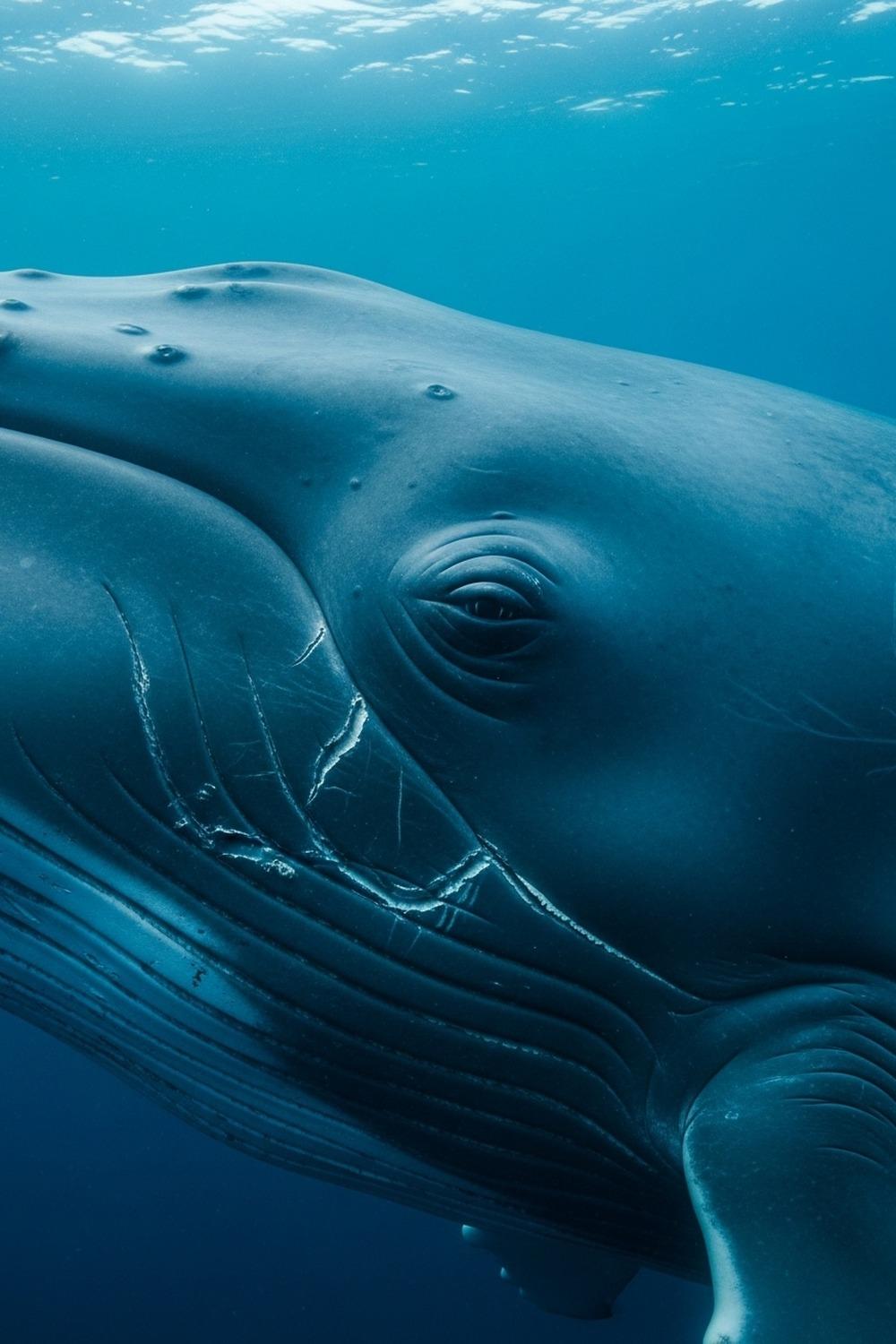
Blue whales are the loudest animals on Earth. A single call registers at 188 decibels — louder than a commercial jet engine at takeoff — and travels over 1,000 miles through cold ocean water via a natural sound channel called the SOFAR channel, a mid-depth band where acoustic energy bends and carries with extraordinary efficiency. The calls are low-frequency rumbles, mostly between 10 and 40 hertz, far below what humans can hear without equipment.
For decades, researchers at the Scripps Institution of Oceanography in San Diego have deployed underwater hydrophones across the Pacific to listen. What they’ve documented since the mid-2000s is a call-rate pattern that doesn’t match population recovery curves — which, after decades of post-whaling rebound, should be climbing.
Here’s the mismatch that makes blue whale songs fading so scientifically unsettling: the global blue whale population has grown since commercial whaling was banned in 1966. Numbers are recovering, slowly. More whales should mean more calls. But acoustic data tells a different story — one tied not to population size but to behaviour. Blue whales sing most intensely during feeding aggregations. When food concentrates, animals concentrate, and when animals concentrate, they sing. Take away the food, and the singing stops. What’s disappearing from the recordings isn’t just sound. It’s the evidence of a functioning ecosystem.
Think of it this way: a blue whale’s song is proof of surplus.
An animal singing is an animal that can afford to. When the recordings go silent, something downstream has already failed.
Krill Collapse Is Rewriting the Feeding Map
Blue whale survival hinges almost entirely on krill — tiny crustaceans that aggregate in dense swarms in cold, nutrient-rich water. A large blue whale needs roughly four tonnes of krill per day during peak feeding season. That’s not a figure that allows for much flexibility. When krill populations shift or collapse, blue whales don’t adapt their diet. They move, burning enormous energy reserves in the search for concentrations that may no longer exist where they once did.
The Northeast Pacific marine heat wave of 2019–2020, widely referred to as the Blob’s return, displaced cold-water krill populations across critical feeding grounds from California to British Columbia. Some feeding aggregations that had formed in the same locations for recorded decades simply didn’t appear that season. The acoustic silence in those zones followed within weeks — a response time that chilled researchers who’d been watching the trend build for years.
Watching a species starve at this speed, you stop calling it a trend and start calling it a collapse.
The relationship between ocean temperature, krill availability, and whale calling behaviour is proving to be tighter, and more fragile, than models had predicted. It’s a dynamic worth understanding alongside other marine ecosystems under stress — similar cascading pressures shape the nutrient cycles described in the salmon runs that feed entire Alaskan forests, where the removal of one keystone species sends ripples through systems far removed from the water itself.
Krill need cold, phytoplankton-rich water. That’s straightforward enough. Marine heat waves suppress the upwelling that delivers nutrients from depth to surface. Without nutrients, phytoplankton blooms thin out. Without phytoplankton, krill populations crash. In the 2019–2020 event, sea surface temperatures across parts of the Northeast Pacific ran 2–3°C above average for months — a deviation that sounds small until you understand that krill populations respond to fractions of a degree. Research from the National Oceanic and Atmospheric Administration published in 2021 estimated krill biomass in some affected zones dropped by over 60% compared to the 2015–2018 baseline.
In the field, NOAA survey teams reported something viscerally odd: whale watching boats operating off Monterey Bay in the summer of 2020 found almost nothing. The whales that did appear were described by observers as “transiting” — moving through rather than stopping to feed. No surface lunges. No extended dives. Just passage. And that’s not behaviour. That’s migration under duress.
Noise That Hides the Silence Underneath
Here’s the cruel irony buried in the acoustic data: the ocean has never been noisier. Shipping traffic doubled between 1992 and 2022. Military sonar exercises pulse through the same frequency ranges blue whales use for long-distance communication. Offshore drilling, seismic surveys, cargo vessel propellers — together they’ve raised the ambient noise floor of the deep ocean by an estimated 15 decibels over the last five decades, according to research published in Science in 2012 by NOAA researchers Mark McDonald and John Hildebrand, with subsequent studies confirming the trend has continued.
What this means, practically, is that the signal-to-noise ratio for whale communication has degraded severely. The whales may, in response, be calling less because calling accomplishes less. If your voice can’t carry through the static, why raise it?
Why does this matter? Because blue whale songs fading becomes more than an ecological story — it’s an information-loss problem. Blue whales are spread thin across enormous distances. Their calls aren’t just mating signals (researchers actually call them “contact calls,” and the distinction matters more than it sounds). They’re potentially used to coordinate feeding, to maintain loose social structure across hundreds of miles of open water, to communicate information about prey location that researchers don’t yet fully understand. If acoustic masking is suppressing call rates, the blue whales fading from recordings may be experiencing something analogous to a communications blackout — unable to reach each other across a noisy ocean even when they try.
The data layers make attribution genuinely difficult. Is the silence from absent food, degraded acoustic habitat, or something else entirely? In many cases, the answer is probably all three, operating simultaneously. That’s what makes this so hard to reverse.
Blue Whale Songs Fading: What the Data Actually Shows
The most comprehensive long-term dataset on blue whale call rates in the North Pacific comes from NOAA’s Pacific Marine Environmental Laboratory, which has maintained hydrophone arrays across the basin since the late 1990s. A 2022 analysis by researchers at Oregon State University — led by marine acoustician Dr. Mark Sirovic, building on earlier work by his team — found statistically significant declines in blue whale call-rate indices in multiple Pacific regions during years corresponding to marine heat wave events. The study cross-referenced acoustic records with independent krill-density surveys and sea surface temperature anomaly data, finding that call-rate drops lagged krill-density drops by approximately three to six weeks — the time it takes for whale feeding behaviour to reorganise in response to prey collapse.
The precision of that lag is remarkable. It suggests the relationship is direct, measurable, and reproducible.
In 2014–2015, during the original Blob event, call rates in the California Current System dropped to their lowest recorded values at the time. In 2019–2020, they dropped further. Each marine heat wave sets a new acoustic floor — a new baseline for what silence sounds like in the North Pacific. The data creates its own kind of drama when you lay it out: populations recover between events, call rates partially rebound, but the baseline keeps shifting downward. And the events are arriving more frequently as ocean warming accelerates. The intervals between major heat wave events that once stretched to a decade or more are now compressing to three or four years.
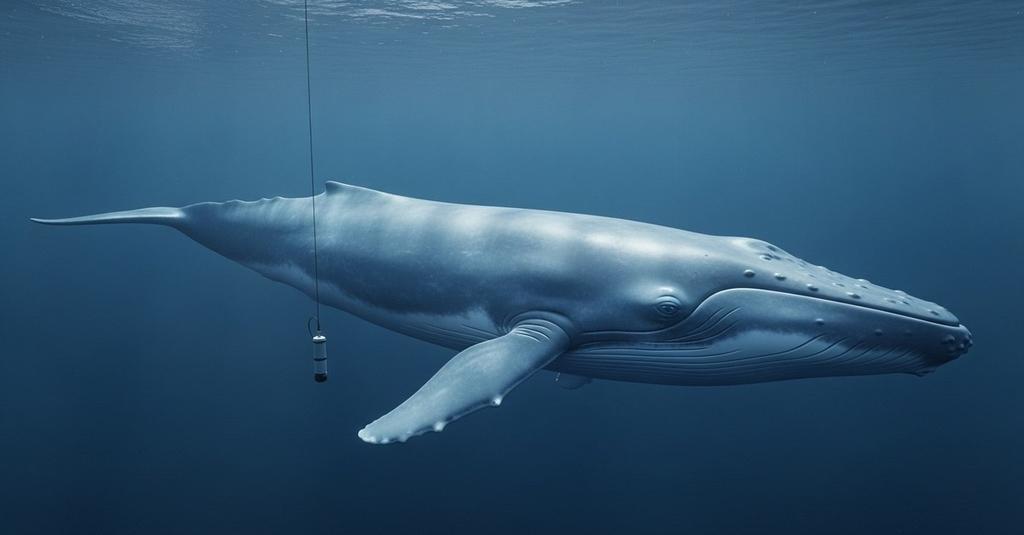
At the Monterey Bay Aquarium Research Institute, engineers have begun experimenting with real-time acoustic monitoring systems that can flag sudden drops in blue whale call activity as early indicators of ecosystem stress — essentially using whale silence as a proxy for krill availability. It’s a monitoring tool born from crisis. But it works.
What Happens If Nobody Fixes the Static
Blue whales have survived extraordinary disruption before. They lived through 70 years of industrial whaling that reduced some populations by over 90%. They persisted through the geological upheaval that reshaped ocean current systems millions of years ago. They are, in the deepest sense, built for a dynamic ocean.
But the pace of current change is something different. Industrial whaling removed individuals. Climate disruption is restructuring the food web those individuals depend on — and doing it across multiple trophic levels simultaneously. When krill collapse, the problem isn’t just that blue whales go hungry. It’s that the entire cold-water marine food web — seabirds, fish, other whale species, marine mammals — loses its foundation at once. The blue whale songs fading from Pacific recordings are a single audible thread in a much larger unravelling.
If marine heat waves continue to intensify and lengthen, population-level consequences become plausible on timescales of decades, not centuries. Blue whales don’t reproduce quickly. A female gives birth to a single calf roughly every two to three years after a 10–12 month gestation. A population can’t outbreed a sustained food crisis. What researchers fear isn’t a dramatic die-off event but something quieter and harder to reverse: a gradual nutritional squeeze that suppresses reproductive success year after year, compressing population recovery trajectories that were already measured in generations, not years.
On a clear morning off the coast of southern Chile — one of the last places where blue whale feeding aggregations still form reliably each austral summer — researcher Bárbara Galletti Vernazzani has spent fifteen years counting flukes. She knows individual animals by their markings. She’s watched some of them for half their lives. “They come back,” she told a conference audience in 2023. “But we can’t assume they always will.”
How It Unfolded
- 1966 — The International Whaling Commission issued a global ban on commercial blue whale hunting, beginning a slow population recovery from near-extinction.
- 1992 — NOAA deployed the first permanent deep-ocean hydrophone arrays across the North Pacific, creating the baseline acoustic record researchers still rely on today.
- 2014–2015 — The original “Blob” marine heat wave caused the first statistically significant recorded drop in North Pacific blue whale call rates, alerting researchers to the food-acoustics connection.
- 2022 — Oregon State University published cross-referenced acoustic and krill-density analysis confirming a direct, reproducible three-to-six-week lag between krill collapse and blue whale acoustic silence.
By the Numbers
- 188 dB — peak intensity of a blue whale call, louder than a commercial jet engine at close range
- 1,000+ miles — maximum documented travel distance of a blue whale song through the SOFAR channel in cold Pacific water
- 60%+ — estimated krill biomass decline in some Northeast Pacific zones during the 2019–2020 marine heat wave (NOAA, 2021)
- 15 dB — estimated rise in ambient ocean noise floor over the last five decades due to shipping and industrial activity
- 10,000–25,000 — estimated surviving blue whales across all global populations (IUCN, 2023), roughly 3–11% of pre-whaling numbers
Field Notes
- In 2021, researchers from the University of California Santa Barbara discovered that blue whale call frequency — not just rate — has been slowly dropping over decades across multiple ocean populations. The leading hypothesis is that as populations recover and competition for mates increases, lower-frequency calls (which carry further) are being sexually selected for. Evolution, in real time, adjusting to an ocean already transformed by noise.
- Blue whales don’t have vocal cords. Their calls are produced by a mechanism involving laryngeal structures and recycled lung air — meaning they sing without exhaling, a biological feat that still isn’t fully understood.
- Different blue whale populations sing in distinctly different dialects. The Northeast Pacific population’s calls are recognisably different from those of the Antarctic or Indian Ocean populations — a regional specificity that means acoustic data from one zone can’t simply be extrapolated to another.
- Researchers still can’t determine whether blue whales calling less during krill collapse is a passive response (less social context for calling) or an active energy conservation strategy. The distinction matters enormously for predicting long-term behavioural change — and nobody yet has the data to resolve it.
Frequently Asked Questions
Q: Why are blue whale songs fading, and is the trend reversible?
Blue whale songs fading from hydrophone recordings appears to be driven by a combination of marine heat waves collapsing krill populations — removing the feeding aggregations that trigger intense calling — and rising ambient ocean noise degrading acoustic communication. The trend has been recorded since at least 2014. It’s likely partially reversible if marine heat wave frequency decreases and krill populations stabilise, but each successive heat event appears to reset the baseline lower than before.
Q: How do scientists actually listen to blue whale songs in the deep ocean?
NOAA and partner institutions maintain networks of hydrophones — underwater microphones — anchored at mid-depth in the ocean’s SOFAR channel, where sound travels with maximum efficiency. These instruments record continuously, generating enormous acoustic datasets that researchers analyse for whale call patterns. In recent years, machine-learning algorithms have been trained to detect and classify blue whale calls automatically, allowing researchers to process years of recordings in days and track call-rate changes over time with much higher precision than manual listening alone could achieve.
Q: Does shipping noise actually prevent blue whales from hearing each other?
The common assumption is that blue whales simply call louder to compensate for background noise — the way humans raise their voices in a loud room. But blue whale calls are already at near-maximum biological intensity. There’s limited headroom to go louder. What researchers have observed instead is a shift in call characteristics in high-noise zones — some populations appear to adjust frequency or timing — but these adaptations have limits. In areas where ambient noise consistently exceeds natural acoustic thresholds, effective communication range may be reduced from hundreds of miles to tens, fundamentally changing how dispersed populations maintain contact across ocean basins.
Editor’s Take — Alex Morgan
What gets me about this story isn’t the silence itself — it’s the lag. Three to six weeks between a krill crash and a measurable drop in whale calling. That’s the ocean’s version of a read receipt: confirmation that the message was received, that the animals adjusted, that something upstream already failed. We usually talk about ecosystem collapse in terms of species we can count. This is ecosystem stress we can hear. Or rather, can’t hear. That distinction feels like it should change how we talk about ocean health entirely.
The hydrophones are still running. Every day, acoustic arrays across the Pacific record what the deep ocean sounds like — its rhythms, its noise, its gaps. For decades, those gaps were anomalies. Now researchers are learning to read them like a language, a vocabulary built entirely from absence. What does a healthy ocean sound like? Loud, irregular, alive with calls rolling through the dark water for a thousand miles in every direction. What we’re recording instead is something quieter, more compressed, with longer spaces between the voices. The ocean is still listening. The question is whether we’re listening back fast enough to matter.
Illustrations are AI-generated. Article fact-checked and human-edited. Our editorial standards.