The Man Who Found T. Rex Wore a Fur Coat to Do It
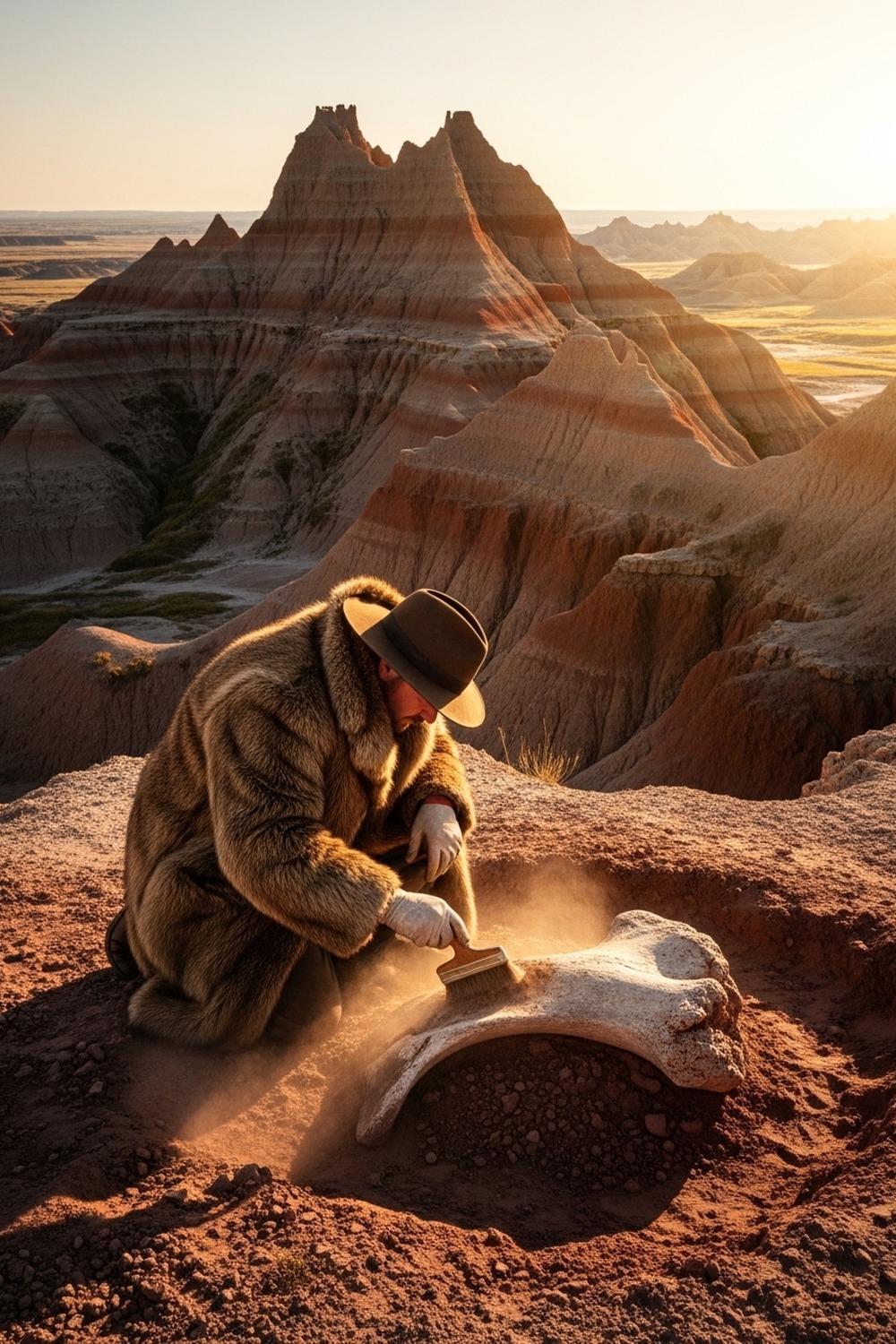
In 1902, a Kansas farm kid named Barnum Brown dug up the first Tyrannosaurus rex skeleton while wearing a full-length beaver fur coat. Not because he was cold. Because that was apparently just who he’d decided to be.
And here’s what gets me — he didn’t stop at one. Or even one continent. Brown spent the next sixty years pulling prehistoric monsters out of Montana badlands, Patagonian jungles, and Indian dust, accumulating a fossil collection so massive that the American Museum of Natural History’s curators literally couldn’t keep up with the pace of arrival. The coat stayed constant. The discoveries kept accelerating.
Key Facts
- Barnum Brown discovered the first Tyrannosaurus rex skeleton in 1902 in the Hell Creek Formation of eastern Montana.
- Henry Fairfield Osborn of the American Museum of Natural History named the species Tyrannosaurus rex in 1905.
- Brown found a second, more complete T. rex skeleton from Hell Creek in 1908, roughly 40% more complete than the first.
- Over a career spanning more than 60 years, Brown collected over 500 significant vertebrate fossils for the AMNH.
- Brown was born in 1873 on a Kansas farm and died in 1963 at age 89, still consulting for the American Museum of Natural History.
In short: The story of Barnum Brown Tyrannosaurus rex discoveries: the eccentric fur-coated paleontologist who dug up the first T. rex skeleton in 1902 in Montana’s Hell Creek Formation, found an even more complete specimen in 1908, and collected over 500 significant vertebrate fossils across a 60-year career.
The 1902 Find That Changed Everything
Eastern Montana. Hell Creek Formation. Two field seasons of careful excavation. What Barnum Brown’s crew uncovered wasn’t a scattered jumble of bones or a fragment that might have been something interesting if you squinted. It was nearly complete. It was enormous. And absolutely nobody had ever formally described a skeleton like it before.
Henry Fairfield Osborn, the AMNH’s paleontologist, named it Tyrannosaurus rex in 1905. But Brown found it first, and that matters more than you’d think. This wasn’t theoretical paleontology happening in a library. This was a man with a shovel in one of the most unforgiving patches of terrain in North America, reading stone the way most people read maps.
Think of it like being the first person to find the answer to a question nobody’d even figured out how to ask yet.
Who Was This Guy, Exactly?
Born 1873 on a Kansas farm near Carbondale. Collected fossils from creek beds as a kid. Studied geology at the University of Kansas. Joined the American Museum of Natural History and basically never left — except to dig.
Colleagues said he had a sixth sense for finding bones. He’d look at a hillside and somehow just *know* where they were hiding. Whether that’s intuition or pattern recognition cranked to eleven, I couldn’t tell you. But the results spoke for themselves. He collected over 500 significant vertebrate fossils across a career spanning more than 60 years. One person. No one’s matched that output before or since.
And yes, the coat.
A full-length beaver fur coat. Worn in the field. Worn in photographs next to dinosaur bones bigger than houses. Worn like a man who’d decided that if history was going to remember him, they might as well remember him with style. It became inseparable from who he was.
One T. rex Wasn’t Enough
In 1908, Brown found a second T. rex skeleton from Hell Creek. Even more complete than the first. Two specimens from the same formation, pulled from the earth by the same man — and that’s genuinely not luck operating at that scale. That’s geology the way some people have music. You can learn about it, but you either have the ear for it or you don’t.
But T. rex was just the headline.
Hadrosaurs. Ceratopsians. Ankylosaurs. More specimens than the AMNH could prepare fast enough. Bones arrived from the field in shipments so frequent that curators were cataloguing them as fast as they could document the previous batch. Brown didn’t specialize — he hunted everything Mesozoic that was hiding in rock, and he was methodical about it. The sheer scope of what he pulled from the ground in Montana and Wyoming alone would’ve made a career for most paleontologists. For Brown, it was just the opening act.
Beyond Montana
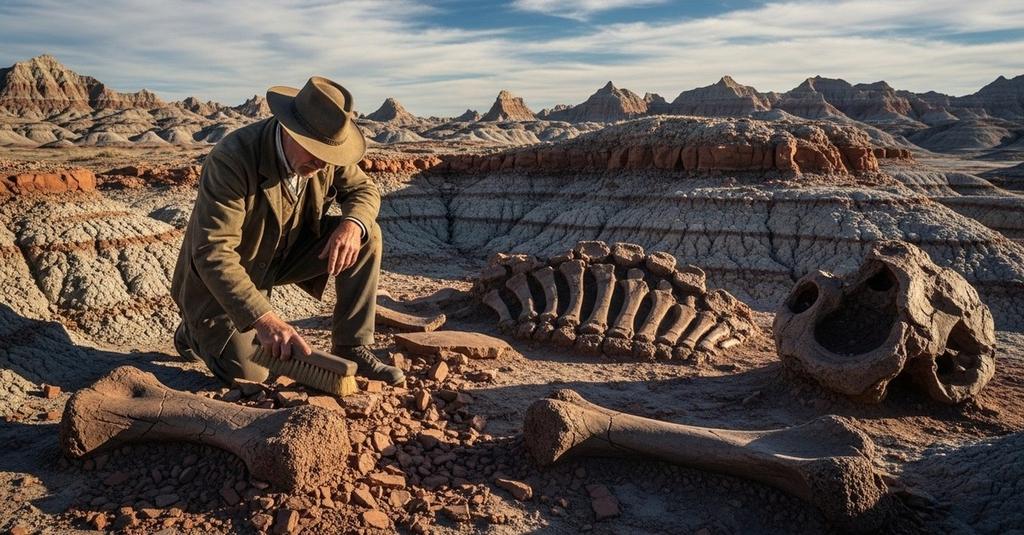
Expeditions to Patagonia, Argentina. Fieldwork in India. Extended campaigns along the Red Deer River in Alberta, Canada — one of the richest dinosaur bonebeds ever discovered. Brown showed up with crews and started digging wherever the geology looked promising. Ancient floodplains, exposed sediment, crumbling badland formations. He worked four continents at a time when international expeditions meant months of sea travel in each direction just to arrive.
The practical innovation nobody really talks about? He used a barge on the Red Deer River, floating from site to site along exposed cliffs and banks that would’ve taken weeks to reach overland. It was efficient. It was unconventional. It was entirely his own invention.
He also built relationships with local ranchers and landowners in ways that were actually ahead of his time — which gave him access to private land where untouched fossils were just sitting there waiting. That network mattered as much as any geological survey.
The Numbers That Don’t Lie
- Over 500 significant vertebrate fossils collected for the AMNH across 60+ years of fieldwork.
- The 1902 T. rex — found 66 million years after the animal’s extinction in one of North America’s most fossil-rich geological units.
- 1908 T. rex was approximately 40% more complete than the first specimen. This skeleton became the basis for early reconstructions that defined how the public imagined the animal for entire decades.
- Four continents. Multiple expeditions to each. Sea travel measured in months. And he kept going.
The Stranger Details
- His name — “Barnum” — wasn’t family tradition. He was born the same day P.T. Barnum’s circus came to his hometown in Kansas. His parents named him in honor of the occasion. Whether that showmanship was genetic is an open question.
- During World War II, Brown was reportedly recruited as an informal intelligence asset by the OSS, the CIA’s predecessor. He used overseas fossil expeditions as cover to gather geographic and political information. This sounds like fiction. Historians have documented it anyway.
- The fur coat wasn’t purely vanity. Montana badland temperatures swing dramatically — brutal nights even in late fall. The coat was practical camouflage for a man working brutal seasons in harsh terrain.
Why This Still Matters
Walk into the American Museum of Natural History’s fossil halls and look up. The T. rex dominating the room. The massive sauropods. The duck-billed hadrosaurs. Many of them came out of the ground because one man in a fur coat refused to stop digging.
Barnum Brown T. rex is the famous part. But what he collected shaped how an entire century of scientists understood the Mesozoic. The full catalog mattered. Without him, paleontology in the 20th century looks fundamentally different.
What he proved was something simpler and stranger: that discovery comes from going somewhere hard, staying as long as required, and trusting what you’re seeing in the rock. Theory helps. Labs help. But sometimes the answer is just showing up and not leaving.
Brown died in 1963 at 89, still consulting for the AMNH. The fossils he collected are still being studied. Still being redescribed. Still yielding new science more than a century later. One person. One coat. Six decades of work that we’re still catching up to. Explore more at this-amazing-world.com.
Frequently Asked Questions
Q: Who discovered the first Tyrannosaurus rex skeleton?
Paleontologist Barnum Brown discovered the first Tyrannosaurus rex skeleton in 1902 in the Hell Creek Formation of eastern Montana, after two field seasons of careful excavation. He was working for the American Museum of Natural History. Although Brown found the specimen, it was Henry Fairfield Osborn, the museum’s paleontologist, who formally named the species Tyrannosaurus rex in 1905. Brown later found a second, more complete skeleton in 1908.
Q: How many fossils did Barnum Brown collect?
Over a career spanning more than 60 years, Barnum Brown collected over 500 significant vertebrate fossils for the American Museum of Natural History. His finds arrived so frequently that curators struggled to catalog them. Beyond his two T. rex skeletons, he collected hadrosaurs, ceratopsians, and ankylosaurs from Montana, Wyoming, Alberta, Patagonia, and India across four continents — an output no single paleontologist has matched before or since.
Q: Why was Barnum Brown named Barnum?
Barnum Brown was born in 1873 on a Kansas farm, and his name was not a family tradition. He was born the same day that P.T. Barnum’s circus came to his hometown, and his parents named him in honor of the occasion. Fittingly, Brown became known for his flair, famously wearing a full-length beaver fur coat in the field and in photographs alongside the dinosaur skeletons he excavated.
Q: Where can you see Barnum Brown’s dinosaur fossils?
Many of Barnum Brown’s most famous fossils are displayed at the American Museum of Natural History in New York, where he worked for most of his career. The museum’s fossil halls feature T. rex specimens, massive sauropods, and duck-billed hadrosaurs that Brown collected. He died in 1963 at age 89, still consulting for the museum, and the fossils he gathered are still being studied and redescribed more than a century later.
Illustrations are AI-generated. Article fact-checked and human-edited. Our editorial standards.