Beaconsfield Mine Collapse Survival: 14 Days Underground
The Beaconsfield mine collapse survival story begins almost a kilometer underground. Fourteen days. That’s how long Brant Webb and Todd Russell spend buried beneath Beaconsfield, Tasmania, alive and breathing in the dark. A void barely big enough to turn around in. And one unlikely lifeline.
The collapse comes in April 2006, when a small earthquake triggers a rockfall deep in the gold mine. A third man dies. Webb and Russell are entombed in a steel cage of a work platform, sealed off by tons of stone. Rescuers don’t even know if they’re alive at first. Then, against the odds, comes a sound from below. The question becomes brutal and simple: how do you reach two men through solid rock?
Key Facts
- Brant Webb and Todd Russell survived 14 days trapped after the Beaconsfield mine collapse in April 2006.
- The men were caught nearly one kilometer underground in Tasmania, Australia, in a space barely large enough to turn around.
- A rockfall triggered by a small seismic event caused the collapse; a third miner, Larry Knight, was killed.
- Rescuers drilled a narrow bore hole to pass food, water, and an iPod loaded with Foo Fighters music.
- Dave Grohl wrote the miners a note and later composed “Ballad of the Beaconsfield Miners,” released on the 2007 album Echoes, Silence, Patience & Grace.
In short: The Beaconsfield mine collapse survival story saw Brant Webb and Todd Russell trapped nearly a kilometer underground for 14 days in 2006. A narrow bore hole delivered food, water, and an iPod of Foo Fighters music. Dave Grohl responded with a handwritten note and an instrumental song written for the two men.
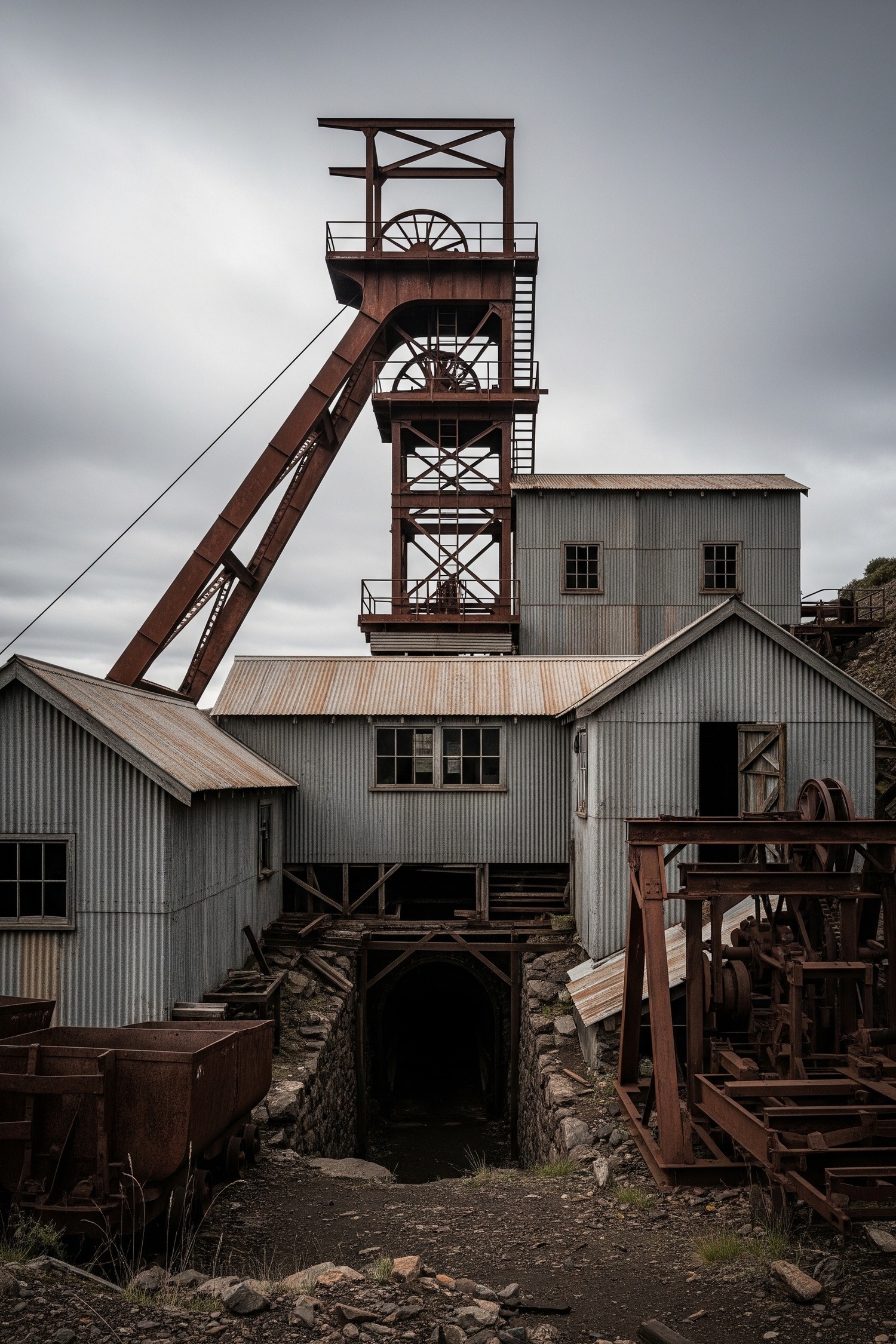
How did two men survive the Beaconsfield mine collapse?
The rockfall strikes on Anzac Day, April 25, 2006, while the men work at the 925-meter level of the Beaconsfield Gold Mine. A seismic event, tiny by earthquake standards, shears loose a slab of rock that crushes the tunnel. Webb and Russell are saved by the steel basket of their telehandler, which holds just enough shape to leave a survivable pocket. For five days, the world above assumes the worst. Then, on May 1, rescuers detect them alive through thermal imaging, a discovery the Beaconsfield mine collapse records still describe as near-miraculous.
What follows is one of the most delicate rescues in mining history. The rock around the men is unstable, so heavy machinery is out of the question for days. Engineers must tunnel by hand and with low-vibration tools, inching toward the trapped pair while the mountain groans overhead. Every meter risks a second collapse. The men, meanwhile, ration the single muesli bar and trickle of groundwater that keep them alive until the first bore hole reaches them.
Two weeks underground. A pocket the size of a car. And no guarantee any of it would work.
What did the rescuers send down the bore hole?
Once the narrow shaft reached the men, it became their umbilical cord to the surface. Through it came food, water, dry clothes, and communication, a thin channel of normal life threaded through a kilometer of stone. The men asked for specific comforts, and rescuers obliged where they could. Our broader look at how people endure the unendurable shows how often survival hinges on these small, human-scale lifelines rather than grand heroics alone.
Then came the request that traveled the world. Amid the deafening grind of the rescue machinery, Webb asked for an iPod, loaded with Foo Fighters. It was a small, almost absurd thing to want a kilometer underground. But it was also profoundly human, a reach for something familiar in a place built to break the spirit. The detail leaked to the press, and within days it reached the one person who could answer it directly.
The music went down the hole. And something came back up.
Why did Dave Grohl write the miners a song?
When the story reached Dave Grohl, the Foo Fighters frontman didn’t issue a polished statement. He sat down and wrote the trapped miners a handwritten note, faxed underground, offering them tickets to any Foo Fighters concert on the planet and a cold beer on the far side of the ordeal. According to coverage by the BBC, the gesture cut straight through the noise of the rescue, a rock star treating two strangers in a hole like old friends he simply hadn’t met yet.
He meant it. That October, after the men were freed, Grohl personally welcomed Webb backstage following an acoustic set at the Sydney Opera House. Then he did something even more unexpected. He composed an instrumental piece, “Ballad of the Beaconsfield Miners,” and released it on the band’s 2007 album Echoes, Silence, Patience & Grace. Not a press release. Not a charity donation. A song, written specifically for two men who’d asked for his music in the dark.
Sometimes the most human response to catastrophe isn’t a rescue team. It’s a melody.
What does the Beaconsfield mine collapse teach us?
The technical lessons were immediate and concrete. A formal inquiry into the disaster, completed in 2007, scrutinized seismic monitoring and ground-support practices at the Beaconsfield Gold Mine, and its findings rippled through Australian mining safety regulation. Seismic risk in deep hard-rock mines moved from a background worry to a front-line design concern. The mine itself kept operating until 2012, when falling gold grades, not safety, finally closed it.
But the lesson people remember has nothing to do with engineering. It’s that connection reached two men when almost nothing else could. The music didn’t dig them out, the iPod didn’t move a single stone, and yet both mattered enormously. Cause and effect blur here: a song can’t lift rock, but it can lift the will to keep breathing through fourteen days of dark. The rescue saved their bodies. Something quieter kept their minds intact.
That’s the part no inquiry can measure, and the part that lingers.
How did the survivors and the song endure afterward?
Webb and Russell emerged on May 9, 2006, walking out under their own power to a crowd and a wall of cameras, two weeks after the rock closed over them. Their survival became a national story in Australia, dissected in books, a television miniseries, and countless interviews. Both men spoke openly afterward about the psychological weight of the ordeal, the strange intimacy of being trapped together, and the long road back to ordinary life. Survival, they made clear, doesn’t end when the rescue does.
“Ballad of the Beaconsfield Miners” outlived the headlines too. It remains a quiet fixture in the Foo Fighters catalog, an instrumental with no lyrics to explain itself, just a guitar reaching for something words couldn’t hold. Decades on, the song still does exactly what Grohl’s faxed note did underground: it shows up, asks nothing, and reminds anyone listening that the world above hasn’t forgotten the people stuck below.
A gesture, it turns out, can last longer than the crisis that prompted it.

How It Unfolded
- April 25, 2006: A seismic event triggers a rockfall at the 925-meter level of the Beaconsfield Gold Mine; Larry Knight is killed and two men are trapped.
- May 1, 2006: Rescuers detect Brant Webb and Todd Russell alive through thermal imaging after five days of uncertainty.
- May 9, 2006: After 14 days underground, the two miners are freed and walk out under their own power.
- 2007: Dave Grohl releases “Ballad of the Beaconsfield Miners” on the Foo Fighters album Echoes, Silence, Patience & Grace.
By the Numbers
- 14 days: how long Webb and Russell survived trapped underground in 2006.
- ~925 meters: the depth at which the collapse occurred, nearly a kilometer down.
- 5 days: how long before rescuers confirmed the men were alive.
- 1 muesli bar: the food the pair rationed between them before the bore hole reached them.
- 2012: the year the Beaconsfield Gold Mine finally closed, due to declining grades.
Field Notes
- The men survived partly because the steel cage of their work platform held its shape under the rockfall, leaving a small air pocket.
- Dave Grohl’s offer of concert tickets and a cold beer was delivered by handwritten note, faxed down through the rescue channel rather than announced publicly.
- “Ballad of the Beaconsfield Miners” is an instrumental, deliberately wordless, leaving the meaning to the music alone.
- Psychologists still study how trapped survivors maintain morale; the Beaconsfield case suggests familiar sound and human contact may matter as much as food and water.
Frequently Asked Questions
Q: How long were the miners trapped in the Beaconsfield mine collapse?
Brant Webb and Todd Russell were trapped for 14 days after the Beaconsfield mine collapse in April 2006. The rockfall occurred on April 25, and the two men were freed on May 9. For the first five days, rescuers didn’t know whether they were alive, only confirming it through thermal imaging on May 1. The pair survived nearly a kilometer underground in a space barely large enough to move in.
Q: What caused the Beaconsfield mine collapse?
The collapse was triggered by a small seismic event, an earthquake minor by surface standards, that sheared loose a slab of rock at the 925-meter level of the gold mine. The falling rock crushed part of the tunnel, killing miner Larry Knight and trapping Webb and Russell. A 2007 inquiry examined the mine’s seismic monitoring and ground-support practices, and its findings influenced Australian mining safety regulations for deep hard-rock operations.
Q: Did Dave Grohl really write a song for the Beaconsfield miners?
Yes. After learning the trapped miners had requested an iPod loaded with Foo Fighters, Dave Grohl sent a handwritten note offering them concert tickets and a beer. He later welcomed survivor Brant Webb backstage at the Sydney Opera House in October 2006. Grohl then composed “Ballad of the Beaconsfield Miners,” an instrumental released on the 2007 album Echoes, Silence, Patience & Grace, written specifically in their honor.
Q: How did the miners survive 14 days underground?
They survived through a combination of luck, rationing, and rescue. The steel cage of their work platform held enough shape to create a survivable air pocket. For the first days they rationed a single muesli bar and groundwater. Once rescuers drilled a narrow bore hole, food, water, and supplies could reach them. The delicate hand-tunneling rescue, slowed to avoid a second collapse, finally freed them on May 9, 2006.
Editor’s Take — Sarah Blake
The detail that won’t leave me isn’t the rock or the 14 days. It’s the iPod. Trapped a kilometer down, one of the first things a man reaches for is a song. And the strangest part is that it worked, that a fax from a rock star and a few Foo Fighters tracks did something the drills couldn’t. We tend to picture survival as muscle and machinery. Beaconsfield says it’s also a melody, threaded down a hole, reminding two men the world still knows their names.
There’s a hole in the rock at Beaconsfield where, for fourteen days, the only proof of the world above was a thin channel carrying water, food, and music. The mine is closed now, the cameras long gone, but the song remains, wordless and patient. It still does the one thing that mattered most down there: it shows up. What would you ask the surface to send, if the rock closed over you and the dark was all that answered?
Illustrations are AI-generated. Article fact-checked and human-edited.