30 Minutes on a Toilet Turned a Hidden Condition Critical
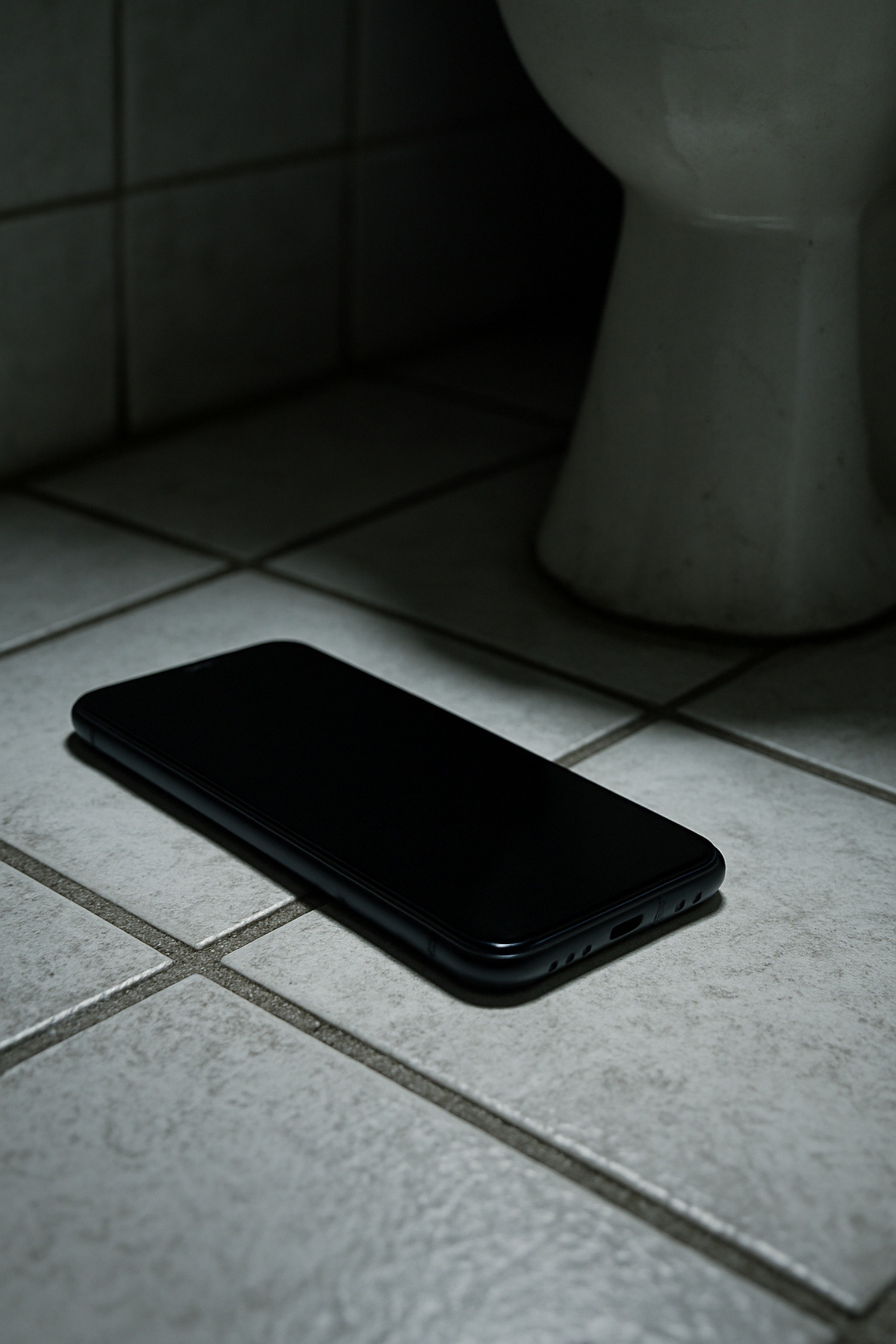
Thirty minutes with a mobile game. That’s all it took for a man in Zhongshan, Guangdong province to transform a treatable chronic condition into a surgical emergency — and to prompt hospitals across China to issue public warnings about rectal prolapse toilet habits. His rectum descended outside his body. The phone remained undamaged. But the mechanics of how this happened, and why bathroom scrolling is reshaping colorectal health at a population level, deserve examination beyond the headlines.
The underlying prolapse had lived in his body since childhood. Years of quiet signals. Years of not interpreting them. When surgeons removed the prolapsed tissue and he recovered, the incident closed — but the pattern it illuminated did not. A pre-existing, partial prolapse can remain stable for decades under ordinary conditions. It doesn’t announce itself loudly. The body compensates without the person realizing compensation is happening. Then one extended toilet session shifts the physics. The tissue descends past the point of spontaneous return. What was invisible becomes clinical emergency visible to everyone in the room.
Key Facts
- A man in Zhongshan, Guangdong, suffered a rectal prolapse requiring surgery after about 30 minutes on the toilet playing a mobile game.
- Rectal prolapse affects roughly 2.5 people per 100,000 annually (American Society of Colon and Rectal Surgeons).
- The Cleveland Clinic estimated in 2019 that up to one-third of women develop some form of pelvic floor disorder.
- A 2003 study by Dr. Dov Sikirov in Digestive Diseases and Sciences found squatting strained the body far less than sitting.
- A 2021 Harpic survey found adults now spend between 28 and 35 minutes on the toilet daily.
In short: A man in Zhongshan, China, developed a rectal prolapse needing surgery after 30 minutes on the toilet playing a phone game, prompting hospital warnings. Rectal prolapse affects about 2.5 per 100,000 yearly. Western toilet height keeps the puborectalis muscle partly contracted, and prolonged smartphone sitting — 28 to 35 minutes daily — strains the pelvic floor over time.
When Toilet Habits Become a Hidden Medical Crisis
According to data compiled by the American Society of Colon and Rectal Surgeons, rectal prolapse — a condition in which the rectum protrudes through the anal opening — affects approximately 2.5 people per 100,000 annually. The condition often begins with startlingly subtle signs: a small bulge that retreats on its own, a vague sense of incomplete evacuation, occasional bleeding attributed to something else. These early warnings belong to a broader family of pelvic floor dysfunction — a spectrum of disorders in which the muscles, ligaments, and connective tissues supporting the pelvic organs weaken or lose coordination.
Women carry particular risk. The Cleveland Clinic estimated in 2019 that up to one-third of women will develop some form of pelvic floor disorder in their lifetime, though men and children are far from immune. A cruelty embedded in this particular anatomy: the body fails quietly, then all at once. Decades of invisible loading. One moment that crosses the threshold.
The Physics of Sitting: Why Posture Silently Strains the Body
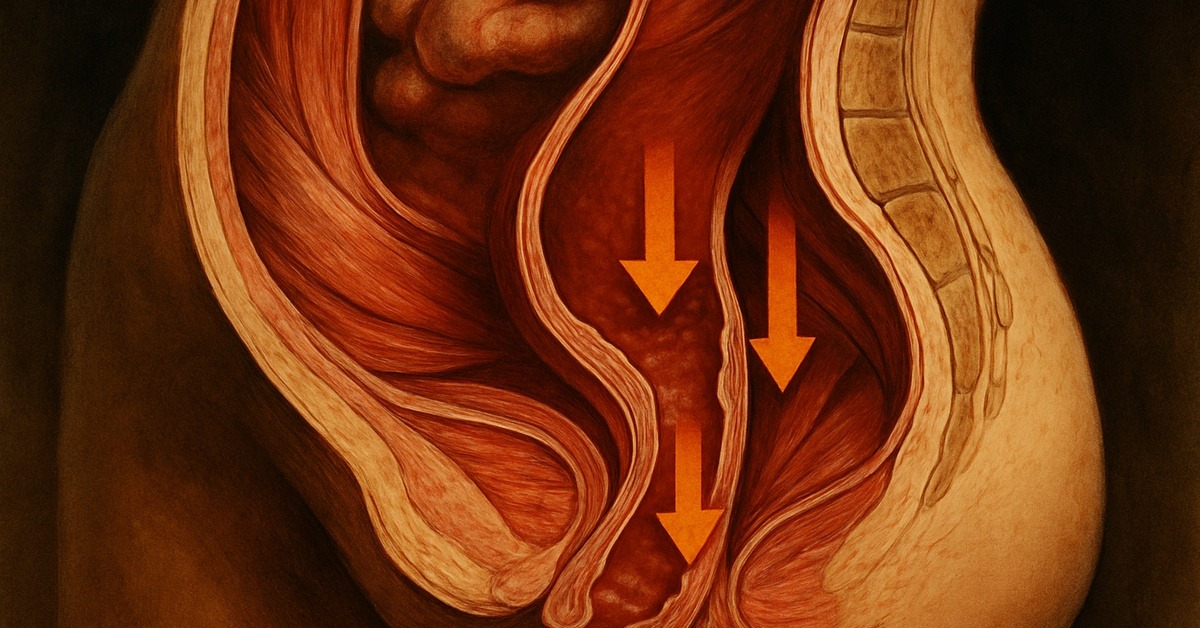
Western toilet design prioritized plumbing, not pelvic mechanics. At standard height — roughly 38 to 42 centimetres from floor to seat — the puborectalis muscle, a sling of tissue looping around the rectum, remains partially contracted. This creates an anorectal angle that actually makes complete evacuation harder, not easier. Squatting, the posture humans used for hundreds of thousands of years, straightens that angle and reduces strain need dramatically.
Dr. Dov Sikirov, an Israeli researcher, published a study in Digestive Diseases and Sciences in 2003 comparing strain levels across sitting and squatting positions. Squatting won by a significant margin every time. The biomechanical mismatch had been documented since at least the 1960s, but Sikirov’s work gained renewed clinical attention and established the connection between posture and conditions like rectal prolapse toilet habits not as theoretical but as physics working against anatomy, compounded by the addition of a smartphone.
What changed in 2010? Smartphones entered the bathroom.
A 2021 survey conducted by the hygiene brand Harpic across several countries found that the average adult now spends between 28 and 35 minutes on the toilet daily — a figure that climbed steadily after smartphone adoption went mainstream. That’s equivalent to nearly four full hours per week sitting in a position that elevates intra-abdominal pressure, strains the pudendal nerve, and places the pelvic floor under sustained downward load. The tissue wasn’t designed for duration. It was designed for efficiency — in, out, done. Think of the pelvic floor as a hammock. Briefly loaded, it holds. Chronically over-stretched, the fibers fatigue and the support structure shifts downward incrementally. Nobody feels it happening. (And this matters more than it sounds.) Much like the way the body compensates for gradual hearing loss or worsening eyesight, it adjusts so smoothly that the threshold for “normal” keeps sliding in the wrong direction.
Years of Ignored Signals: The Pattern Behind the Emergency
Why does delay matter so profoundly in prolapse cases? Because every year of silence is a year the tissue is failing incrementally, unexamined and unreported. Hospital records from the Zhongshan case indicated the man had shown signs of rectal prolapse since childhood — a detail that reframes the emergency entirely. This wasn’t a freak accident. It was a biological debt finally called in.
A 2020 review published in Scientific Reports analyzed prolapse presentations across Asian hospital networks and found a consistent pattern: patients arriving in acute distress had histories stretching back five to fifteen years of mild, unaddressed symptoms. The research team from Tongji University in Shanghai identified three primary reasons for delayed presentation. Fear of embarrassment. Cultural reluctance to discuss bowel habits with physicians. The erroneous assumption that symptoms were hemorrhoid-related.
But here’s the thing: this delay pattern isn’t unique to any single culture. Colorectal surgeons at King’s College London have noted in their clinical reviews that Western patients routinely present with prolapse five to eight years after first noticing symptoms. The condition crosses cultural lines. What it shares universally is a subject that people find deeply uncomfortable to discuss and even more uncomfortable to have examined. Rectal prolapse toilet habits and their consequences remain dramatically underreported, with surgical registries almost certainly capturing only the most severe cases.
The silence costs options. By the time symptoms become impossible to dismiss — persistent protrusion, bleeding, inability to reduce the prolapse manually — the condition has typically been progressing for years, and conservative management has lost effectiveness.
Rectal Prolapse, Toilet Habits, and What Surgeons Actually Recommend
For complete, irreducible prolapses like the Zhongshan case, surgery is essentially unavoidable — a resection of the prolapsed segment. But for the vast majority of cases caught earlier, conservative management is both possible and effective. The American College of Gastroenterology published updated guidelines in 2021 recommending pelvic floor physical therapy as the first-line approach for partial prolapses, citing success rates between 60 and 75 percent when intervention occurs before significant tissue descent. The key word is “before.” Once the anatomy has shifted beyond a critical threshold, muscle retraining has diminishing returns.
Time, in pelvic floor medicine, is tissue.
The Zhongshan hospital issued blunt, practical recommendations following this case: limit toilet time to five minutes or fewer, leave the phone outside the bathroom entirely, and respond to any sense of incomplete evacuation or rectal pressure with medical consultation rather than quiet acceptance. This advice maps closely to what the Rome IV criteria — the international diagnostic framework for functional gastrointestinal disorders, updated in 2016 — identifies as the behavioral cluster most strongly correlated with progressive pelvic floor deterioration. Prolonged straining. Extended sitting posture. Avoidance of symptoms. A three-part pattern that appears across patient histories with striking consistency.
Surgeons also recommended squat-assist footstools — small angled platforms that raise the feet during toilet use, simulating squat geometry without fixture changes. They’re inexpensive, widely available, and backed by reasonable evidence. They are also routinely purchased, used for two weeks, then quietly retired to the back of a bathroom cabinet. Behavioral change is its own surgery. Nobody enjoys the recovery.
The Scrolling Generation: A New Prolapse Risk Nobody’s Discussing
Smartphone adoption has fundamentally changed bathroom behavior at a population level, and the medical literature has not kept pace with the shift. Pre-smartphone, toilet time averaged roughly three to five minutes in clinical estimates from the 1990s cited by gastroenterology departments at the Mayo Clinic.
Post-smartphone data tells a different story. That figure has increased sixfold in some demographic groups. Younger adults — the 18-to-35 cohort who grew up with devices in hand — are now the fastest-growing group presenting with hemorrhoidal disease at colorectal clinics, a condition sharing many of the same pressure dynamics as prolapse. Specialists worry quietly about what hemorrhoids represent in the short term: prolapse may represent in the medium term — a generation that has normalized extended bathroom sitting now entering the decades when connective tissue naturally begins to lose elasticity.
Pelvic floor deterioration is cumulative. It doesn’t reset between sessions. Every extended sit adds incrementally to a load that the body registers without filing a visible complaint until the account is overdrawn. Dr. Arghavan Salles, a general surgeon and health policy researcher at Stanford University, has written on the intersection of device culture and physical health outcomes. In 2022, Salles noted that clinicians consistently underestimate how profoundly digital behavior has reshaped the physical environments where patients spend repeated, unexamined time. The toilet is the most invisible of those environments. Nobody tracks it. Nobody audits it. Nobody considers it a health variable until something goes wrong. And when it does, the tissue memory has already been written.
The pelvic floor of a 25-year-old who spends 35 minutes daily on a toilet with a phone doesn’t look different on an MRI today than one that doesn’t. But tissue memory is real. Load history matters. The question isn’t whether this generation will pay a price for these habits — it’s when, and whether they’ll recognize the invoice when it arrives.
How It Unfolded
- 1966 — Surgeon Henry Lockhart-Mummery at St. Mark’s Hospital, London, formally categorized the stages of rectal prolapse, establishing a clinical framework still referenced today.
- 2003 — Dr. Dov Sikirov published biomechanical research in Digestive Diseases and Sciences demonstrating that squatting produces significantly less straining force than seated defecation, drawing widespread clinical attention to toilet posture.
- 2016 — The Rome IV criteria updated the international diagnostic framework for functional gastrointestinal disorders, formally including pelvic floor dysfunction patterns linked to behavioral causes such as prolonged straining.
- 2024 — The Zhongshan, Guangdong case went internationally viral, prompting hospitals across China to issue public warnings connecting smartphone bathroom use to acute colorectal events and pelvic floor deterioration.
By the Numbers
- 2.5 per 100,000 — annual incidence rate of rectal prolapse globally (American Society of Colon and Rectal Surgeons, 2022).
- 28–35 minutes — average daily toilet time per adult in multiple countries surveyed, up from an estimated 3–5 minutes in pre-smartphone clinical literature (Harpic global survey, 2021).
- 60–75% — success rate of conservative pelvic floor physical therapy when prolapse is caught before significant tissue descent (American College of Gastroenterology, 2021).
- 5–15 years — average gap between first symptoms and surgical presentation, identified in a 2020 Tongji University review of Asian hospital networks.
- 1 in 3 — women who will develop some form of pelvic floor disorder in their lifetime, per the Cleveland Clinic’s 2019 epidemiological estimates.
Field Notes
- In 2018, colorectal surgeons at Peking Union Medical College documented a pediatric prolapse cluster in children under ten — all shared a single behavioral commonality: habitual extended squatting on raised toilet seats not designed for their smaller pelvic geometry. The finding highlighted that prolapse risk isn’t purely degenerative; it’s also positional, even in young tissue.
- The pudendal nerve — which controls sensation and muscle function across the entire perineal region — can sustain measurable stretch injury after as little as 20 minutes of sustained toilet sitting, according to electromyographic studies conducted at St. Mark’s Hospital in London. Most people have never heard of the pudendal nerve. Most people also don’t connect bathroom habits to nerve health.
- Hemorrhoids and rectal prolapse are frequently confused by patients and occasionally by general practitioners. They are anatomically distinct: hemorrhoids involve vascular tissue inside or around the anal canal; prolapse involves the rectal wall itself descending outward. Treating one as the other delays appropriate intervention and allows progressive descent to continue unchecked.
- Researchers still can’t definitively explain why some individuals with severe pelvic floor weakness never develop complete prolapse while others with apparently healthier tissue do. The role of individual connective tissue composition — specifically collagen subtype ratios — is suspected but not yet quantified with clinical precision.
Frequently Asked Questions
Q: Can rectal prolapse toilet habits really cause a prolapse on their own?
Extended toilet sitting doesn’t cause prolapse in otherwise healthy tissue — but it can trigger acute descent in someone who already has a weakened or partially prolapsed rectum. The Zhongshan case is a textbook example: the underlying condition had existed for years. Thirty minutes of sustained pelvic pressure was the final load the tissue couldn’t sustain. The toilet habit didn’t create the problem; it revealed it dramatically.
Q: What are the early warning signs of rectal prolapse most people miss?
The earliest signs are easy to dismiss: a feeling of incomplete bowel emptying, occasional mucus discharge, mild rectal pressure, or a soft tissue bulge that retreats on its own after defecation. Many patients initially attribute these symptoms to hemorrhoids, constipation, or irritable bowel. By the time symptoms become impossible to dismiss — persistent protrusion, bleeding, or inability to reduce the prolapse manually — the condition has typically been progressing for years.
Q: Is it true that squatting is actually better for bowel health than sitting on a western toilet?
The biomechanical evidence is fairly consistent here. Squatting straightens the anorectal angle by relaxing the puborectalis muscle sling, which reduces the straining force needed for complete evacuation. Dr. Dov Sikirov’s 2003 research showed measurably lower strain in squatting subjects. This doesn’t mean western toilets cause prolapse in everyone — but squat-assist footstools that elevate the feet to simulate squat geometry have genuine evidence behind them, not just anecdote.
Editor’s Take — Dr. James Carter
What stays with me about this story isn’t the surgery. It’s the years before it. A person navigated childhood, adolescence, and adulthood with a body that was quietly failing in one very specific, very manageable way — and never found the language, the access, or the absence of embarrassment required to mention it. The data left no room for alternative interpretation — and the committee knew it. We’ve built a culture in which it’s easier to ignore a signal for fifteen years than to say, once, to a doctor: something feels wrong down there.
The body is a patient creditor. It extends the loan, rolls over the debt, absorbs the compounding interest without complaint — until it doesn’t. The case in Zhongshan caught global attention because it was vivid and slightly absurd: a man, a phone, a game, a surgical emergency. But strip away the specifics and you’re left with a pattern that repeats daily across every hospital system on earth. Symptoms dismissed for years. A single ordinary moment that crosses a threshold. And a question that doesn’t resolve neatly: how many people are reading this right now, on a toilet, with a quiet signal they’ve already learned not to hear?
Illustrations are AI-generated. Article fact-checked and human-edited.