The Mighty Big Toe: The Secret Engine of Human Evolution
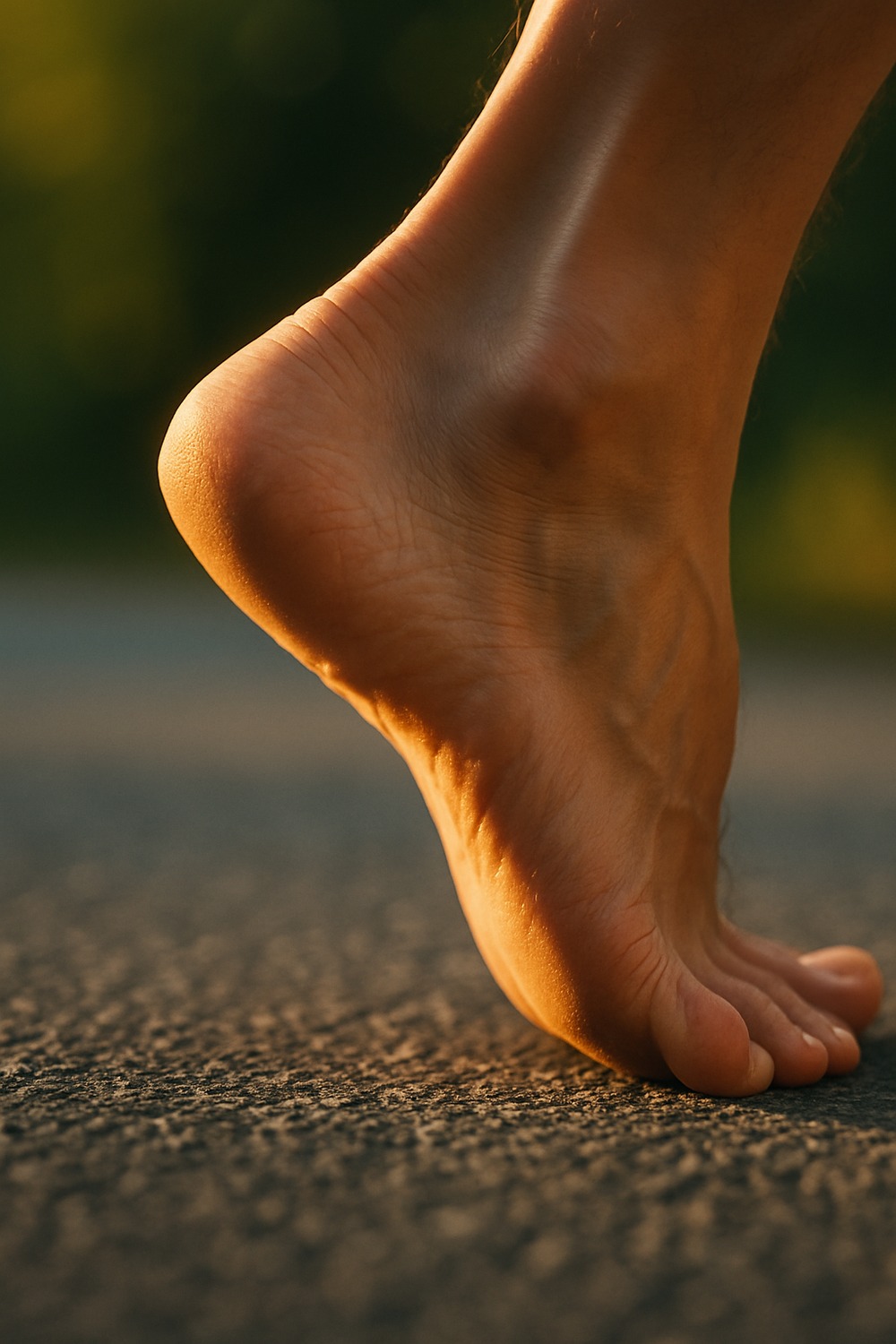
Three-point-seven million years ago, someone walked through wet volcanic ash on a Tanzanian plain and kept going — never knowing they were leaving behind the clearest argument we have for what made us human. Big toe human evolution doesn’t begin with a brain or a tool. It begins with a single digit pressing into hardened ground, aligned not outward like an ape’s grasping foot, but flush, parallel, committed to forward motion. That footprint is still there. And most mornings, you recreate it without thinking.
The hallux — your big toe — absorbs roughly 60 percent of your body weight with every push-off stride. It anchors balance, drives propulsion, and helped transform an ape into a distance runner capable of crossing continents. Yet for all its mechanical importance, it rarely earns a second thought. So what does our dependence on something so seemingly minor actually reveal about how we became human?
Key Facts
- The Laetoli footprints in Tanzania, dated to 3.7 million years ago, show a fully aligned human-style big toe and stretch nearly 27 meters.
- Mary Leakey’s team formally described the Laetoli trackway prints in 1978.
- The big toe absorbs roughly 60 percent of body weight during the push-off phase of a walking stride.
- Harvard researchers Daniel Lieberman and Dennis Bramble published the endurance running hypothesis in Nature in 2004.
- Bunions affect an estimated 23 percent of adults worldwide, rising to 36 percent in adults over 65 (Journal of Foot and Ankle Research, 2010).
In short: The story of big toe human evolution is traced through the 3.7-million-year-old Laetoli footprints in Tanzania, which show a hallux aligned for upright walking rather than gripping. The big toe absorbs about 60 percent of push-off force, making it a propulsive lever central to human bipedalism and endurance running.
The Toe That Rewrote the Story of Walking
In 1978, paleoanthropologist Mary Leakey and her team at the Laetoli site in northern Tanzania uncovered something that stopped the field cold. Preserved in a layer of volcanic ash hardened by rain, a trail of hominin footprints stretched nearly 27 meters — and they looked startlingly modern. The big toe sat flush alongside the other digits, not splayed outward like a chimpanzee’s grasping foot. This alignment, researchers now understand, is the biomechanical signature of obligate bipedalism — walking upright as a default, not an occasional trick.
The Laetoli trackways, attributed to Australopithecus afarensis, confirmed that the hallux had already locked into place alongside the other toes millions of years before our genus, Homo, even appeared. What makes the big toe so mechanically decisive? It comes down to lever mechanics. During each walking stride, the heel strikes first, the arch absorbs shock, and then — at the critical moment of push-off — the hallux flexes under enormous load, propelling the body forward. Biomechanics researchers at Stanford University’s Human Performance Lab have measured peak forces on the first metatarsophalangeal joint (researchers actually call this the MTP joint, and the name undersells it considerably) at well over 40 percent of total ground reaction force. That’s not supporting weight. That’s launching it.
Lose that lever and the whole kinetic chain falters. Surgeons and physical therapists who treat hallux amputation patients describe watching people essentially relearn how to move from scratch. The toe isn’t decoration. It’s an engine.
Why Apes Can’t Run Marathons — But We Can
Why does this matter? Because the gap between a chimpanzee’s foot and ours isn’t just structural — it’s the difference between a body built to climb and a body built to chase.
A chimpanzee’s big toe points away from the foot at roughly 30 to 40 degrees, optimized for gripping branches and clambering up vertical surfaces. Ours is parallel, bound to the foot by a rigid ligament system, and built for sustained forward propulsion over long distances. Just as the Sunda flying lemur’s elongated limbs evolved for a very specific form of locomotion, our hallux represents a radical structural commitment to a single movement strategy — and that commitment changed everything about what our ancestors could do in the world. Researchers at Harvard University’s Department of Human Evolutionary Biology, led by Daniel Lieberman, built a compelling case around what they call the “endurance running hypothesis,” published in Nature in 2004. Their work identified more than two dozen anatomical features in modern humans that appear purpose-built for long-distance running — features conspicuously absent in our nearest primate relatives. The hallux sits at the centre of this suite of adaptations. When early Homo began persistence hunting — chasing prey across open savanna until it collapsed from exhaustion — a rigid, aligned big toe wasn’t a luxury. It was a survival tool.
The numbers tell the story bluntly. A chimpanzee walking bipedally uses roughly four times more energy per stride than a modern human covering the same ground. Much of that efficiency gap traces directly to foot architecture. Our locked hallux, combined with the arch system it anchors, functions as a spring — storing elastic energy on impact and releasing it at push-off. That spring might be the single most consequential anatomical feature in human history.
The Fossil Record’s Most Overlooked Clue
Paleoanthropologists have long focused on skulls — cranial capacity, brow ridges, jaw structure. Feet, by contrast, tend to crumble badly in the fossil record, making complete specimens rare and precious. But when they do survive, they rewrite timelines. In 2011, a research team led by William Harcourt-Smith at the American Museum of Natural History analysed foot bones from multiple hominin species and found a surprising gradient. As Smithsonian Magazine reported, the transition from a flexible, grasping primate foot to a rigid, bipedal human foot wasn’t a single sudden shift — it was a mosaic of changes that played out over millions of years, with the hallux consistently leading the transformation.
Stranger still is the sequence. Big toe human evolution moved ahead of nearly every other hallmark of humanity we tend to celebrate. Stone tools came later. Fire came later. Language, large brains, social complexity — all of it followed. The foot changed first. And that ordering suggests something important: it was the biomechanical demand of upright walking and running that created the selective pressure driving everything else. Freed hands. Longer legs. A reorganised pelvis. Each followed from the simple, brutal logic of moving more efficiently on two feet — a logic anchored, literally, at the toe.
History has a way of treating the people who ignored this kind of evidence unkindly — and the evidence here is unambiguous: we didn’t think our way into humanity. We walked into it.
Think about what that means. The architecture of our thoughts, our tool use, our social complexity — it may all trace back, in some meaningful chain of causation, to a digit locking into alignment with its neighbours. Evolution has a wicked sense of proportion.
Big Toe Human Evolution and the Modern Body’s Hidden Cost
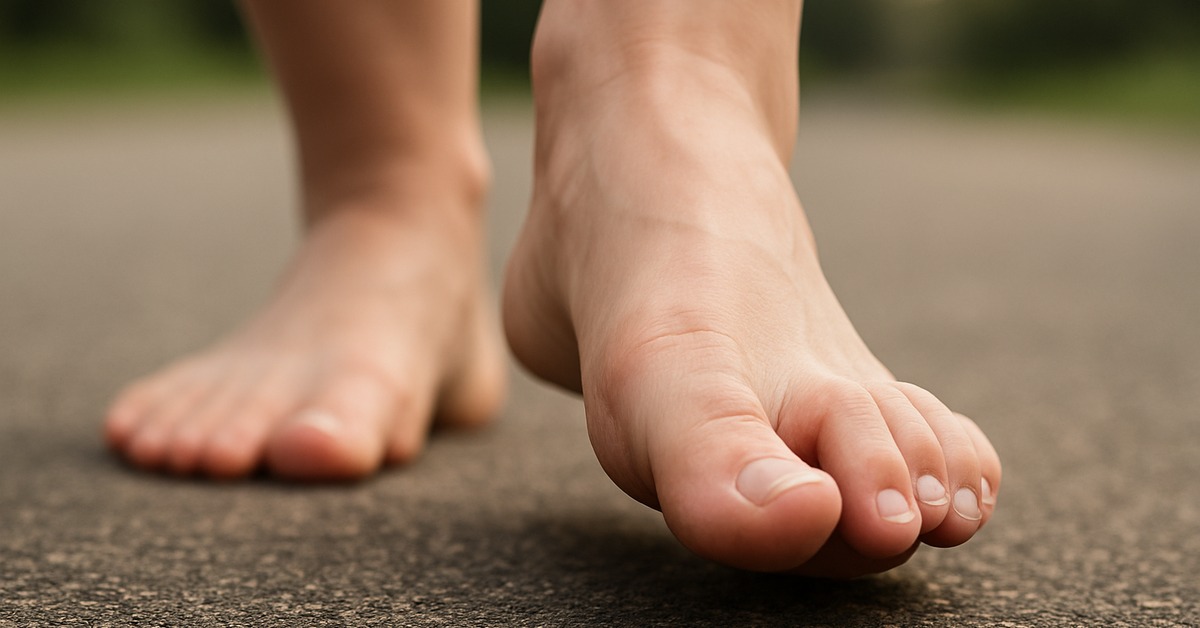
Turns out, the same hallux that enabled human beings to walk upright, hunt across open plains, and eventually build civilisations is now one of the most commonly injured and deformed joints in the human body. Bunions — a progressive deformity in which the big toe drifts toward the smaller toes and the joint protrudes painfully outward — affect an estimated 23 percent of adults worldwide, according to a 2010 systematic review published in the Journal of Foot and Ankle Research. Among adults over 65, that figure climbs to 36 percent. Researchers at the Hospital for Special Surgery in New York have found that much of this epidemic traces directly to footwear — specifically, shoes with tapered toe boxes that mechanically force the hallux inward over years of daily use.
The evolutionary mismatch is almost darkly comic. Our big toe evolved over millions of years to sit aligned and free-moving, bearing enormous loads with precision. Then, in a geological eyeblink — roughly the last few thousand years — humans began binding their feet in increasingly constrictive footwear. Studies tracking barefoot populations, including research on indigenous communities in rural Africa and South America, consistently find dramatically lower rates of hallux deformity than in shoe-wearing urban populations. The joint that helped drive human expansion across every continent is now routinely deformed by fashion. The toe knows how to work. We just keep getting in its way.
And rehabilitation researchers have documented, in uncomfortable detail, what happens when the hallux fails or is lost. At the Hospital for Special Surgery and at military medical centres treating combat injuries, clinicians describe a gait restructuring process that takes months, sometimes years. Patients shift load to the lateral forefoot, the ankle works overtime, and the knee and hip compensate in ways that generate new injury cascades upstream. The body adapts. But adaptation has a price.
How It Unfolded
- 3.7 million years ago — Hominin footprints at Laetoli, Tanzania, show a fully adducted, human-like big toe, the earliest physical evidence of modern bipedal mechanics.
- 1978 — Mary Leakey’s team formally describes the Laetoli trackway prints, forcing a reassessment of when upright walking became anatomically committed.
- 2004 — Harvard researchers Daniel Lieberman and Dennis Bramble publish the endurance running hypothesis in Nature, placing the hallux at the centre of human long-distance locomotion.
- 2011 — William Harcourt-Smith’s analysis at the American Museum of Natural History establishes the mosaic, gradual nature of foot evolution across hominin species.
By the Numbers
- 60% — share of body weight absorbed by the big toe during the push-off phase of a single walking stride.
- 3.7 million years — age of the Laetoli footprints in Tanzania, the oldest confirmed evidence of a human-style aligned hallux.
- 23% — proportion of adults worldwide affected by bunions, rising to 36% in adults over 65 (Journal of Foot and Ankle Research, 2010).
- 4× — the energy cost of chimpanzee bipedal walking compared to human walking over equivalent distance, largely attributable to foot architecture differences.
- 27 metres — length of the preserved hominin trackway at Laetoli, the most complete early hominin footprint trail ever discovered.
Field Notes
- In 2016, researchers at the University of the Witwatersrand analysed a 3.3-million-year-old partial foot skeleton from Sterkfontein, South Africa, and found it retained a partially opposable big toe — suggesting multiple hominin lineages were experimenting with different foot designs simultaneously, some still suited for tree climbing.
- Embedded in the tendons beneath the big toe joint sit two tiny pea-sized bones called sesamoids — unique to the human foot’s load-bearing architecture. They act as pulleys, increasing the mechanical advantage of the muscles that flex the hallux during push-off.
- Long-distance runners who lose hallux function to injury almost universally develop metatarsal stress fractures in the lesser toes within two to three seasons, as lateral load redistribution pushes those bones past their design tolerance.
- Researchers still can’t fully explain why some individuals with severe hallux valgus deformity maintain near-normal gait efficiency while others with mild deformity show significant impairment — the relationship between structural alignment and functional outcome is more complex than current biomechanical models predict.
Frequently Asked Questions
Q: How did big toe human evolution differ from our primate ancestors?
In non-human primates, the big toe is widely abducted — angled away from the other digits to allow gripping of branches and vertical surfaces. In the human lineage, the hallux gradually aligned parallel with the other toes and became bound by rigid ligaments to the forefoot. This shift, documented clearly in the 3.7-million-year-old Laetoli footprints, converted the toe from a grasping tool into a propulsive lever, fundamentally changing how energy is generated during walking and running.
Q: Can a person walk normally without a big toe?
Technically yes — but not without significant compromise. Bearing roughly 60 percent of push-off force in a normal stride, the big toe’s absence forces the body to redistribute load across the lateral forefoot and ankle. Patients who’ve undergone hallux amputation, studied at institutions including the Hospital for Special Surgery in New York, typically require months of intensive gait retraining. Many develop secondary injuries in the ankle, knee, or hip as a result of long-term compensation patterns. Walking continues; efficient, pain-free walking becomes considerably harder.
Q: Does footwear actually damage the big toe over time?
The evidence strongly suggests it can. Barefoot and minimally-shod populations consistently show lower rates of hallux valgus — the progressive inward drift of the big toe — than populations wearing tapered, rigid footwear daily. Genetics do play a role, but a 2010 review in the Journal of Foot and Ankle Research confirmed that mechanical pressure from narrow shoes is a primary driver. The hallux evolved to function unobstructed. Decades inside a pointed shoe is a poor substitute for the volcanic ash of Laetoli.
Editor’s Take — Sarah Blake
What strikes me most isn’t that the big toe is important — it’s that its importance preceded almost everything else we associate with being human. Before art. Before tools. Before language. The foot changed first. That sequence should make us rethink the standard narrative of human evolution, which tends to centre the brain and the hand. The most consequential anatomical event in our history may have happened quietly, at the very bottom, when one small digit stopped reaching for branches and started pushing off the earth instead.
Every morning, without a second thought, you push off from your bed with a joint that’s been millions of years in the making. The hallux carries the full weight of human evolutionary history — the hunts, the migrations, the first tentative steps across volcanic ash — with every stride. We’ve spent centuries designing shoes that quietly undo what evolution spent aeons building. It raises a question worth sitting with: what else are we casually dismantling that we don’t yet have the perspective to see?
Illustrations are AI-generated. Article fact-checked and human-edited. Our editorial standards.