Cold Pasta Spikes Your Blood Sugar 50% Less. Here’s Why
Your leftover pasta in the fridge is literally becoming different food overnight. The blood sugar hit drops by up to 50 percent, and nobody talks about this.
Here’s what gets me: the University of Surrey ran this experiment in 2014. They measured it. They published it. And then basically nothing happened. Nobody rewrote the nutrition textbooks. Nobody put it on pasta boxes. The conventional wisdom stayed exactly the same — pasta is a refined carb, it spikes your blood sugar, eat it fresh or don’t eat it. Except that’s not actually what the data said.
Key Facts
- A 2014 University of Surrey experiment, led by Dr. Denise Robertson, measured glucose response to fresh, cold, and reheated pasta in human participants.
- Cold pasta produced up to a 50% lower blood glucose spike than freshly cooked pasta in the Surrey study.
- Reheated pasta still showed a measurably reduced glucose response compared to fresh pasta, even after warming completely through.
- Resistant starch content in cooked-then-cooled pasta can increase 3 to 4 times compared to hot freshly cooked pasta.
- Butyrate, produced when gut bacteria ferment resistant starch, supplies roughly 60 to 70 percent of colonocyte energy needs.
In short: Cold leftover pasta lowers blood sugar because cooling cooked pasta forms resistant starch your enzymes cannot break down. A 2014 University of Surrey study found cold pasta produced up to a 50% lower glucose spike than fresh, and reheating only partially reverses the effect, leaving leftovers metabolically superior.
What Happens When Pasta Gets Cold (And Why Your Enzymes Care)
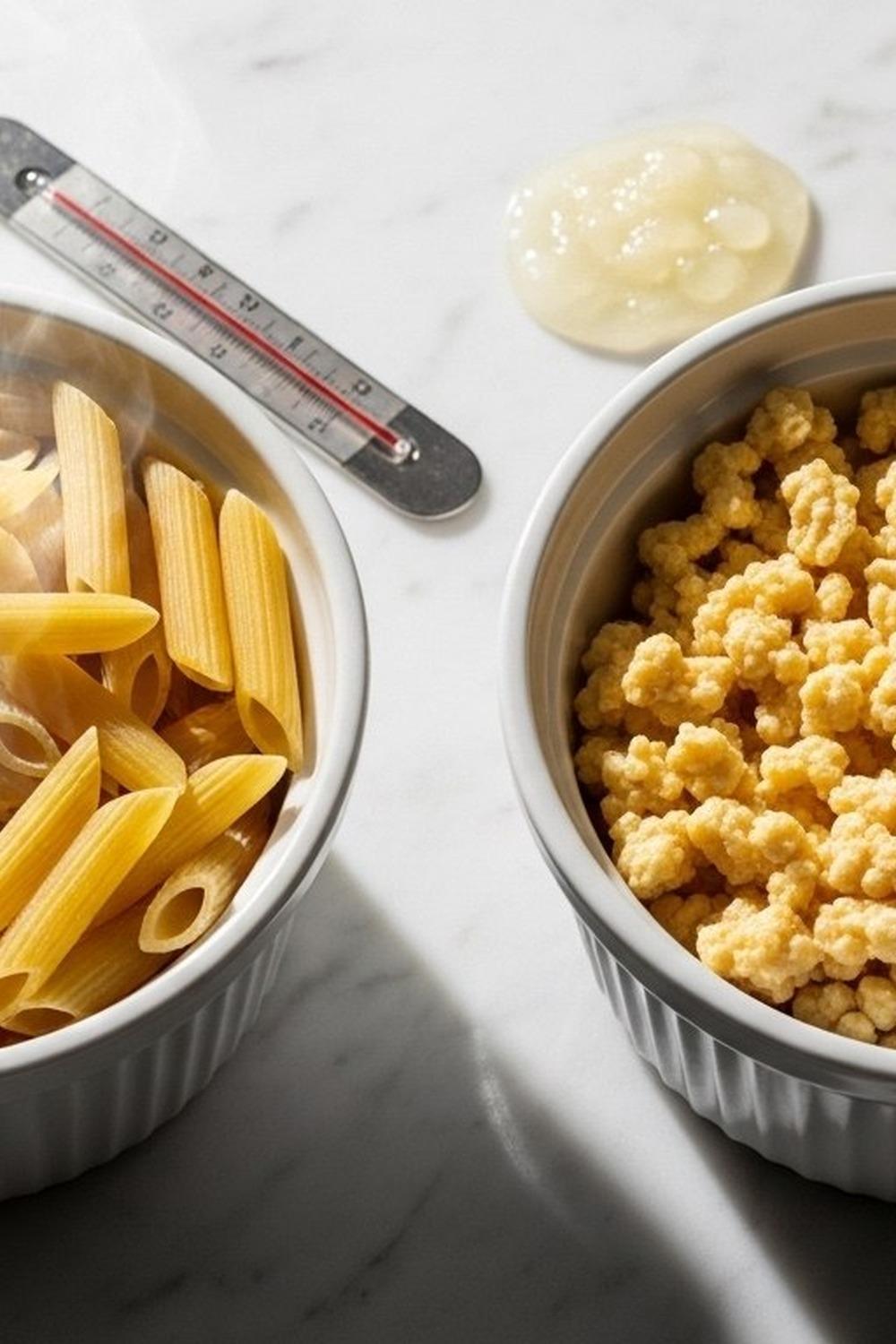
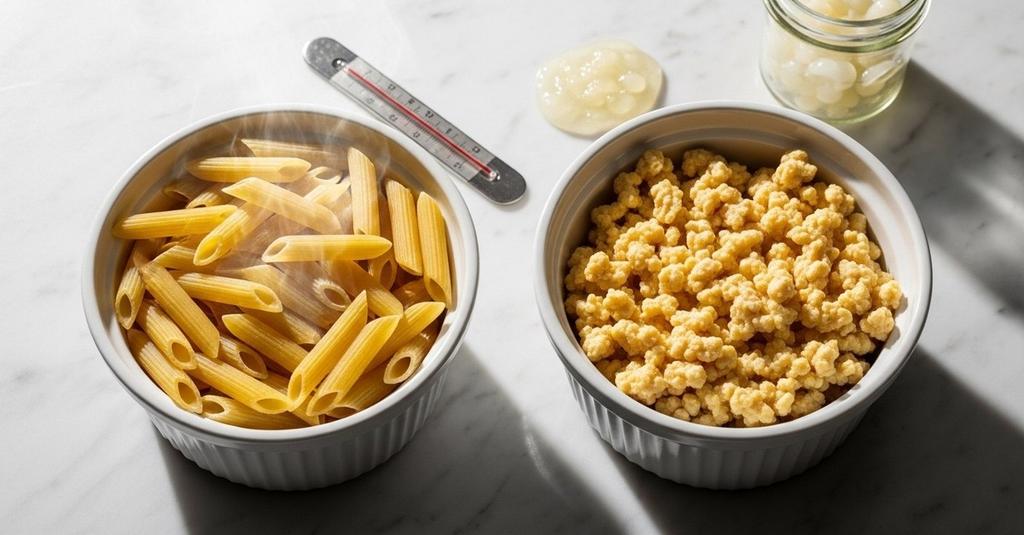
When cooked pasta sits in your refrigerator, the starch molecules do something strange. They were loosened and swollen by heat, all vulnerable and accessible. As they cool, they recrystallize into these tightly packed structures called resistant starch. Think of it like the difference between a sponge in hot water and a sponge that’s been wrung out and left to harden.
Dr. Denise Robertson tested this in humans. Fresh pasta. Cold pasta. Reheated pasta. She measured the glucose response.
The results were striking because they shouldn’t have mattered that much, and yet they did.
Your digestive enzymes are built for loose, swollen starch. They break it down fast in your small intestine, glucose hits your bloodstream hard, your blood sugar spikes. But resistant starch? Those tightly folded molecules are basically armor. Your enzymes can’t grip them. So they pass through your small intestine mostly untouched, which means no spike, which means your body never even gets the chance to overreact.
Your Large Intestine Becomes the Actual Story
This is where it gets genuinely interesting.
When resistant starch makes it past your small intestine and into your large intestine, your gut bacteria are waiting. They ferment it. And when they ferment it, they produce short-chain fatty acids — compounds like butyrate that researchers have spent decades studying because they’re connected to reduced inflammation, better gut lining integrity, potentially lower colon cancer risk. You can read more about how food chemistry shapes your body in surprising ways over at this-amazing-world.com.
The wild part? The people in that Surrey study weren’t eating anything exotic. They weren’t taking supplements or doing anything complicated. They were eating regular pasta. The only variable was whether they’d put it in the fridge overnight. That’s genuinely it.
Reheating Doesn’t Reverse What Cooling Built
Most people assume reheating leftovers undoes whatever benefit cooling created. Wrong assumption.
The researchers reheated the cold pasta. Glucose response still measurably lower than fresh pasta. Not as dramatic as eating it cold straight from the fridge, but significantly blunted. The structural changes don’t fully unwind. Once the starch has recrystallized, some of that locks in permanently.
Which means your Tuesday leftover pasta, reheated in a pan, is molecularly different from the pasta you cooked fresh on Monday. Genuinely different.
That last fact kept me reading for another hour.
The Leftover Narrative Completely Inverts Here
We’ve been trained to think of leftovers as the lesser version. The convenience compromise. The slightly sad meal. But with resistant starch pasta, the leftover is actually the metabolically superior option. Same pasta. Same portion. Different timing. Different temperature.
And it’s not just pasta. Rice, potatoes, bread that’s been frozen and thawed — any cooked starch shows this pattern. It’s been studied for decades. It’s just never made it into mainstream nutrition conversations. The gap between what researchers know and what most people understand about their food is enormous.
You can even repeat the cycle. Cook, cool, reheat, cool again. Each cooling phase can increase resistant starch content further.
Nobody puts that on a food label.
What Your Microbiome Actually Does With This
Resistant starch isn’t just about what your body doesn’t absorb. It’s about what happens with what’s left over. When it reaches your colon, it acts as a prebiotic — essentially food for the beneficial bacteria that actually live there. Those bacteria ferment the resistant starch. Butyrate and other short-chain fatty acids are produced. Butyrate shows up in research connected to everything from reduced colon cancer risk to better long-term blood sugar regulation. Turns out it provides roughly 60 to 70 percent of the energy that colonocytes — the cells lining your colon — actually need to function.
So this isn’t a one-meal blood sugar story. It’s a long-game gut health strategy hiding inside something you probably already eat twice a week. The downstream effects compound over time in ways that are hard to see but increasingly hard to ignore.
By the Numbers
- 50% lower blood glucose spike from cold pasta versus freshly cooked — measured in actual human participants by University of Surrey researchers in 2014.
- Reheated pasta still showed reduced glucose response compared to fresh pasta, even after warming through completely.
- Resistant starch content in cooked-then-cooled pasta can increase 3 to 4 times compared to hot freshly cooked pasta, depending on cooling time and temperature.
- Butyrate production: roughly 60 to 70 percent of colonocyte energy needs.
The Broader Pattern
- Potatoes, rice, legumes — any cooked starch triggers the same recrystallization when cooled, making the leftover effect a dietary phenomenon that goes way beyond pasta.
- Traditional Asian cuisines have been eating cooled and reheated rice for centuries as congee or cold rice dishes. They never needed a name for it. They just knew it worked.
- Pasta shape actually matters: thicker, denser formats retain heat longer, which might affect how completely the starch recrystallizes. This variable hasn’t been rigorously studied yet.
Why This Changes How You Think About What You’re Eating
The resistant starch pasta finding isn’t permission to eat unlimited spaghetti. But it is evidence that food isn’t a fixed object with static properties. What pasta does to your blood sugar isn’t a property of pasta alone. It’s pasta plus time plus temperature plus your particular gut microbiome. The same logic applies to a surprisingly wide range of foods.
Blood sugar management matters because repeated glucose spikes affect energy levels, hunger, mood, and long-term metabolic health for virtually everyone. Not just people with diabetes. A simple habit change — cook pasta ahead, let it cool, reheat it — could have effects that a supplement can’t replicate. And the effect compounds.
The science of how food transforms in your kitchen and in your gut is still being written. Starch molecules reorganizing in your fridge overnight. Bacteria in your colon doing work your small intestine couldn’t do. Small things with real consequences.
If this kind of story keeps you up at night, there’s more at this-amazing-world.com. And the next one is even stranger.
“
Frequently Asked Questions
Q: Does cold pasta really lower blood sugar?
Yes. A 2014 University of Surrey experiment led by Dr. Denise Robertson measured glucose response in human participants and found cold pasta produced up to a 50% lower blood glucose spike than freshly cooked pasta. When pasta cools, its starch recrystallizes into resistant starch that digestive enzymes cannot break down quickly, so glucose enters the bloodstream more slowly and the usual spike is blunted significantly.
Q: Why does cooling pasta create resistant starch?
When pasta is cooked, heat loosens and swells the starch molecules, making them easy for enzymes to access. As the pasta cools in the refrigerator, those molecules recrystallize into tightly packed structures called resistant starch. These folded molecules act like armor that enzymes cannot grip, so they pass through the small intestine mostly untouched. Resistant starch content can increase 3 to 4 times compared to hot freshly cooked pasta.
Q: Does reheating cold pasta cancel the benefit?
No. In the University of Surrey research, reheated cold pasta still showed a measurably lower glucose response than freshly cooked pasta, even after warming completely through. The effect is not as dramatic as eating it cold straight from the fridge, but the structural changes from recrystallization do not fully unwind. Once the starch has recrystallized, some of that change locks in permanently, making Tuesday’s reheated leftover molecularly different from Monday’s fresh pasta.
Q: Does this work for foods other than pasta?
Yes. Rice, potatoes, legumes, and bread that has been frozen and thawed all show the same recrystallization pattern when cooked then cooled. The phenomenon has been studied for decades and extends to any cooked starch. Traditional Asian cuisines have eaten cooled and reheated rice for centuries as congee or cold rice dishes. You can even repeat the cook-cool-reheat cycle, with each cooling phase increasing resistant starch content further.
Illustrations are AI-generated. Article fact-checked and human-edited. Our editorial standards.